AI as a partner in travel decision making


Dear reader,
AI is quickly becoming the biggest tool of creative destruction since the introduction of the internet in all fields of life, including tourism. In tech-savvy cultures, like in China, it has already made the transition from being a tool to being a partner.
Most people are surprised to learn that Artificial Intelligence as an academic discipline was already founded in 1956 at the Dartmouth Conference, the first machine, a “Perceptron” creating a neural network, was developed by Frank Rosenblatt in the following year, 1957, which incidentally is also the year your humble editor, PROF M, was born.
Among the first AI programs was what we today would call an App able to play Chinese checkers. However, because of the lack of sufficient computational power and available digital data, it took many more years before AI graduated from checkers to chess by beating 1997 with the help of IBM's Deep Blue, the then world chess champion Garry Kasparov.
The key step toward further progress happened with the shift from knowledge-based to data-driven approaches.
In 2012, “AlexNet” demonstrated for the first time the power of deep neural networks, and four years later, AlphaGo defeated the then ruling world champion Lee Sedol, mastering the most complex of all games, Go.
Today, we have reached GPT-5 and a multitude of specialised AI apps, all learning while operating, all needing incredible amounts of energy and investment.

In tourism and hospitality, dynamic pricing and revenue management are using AI algorithms to optimize pricing in real-time based on demand, seasonality, and competitor rates. Together with predictive analytics for occupancy forecasting and yield management, this allows hotel groups to calculate prices every second, finding causalities that humans would never have spotted.
Chatbots and Virtual Assistants provide 24/7 customer service for bookings, inquiries, and support in many different languages.
Generative AI has upended just about every part of the travel lifecycle for both buyers and sellers of travel services. From the consumer perspective, the resources available to inspire, research, plan, book, and share your favourite trips have simultaneously expanded the possibilities for consideration and curated that consideration set to a handful of suggestions — all in a matter of seconds.
From the perspective of those selling travel services, that path to reach your buyers has become exponentially more complicated. The old reliable model of online search (primarily through Google) has a half-life that is accelerating faster than anyone could have predicted. The promise of agentic AI in the hands of consumers may feel more like a curse to travel suppliers who haven’t yet figured out how to be relevant to the constantly evolving LLMs.
Suppliers seem to win - because almost all the value previously offered by OTAs has been made obsolete by GenAI. AI is doing the work of searching, curating, filtering, and adding the trust layer, so why do we need a middleman?
However, there is the danger that the LLM companies and the AI itself might look at the supply coming from Booking and Expedia, and decide that it is 'good enough’. Not worth the time and tokens to search further, just to find the same exact product at a higher price, or a less reliable booking process.
In their very near future, personal assistants will help consumers in all aspects of life, including travel. They will not only know your personal situation with respect to family status, income, residence, preferences, and schedule. They will also know Google/AI search you ever made, every YouTube and other video you ever watched, all purchases done electronically, all previous trips, including photos, invoices, posts, related shopping, etc.
A prompt: We want to go for one week to Portugal, some fun for the kids, surprise us!” will result after three minutes in a bookable itinerary, which, if confirmed, is booked in ten minutes.
Dear reader, if you do not believe that, try giving a prompt like “Looking at public information about YOUR NAME, what do you recommend as travel destinations that will be meaningful?” to Perplexity or other App (not ChatGTP, that’s sooo 2024) and see how detailed and to the point the answer will be you get.
For a Meaningful Tourism development, the use of AI-powered Personal Assistants can be a chance to select activities and destinations which offer sustainable transformational experiences customised for you.
However, if the Apps are biased towards booking.com %& Co., it will result in even greater pollution, overtourism, and exploitation of local communities and of service-providing employees.
As always, all good wishes from Prof. Dr. Wolfgang Georg Arlt (PROF M) and the entire Meaningful Tourism Weekly team in Kathmandu and Manila!

Meaningful Tourism Online Lectures for Africa starting on Monday, December 1, 2025 – Local experts named
As reported earlier, from coming Monday, the series of free online lectures providing an introduction to Meaningful Tourism for 30 destinations, is starting with five African countries and five destinations in South Asia.
The Meaningful Tourism Centre, the Tourism Institute, AIROI Co., and partners for each country have a special gift for the festive season.
The first wave of altogether 30 country-specific Meaningful Tourism Online Lectures, with each series consisting of four lectures of 60 minutes each, will be offered in December 2025 for free, sponsored by the organisers. However, participants need to register beforehand.
In the whole series, the first lecture is dedicated to a specific country, followed by three more lectures focusing on Meaningful Tourism for the continent or wider region.
The first lecture is structured each time in five parts:
• Prof. Dr. Wolfgang Georg Arlt “PROF M”: Introduction to Meaningful Tourism paradigm and tools
• Certified trainer for the country: Relevance of Meaningful Tourism for the country
• Local senior expert from private and public organisations: Current activities in the country to support Sustainable Tourism and Capacity Building (The names will be published in the coming edition of Meaningful Tourism Weekly.)
• Senior Expert from AIROI: Earning Money from Sustainable Tourism: The example of Carbon Credit Trading
• Open for audience: Questions and Answers
The other three Online Lectures 2, 3 and 4 will give information about the Africa-specific Meaningful Tourism holistic approach and tools, about customised KPIs, practical application examples and a guide to a step-by-step development and application of a Meaningful Tourism strategy. Each lecture includes an open Question and Answer section.
Dates and names of the local expert for the Online Lecture Africa 1 (all times local):
• Dec 1 (Monday), 10 am: South Africa - Ms. Julia Louw, CTO Wesgro
• Dec 2 (Tuesday), 11 am: Kenya - Ms. Angela Njehia, Chairperson, Ecotourism Kenya
• Dec 3 (Wednesday), 11 am: Tanzania - tba
• Dec 4 (Thursday), 9 am: Cameroon - Mr. Amir Mamah Adamu, Founder HIL Forum
• Dec 5 (Friday), 10 am: Zimbabwe - Prof. Frederick Kasese, Leader, Great Zimbabwe DMO
Dates of Online Lectures Africa 2-4:
December 9, 16, and 23, 2025, same time (10 am SAST)
To register, please use the following links:
South Africa https://institutetourism.com/mt-southafrica/
Kenya: https://institutetourism.com/mt-kenya/
Tanzania https://institutetourism.com/mt-tanzania/
Cameroon https://institutetourism.com/mt-cameroon/
Zimbabwe https://institutetourism.com/mt-zimbabwe/
Updated website online
Meaningful Tourism Centre (MTC) and its affiliated organisations, COTRI China Outbound Tourism Research Institute and Tangting Technologies, proudly present the updated website.
New elements are the extended gallery of photos and videos, and especially for the Meaningful Tourism Centre, extended information about the Certified Trainers around the world.
Current activities are now easier to find on the homepages of MTC and COTRI.
Meaningful Tourism Community: The Meaningful Tourism Transformational Game Workshop Trainer
Trainer: Karunya L.S, Trainer for Tamil Nadu, India

Karunya L.S is a NET/JRF-qualified academic and Ph.D. scholar in Tourism Studies at a prestigious Central University in India, with a strong blend of consultancy and research experience. She has worked as an Associate Consultant in a renowned Big Four firm, contributing to major tourism PPP projects in Puducherry and advising government clients in Tamil Nadu through feasibility assessments, strategic planning, and stakeholder coordination.
Passionate about teaching and sustainable tourism, she has published in reputed journals, presented at national and international conferences, conducted extensive fieldwork, and mentored undergraduate and postgraduate students. Known for her courtesy, analytical skills, and service-oriented mindset, she is committed to advancing tourism development and shaping future industry professionals.
Meaningful Tourism Weekly: What is the current situation of tourism in India, Tamil Nadu and how can the Meaningful Tourism Paradigm help to support its development?
Karunya: India’s tourism industry in 2025 is rapidly recovering and expanding from pandemic and global issues and concerns, driven by both international and domestic travelers.
According to recent data, India recorded approximately 56 lakh foreign tourist arrivals and 303 crore domestic visits in the first eight months of 2025. Tourism contributed about ₹15.73 lakh crore to the GDP in 2023-24 and supports over 84 million jobs, highlighting its economic importance. States like Uttar Pradesh and Tamil Nadu remain key domestic destinations, while iconic sites such as the Taj Mahal continue to attract millions annually. The government is actively investing in infrastructure and skill development with schemes like Swadesh Darshan 2.0 to promote thematic and heritage circuits across the country.
The Meaningful Tourism Paradigm aligns well with India’s unique socio-cultural and ecological contexts, offering a sustainable pathway for the sector’s development. It emphasizes responsible travel that benefits local communities, respects cultural heritage, and conserves biodiversity.
For example, community-managed ecotourism initiatives in the Nilgiris Biosphere Reserve empower local stakeholders to protect landscapes while generating livelihoods. This approach reduces the detrimental impacts of mass tourism, ensuring that authentic cultural and environmental assets are preserved and valued.

By focusing on smaller group sizes, immersive experiences, and locally driven tourism products, meaningful tourism can diversify India’s offerings beyond traditional hotspots. Niche segments like medical tourism, wellness retreats, cultural tourism, and rural/indigenous tourism present strong growth opportunities and help distribute economic benefits more equitably across regions.
In the current world, meaningful tourism strengthens resilience by fostering healthier visitor behaviours, community trust, and environmental stewardship. This paradigm supports India’s dual goals of scaling sustainable tourism growth while safeguarding its diverse heritage and ecosystems, thereby ensuring long-term visitor satisfaction and local well-being.
MTC Certified Trainers
Please find below the updated overview of all our Certified Trainers for the Meaningful Tourism Transformational Game Workshop, along with the updated World Map showing the countries directly and indirectly covered at present.
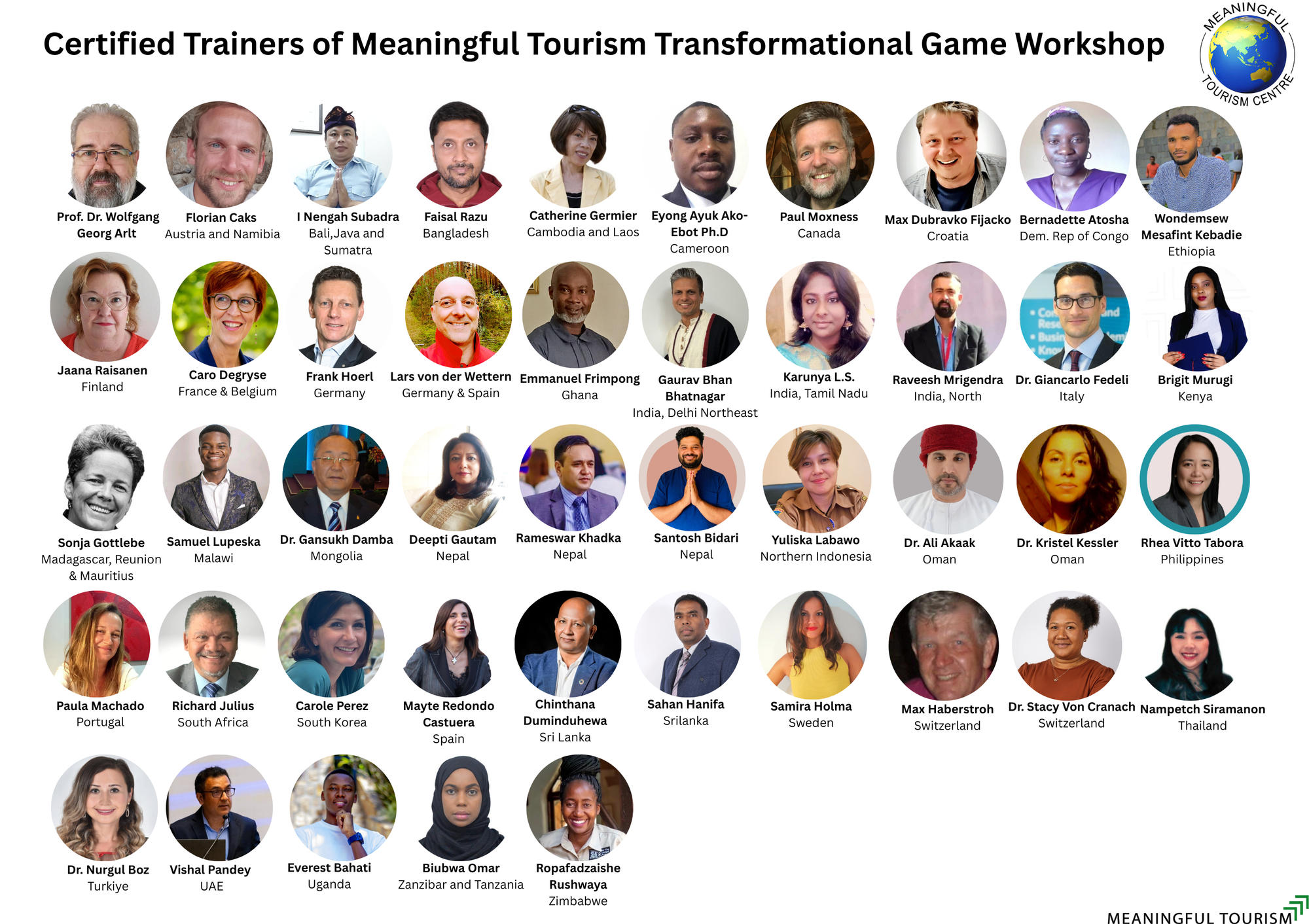
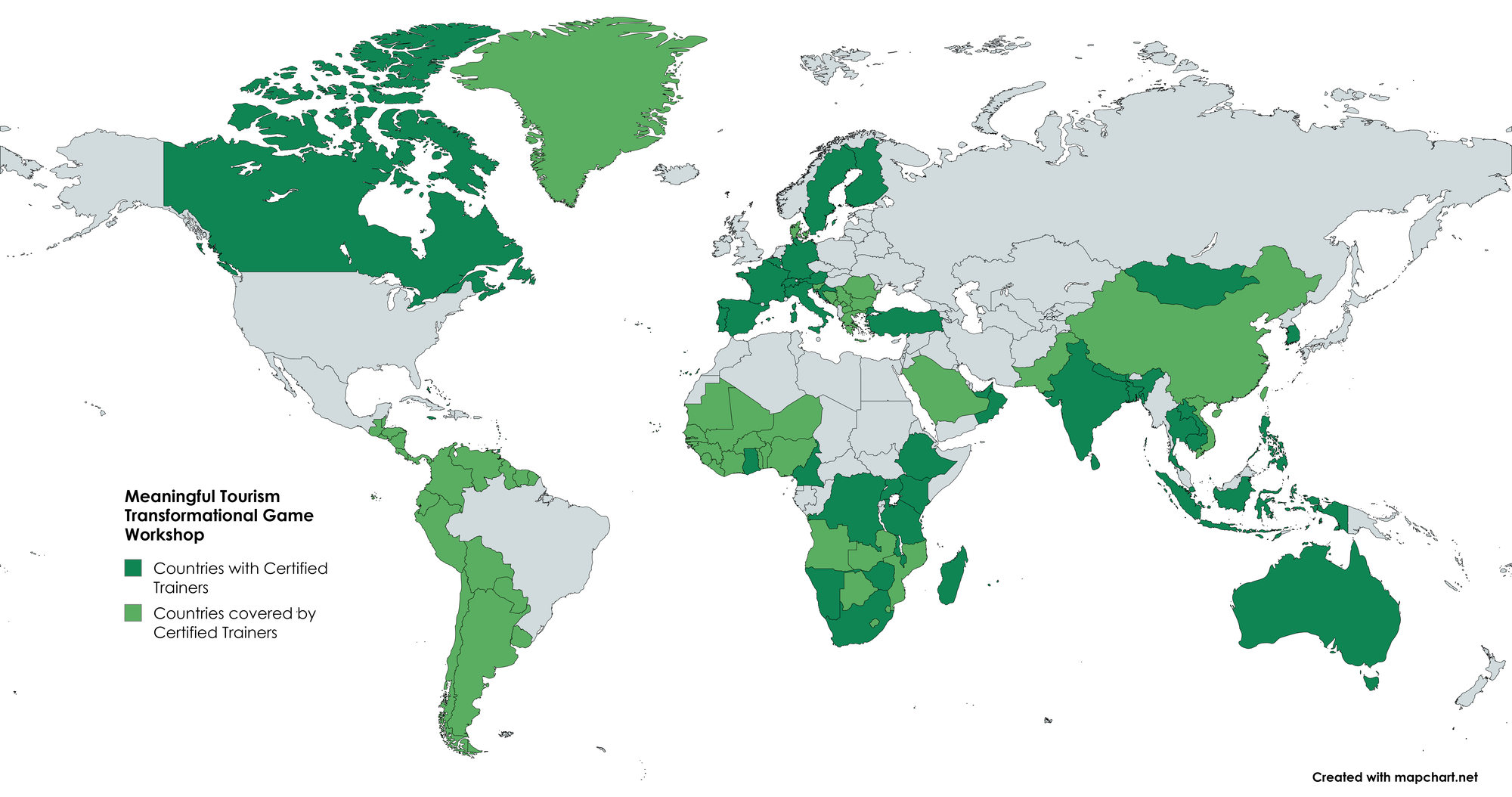
With almost 50 Certified Trainers, many countries and regions of the world are already covered. However, MTC continues to look for professionals with experience in training or lecturing and a passion for sustainable tourism.
If you are interested in becoming a Certified Trainer for the Meaningful Tourism Transformational Game Workshop for a country not marked in dark green on the map above, please contact us at office@meaningfultourismcentre.org.
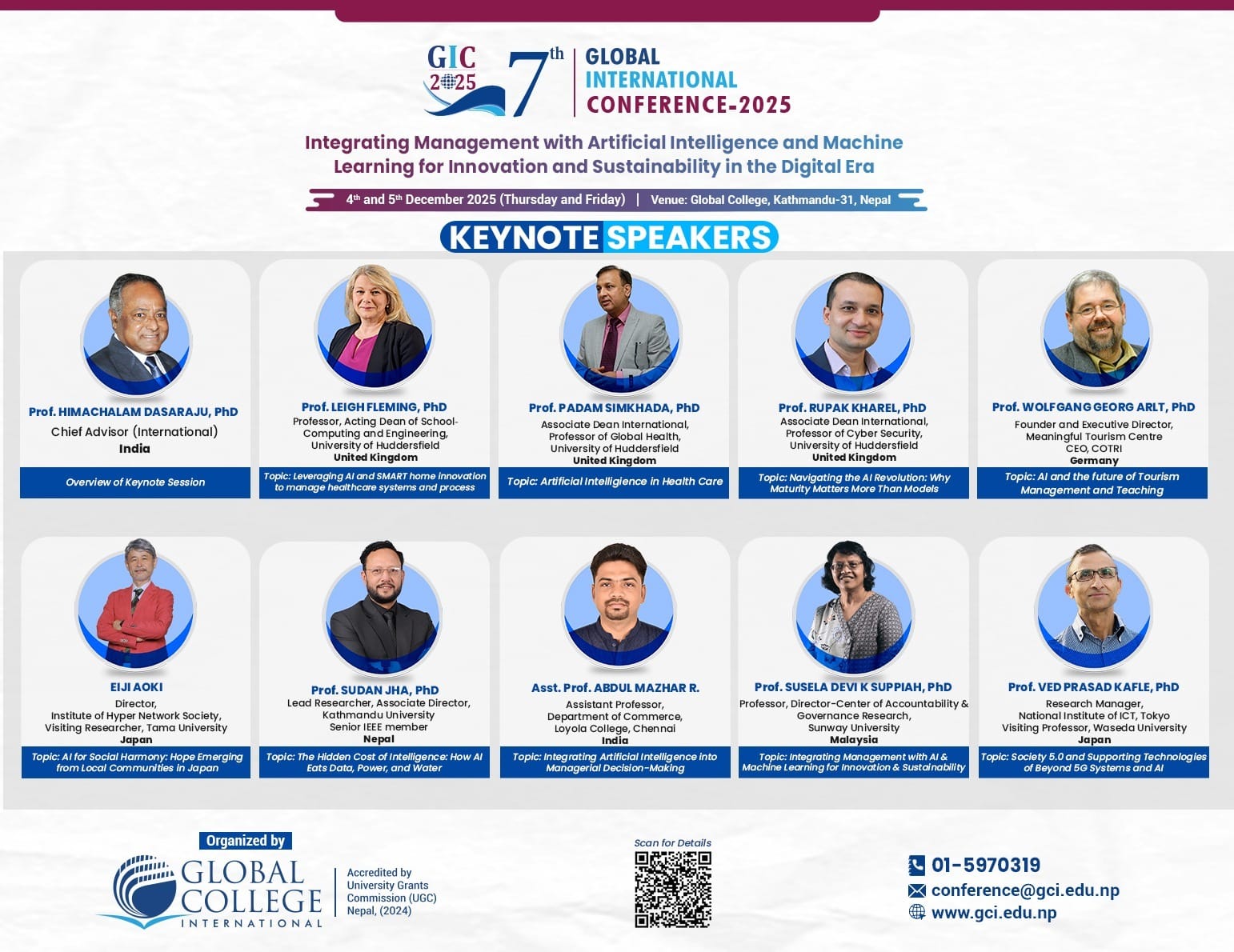
Global International Conference (GIC) 2025
Prof. Dr. Arlt will speak about "AI and the Future of Tourism". The event will be livestreamed on Facebook and YouTube.
About Meaningful Tourism Weekly
Meaningful Tourism Weekly is published every Thursday by Meaningful Tourism Centre (MTC) - London and Kathmandu in collaboration with Travel Asia Now, led by Rhea Vitto Tabora. This partnership enhances the newsletter’s professional production and distribution, bringing added value to our readers.
Each issue features an Editorial, updates on MTC activities, a Best Practice Example, a profile of an MTC-certified trainer, news about upcoming events, and, occasionally, additional op-ed pieces from guest authors. Carefully selected news items, including videos and podcasts, are also included, with links to their original sources in the Meaningful Tourism News section.
Subscription to Meaningful Tourism Weekly is free, with the addition of a paid content section that includes a library of surveys, exclusive articles, conference presentations, and statistical data, offering subscribers invaluable resources.
Sponsorship opportunities are available for those interested in supporting this initiative.
For more information about MTC's training programs, market research, product adaptation, consulting services, conferences, strategy development, and marketing, visit our website or email us at info@meaningfultourismcentre.org.