From experience to transformation: Unlocking the true potential of Meaningful Tourism

Dear reader,
our colleague Jake Haupert of the Transformational Council recently published a short piece discussing the difference between experiential travel and transformative travel.
He gave a rather romantic-sounding answer:
"Experiences fill itineraries, Transformations imbue all the space between, as the glue, the through-thread, the secret sauce, the mojo, the magic, and the mystical, from that first whisper of a call to adventure and continuing far after we've returned and integrated the insights.
It's in this place that our whole body intelligence, aka Head, Heart, and Gut, can be activated and unleash the true potential of travel. ... This is where the treasures you seek are hidden, and the transformations begin."
The Meaningful Tourism paradigm does not focus only on the experience or, indeed, the transformation of the traveller alone, but understands that all stakeholders need benefits and satisfaction. At MTC, we do identify the shift from experience- to transformation-oriented tourism as part of the move towards a Transformation Economy.
Jake Haupert correctly states that “tourism and hospitality organizations that are tuning into the market's insatiable hunger for more meaning, connection, purpose, regeneration, and reciprocity, and are willing to elevate their experience strategy, are the early adopters in the emerging transformation economy.”
However, these customer needs can only be satisfied within a holistic approach, which also acknowledges the needs of the other stakeholders. Otherwise, as we see currently, the “treasure seeking” tourist might encounter local throwing stones or horse dung at him/her and unmotivated or even absent staff in service providing companies, plus governments finding new ways to slap taxes on visitors and air travellers.
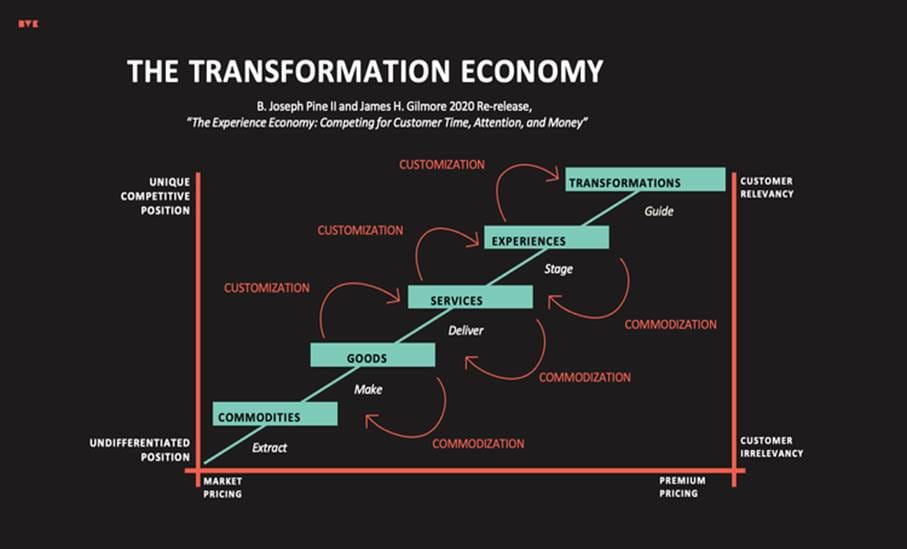
Transformation is focussing on personal growth, meaning and lasting change, where for experiences the focus is on activities, attractions, and memorable moments. The shift occurs from “doing something” to “becoming something”, with the satisfaction measured in insights and deeper connections to the visited destination rather than enjoyment and novelty. Whereas according to Pine & Gilmore’s graph above Experiences are staged for the visitors, Transformation is guided by the service providers, but is coming into existence with all stakeholders, including but not solely the travellers as co-creators.
In times of AI, such offers, which create unique products which cannot be copied by competitors and let visitors stay longer and spend more money which stays in the local economy, can be produced easier and more cost-effective than ever before. “Niche” becomes the new normal.
You can read Jake Haupert's full narrative here:
 Jake Haupert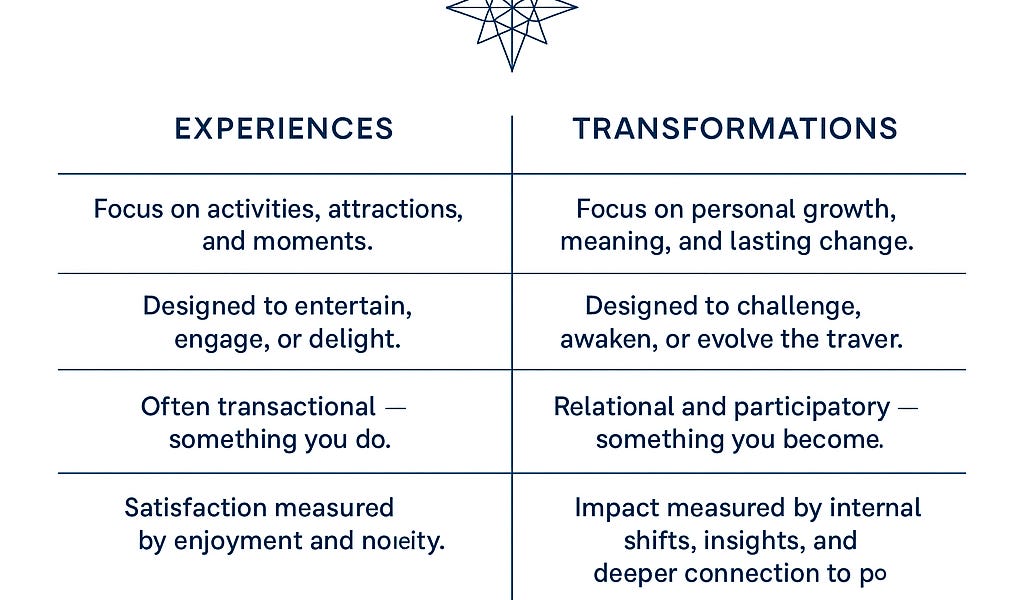
Dear reader, we are happy to welcome many new subscribers from Africa who registered for the Online Lectures about Meaningful Tourism for Africa. If, for some reason, the Meaningful Tourism Weekly is not needed, you can of course stop the free subscription. However, if your interest is primarily to sustain your business or rather to save the planet, the information contained in each edition should help you to achieve your goals.
As always, all good wishes from Prof. Dr. Wolfgang Georg Arlt (PROF M) and the entire Meaningful Tourism Weekly team in Kathmandu and Manila!

Meaningful Tourism and AI
In the last week, your humble editor, PROF M, had the honour to give a keynote speech and act as a Session Chair at the Global International Conference GIC 2025 in Kathmandu/Nepal.
A summary of the many interesting keynotes and panel discussions under the heading of "Integrating Management with Artificial Intelligence and Machine Learning for Innovation and Sustainability in the Digital Era" is available in a seven-hour YouTube video. It includes, along with many interesting presentations, a lengthy section where six PhD students introduce their AI-related projects, with PROF M asking questions and commenting on their approaches. It is certainly interesting to see how PhD students seriously address different aspects of AI development in Nepal.
Watch the recording below:
The conference and several others before, together with discussions within the Meaningful Tourism community, clearly show that there is a gap between the industry talking about AI without mentioning Climate Change and the sustainability-oriented activists talking about Climate Change without looking at the massive changes AI is bringing to the world, including the tourism sector.
The Meaningful Tourism tools are continually developing to support closing this gap and to use AI for the customisation, application, and measurement of SMART KPIs. Among other things, we are working to reach a point where, with the help of AI, a real-time dashboard can provide destinations, companies, and organisations with a transparent view of the level of Meaningful Tourism implementation at any given moment.
Lecture Series on Meaningful Tourism as a Tool to Develop Sustainable Tourism in Africa and South Asia Continues
Last week and this week have brought a lot of work, as well as benefits and satisfaction, to the Meaningful Tourism community. Following the five country-specific Online Lectures on Meaningful Tourism as a tool to develop sustainable tourism in South Africa, Kenya, Tanzania, Cameroon, and Zimbabwe in the first week of December, this week, four more Online Lectures for South Asia, namely North and Northeast India, Nepal, and Bangladesh are offered.
When you read this, all but the Online Lecture for Bangladesh have been broadcasted. All Online Lectures are available as videos on https://institutetourism.com/mt-lectures/.
Each Online Lecture included an introduction into Meaningful Tourism by PROF M plus specific presentations by the Certified MTC trainers and local experts, providing deep insights and interesting discussions. The Q&A sessions at the end of each Online Lecture were especially uplifting, seeing so many people in all the countries engaging for a better sustainable and Meaningful Tourism and sharing their own points of view.
For example, in the Online Lecture about Zimbabwe, MTC trainer Ropafadzaishe Mushoorwa explained why Meaningful Tourism can make a difference in achieving a sustainable and profitable future for tourism in Zimbabwe. Her carefully crafted presentation was supplemented by insights from Prof. Frederick Kasese, one of the leading experts for sustainable tourism in Zimbabwe.
It was nice to see that representatives of the national tourism authorities and the national tourism board were taking part in the discussion together with Prof. Marina Novelli, one of the leading experts on Sustainable Tourism, especially in Africa, who has been working for the tourism development of Zimbabwe for more than two decades.
Based on personal strong connections to Zimbabwe, she provided her insights and underlined that one of the possible positive effects of introducing a new concept like Meaningful Tourism could be the development of a continent-wide database of Best Practice Examples. Marina asked why a new term is needed instead of pushing the sustainability term further; however, she promised to sympathetically follow the work of MTC.
Please have a look at the videos, especially the country-specific parts, there is a lot to learn and MTC is extremely thankful for all speakers and participants who helped to make this another milestone in the Meaningful Tourism movement.
However, it is not over yet!
Three more Online Lectures are diving deeper into the practical advantages that Meaningful Tourism can provide for tourism development in Africa and in South Asia.
For Africa, the dates are Tuesdays, December 9 (already happened, video is available), 16 and 23, starting each time at 9:30 a.m. GMT (11:30 a.m. SAST). Duration: 45 minutes plus 15 minutes Q&A
Online Lecture 2: of Tools and Key Performance Indicators to create and measure benefits and satisfaction
Online Lecture 3: Meaningful Tourism for Africa: A holistic approach and an example of how to earn money from sustainable behaviour
Online Lecture 4: Meaningful Tourism for Africa: A step-by-step guide for the successful implementation
The lectures are provided by Prof. Dr. Wolfgang Georg Arlt, known as PROF M (“M” for Meaningful with a capital M), the founder and Executive Director of the Meaningful Tourism Centre.
Lecture 2 (Dec 9) focused on the elements of the Meaningful Tourism holistic approach and the relevant tools and products, especially for Africa, and on the use of SMART KPIs and AI to measure and manage the objective benefits and subjective satisfaction of all stakeholders connected to tourism and hospitality.
Lecture 3 (Dec 16) provides additional information about the driving forces and theoretical foundations of the Meaningful Tourism paradigm as well as discussing major tourism source markets for Africa, including China and Europe. A special presentation by Mr. Vinod Vasudevan (AiROI) about reducing the usage of electricity and water and the reduction of waste enabling carbon credit trading.
Lecture 4 (Dec 23) looks at the different forms of step-by-step implementation of Meaningful Tourism for destinations, companies and organisations, plus a conclusion and outlook into the coming years.
For South Asia, the content is similar, with a focus on South Asia. The times are as follows: Lectures 2, 3, and 4, December 15, 22, and 29 (Mondays), 8:00 a.m. GMT (1:30 p.m. Indian standard time).
Participation remains free of charge; however, you need to register to receive a Zoom link for each of the three Online Lectures.
Please register here: https://institutetourism.com/mt-series/
You need to register for each of the three Online Lectures separately. Sorry for the inconvenience.
MTC Welcomes New Team Member
MTC is proud to announce that Ms. Sakshi Poudel has joined the Meaningful Tourism Centre on December 1, 2025, as Sales and Communication Officer.

Sakshi Poudel is a social work graduate from St. Xavier’s College at Kathmandu University. She is currently pursuing Master’s in Social Work at Tribhuvan University. Originally from Nepalgunj, she now resides in Kathmandu. She has experience working as a special educator at Neo Child Care Centre, where she supported children with special needs.
Sakshi will support specific projects in coordination with the sales and marketing team. She will help in the development, management, and execution of workshops, conferences, webinars, podcasts, videos, interviews, publications, fair participation, and similar activities. Additionally, she will collaborate closely with other employees in the company as well as with partner organizations to ensure smooth and effective project delivery.

Free Sustainability Self-Assessment Checklist from MTC Certified Trainer
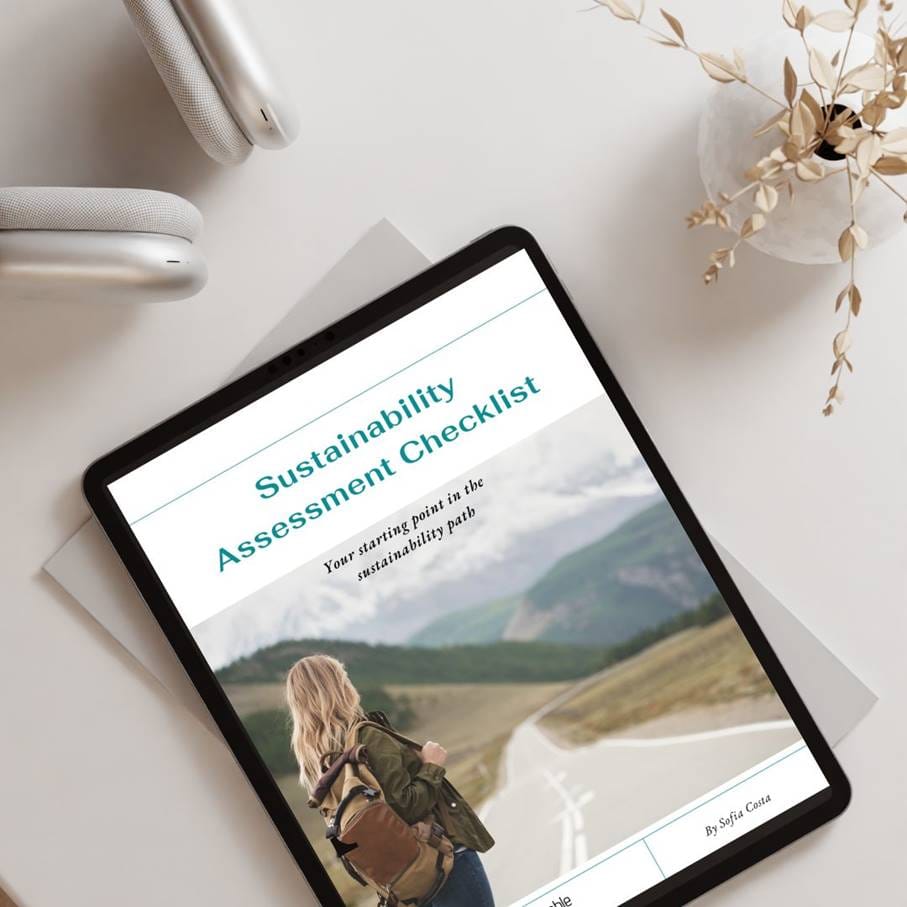
Sofia Costa, founder of the Sustainable Travels Consultancy and Certified MTC trainer for Portugal, is already in the festive season mood.
She is giving away as a Christmas gift hands-on 𝐒𝐮𝐬𝐭𝐚𝐢𝐧𝐚𝐛𝐢𝐥𝐢𝐭𝐲 𝐒𝐞𝐥𝐟-𝐀𝐬𝐬𝐞𝐬𝐬𝐦𝐞𝐧𝐭 𝐂𝐡𝐞𝐜𝐤𝐥𝐢𝐬𝐭, which will help the user to:
✔️ Understand current sustainability practices
✔️ Spot opportunities for improvement
✔️ Set clear next steps for real, measurable action
The text includes:
• A simple, practical self-assessment checklist
• Space for reflection and goal-setting
• Actionable tips to better integrate sustainability into your operations and strategy
This publication is also useful to prepare for the self-assessment process for individual companies and organisations based on 24 SMART KPIs provided by MTC to become recognized as a “Meaningful Tourism Movement Member” and, in a second step of committing to improving at least two of the KPIs within 12 months as a Certified Meaningful Tourism Movement Member.
Sofia’s document can be downloaded here:
 Sustainable Travels
Meaningful Tourism Community: The Meaningful Tourism Transformational Game Workshop Trainer
Trainer: Biubwa Omar, Trainer for Tanzania, Zanzibar

Biubwa Omar is a visionary entrepreneur and advocate for sustainable tourism, women’s empowerment, and economic development in Zanzibar, Tanzania.
As Chairperson of the Zanzibar Women Chamber of Commerce (ZWCC), she champions gender equality, fostering opportunities for women-led businesses through training, market access, and financial literacy programs.
As Managing Director of Safari Gateway Ltd, Biubwa crafts unforgettable safari and beach holiday experiences, promoting responsible travel that supports local communities and preserves Tanzania’s natural and cultural heritage.
A Board Director in the Tourism Cluster at the Zanzibar National Chamber of Commerce (ZNCC), she drives strategic initiatives to enhance Zanzibar’s global competitiveness as a sustainable tourism destination.
Biubwa is also a pioneer in Halal tourism, working to establish Zanzibar and Tanzania as leading Muslim-friendly travel destinations.
Passionate about creating impact-driven solutions, she builds strategic partnerships to attract investment, strengthen business networks, and empower women and youth, shaping a vibrant future for Zanzibar’s tourism and economy.
Meaningful Tourism Weekly: What is the current situation of tourism in Tanzania and Zanzibar, and how can the Meaningful Tourism Paradigm help to support its development?
Biubwa: Tourism in Tanzania, including Zanzibar, continues on a steady growth trajectory, reflecting the country’s rich diversity of natural wonders, cultural heritage, and historical significance.
In the post-pandemic era, the sector has rebounded strongly, with rising visitor arrivals from both traditional markets like Europe and emerging ones such as the Middle East and Asia. Zanzibar, in particular, has become a hotspot for investment in luxury and mid-range accommodations, drawing travelers to its idyllic beaches, vibrant Swahili culture, and UNESCO World Heritage-listed Stone Town. Meanwhile, mainland Tanzania remains globally renowned for its national parks — Serengeti, Mikumi, and Nyerere (Selous) — where the growth of eco-lodges and sustainable safari camps signals a shift toward responsible tourism practices.
Both the Government of Tanzania and the Revolutionary Government of Zanzibar are committed to developing tourism sustainably. Joint initiatives are underway to promote cultural sensitivity, safeguard heritage sites like Kilwa and Bagamoyo, and empower indigenous communities, including the Maasai and Hadzabe, ensuring they are active participants in the tourism value chain.
In this context, the Meaningful Tourism paradigm offers a timely and strategic framework. By emphasizing purposeful travel that respects local culture, preserves the environment, and ensures economic and social benefits for host communities, Meaningful Tourism aligns seamlessly with Tanzania’s broader development goals. It supports efforts to reduce poverty, create employment, and nurture pride in the country’s unique identity and traditions.
Prioritizing value-driven, impactful travel experiences over mass tourism can help Tanzania and Zanzibar attract more responsible and conscientious visitors. Meaningful Tourism fosters deeper engagement between travelers and local communities, transforming tourism into a powerful tool for inclusive development and long-term sustainability.
MTC Certified Trainers
Please find below the updated overview of all our Certified Trainers for the Meaningful Tourism Transformational Game Workshop, along with the updated World Map showing the countries directly and indirectly covered at present.
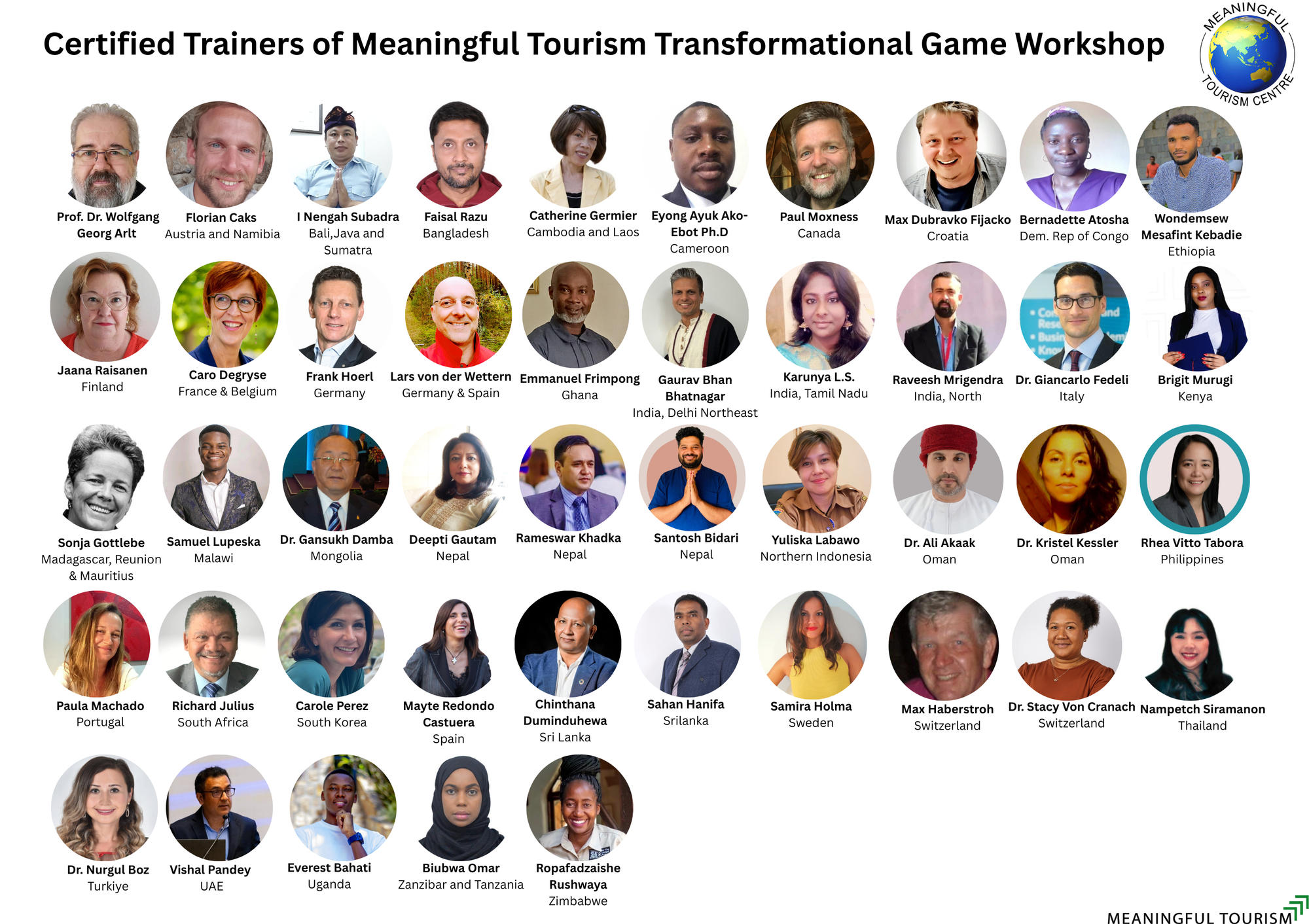
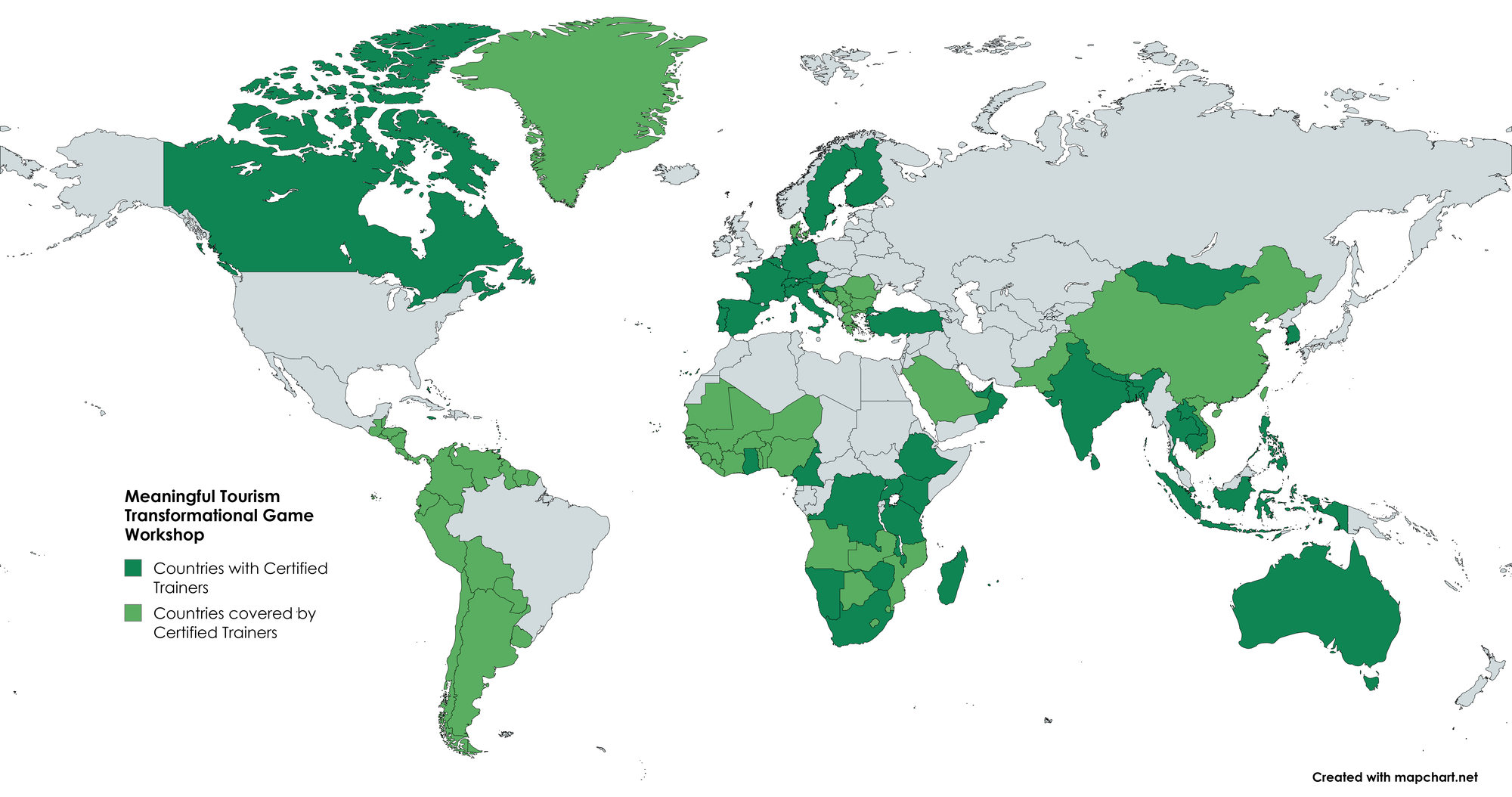
With almost 50 Certified Trainers, many countries and regions of the world are already covered. However, MTC continues to look for professionals with experience in training or lecturing and a passion for sustainable tourism.
If you are interested in becoming a Certified Trainer for the Meaningful Tourism Transformational Game Workshop for a country not marked in dark green on the map above, please contact us at office@meaningfultourismcentre.org.
Africa Online Lectures
December 16 and 23, 2025 (Tuesday)
Starting at 9:30 a.m. GMT (11:30 a.m. SAST)
Duration: 45 minutes plus 15 minutes Q&A
Online Lecture 3 (Dec 16): Meaningful Tourism for Africa: A holistic approach and an example of how to earn money from sustainable behaviour
Online Lecture 4 (Dec 23): Meaningful Tourism for Africa: A step-by-step guide for the successful implementation
South Asia Online Lectures
December 15, 22, and 29, 2025 (Monday)
Starting at 8:00 a.m. GMT (1:30 p.m. Indian standard time)
Duration: 45 minutes plus 15 minutes Q&A
Online Lecture 2 (Dec 15): Meaningful Tourism for South Asia: Tools and Key Performance Indicators to create and measure benefits and satisfaction
Online Lecture 3 (Dec 22): Meaningful Tourism for South Asia: A holistic approach and an example of how to earn money from sustainable behaviour
Online Lecture 4 (Dec 29): Meaningful Tourism for South Asia: A step-by-step guide for the successful implementation
Participation remains free of charge. However, you need to register to receive a Zoom link for each of the three Online Lectures.
Please register here: https://institutetourism.com/mt-series/
About Meaningful Tourism Weekly
Meaningful Tourism Weekly is published every Thursday by Meaningful Tourism Centre (MTC) - London and Kathmandu in collaboration with Travel Asia Now, led by Rhea Vitto Tabora.
Each issue features an Editorial, updates on MTC activities, a Best Practice Example, a profile of an MTC-certified trainer, news about upcoming events, and, occasionally, additional op-ed pieces from guest authors. Carefully selected news items, including videos and podcasts, are also included, with links to their original sources in the Meaningful Tourism News section.
Subscription to Meaningful Tourism Weekly is free, with the addition of a paid content section that includes a library of surveys, exclusive articles, conference presentations, and statistical data, offering subscribers invaluable resources.
Sponsorship opportunities are available for those interested in supporting this initiative.
For more information about MTC's training programs, market research, product adaptation, consulting services, conferences, strategy development, and marketing, visit our website or email us at info@meaningfultourismcentre.org.