Into the second quarter of the 21st century toward a Meaningful Tourism Economy - Starting the Meaningful Tourism Movement

Dear reader,
in a few hours after this editorial is written, in most parts of the world, the year 2026 will be welcomed with parties and fireworks, but also with a sense of anxiety, not the least among professionals in the tourism and hospitality industry. 2025 has shown in many places that the Climate Catastrophe cannot be ignored anymore, and also to what extent tourism depends on peace and global cooperation. The technological development is moving on faster than ever; however, in geopolitical terms, there is rather a sense of déjà vu prevailing.
For people old enough, like your humble editor PROF M, it is hard to believe that one quarter of the 21st century is already coming to an end! Movies like Stanley Kubricks “2001 – Odyssee in Space” or Alain Tanners “Jonas, qui aura 25 ans en l'an 2000” (Jonas, who will be 25 years old in the year 2000) or the Video 2000 norm for videorecorder (if you do not know what that used to be, ask Perplexity or Grok) treated the 21st century as the time of Science Fiction and Utopia. Computers, robots and flying cars have indeed arrived; however, the mindset of most people seem still very much fixed to the 20st century, if not to the 19th.
Overpopulation used to be the boogie man in the past, the existential threat of the Climate catastrophe, however, was not part of the forecast about the 21st century back then. Overtourism was hard to imagine even 20 years ago.
For the Meaningful Tourism paradigm, 2025 however was a very successful year. The community of MTC Certified Trainers has grown continuously, and the concept is recognized much more widely than a year ago and received overwhelmingly positive feedback as a necessary step forward in the quest for sustainable tourism development. The MTC headquarter in Kathmandu, where there are no New Year celebrations today whatsoever by the way, is working well thanks to our dedicated staff, this publication Meaningful Tourism Weekly has witnessed a substantial growth in the number of readers, thanks also to our successful cooperation with our partners in Manila. PATA has endorsed the vision of a Meaningful Tourism Economy as the goal for the whole Asia-Pacific region, a major step that hopefully will be followed soon in other parts of our planet.
Most importantly, the scale of services for smaller and bigger stakeholders in tourism and hospitality has improved, and we can offer low-level entry with a self-assessment together with full-blown national strategy development implementation support.
At this point in the development, we are now following the proposal of many of our supporters to dare to call the Meaningful Tourism approach a Movement. This is not about having things a bit more or less meaningful; this is a movement about Meaningful Tourism with a capital M. It is a great pleasure for your humble editor that, as a result of the development in the year which is coming to an end now, he has earned the nickname PROF M.
The year 2026 and the second quarter of the 21st century, starting with it, will certainly bring tough times for mankind, including tourism and hospitality. Let us join in the Meaningful Tourism movement, based on a positive and holistic approach, to minimize the damage and maximize the success of the efforts towards the establishment of Meaningful Tourism.
All best wishes from the Meaningful Tourism Weekly team in Kathmandu and Manila and from the whole Meaningful Tourism community to all our readers and their loved ones, colleagues and customers!

MTC services overview
Starting with the Meaningful Tourism Transformative Game Workshop at the end of 2024, MTC and its community have developed a full portfolio of services during 2025.
As part of the Online Lectures about Meaningful Tourism, a comprehensive overview was provided in the last Online Lecture for SMEs and small organisations on the one hand and for NTOs, DMOs, and bigger companies like hotel groups, attractions, airports, retail groups, etc. on the other hand.
Join the Meaningful Tourism movement, starting with an easy and cost-effective Self-Assessment, and move further with training and implementation support to become a Distinguished Meaningful Tourism movement member.
Please have a look at the file here.
The video which includes explanations by PROF M can be viewed and downloaded here: https://institutetourism.com/mt-lectures/ (Online Lecture 4).
MTC and MTC Certified Trainers are at your service around the world!
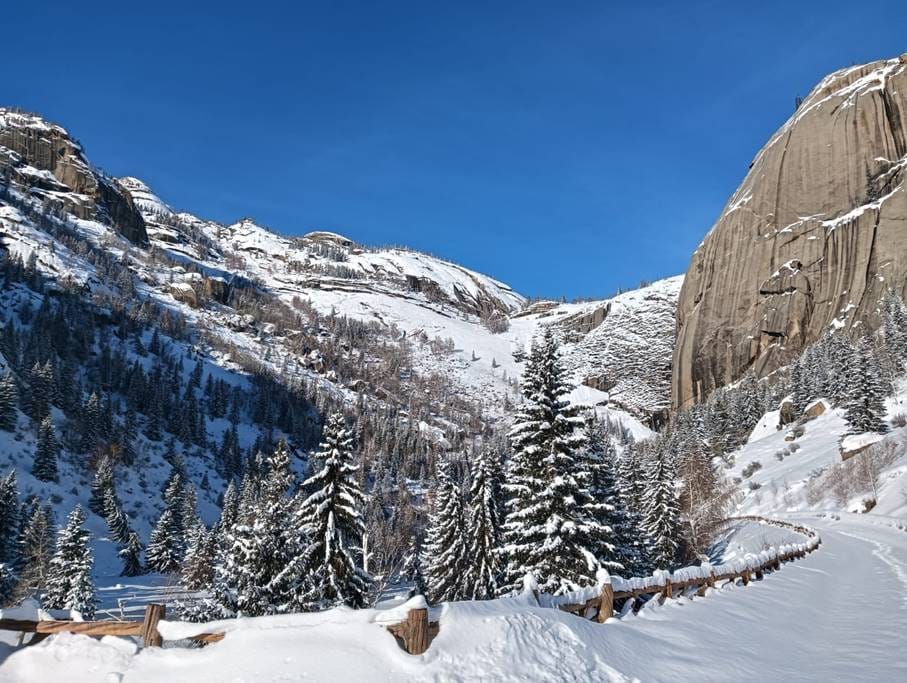
Report Altay Conference December 21, 2025: Global Ski Tourism Destinations - A Seminar on the Development of Ice-Snow Tourism in Altay
In recent years, with the development of China’s ice-snow economy, especially after the Beijing Winter Olympics, Altay Prefecture in Xinjiang/China has started to attract global attention. As the birthplace of human skiing, documented in an impressive museum in the 800,000 citizen city, the Altay region boasts a distinctive cultural heritage and outstanding natural endowments, which provide it with enormous potential to develop into a world-class ski tourism destination. Modern hardware is available; however, how to conduct scientific planning, implement efficient operation, accurately benchmark against world-class standards, and properly align the relationship between development and conservation have become crucial issues for local development.
The Xinjiang Research Institute of Sun Yat-sen University and Altay Vocational and Technical College organized a forum for domestic and international experts and local scholars to jointly explore the development of Altay’s ice-snow industry on December 21, 2025 in Altay.
Moderated by the famous tourism expert Prof. Xu Honggang, Dean of the School of Tourism Management, Sun Yat-sen University, the seminar started with Mr. Shi Zhiqiang from the local authority providing a data-rich overview about the development process of Ice-Snow Tourism in the Altay, before four international experts gave their presentations:
Serge Koenig (France), four times Mount Everest Summiteer and a leading French expert on Winter Sports and Sustainable Tourism and his colleague Lucas Bernard-Chenu shared what China can learn from the history and future of Ski Tourism, especially in France. Richard Adam, Australian-Bavarian organiser of the Winter Olympics and ski resorts in different countries, explained how to develop the World Class Mountain and Ski Resorts, especially beyond the hardware. Finally, your humble editor PROF M had the honourable task to sum up the discussion and put it into the wider perspective of global tourism trends, climate change and AI development from a Meaningful Tourism perspective.
One key insight delivered was that a concentration on ice-snow tourism alone will not enable the region to fully develop. Activities using the existing resources year-round, for example, with the usage of the cable car by mountain bikers in the summer, are necessary to become profitable, but also to attract the necessary high-quality staff with year-round full-time job offers. The rich local culture needs to be highlighted as another reason to visit this rather remote area, especially for international visitors.
Review Meaningful Tourism Online Lectures December 2025
The last month of the year 2025 brought a lot of detailed insights and information to participants, especially in Asia and Africa, thanks to the series of Online Lectures about the importance and application of Meaningful Tourism in Africa and Asia. The Certified MTC trainer in South Africa, Kenya, Tanzania, Cameroon and Zimbabwe in Africa, and in Northeast and North India and in Nepal in South Asia provided detailed information on how Meaningful Tourism is a powerful tool to improve tourism in their respective countries and beyond. They were supported by regional experts in most cases, highlighting practical experiences and Best Practice examples.
The eight destination-specific Online Lectures were complemented by two sets of three additional lectures each for Africa and South Asia respectively. With the kind support and sponsorship of the Tourism Institute, almost 1,000 registrations could be achieved. The Online Lectures were free of charge and can now be downloaded at https://institutetourism.com/mt-series/.
Participants who would like to receive a Certification of Participation can have the document signed by both the leaders of the Tourism Institute and MTC, upon request, for a small administrative fee of 30 USD.
A key part of all the Online Lectures was the lively Q&A session at the end of each Online Lecture, with participants inquiring about ways to implement the Meaningful Tourism paradigm and tools in their destination and companies and sharing their own views and experiences in the field of sustainable tourism.
Based on the experiences with this first wave, MTC will tweak the format of the Online Lectures, making them even more interactive and goal-oriented. Infos will be provided here at the Meaningful Tourism Weekly as soon as they become available.
MTC becomes a member of WTCF World Tourism Cities Federation
The World Tourism Cities Federation (WTCF) is a non-profit, non-governmental international organization formed voluntarily by tourism cities, related institutions, associations, and enterprises worldwide, initiated by Beijing and headquartered there. Its core vision is "Better City Life through Tourism".
WTCF started with 58 founding members in 2012 and has grown to 257 members across 87 countries and regions, including 168 city members and 89 institutional members as of 2025. COTRI, now part of the Meaningful Tourism Centre, has been working with WTCF from the first meeting in 2012, inviting speakers from other organisations to conferences and keynote speeches on several occasions.
Your humble editor is a member of the Experts Council of WTCF. In 2025, he was a panellist at the ITB Berlin China tourism panel in March 2025 and gave a presentation at the WTCF Europe Conference in Spain in November 2025.
The annual Fragrant Hills Tourism Summit is organised annually alternatively in Beijing for one year and in locations like Rabat (Morocco), Los Angeles (USA), Helsinki (Finland), and Hong Kong SAR (China) since 2012. In 2026, it will return to Beijing from June 10-12, just before the BITLF Beijing International Tourism and Lifestyle Fair.
Beginning with the new year 2026, MTC has the honour to be accepted as a member of WTCF and looks forward to further intensify the cooperation with the most important international organisation for Urban tourism.
Preview: Best of Meaningful Tourism Weekly 2025 eBook
The new format of the Meaningful Tourism Weekly has been published since April 2025. In the coming weeks, the editorial board will select the best editorials and other articles which are still interesting to read for a long time after the initial publication. The chosen texts will be published as an eBook before the start of the Fire-Horse Year according to the Chinese calendar, i.e., February 17, 2026.
Friends and sponsors of the Meaningful Tourism Weekly and all Meaningful Tourism movement members will receive their copy free of charge. For other readers, it will become available for download for a small fee. The eBook will provide welcome reading for the cold winter evenings in the Northern hemisphere or the late summer days in the Southern hemisphere. Something to look forward to in the new year!
New Structure of Meaningful Tourism Weekly from January 2026
The Meaningful Tourism Weekly has always been provided free of charge and will remain so. However, due to rising demand to gain access to more background materials, articles, videos and presentation about Meaningful Tourism, starting with the first edition in 2026, the publication will be split into a free version as before plus a paid version with a vast archive and special items.
Access to the paid-for part will be free for all Meaningful Tourism movement members. For all others, there is no need for a subscription: a simple one-time payment of less than 100 USD gives access to a treasure trove of actionable information for as long as Meaningful Tourism is published and is wanted to be received. Sponsorship payment on a higher level to support the work of MTC is also possible; sponsors will be named in the publication.
More details will be provided in the coming issue of Meaningful Tourism Weekly.

Special Focus topic Meaningful Tourism in Africa and Asia published in new Bali Journal of Hospitality, Tourism and Culture Research (BJHTCR)
In the June 2025 edition of the Bali Journal of Hospitality, Tourism and Culture Research, the founder and Executive Director of the Meaningful Tourism Centre published an introduction into the Meaningful Tourism paradigm. In the current edition, which will be available free of charge online in the first days of January 2026, this article is followed up with a Special Focus topic looking at the development of the Meaningful Tourism paradigm and its application, especially in Africa and in Asia.
This text is written at the very end of the first quarter of the 21st century, entering the new quarter with a lot of anxiety and uncertainty on a global scale. A positive approach is needed more than ever, as Meaningful Tourism is providing, based on Positive Psychology and Creative Destruction theory, embracing change instead of trying to bring back the “good old times” of the pre-pandemic focus on growth and quantity, with arrival numbers as the main KPI.
The openness to change is greater in countries still catching up in their tourism development, as the examples from Africa and Asia provided in the Special Focus topic articles clearly show. The majority of the authors and indeed all four editors are Certified Meaningful Tourism trainers. The two main texts are based on the content of the Online Lectures, which were provided by MTC and the Tourism Institute in December 2025.
The development of the Meaningful Tourism Paradigm in Cameroon, Kenya, Tanzania, South Africa, and Zimbabwe offers a transformative approach, as shown by different examples.
In Cameroon, Meaningful Tourism is used to mitigate sustainability fatigue and shift focus toward culturally rich experiences, reinforcing community identity and environmental accountability within tourism narratives.
Asia's rapid growth in international tourism, particularly the emergence of China as a dominant source market, highlights the necessity for more sustainable and inclusive tourism practices. As Asia's significance in global tourism continues to expand, there is an increasing need to transition toward a Meaningful Tourism paradigm focusing on authentic niche tourism products involving and benefiting all six stakeholders. This approach is especially relevant in countries and destinations such as Mongolia, Nepal, North and Northeast India, which are discussed in the article focusing on Asia.
Adopting a Meaningful Tourism approach is essential for addressing the challenges faced by these countries, including insufficient benefits for local communities, cultural and ecological destruction. Meaningful Tourism is not a niche concept; it is a strategic necessity.
Its successful implementation in Asia can serve as a global inspiration for meaningful, equitable, and transformative tourism, demonstrating what is possible.
By embracing the Meaningful Tourism Paradigm, these countries have the potential to inspire the global tourism community and illustrate how tourism can be both meaningful and transformative, leading to long-term resilience, inclusivity, and a positive impact for visitors, the host community, tourism employees, governments, tourism companies and the environment.
The Bali Journal of Hospitality, Tourism and Culture Research (BJHTCR), Vol. 3 No. 1 (2025) can be found here:
https://ojs.baliacademicpublishing.com/index.php/balijournalhtcr

Meaningful Tourism Centre at three fairs in 2026: PTM, GITF and BITLF
In the second quarter of 2026, the MTC will be participating in three major international tourism fairs in Asia:
In April at the Pakistan Travel Mart (PTM) in Lahore and Karachi, in May at the Guangzhou International Travel Fair (GITF) in South China, and in June at the Beijing International Tourism and Lifestyle Fair (BITLF) in North China.
In all three exhibitions, MTC will organise keynotes, conferences and stands. Detailed information will become available in the coming weeks and will be published here on Meaningful Tourism Weekly.
Hong Kong Humanity Hub: An Incentive Program that could Change the Face of Tourism Concept
By Patrick Chun, Co-Founder of IITTI World Civility Index
With the rise of overtourism and growing calls from destination authorities to identify more respectful, empathetic, and culturally aware tourists, a consortium of NGOs, governments, and training organizations is establishing a “Humanity Hub” in Hong Kong to address this global challenge.
The initial focus is to educate Mainland Chinese tourists in international social etiquette, empathy, and intercultural awareness. These participants may be described as “high-quality tourists”—travellers who actively invest effort in being thoughtful and responsible visitors.
Riding the Tailwind
In December 2025, the Hong Kong Government announced the “Expand Overseas” initiative, aimed primarily at helping Mainland Chinese companies in preparing for international markets by understanding local business environments and cultures.
Given Hong Kong’s long-standing role as an international metropolis, this initiative represents a natural evolution of its position within the Greater China region. The consortium aligns closely with this policy direction and is actively advocating for its extension to include tourists as part of the broader strategy.
Business Model
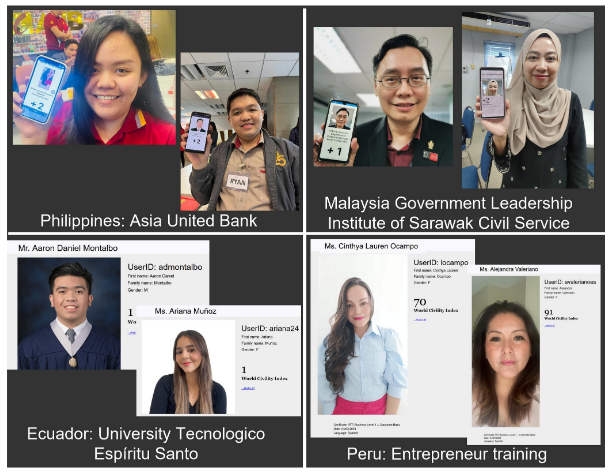
The program operates on a gamified learning model. Participants read curated articles, watch videos, and/or attend seminars to earn points measured through a standardized soft-skills framework known as the World Civility Index (WCI).
Each participant pays US$1.00 per mini-lesson, with proceeds shared among promoters and other stakeholders.
The consortium is building a marketing structure to attract Mainland Chinese tourists to go to Hong Kong for “how to be a good tourist” training programs, while at the same time, actively encouraging local Hong Kong merchants to develop loyalty programs linked to this Index.
Benefits Across Stakeholders
For the travel industry, civility points can be redeemed for rewards such as airline coffee vouchers, bonus loyalty miles, traveller badges, or even small recognition gestures (e.g., a special boarding-music shoutout!). The goal is to encourage civil behaviour to help smooth out traffic flow, minimizing uncivil acts and causing delays.
For airlines, it could represent a major step forward in a different kind of loyalty program, allowing a natural gathering of like-minded, civil customers where new and novel products and services can be provided, which is not so much based on money, but virtue.
For governments, a quantifiable World Civility Index enables clear policies to curb overtourism, admitting tourists with a certain score based on demonstrated effort (in earning the points) rather than financial capability.
In this sense, the World Civility Index offers a way to be democratic and more inclusive, leveling the playing field.
From Tourists to Contributors
What’s more, some of the curated articles and videos can not only be about etiquette and culture as discussed above, but also about history, the environment, and current challenges of local communities, allowing these high-quality tourists not only to understand destinations more deeply, but potentially to contribute to long-term local solutions.
Tourism, in this model, becomes more than consumption—it becomes a pathway to meaning, emotional connection, and purpose, transforming tourists into potential contributors to destination resilience.
History of the World Civility Index
The World Civility Index is administered by a non-profit called IITTI (International Soft Skills Standards & Testing), headquartered in Vancouver, Canada. Historically, the Index has been used for the HR/employment field.
One can think of the Index as somewhat similar to a person's credit rating, but instead of measuring how well a person can pay his bills, it measures soft skills, such as business etiquette, empathy, and intercultural awareness.
The concept is that job-seekers can obtain a credential based on the World Civility Index as proof to present to employers worldwide.
From an employer's point of view, they can raise company culture by simply requiring job applicants to have this credential before coming on board. HR can also use such for internal performance evaluation, a new kind of KPI (key performance indicator) that traditionally has been difficult to quantify.
Since 2019, the World Civility Index is officially recognized by UN Sustainable Development.
Contribution to Meaningful Tourism
The World Civility Index helps quantify Meaningful Tourism training, offering a single, widely understandable metric in an otherwise fragmented global market.
Even high-quality programs—such as Meaningful Tourism Workshops—face a practical limitation: without a shared credentialing standard, it is unrealistic to expect the millions of tour operators, local communities, employees, tourists, governments, and NGOs to research, evaluate, and recognize the scope and quality of countless programs worldwide.
A single numerical indicator provides a simple, scalable way to signal the extent and seriousness of a traveller’s education and commitment. In short, one number offers a common language for recognizing and rewarding Meaningful Tourism.
Examples:
About Patrick Chun
Patrick Chun is an engineer and entrepreneur. He sold his first company to a multinational in the mid-2000s. During that time, he recognized the critical role of soft skills, like teamwork and communication, and the need for a standardized way to measure them.
In 2011, Patrick co-founded the non-profit IITTI World Civility Index to establish such a standard. Similar to the ISO and tests like the GMAT, IITTI is now used in 19 countries by hundreds of thousands and was officially recognized by the UN Sustainable Development Goals in 2019.
In 2023, IITTI joined the MIT Presencing Institute as a partner to address global challenges in civility and social fabric.
In 2024, IITTI was invited to contribute a chapter on the World Civility Index to a book by the Harvard, Lund, Stockholm Universities’ Inner Development Goals (IDGs), published by De Gruyter of Switzerland in 2025.
Meaningful Tourism Community: The Meaningful Tourism Transformational Game Workshop Trainer
Santosh Bidari, Certified Trainer for Nepal

Santosh Bidari is a Nepali social entrepreneur and community leader dedicated to personal growth, cultural connection, and grassroots transformation. He is the Founder and Leader of InnerVillage Nepal, where he facilitates transformational spiritual and cultural journeys that reconnect individuals with nature, mindfulness, and authentic village life. He also serves as the Founder and Director of Peace for People Foundation, a nonprofit empowering youth, women, and marginalized communities through education, creative expression, and cultural exchange.
With more than 15 years of experience in community development, he has supported over 3,000 children and young people through scholarships and skill-building programs. His work focuses on well-being, intercultural understanding, and building inclusive communities grounded in dignity, love, and human connection.
Meaningful Tourism Weekly: What is the current situation of tourism in Nepal and how can the Meaningful Tourism Paradigm help to support its development?
Santosh: Tourism in Nepal has been steadily recovering after the disruptions of recent years, with international arrivals gradually increasing and traditional destinations such as Kathmandu Valley, Pokhara, Chitwan, and the Everest and Annapurna regions regaining activity. According to official figures, Nepal received over one million international visitors in 2023, showing strong interest despite global uncertainties.
However, the current tourism model remains largely volume-driven and concentrated in a few locations, leaving much of the country's cultural and rural potential underutilized.
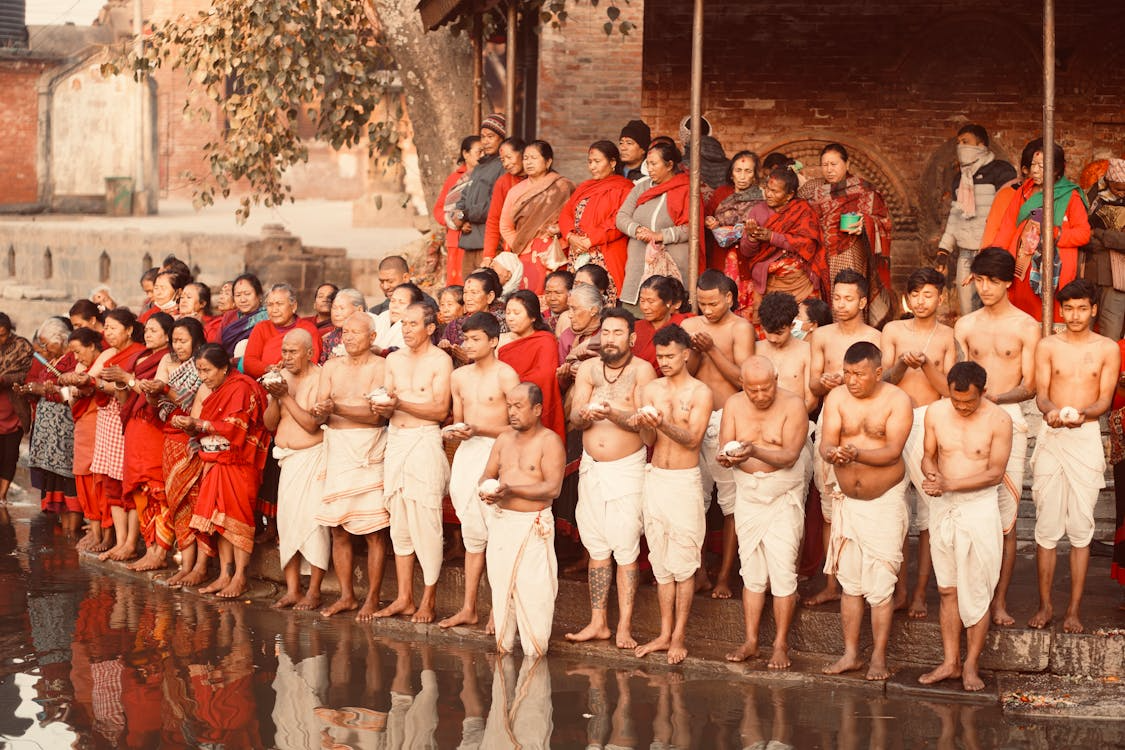
From my professional experience, Nepal is exceptionally well-positioned for meaningful tourism, yet it has not fully capitalized on this strength. Globally, many travelers are moving away from fast-paced itineraries and mass tourism. Instead, they are seeking safety, peace, cultural depth, wellness, and genuine human connection. Nepal naturally offers these qualities through its spiritual heritage, village life, diverse cultures, and strong sense of hospitality.
The challenge lies in promotion, professionalism, and policy alignment. Tourism marketing in Nepal still focuses heavily on iconic landscapes rather than on experience quality, community engagement, and long-term value. At the same time, gaps in professional training, service consistency, and storytelling limit Nepal's ability to present itself clearly to conscious international travelers. Policy-related issues—such as visa limitations, unclear frameworks for long-stay, wellness, or retreat-based tourism, and regulatory inconsistencies—also discourage deeper engagement.
Meaningful tourism provides a practical path forward. By prioritizing quality over quantity, supporting community-based initiatives, strengthening professional standards, and improving policy support for longer and purpose-driven stays, Nepal can move toward a more resilient and ethical tourism model. Such an approach would not only distribute benefits more evenly but also align Nepal's tourism identity with what global travelers increasingly value: authenticity, responsibility, and meaningful experience.
MTC Certified Trainers
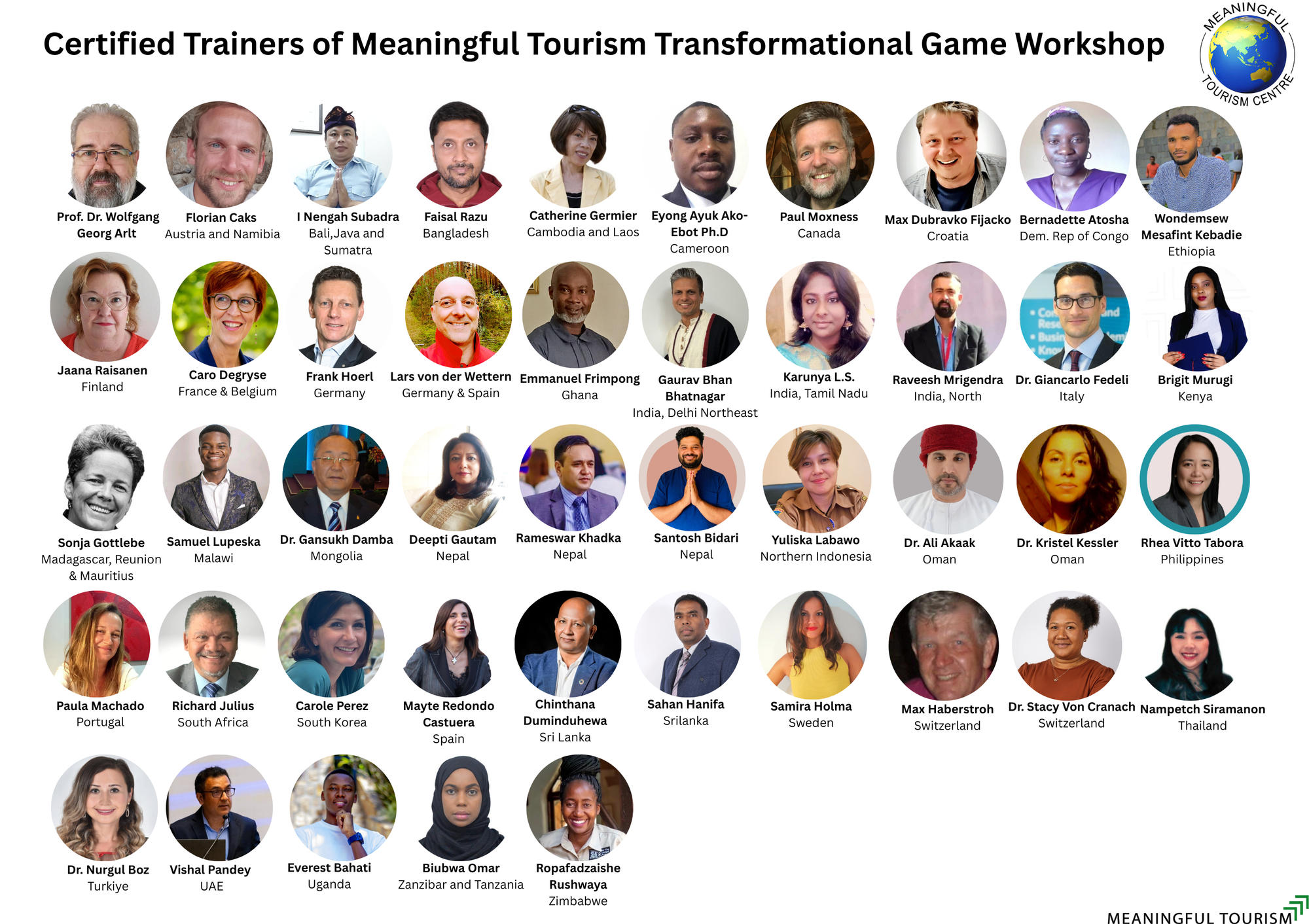
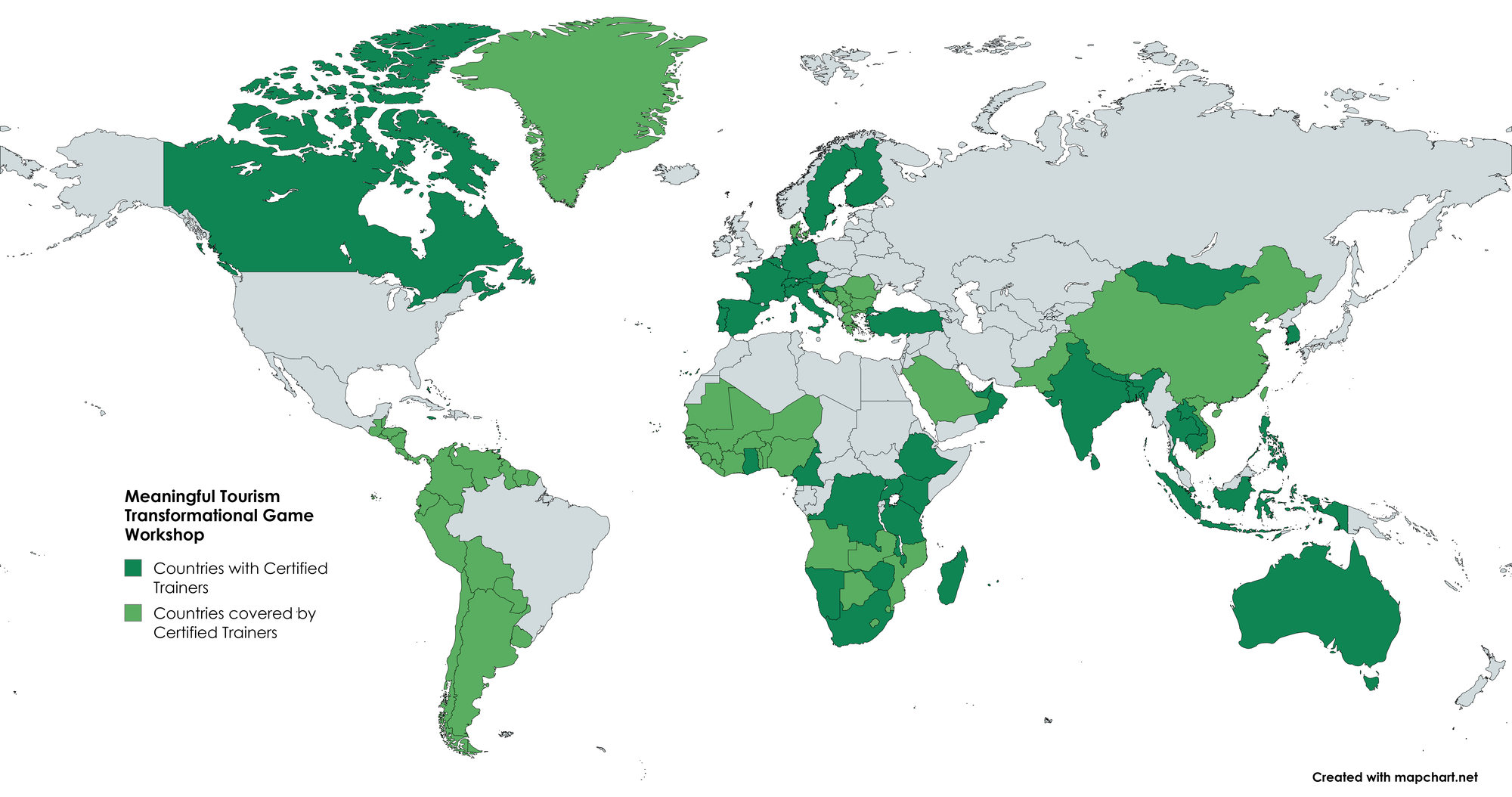
Please find below the overview of all our Certified Trainers for the Meaningful Tourism Transformational Game Workshop, along with the World Map showing the countries directly and indirectly covered at present.
About Meaningful Tourism Weekly
Meaningful Tourism Weekly is published every Thursday by Meaningful Tourism Centre (MTC) - London and Kathmandu in collaboration with Travel Asia Now, led by Rhea Vitto Tabora.
Each issue features an Editorial, updates on MTC activities, a Best Practice Example, a profile of an MTC-certified trainer, news about upcoming events, and, occasionally, additional op-ed pieces from guest authors. Carefully selected news items, including videos and podcasts, are also included, with links to their original sources in the Meaningful Tourism News section.
Subscription to Meaningful Tourism Weekly is free, with the addition of a paid content section that includes a library of surveys, exclusive articles, conference presentations, and statistical data, offering subscribers invaluable resources.
Sponsorship opportunities are available for those interested in supporting this initiative.
For more information about MTC's training programs, market research, product adaptation, consulting services, conferences, strategy development, and marketing, visit our website or email us at info@meaningfultourismcentre.org.