Meaningful Tourism on the move - Ger & Nature in Mongolia

Dear reader,
last week, the book chapter about Meaningful Tourism, transformative tourism and the role of AI, which we have been finishing during the last days, to be published in the first half of 2026, was discussed here. However, as mentioned, three articles on Meaningful Tourism in Africa and Asia are already available in the latest edition of the Bali Journal of Hospitality, Tourism and Culture Research.
 I Nengah Subadra, Made Sudiarta, Ida Bagus Nyoman Krisna Prawira Yuda, I Wayan Bratayasa (Author)
One article is in one part, concentrating on Meaningful Nomadic Tourism in Mongolia, written by Dr. Gansukh Damba. Your humble editor is still fondly remembering his own experience of moving around as organizer of a trip to the western part of Mongolia with herders, travelling on horseback and living in Gers or yurts, as they are often called.
As there is not much information available about tourism in Mongolia, and this is a very special concept, let us look at this approach as an example of the practical application of the Meaningful Tourism paradigm.
Tourism in Mongolia continues to be a significant contributor to the national GDP, reaching around 2% of GDP and employing 83,000 people, with tour operators (27%) and hotels (22%) as the largest employers. Other key segments include restaurants and cafes (21%), tourist camps (13%), and additional tourism-related services (17%). Mongolia offers a unique value proposition with its diverse natural beauty, breathtaking landscapes, authentic nomadic way of life, rich Mongolian culture and festivals, historical heritage associated with Genghis Khan, and thriving sports and adventure tourism activities.
Mongolia has an ambitious vision to increase the number of visitors to 2 million by 2030. To achieve this goal, proper tours and itineraries involving nomadic herders, along with relevant infrastructure and transportation, must be developed. UNDP/PAGE recently developed and proposed a suitable concept for the “Ger and Nature” scheme for nomadic tourism. What is needed are improvements in the offerings, organization, sustainability, business volume, and profit of nomadic tourism activities in Mongolia.
To achieve this goal, the Meaningful Tourism approach should be used to develop nomadic tourism in Mongolia. The first step is a planned study which specifically aims to evaluate the stakeholders involved in nomadic tourism, their respective roles, and to identify the challenges that the Meaningful Tourism approach may encounter.
While Mongolia's tourism sector has significant untapped potential, adjustments are necessary to fully capitalize on this opportunity, particularly in improving the quality and diversifying the offerings.
Mongolia's major potential for successful international tourism development lies not only in its unspoiled landscape but also in its rich cultural heritage, particularly its existing pastoral nomadic tradition. The nomadic lifestyle is a unique experience and one of Mongolia's key unique selling propositions. It is one of the main reasons travellers are drawn to the countryside.
The majority of international tourists who visit Mongolia are not only seeking the beauty of the landscape, but also authentic and genuine cultural experiences with rural herders, who change their location in response to seasonal movement between rangelands.

This type of tourism offers authentic experiences of traditional nomadic lifestyles: yurt lodging, traditional cuisine, and horse and camel riding. Most tourism offers include nature experiences, visits to cultural heritage sites, and participation in traditional arts and crafts-making, while others also propose falconry and shamanic healing.
As one of the first countries to adopt the Sustainable Development Goals (SDGs), Mongolia has developed a Long-Term Development Policy Vision 2050, which was approved in 2020 for implementation. It recognizes tourism as a priority sector of Mongolia's economy. One of the main objectives of the Vision for Mongolia is “to become a leading country with preserved nomadic civilization, based on the national mentality, heritage, culture, and mindset and centred around the creativity of Mongolian citizens”.
By understanding the interests and needs of all stakeholders involved in the Ger & Nature scheme and nomadic tourism through the Meaningful tourism approach, we can establish the ideal conditions for its implementation.
As always, all best wishes from the Meaningful Tourism Weekly team in Kathmandu and Manila and from the whole Meaningful Tourism community to all our readers!


Meaningful Tourism in three fairs in Asia – Weekly update
MTC, including its section COTRI, is supporting three major tourism fairs and conferences taking place in April, May, and June 2026 in Pakistan and China. For all three fairs, special MTC RECOMMENDED EXHIBITOR and COTRI RECOMMENDED EXHIBITOR packages are available for exhibitors using MTC and COTRI to book their booth at no additional cost.
This week, we are pleased to introduce three short videos produced by the MTC HQ expert on videos and AI applications. It is still fascinating to see how, with AI-powered software, it is now relatively easy and cost-effective to produce such videos.
They can all be found on the MTC YouTube channel,

on Instagram, and as posts on LinkedIn. On LinkedIn, you will also find weekly updates in the form of short videos during the coming months.
More detailed information is available from our MTC website or in last week's edition of Meaningful Tourism Weekly.
 Prof. Dr. Wolfgang Georg Arlt

Meet the Trainer for the Meaningful Tourism Transformative Game Workshop
Rhea Vitto Tabora, Certified Trainer for the Philippines

Rhea Vitto Tabora is the Founding Editor-in-Chief of Travel Asia Now, a digital publication that encourages and inspires meaningful and mindful travel across Asia. She is also the Co-Founder of Asia Sustainable Travel, a media and intelligence company providing sustainability content and Asia-focused marketing solutions for hospitality and travel brands.
With over 20 years of leadership in hospitality sales, marketing, and PR in Vietnam, Indonesia, and the Philippines, Rhea helps hotels achieve responsible growth. She advises them on content and storytelling to increase direct bookings and strengthen brand preference by aligning sustainability goals with business objectives. She is also a travel journalist and a speaker and moderator at industry events across Southeast Asia, advocating for tourism that benefits all stakeholders.
Meaningful Tourism Weekly: What is the current situation of tourism in the Philippines, and how can the Meaningful Tourism paradigm help to support its development?
Rhea: The Philippine Department of Tourism is moving forward with projects such as the Tourism Champions Challenge (TCC), which supports resilient local tourism, and the Philippine Experience Program (PEP), which promotes immersive, community-based travel beyond the usual destinations.
This is where the Meaningful Tourism (MT) approach can make a bigger difference. MT helps all tourism stakeholders benefit, including travelers, local communities, employees, service providers, the government, and the environment—by driving equitable value and building stronger connections. Here’s how it can help:
- Measuring what matters: MT introduces clear, stakeholder-specific KPIs to evaluate projects like the TCC. This approach ensures equitable benefit sharing and delivers tangible value.
- Deepening connections: For programs like the PEP, MT offers tools to create immersive travel experiences that protect cultural heritage and help prevent overtourism.
- Bridging gaps: MT’s structured approach aligns stakeholders, addresses conflicts of interest, and supports cohesive, balanced development plans.
By adopting Meaningful Tourism principles, the Philippines can turn tourism growth into greater social and environmental value. The goal is not just to attract visitors but also to build a model that supports communities, protects resources, and offers lasting experiences.
The future of Philippine tourism will be defined by its impact. With Meaningful Tourism as a guide, this impact can be positive, lasting, and inclusive.
MTC Certified Trainers
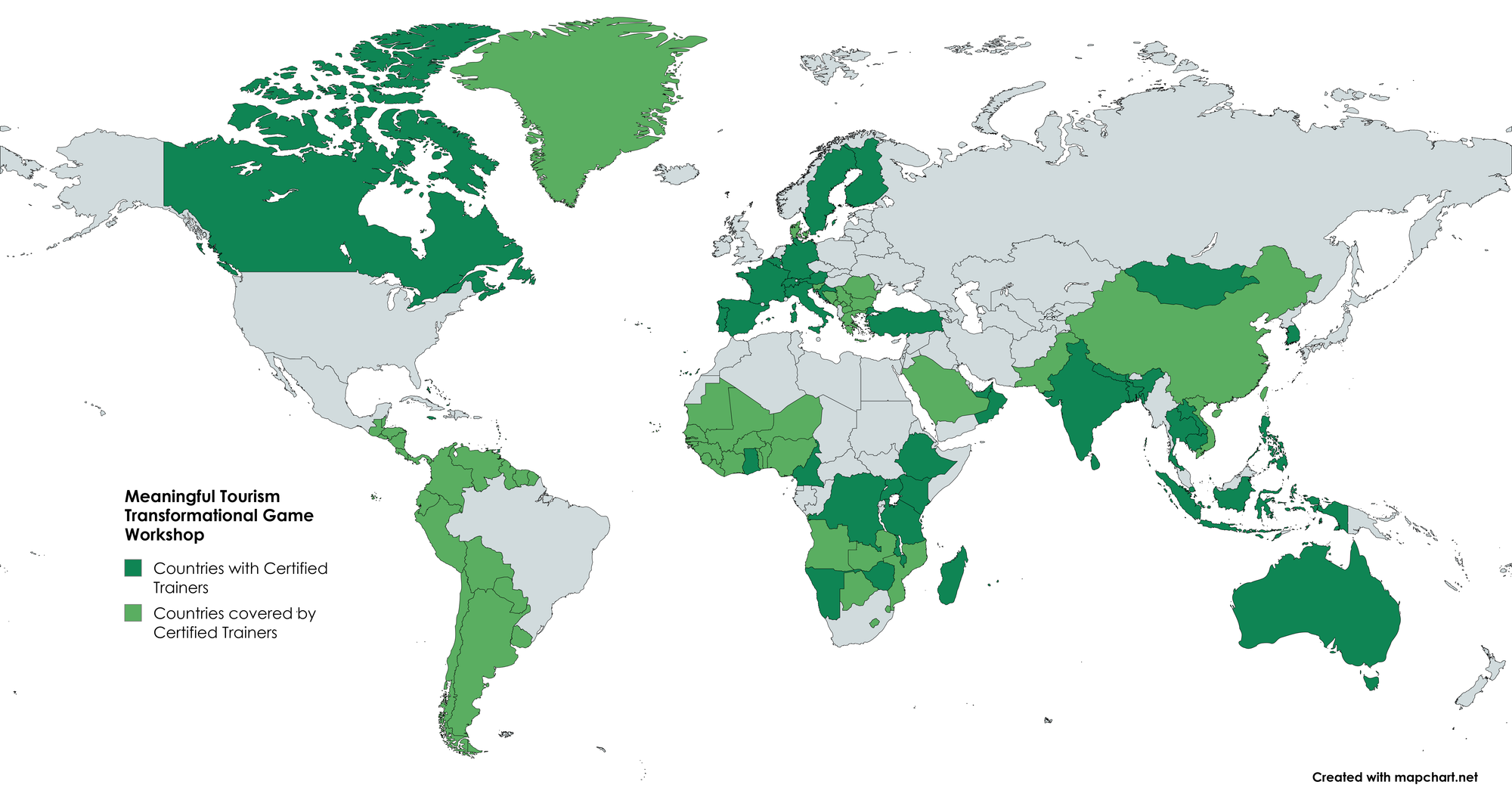
Please find below an overview of all our Certified Trainers for the Meaningful Tourism Transformational Game Workshop, along with the World Map showing the countries currently covered directly or indirectly.
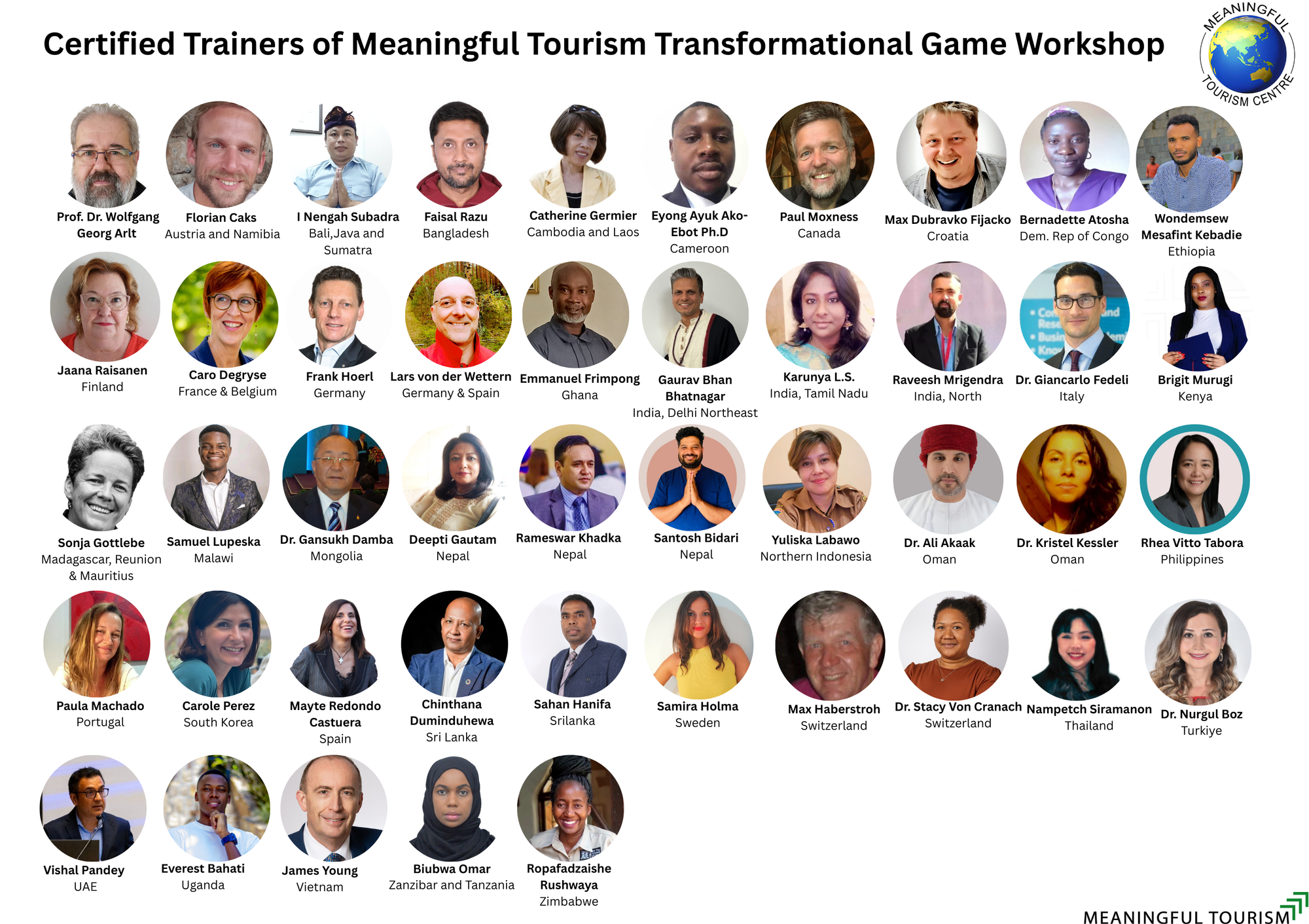
The network of MTC Certified Trainers is constantly growing. As shown on the map, many countries and regions around the world are already served by dedicated experts. However, MTC is continuously looking for professionals with experience in training or lecturing and a passion for sustainable tourism to join the network and fill the blanks on the map.
The next Train-the-Trainer workshop will take place on February 2, 2026. If you are interested in becoming a Certified Trainer for the Meaningful Tourism Transformational Game Workshop, providing different kinds of Implementation Support, or helping with establishing a Carbon Credit trading initiative, please contact us at office@meaningfultourismcentre.org.

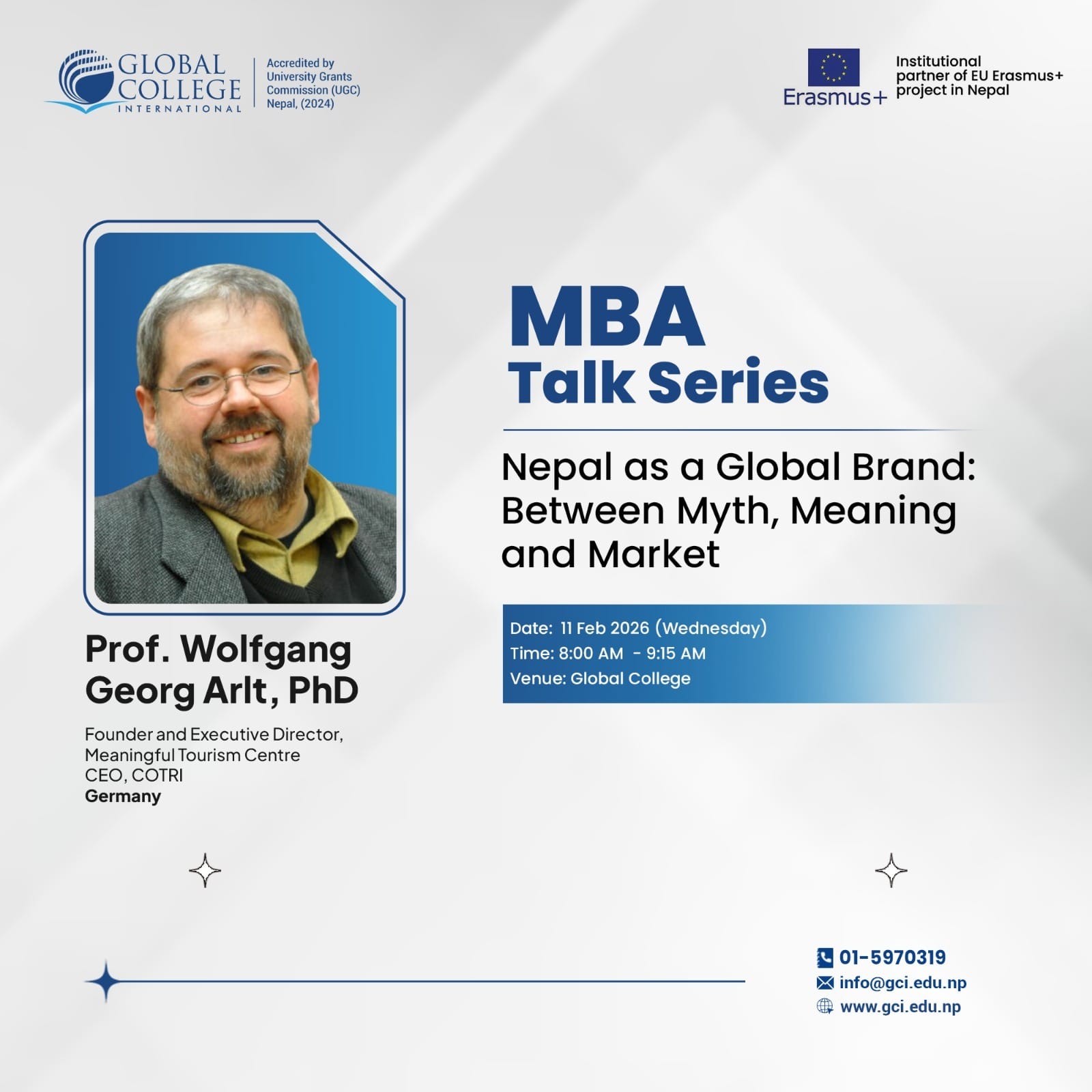
Global College International's MBA Talk Series on February 11, 2026
Prof. Dr. Wolfgang Georg Arlt, Founder and Executive Director of the Meaningful Tourism Centre and CEO of COTRI, will deliver a keynote lecture at Global College International's MBA Talk Series on February 11, 2026, titled "Nepal as a Global Brand: Between Myth, Meaning and Market."
The event will be livestreamed and recorded. We will share the Zoom link in the next issue of MT Weekly.

Pakistan Travel Mart (PTM) 2026
April 3–5, 2026: Karachi
April 7–8, 2026: Lahore
Guangzhou International Travel Fair (GITF) 2026
May 21–23, 2026

Beijing International Travel & Lifestyle Fair (BITLF)
June 12–14, 2026
About Meaningful Tourism Weekly
Meaningful Tourism Weekly is published every Thursday by Meaningful Tourism Centre (MTC) - London and Kathmandu in collaboration with Travel Asia Now, led by Rhea Vitto Tabora.
Each issue features an Editorial, updates on MTC activities, a Best Practice Example, a profile of an MTC-certified trainer, news about upcoming events, and, occasionally, additional op-ed pieces from guest authors. Carefully selected news items, including videos and podcasts, are also included, with links to their original sources in the Meaningful Tourism News section.
Subscription to Meaningful Tourism Weekly is free, with the addition of a paid content section that includes a library of surveys, exclusive articles, conference presentations, and statistical data, offering subscribers invaluable resources.
Sponsorship opportunities are available for those interested in supporting this initiative.
For more information about MTC's training programs, market research, product adaptation, consulting services, conferences, strategy development, and marketing, visit our website or email us at info@meaningfultourismcentre.org.