New Year Resolution 2026: Joining the Meaningful Tourism Movement to survive in difficult times
Dear reader,
the second quarter of the 21st century is unfortunately even worse than the first one ended. The agreement that borders of sovereign states have to be respected was established in 1648 with the Westphalian Peace agreement at the end of the 30 Years War in Europe. Violations of this principle, from Hitler to Putin, have been condemned and counteracted upon by the rest of the world and by anti-colonial fighters from Simón Bolivar and Samori Ture to Abdelkrim El Khattabi and José Rizal. Violators would at least find some excuses for their actions by citing lofty goals or by simply denying the existence of local power structures. After almost 400 years, it seems that this basic agreement has been destroyed by somebody whose ancestral home, Kallstadt, is only a few hours away from Osnabrück and Münster, the cities where the Westphalian Peace Treaty was signed.
This development is harmful to humanity; it is certainly bad for global tourism. Tourism needs peace and international cooperation. Marco Polo could not have travelled all the way from Venice to China without the security provided by the rulers of the Mongolian Empire; modern mass-tourism could not have developed without globalisation and progressively open borders.
Xi Jinping said at the end of his New Year speech for the year 2026: “The dream lofty, the journey long — bold strides will get us there. Let us charge ahead like horses with courage, vitality, and energy, fight for our dreams and our happiness, and turn our great vision into beautiful realities.” He referred mostly to China, of course. However, he also admitted the challenges of uncertainties in the external environment and the pressure of transformation.
The 14th Dalai Lama, in his New Year greetings, even mentioned meaningfulness, asking everyone to start the new year by living their lives “in a more compassionate, a more meaningful way”.
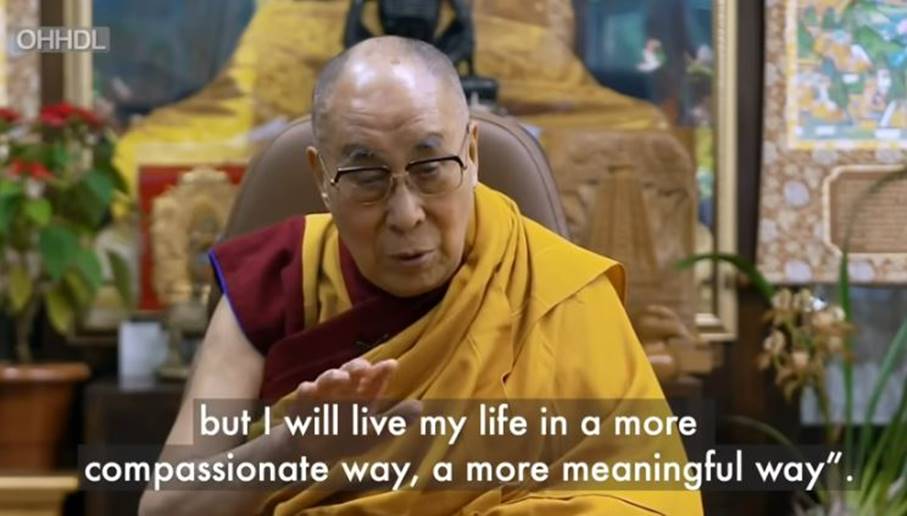
The word “meaningful” has become much more widely used in recent years, especially since the pandemic, reflecting the decrease in optimism for global development and an increase in the concentration on personal life and happiness.
However, as mentioned here before, the Meaningful Tourism paradigm comes with a capital “M”, it is based on a sound scientific background and an established tool set, services and network.
For many destinations and companies, it will be a matter of survival to adapt to the deteriorating circumstances, with the new geopolitical dangers adding to the challenges of AI, climate change, and changing demands and demographics of the travellers.
This is not the question of travellers behaving a bit more meaningfully or more meaningful itineraries offered by tour operators. These aspects are all certainly moving in the right direction; they will, however, not be enough to replace a holistic approach covering measurable benefits and satisfaction of all stakeholders.
The easiest way to join the Meaningful Tourism Movement is to become a member through a simple self-assessment at a cost of less than 100 USD for companies and organisations with less than ten employees, and less than 200 USD for SMEs with more than ten employees.
Fulfill your New Year resolution and start your journey with this easy first step by contacting your local MTC Certified Trainer or by contacting your humble editor, PROF M, and the team at the MTC headquarter in Kathmandu at info@meaningfultourismcentre.org.
In the 1980s, the song by Timbuk 3 “The Future's So Bright, I Gotta Wear Shades” used to be a stable on MTV. For the future starting from tomorrow, unfortunately, more tools seem to be needed than just a pair of sunglasses.
As always, all best wishes from the Meaningful Tourism Weekly team in Kathmandu and Manila and from the whole Meaningful Tourism community to all our readers!


Meaningful Tourism Online Lectures December 2025 download
All videos of the Online Lectures series on the importance and application of Meaningful Tourism in Africa and Asia, delivered in December 2025, are now available in a neat, well-organised online format, thanks to our partner, the Institute of Tourism.
 r
r
The Online Lectures are sorted with the recent ones on top, so if you want to look at them in sequence, start with the ones at the bottom of the page.

Meaningful Tourism Community: The Meaningful Tourism Transformational Game Workshop Trainer
Emmanuel Frimpong, Certified Trainer for Ghana, Africa
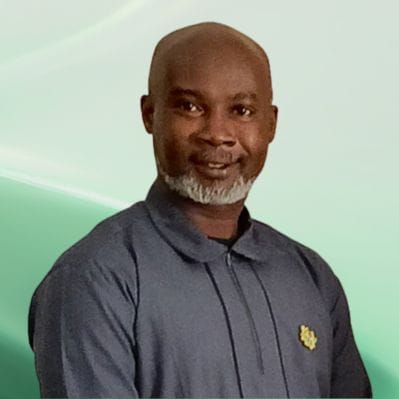
Emmanuel Frimpong is a Tourism and Hospitality Consultant, Analyst, and Lecturer at HOTCATT under the Ministry of Tourism, Arts, and Culture. He is the Founding President of Africa Tourism Research Network (ATRN) and Co-Founder/Vice President of the Africa Medical Tourism Council (AMTC). He serves as CEO of Pishon Consult Ltd, President of People of Purpose (a youth-focused NGO), and holds key roles in various global tourism and ecotourism organizations, including GAEST, WATO, WAEN, and IH. He is also the Country Head for the Pan African Heritage Museum (PAHM) and sits on its International Board.
Emmanuel is a CBT Curriculum Development Expert, a Global Ambassador for Tourism Education, and a Patron of GATHS. He was also recognized as the Most Influential Tourism Development Expert of 2023 by the Humanities Chamber of Commerce. He holds an MBA from the University of Leicester, a BA from KNUST, and other qualifications in hospitality and tourism management.
Meaningful Tourism Weekly: What is the current situation of tourism in Ghana and how can the Meaningful Tourism Paradigm help to support its development?
Emmanuel:
The Potential Impact of Overtourism in Europe on Africa
Overtourism has become a pressing challenge for many European destinations such as Barcelona, Venice, and Amsterdam. These cities face overcrowding, environmental degradation, rising costs of living, and strained infrastructure due to the influx of millions of visitors annually. While overtourism is viewed negatively in Europe, it presents both opportunities and challenges for Africa’s tourism sector.
One significant impact is the shift in tourist flows. As European destinations struggle to balance visitor numbers, travelers are increasingly seeking alternative, less-crowded regions. Africa, with its vast landscapes, cultural diversity and emerging destinations, stands to benefit from this redirection. Countries like Kenya, Ghana, South Africa, and Tanzania can attract tourists who desire authentic, less commercialized experiences.
Secondly, overtourism in Europe has influenced policy and awareness in Africa. European debates on sustainability, responsible tourism, and carrying capacity have heightened global awareness. African tourism stakeholders are learning from Europe’s challenges to adopt proactive strategies such as eco-tourism, community-based tourism, and heritage conservation to avoid similar pitfalls.
However, there are also risks. The potential influx of tourists fleeing overcrowded European destinations may put pressure on Africa’s still-developing infrastructure. Without careful planning, Africa could replicate Europe’s mistakes, facing environmental strain, cultural dilution, and uneven benefits for local communities.
In addition, overtourism in Europe shapes global tourism narratives and funding priorities. International organisations are channeling resources into sustainable tourism initiatives, many of which Africa can leverage. This creates an opportunity for the continent to position itself as a responsible and attractive destination.
In conclusion, while overtourism has strained Europe’s tourism industry, it provides Africa with lessons and opportunities. By embracing the concept of Meaningful Tourism practices, Africa can benefit from shifting tourist flows while safeguarding its natural and cultural assets.
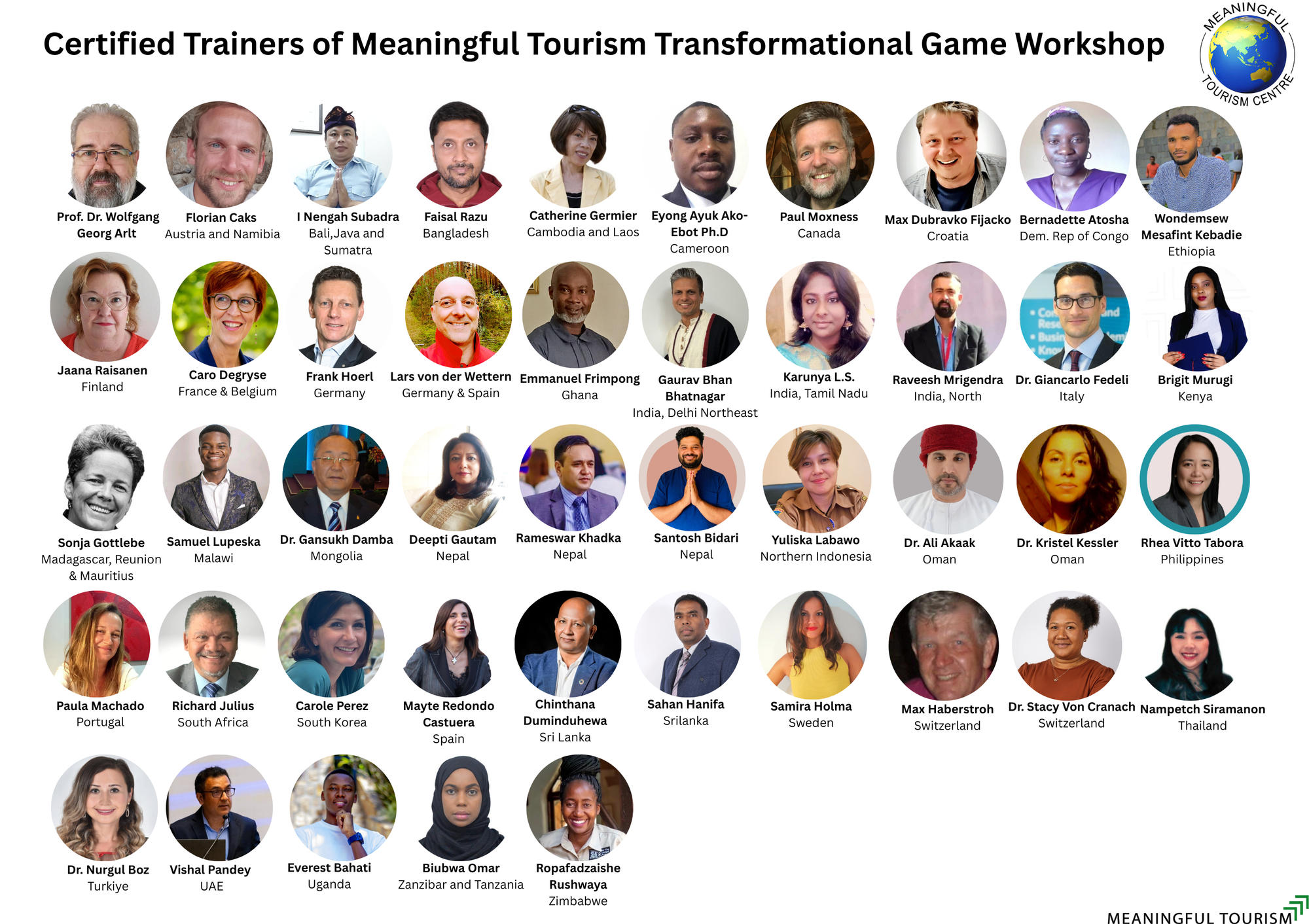
MTC Certified Trainers
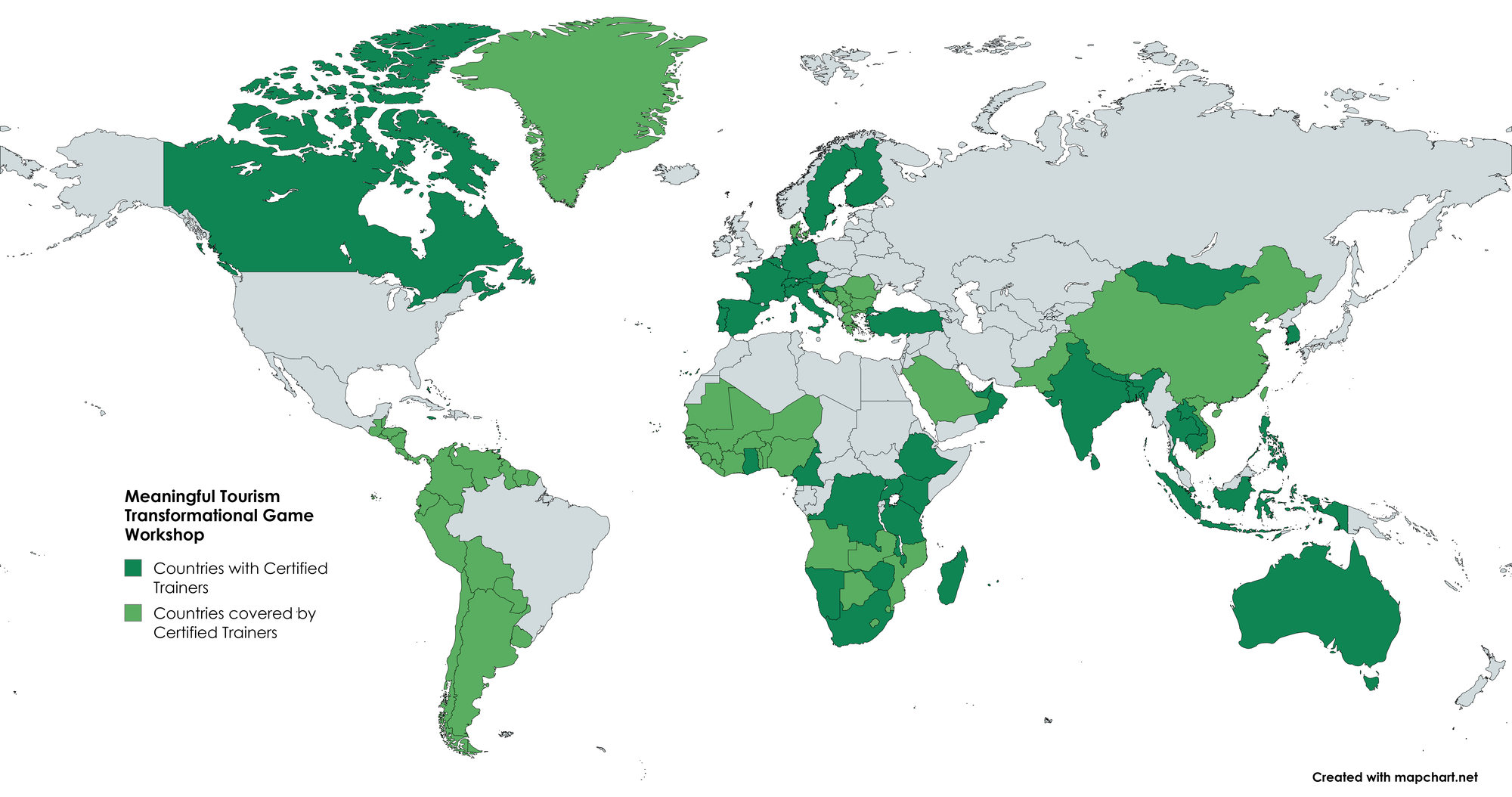
Please find below the overview of all our Certified Trainers for the Meaningful Tourism Transformational Game Workshop, along with the World Map showing the countries directly and indirectly covered at present.

European Tourism Association (ETOA) webinar
January 13, 2026
09:00am GMT / 10:00am CET
Prof. Dr. Wolfgang Georg Arlt is among the panellists.
The webinar, chaired by Tom Jenkins, CEO of ETOA, is free to attend. Register here.

Pakistan Travel Mart (PTM) 2026
April 3–5, 2026: Karachi
April 7–8, 2026: Lahore
Guangzhou International Travel Fair (GITF) 2026
May 21–23, 2026

Beijing International Travel & Lifestyle Fair (BITLF)
June 12–14, 2026
About Meaningful Tourism Weekly
Meaningful Tourism Weekly is published every Thursday by Meaningful Tourism Centre (MTC) - London and Kathmandu in collaboration with Travel Asia Now, led by Rhea Vitto Tabora.
Each issue features an Editorial, updates on MTC activities, a Best Practice Example, a profile of an MTC-certified trainer, news about upcoming events, and, occasionally, additional op-ed pieces from guest authors. Carefully selected news items, including videos and podcasts, are also included, with links to their original sources in the Meaningful Tourism News section.
Subscription to Meaningful Tourism Weekly is free, with the addition of a paid content section that includes a library of surveys, exclusive articles, conference presentations, and statistical data, offering subscribers invaluable resources.
Sponsorship opportunities are available for those interested in supporting this initiative.
For more information about MTC's training programs, market research, product adaptation, consulting services, conferences, strategy development, and marketing, visit our website or email us at info@meaningfultourismcentre.org.