Why regenerative tourism is a step in the right direction, but too small a step



Dear reader,
the overwhelming part of responses to the Meaningful Tourism paradigm is positive. MTC is receiving congratulatory messages almost daily from colleagues stating that this approach resonates with what they are thinking and doing in different fields and capacities.
However, some critical voices are asking if this is not just another buzzword which dilutes the attention given to the concept of sustainability. Let your humble editor give a clear answer to that:
While existing frameworks—such as sustainable tourism, regenerative tourism, transformative tourism, and wellbeing tourism—have significantly advanced the discourse, they often remain fragmented in scope or limited in operational integration. The Meaningful Tourism paradigm contributes to this evolving field by offering a system-level, integrative framework that aligns environmental stewardship, stakeholder wellbeing, governance innovation, and technological enablement within a unified model of value creation. In this sense, Meaningful Tourism moves beyond individual dimensions of sustainability or transformation toward a coherent tourism system architecture.
The sustainable tourism discourse, in its different forms, has, for example, in almost all cases left out the fate of the employees working in the industry. It has also concentrated on the operations of hotels, leisure trips and other easily visible parts of the tourism industry. In fact, a lot of decisions regarding the catering to specific demands of guests, the integration of local communities, the working conditions of employees, and the environmental impact of a new hotel are determined by the design and construction of a property long before the first guests arrive.
On a deeper level, the regenerative tourism approach has narrowed the concept of Responsible Tourism even further. Harold Goodwin, the inventor of the Responsible Tourism approach, has to be praised for asking the piercing question of ‘Who is responsible?’, moving away from the foggy concept of “We all should behave in a better way” or even “How can they (the tourists!) not understand that they should behave in a responsible way similar to what we (the travellers) do on our trips.
Responsible Tourism says “we” should leave a place better than we found it. Not wrong, but reducing the action to the visitors, portraying the local as passive receivers and letting governments and corporations get away with their unsustainable policies and activities. A “regenerative” tourist, flying from Europe to Costa Rica, a trip not possible without using a fossil-fuel burning aircraft, might believe that eating in a local restaurant and using public buses can offset or even repair the damage which results from his or her trip. Accordingly, the pressure on airlines and the government to push for the introduction of SAF will not increase from this traveller.
The Dutch tourism expert Shirley Nieuwland recently raised a similar question in a communication on LinkedIn: “Regenerative tourism is all about the local. Making a positive local impact, connecting to place and people, contributing to it, making it better, restoring nature. Which I think is wonderful and necessary. BUT, we need to consider the other side of the coin. We need to consider the global impact of locally organised regenerative tourism. Can we talk about regenerative tourism and net-positive impact if, for example, on a global scale, we are increasing carbon emissions by travelling to those places? Do these two factors outweigh each other? Is one more important than the other? How can we better align local contributions and global impact in tourism?”
Consequently, the establishment of a Meaningful Tourism Economy emerges not as a normative aspiration, but as a strategic necessity. It reframes success from volume-based growth toward multi-stakeholder value creation, emphasizing experiential depth, community benefit, ecological regeneration, and long-term resilience. Artificial intelligence, when aligned with this paradigm, can serve as a strategic enabler—supporting transparency, adaptive governance, real-time monitoring, and personalized yet responsible experience design.
For the establishment of a Meaningful Tourism Economy, many different skills and experiences are needed. It is therefore a pleasure to introduce the updated version of the MTC Skill Matrix, which added the sets of skills and experiences of our newly certified trainers to the existing impressive matrix of skills, including language skills available within the network. For details, see the MTC News below.
As always, all best wishes from the Meaningful Tourism Weekly team in Kathmandu and Manila, and from the whole Meaningful Tourism community to all our readers!


Meaningful Tourism in China – Weekly update
The conflict in the Middle East and disruptions to international air routes have added even more importance to the No. 1 global tourism source market: China.
The Arabian Travel Mart has been rescheduled from May to August 2026, offering a good opportunity for a flexible reaction by joining two major travel fairs in South and North China: GITF (Guangzhou, May 21-23) and BITLF (Beijing, June 5-7) instead. As a COTRI Recommended Exhibitor, you get all the support needed to turn a last-minute decision into a long-lasting success.
MTC, including its COTRI section, is supporting the two major tourism fairs and conferences taking place in China in May and June 2026. For both fairs, special COTRI RECOMMENDED EXHIBITOR packages are available for exhibitors using MTC and COTRI to book their booth at no additional cost.
Videos providing additional information about the advantages of participating in one or more fairs are available on the MTC YouTube channel and Instagram.

Additional information was provided during the COTRI & Ecotourism Kenya webinar on March 26th. If you missed it, you can watch the video recording, which will be published in a few days. You will find the link in Meaningful Tourism Weekly in the coming week.
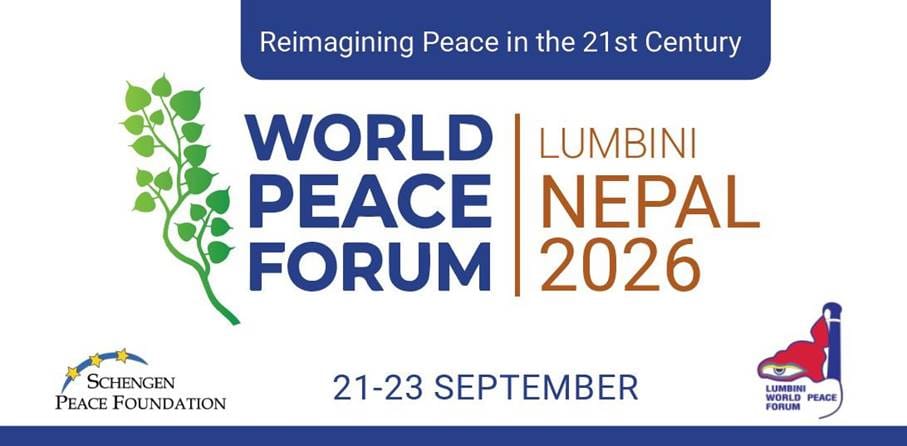
World Peace Forum 2026 in Lumbini/Nepal as part of an 85 million USD World Bank program
As we all witness today, tourism cannot exist without peace.
What place can be more appropriate for a World Peace Forum? Lumbini is the birthplace of Buddha, and is located in Nepal, one of the last members left in the group of nonaligned countries.
We included last week the information about the 17th World Peace Forum, which will be hosted by Lumbini World Peace Forum, Nepal and the Schengen Peace Foundation, Luxembourg, with the support of MTC, providing the opportunity to start an annual “Peace Davos” conference in Lumbini.
The timing seems perfect, as the World Bank just announced that USD 85 million is available for a major program to improve tourism in Lumbini. On March 27, 2026, the new government in Nepal is supposed to start its work. To organise the structure for this program will be among the first jobs for the new Minister of Tourism.
Our readers will find more information in the Meaningful Tourism Weekly as it becomes available.
New Meaningful Tourism Experts Skill and Experiences Matrix
The Meaningful Tourism Centre is proud to have a community of more than 40 Certified Trainers for the Meaningful Tourism Transformational Game Workshop worldwide.
For the Implementation Support of developing and implementing a Meaningful Tourism strategy, including developing and using SMART KPIs, for using such strategies to apply for different certifications or awards, etc., they can offer a wide range of skills and experiences in more than 20 different languages.
As we recently welcomed a group of new MTC Certified Trainers, we are providing an updated version of our Skills Matrix, which provides information about available knowledge and language skills offered by MTC.
Please download the March 2026 edition here.
AI and Meaningful Tourism – Book chapter jumps over the last hurdle
Last week, you could read here about the group of Certified MTC trainers who pooled their research results and practical experiences to create a chapter in a book about tourism and transformation, which will be published by the editors Berta Costa and Susana Rodrigues in the SPRINGER publishing house, one of the most important and respected science publishers.
The chapter in the Handbook of Tourism Transformation: Multidisciplinary Approaches to Integrate Technology and Sustainability describes how AI can be a useful tool for a sustainable future of tourism if used within a framework of Meaningful Tourism Economy, or can further accelerate the speed of self-destruction of the tourism industry.
The last hurdle for the publication has now been cleared, with some final editing as recommended by two external examiners, who, fortunately, had a lot of praise for the chapter. The book is due to become available in June 2026.
MTC Online certification course agrees on cooperation with Tourism Institute and AIROI
Last week, you could also read about the online certificate training course, talking also about AI and Meaningful Tourism, which is in the making. Good news here also: Our friends and partners at the Tourism Institute and AIROI have agreed to become partners in this project. Tourism Institute will support the LMS (Learning Management Software) provided as well as the marketing, AIROI will provide information about Carbon Credit Trading as a way to earn additional money from sustainable behaviour within a Meaningful Tourism Economy.
MTC is working on the 30 lectures, which will be provided by MTC Certified trainers as well as external experts and some VIP speakers.
Registration will start soon. Meaningful Tourism Weekly readers will enjoy a special discounted participation fee. MTC will also sponsor one free participation per month to a participant from one of the Least Developed countries.

Meaningful Tourism Community: The Meaningful Tourism Transformational Game Workshop Trainer
Paul Moxness - Certified Trainer for Canada

Paul Moxness is a globally recognized expert in hospitality security, with over three decades of international experience. He currently serves as Senior Director at Risk Resiliency, leading hospitality risk and safety programs. Paul is also a lead writer for Keep Travel Safe, a Substack publication on hospitality and travel risk. He teaches tourism and hospitality courses remotely as a Programme Coordinator at Excel Career College.
Previously, he worked as a College Professor at Okanagan College, earning top student evaluations. From 2019 to 2024, he was Managing Partner at NorthPoint International, supporting Hyatt Hotels’ post-pandemic safety efforts. Paul co-founded The Always Care Consulting Company, where he authored the book Spin the Bottle Service – Hospitality in the Age of AI.
His longest tenure was with Radisson Hotel Group as Vice President of Corporate Safety and Security, where he contributed to its 9-year streak on Ethisphere’s Most Ethical Companies list. Paul holds a Bachelor of Social Science in Psychology from the Norwegian University of Science and Technology.
He is multilingual, a UN Global Expert, and an active member of several international security organizations.
Situation of tourism in Canada and the role the Meaningful Tourism paradigm can play to support the development in the country
Recently, at the British Columbia Hotel Association’s annual summit, Greg Klassen, Senior Director at Skift Advisory, delivered a compelling presentation on the urgent need to prioritize tourism investment in Canada. His message was clear: while Canada may have underinvested in tourism compared to other global destinations, this lag presents a rare opportunity to chart a new and better course.
I believe Meaningful Tourism can play a foundational role as Canada moves to fill the tourism investment gap.

The Opportunity in Underinvestment
For years, Canada’s tourism sector has lacked the same level of investment seen in other markets. With growing numbers of international travellers reconsidering the United States as a destination, Canada stands poised to welcome more visitors. As destinations are developed to meet this potential, Meaningful Tourism offers a framework that ensures those developments are not just visitor-centric but holistically focused on all stakeholders in ways that benefit communities, ecosystems, employees, and travellers alike.
A Strong Foundation in Indigenous Tourism
Canada is already a global leader in Indigenous Tourism, and this sector offers valuable lessons in how to apply Meaningful Tourism in practice. The stewardship of land and life embedded in Indigenous values aligns naturally with this paradigm. What began as efforts to preserve and share cultural history has evolved into vibrant, contemporary experiences rooted in traditions of sustainability and care.
For example, the Thompson Okanagan Tourism Association’s Seven Affirmations for Seven Generations is grounded in the Indigenous Seven Generations Principle. This long-view understanding that today’s decisions ripple across future generations is the foundation for truly sustainable tourism.
Redefining What Tourism Success Looks Like
A recent article I shared on LinkedIn from Travel Weekly was titled, “Hawaii Travel Executive: Tourism as We Know It Is Over.” The message resonated. The volume-based, extractive model of tourism is failing, not only for communities and ecosystems but increasingly for the travellers themselves.
Instead of maximizing numbers, tourism must prioritize place, people, and purpose. That’s where the Meaningful Tourism paradigm shines. In practical terms, this shift includes:
- Authentic cultural experiences that aren’t staged but shared with integrity.
- Local communities that actively shape tourism to the benefit of visitors and residents alike.
- Climate adaptation and resilience that is designed into tourism infrastructure, policies, and storytelling.
- Businesses that recognize employee well-being and guest satisfaction are two sides of the same coin.
When I shared these ideas on LinkedIn, the post received over 23,000 views and sparked hundreds of reactions and dozens of conversations, many from professionals across nearly every province in Canada. People are ready for a new model, and they want to contribute to forging the path forward.
A Blank Canvas Worth Painting
Canada’s lag in tourism development may be a blessing in disguise. Rather than replicating models used elsewhere, we have the chance to design something better. We have the chance to develop tourism that is truly resilient, equitable, and sustainable.
Meaningful Tourism is not just a theory. It’s a framework that helps us build tourism experiences that matter to travellers, to locals, and to the planet. It’s time to invest, and Canada is primed to invest in a meaningful way.
MTC Certified Trainers
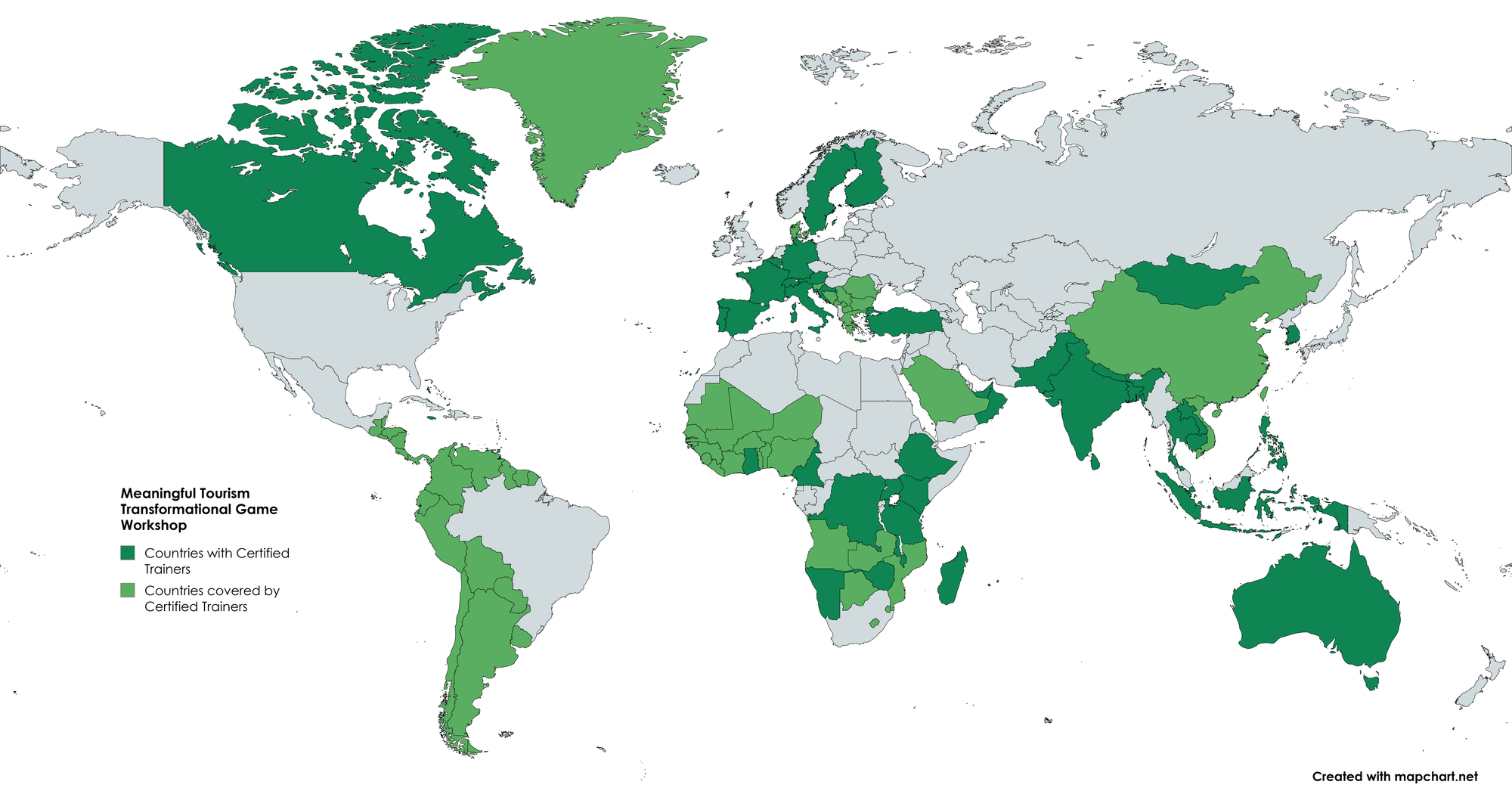
Please find below an overview of all our Certified Trainers for the Meaningful Tourism Transformational Game Workshop, along with the World Map showing the countries currently covered directly or indirectly.
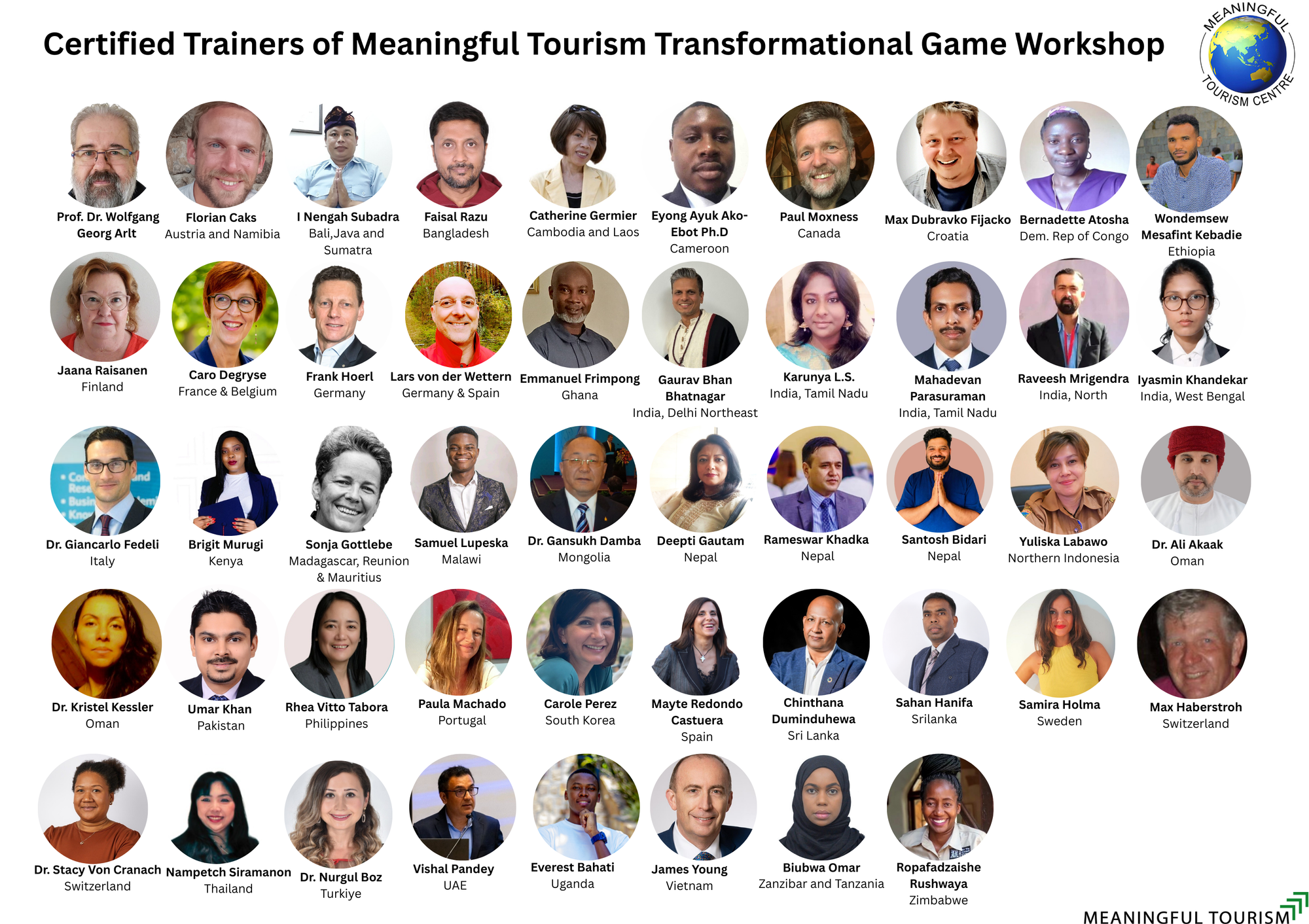
The network of MTC Certified Trainers is constantly growing. As shown on the map, many countries and regions worldwide are already served by dedicated experts. However, MTC is continuously looking for professionals with experience in training or lecturing and a passion for sustainable tourism to join the network and fill the blanks on the map.


Pakistan Travel Mart (PTM) 2026
April 3–5, 2026: Karachi
April 7–8, 2026: Lahore
Guangzhou International Travel Fair (GITF) 2026
May 21–23, 2026

Beijing International Travel & Lifestyle Fair (BITLF)
June 5–7, 2026
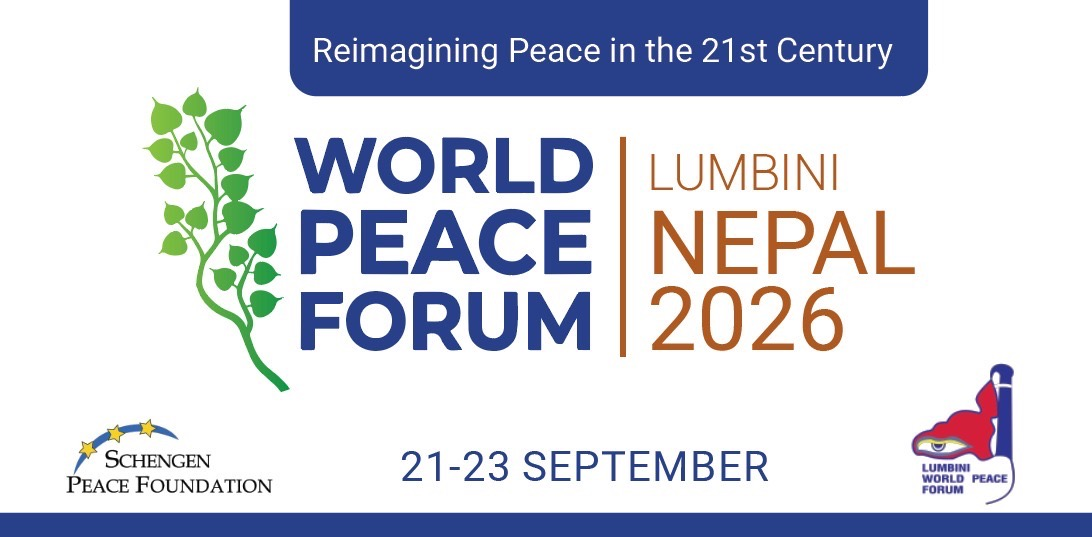
World Peace Forum 2026
September 21-23, 2026
Lumbini, Nepal
About Meaningful Tourism Weekly
Meaningful Tourism Weekly is published every Thursday by Meaningful Tourism Centre (MTC) - London and Kathmandu in collaboration with Travel Asia Now, led by Rhea Vitto Tabora.
Each issue features an Editorial, updates on MTC activities, a Best Practice Example, a profile of an MTC-certified trainer, news about upcoming events, and, occasionally, additional op-ed pieces from guest authors. Carefully selected news items, including videos and podcasts, are also included, with links to their original sources in the Meaningful Tourism News section.
Subscription to Meaningful Tourism Weekly is free, with the addition of a paid content section that includes a library of surveys, exclusive articles, conference presentations, and statistical data, offering subscribers invaluable resources.
Sponsorship opportunities are available for those interested in supporting this initiative.
For more information about MTC's training programs, market research, product adaptation, consulting services, conferences, strategy development, and marketing, visit our website or email us at info@meaningfultourismcentre.org.