Sustainable Tourism Beyond Certification

Dear reader,
during the last decade, when the impact of tourism, especially on the environment and on local communities, became under increasing scrutiny, the field of sustainable tourism certification and accreditation has been perceived by many as a beacon of hope and responsibility. Proper certification was seen as more than just a marketing badge of honour, but instead as a commitment to better business standards and the future of the planet and its inhabitants.
However, certifications are now seen as much more critical in current debates, for example, during the recent tourism conferences in Dubai and London.
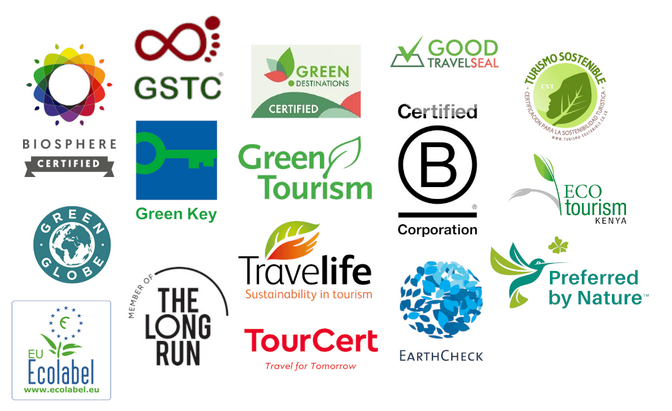
First of all, the multitude of badges, labels, and certificates on regional, national, and global levels and in different parts of the industry makes it almost impossible for travellers to distinguish between badges of convenience issued against commitment not going beyond the infamous “towel back on the rack” and certifications as a result of a thorough process of analysis and commitment.
Secondly, even the more established certifications are criticised for being available for money or to be given to entire regions and hotel groups.
Thirdly, it can be widely observed that many companies or destinations see the certification as the end of a process, not the start, and go happily back to their old practices or at least stop innovating after the press release is issued, which proudly proclaims that “we have joined the ranks of the good ones”.
A more systematic criticism furthermore points out that only big companies and organisations, and only those in rich countries, can afford the time, expertise, and money connected with the acquisition of a widely recognized certification. Smaller units, which may follow sustainable practices since millenniums, appear less sustainable if they cannot document that they stopped using plastic bottles when they never used them in the first place.
The Meaningful Tourism Centre (MTC) has, from the beginning, declared that there will be no Meaningful Tourism certification.
Meaningful Tourism is an ongoing process, involving the engagement of all stakeholders based on clearly defined SMART KPIs, which are transparently developed and reviewed frequently. Companies and organisations will, however, receive acknowledgement for their involvement in the process, from the simple entry-level step of self-assessment and commitment to the full strategy development and implementation over several years.
In the end, the proof is in the pudding: Do certificates actually increase the perception of sustainability by visitors or guests?
With regard to the decision-making process of booking, for instance, a hotel room, certificates are a self-defeating mechanism: The higher the percentage of properties claiming to be eco-friendly or sustainability-centred, the smaller becomes the influence on the decision which hotel to choose.
Platforms like Singular Places provide more information informing the decision; however, they are not as widely used as booking.com or Expedia.com. In destinations like Slovenia, practically all accommodation providers have some kind of “green” certificate.
About the perception of sustainability of customers actually using the services, a new extensive study sheds light on the real situation.
Result: Guests rate a hotel as environmentally friendly mainly when they are satisfied with their stay overall. Not when the hotel has documented sustainability measures. Not when it holds certifications. Not when it reports its performance.
Guest perception of sustainability seems to follow guest satisfaction far more closely than actual sustainability practices.
The study which comes to these insights was organised by Prof. Xavier Font PhD and three Spanish colleagues. Xavier is a professor of Sustainability Marketing at the University of Surrey. He is one of the leading experts in his field and has published widely about sustainable tourism certification and is currently serving as advisor in the Travalyst coalition of Amadeus, Booking, Google, Expedia, Mastercard, Skyscanner, Travelport, Trip, TripAdvisor, and Visa. He is also the Editor-in-Chief of the Journal of Sustainable Tourism.
In the study Perceptions Versus Performance in Hotel Sustainability: Evidence from Expedia and Booking.com, which is freely available now as a pre-publication, he and his colleagues compared Expedia’s “eco-friendly” guest ratings with Booking.com’s sustainability data for almost 7,000 hotels in the world’s 100 largest city destinations.
In the conclusions of the study, the authors state that the analysis shows that “overall guest satisfaction is the only consistent predictor of perceived eco-friendliness. Neither reported sustainability practices nor independent certifications explain variation in eco-friendliness ratings, and this holds across all hotel subgroups and model specifications. In other words, Expedia’s post-travel, customer-submitted eco-friendliness ratings function primarily as a proxy for general satisfaction rather than a measure of sustainability performance.”
Therefore, “unless sustainability information is made more visible and tied to meaningful aspects of the guest experience, eco-friendliness ratings will continue to reflect general impressions of service quality rather than actual environmental performance. Stronger validation, clearer communication, and integration of sustainability into the service encounter are therefore essential.”
The perception of a service provider caring for the guests, for the environment, for the host community, and for its employees is obviously not based on a certification, but on embracing a holistic approach like Meaningful Tourism as the base for the strategy of a company or a destination.
Certifications may, in some cases, help to start an ongoing process of awareness and innovation. In most cases, however, it will remain a top-down bureaucratic exercise with little impact on the actions of the company or destination and – as the study of Xavier Font and his colleagues clearly shows – the perception of the customers.
A bottom-up permanent process of innovation and creative destruction based on a Meaningful Tourism strategy to assure a sustainable and profitable future appears, in the humble opinion of your editor PROF M, as the more promising way of spending some money, effort, and time.
As always, all good wishes from Prof. Dr. Wolfgang Georg Arlt (PROF M) and the entire Meaningful Tourism Weekly team in Kathmandu and Manila!

NOW OPEN FOR FREE REGISTRATION: Meaningful Tourism Online Lectures
From December 1, 2025, free online lectures provide an introduction to Meaningful Tourism for 30 destinations, starting with five African countries and five destinations in South Asia.
The Meaningful Tourism Centre, the Tourism Institute, AIROI Co., and partners for each country have a special gift for the festive season.
The first wave of altogether 30 country-specific Meaningful Tourism Online Lectures, with each series consisting of four lectures of 60 minutes each, will be offered in December 2025 for free, sponsored by the organisers. However, participants need to register beforehand.
Certificates of Participation are available on request for registered participants against a production fee of 30 USD.
Throughout the series, the first lecture is dedicated to a specific country, followed by three more lectures focusing on Meaningful Tourism for the continent or a wider region.
The first lecture is structured each time in five parts:
• Prof. Dr. Wolfgang Georg Arlt “PROF M”: Introduction to Meaningful Tourism paradigm and tools
• Certified trainer for the country: Relevance of Meaningful Tourism for the country
• Local senior expert from private and public organisations: Current activities in the country to support Sustainable Tourism and Capacity Building (The names will be published in the coming edition of Meaningful Tourism Weekly.)
• Senior Expert from AIROI: Earning Money from Sustainable Tourism: The example of Carbon Credit Trading
• Open for audience: Questions and Answers
The other three Online Lectures 2, 3 and 4 will give information about the Africa-specific Meaningful Tourism holistic approach and tools, about customised KPIs, practical application examples and a guide to a step-by-step development and application of a Meaningful Tourism strategy. Each lecture includes an open Question and Answer section.
Dates of Online Lecture Africa 1 (all times local):
• Dec 1 (Monday), 10 am South Africa
• Dec 2 (Tuesday), 11 am Kenya
• Dec 3 (Wednesday), 11 am Tanzania / Zanzibar
• Dec 4 (Thursday), 9 am Cameroon
• Dec 5 (Friday), 10 am Zimbabwe
Dates of Online Lectures Africa 2-4:
• December 9, 16, and 23, 2025, same time (10 am South Africa)
To register, please use the following links:
South Africa https://institutetourism.com/mt-southafrica/
Kenya: https://institutetourism.com/mt-kenya/
Tanzania https://institutetourism.com/mt-tanzania/
Cameroon https://institutetourism.com/mt-cameroon/
Zimbabwe https://institutetourism.com/mt-zimbabwe/

Africa Tourism Research Network (ATRN) and Ghana Travel start strategic alliance
ATRN is headed by the Certified Trainer for Ghana of MTC, Emmanuel Frimpong. Ghana Travels is a fast-growing destination marketing and travel services platform. Both organisations are convinced that the partnership will deepen understanding of market dynamics, improve product development, and create more competitive tourism services across Ghana, as a sector as diverse as tourism must be guided by data, innovation, and technology - not assumptions.
The agreement comes at a time when the tourism industry is seeking stronger collaborations to establish a research-driven tourism development, rebuild momentum, attract international travellers, and strengthen domestic tourism. With Ghana’s growing global visibility and expanding events calendar, stakeholders believe that this partnership is timely and aligned with the country’s tourism ambitions.
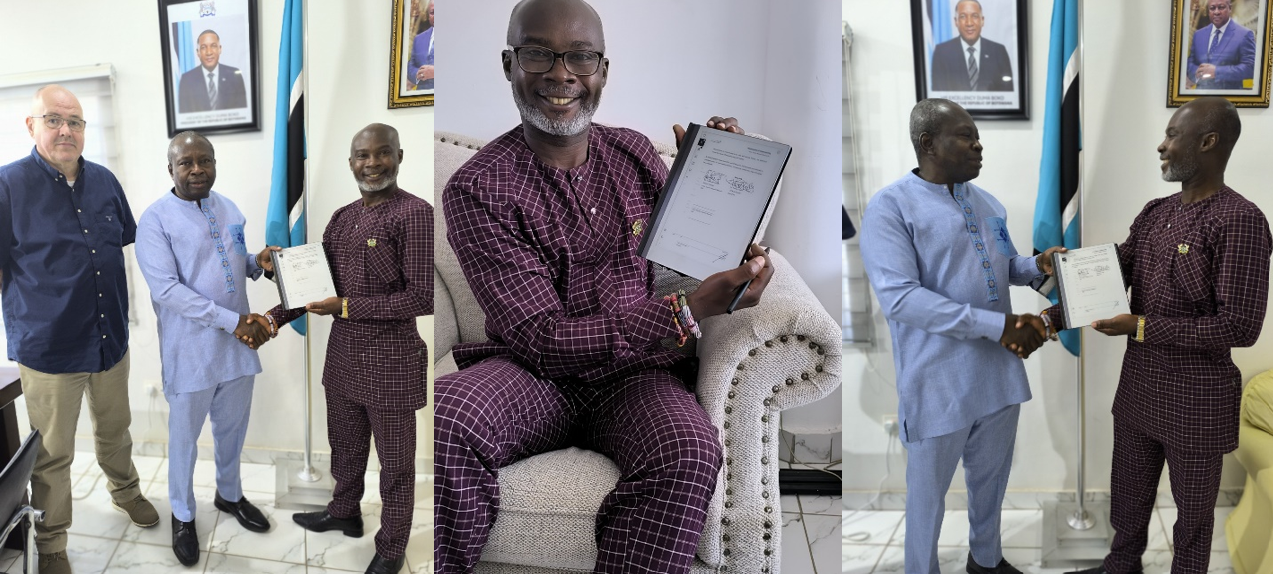
The signing ceremony of the agreement, which took place in Accra, was witnessed by H.E. Thomas Okyere, Consul of Botswana & Co-Founder GhanaTRVL in the presence of Co-Founder of GhanaTRVL, Mr. Marcel Van Bussel, and the founder of ATRN, Emmanuel Frimpong. The partnership marks a major milestone in efforts to align industry practice with data-driven insights, innovation, and market intelligence - three pillars the sector urgently requires to stay competitive in the global tourism landscape.
Under the agreement, ATRN and Ghana Travels will pursue a series of strategic initiatives, including:
- joint research and data collection
- digital promotion and destination marketing
- capacity-building for industry stakeholders
- youth and academic engagement
- advocacy and thought leadership
As the two organisations move into the implementation phase, the tourism community eagerly anticipates a wave of new projects, publications, and digital campaigns that will amplify Ghana's presence as a must-visit African destination.
Meaningful Tourism Community: The Meaningful Tourism Transformational Game Workshop Trainer
Raveesh Mrigendra, Trainer for North India

Raveesh Mrigendra is a Ph.D. Research Scholar in the Department of Tourism & Travel Management, School of Tourism, Travel and Hospitality Management, Central University of Himachal Pradesh, Dharamshala, India.
Previously, he has worked as a social worker, as a staff member in a resort, and as a Vocational Trainer (Tourism & Hospitality) in Government Senior Secondary Schools of Himachal Pradesh.
Meaningful Tourism Weekly: What is the current situation of tourism in North India and how can the Meaningful Tourism Paradigm help to support its development?
Raveesh:
Tourism in India today is at a crossroads where rapid growth is witnessing complex challenges. The sector significantly contributes to the national economy and provides employment across urban and rural regions. Simultaneously, this growth has also raised apprehensions concerning environmental pressure, erosion of cultural values, and uneven distribution of benefits accruing from tourism.
North India, with its Himalayas, pilgrimage circuits, heritage cities, and countryside, attracts a large number of domestic and international visitors.
However, many destinations are facing challenges such as overcrowding, waste management issues, unregulated construction, and seasonal economic instability. Communities in these areas often remain at the margin of decision-making and receive limited economic returns from tourism activities.
The Meaningful Tourism paradigm offers a constructive way forward by advocating tourism that creates balanced value for all stakeholder groups, namely, visitors, host communities, tourism providers, local governments, and the natural environment.
It calls for destinations to design tourism products and experiences aimed at deepening the visitor engagement with the local culture and nature, ensuring fair distribution of incomes, strengthening local identity, and conserving ecological resources, instead of merely meeting the number of tourists.
For North India, this may translate into community-based models of tourism, small-scale entrepreneurship, interpretation programs aimed at encouraging respectful behaviour, local product development, controlled carrying capacity plans in ecologically fragile zones, and training programs that uplift the local youth as guides and stewards of heritage.
Meaningful Tourism supports long-term resilience through shifting tourism from volume-driven to value-driven. As a certified trainer of Meaningful Tourism, I seek to support stakeholders in adopting this paradigm so that tourism in India grows in ways that enrich visitors, empower host communities, and protect cultural and natural heritage for future generations.
MTC Certified Trainers
Please find below the updated overview of all our Certified Trainers for the Meaningful Tourism Transformational Game Workshop, along with the updated World Map showing the countries directly and indirectly covered at present.
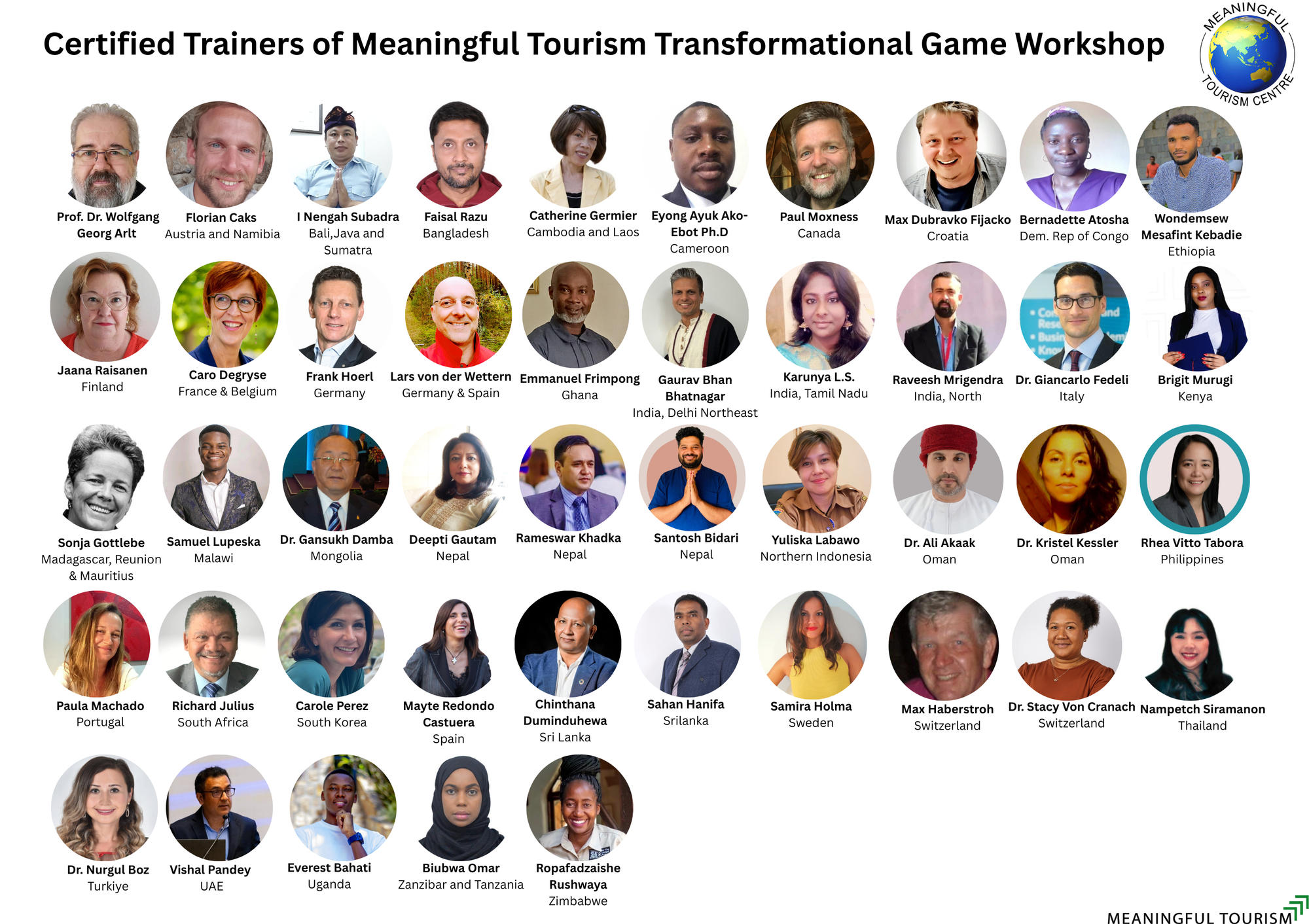
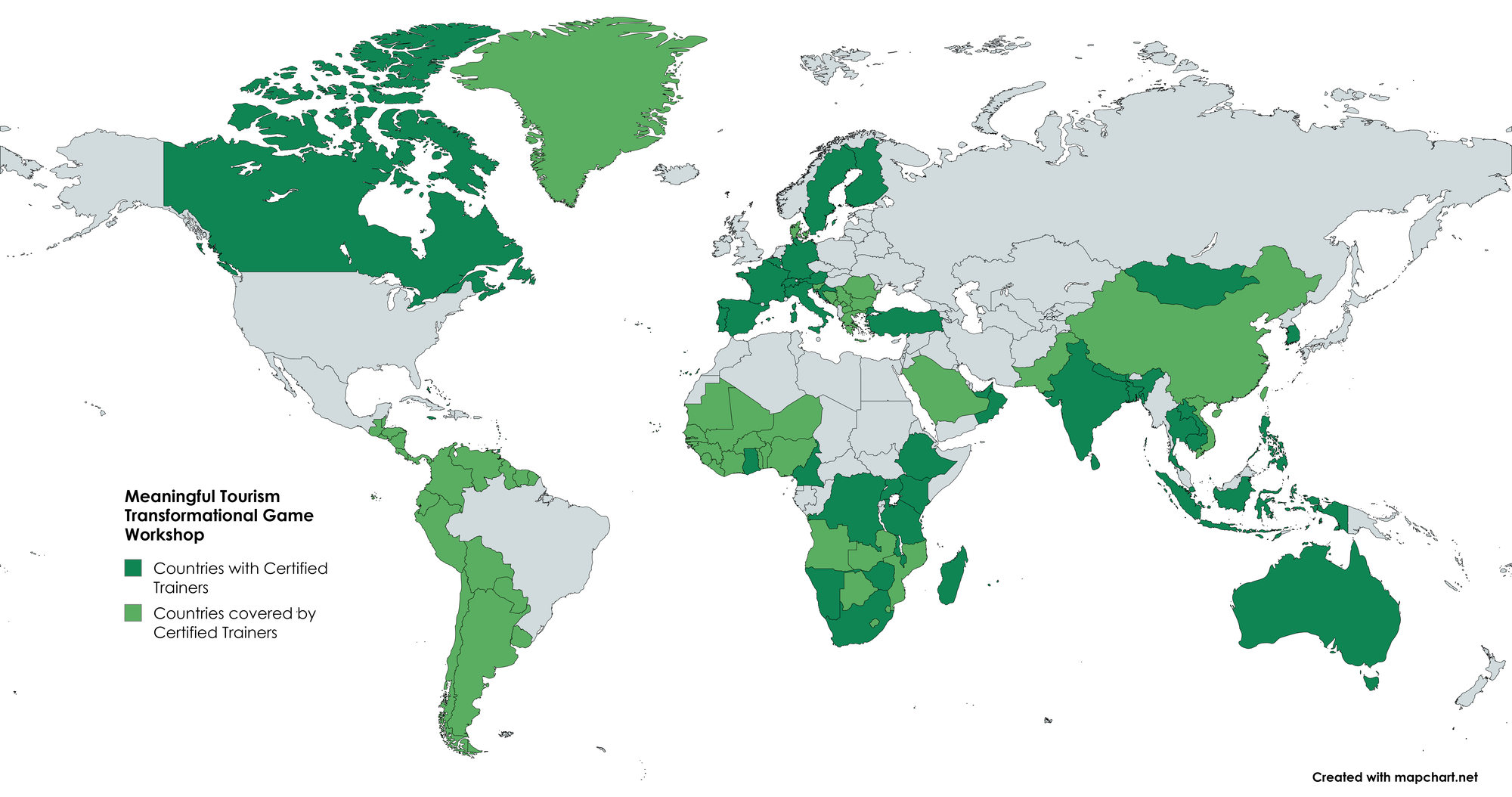
With almost 50 Certified Trainers, many countries and regions of the world are already covered. However, MTC continues to look for professionals with experience in training or lecturing and a passion for sustainable tourism.
If you are interested in becoming a Certified Trainer for the Meaningful Tourism Transformational Game Workshop for a country not marked in dark green on the map above, please contact us at office@meaningfultourismcentre.org.
Meaningful Tourism Online Lectures Africa – Participation free of charge, registration needed
Dates of Online Lecture Africa 1 (all times local):
• Dec 1 (Monday), 10 am South Africa
• Dec 2 (Tuesday), 11 am Kenya
• Dec 3 (Wednesday), 11 am Tanzania / Zanzibar
• Dec 4 (Thursday), 9 am Cameroon
• Dec 5 (Friday), 10 am Zimbabwe
Dates of Online Lectures Africa 2-4:
• December 9, 16, and 23, 2025, same time (10 am South Africa)
The first lecture is structured each time in five parts:
• Prof. Dr. Wolfgang Georg Arlt “PROF M”: Introduction to Meaningful Tourism paradigm and tools
• Certified trainer for the country: Relevance of Meaningful Tourism for the country
• Local senior expert from private and public organisations: Current activities in the country to support Sustainable Tourism and Capacity Building (Names will be published in the coming edition of Meaningful Tourism Weekly)
• Senior Expert from AIROI: Earning Money from Sustainable Tourism: The example of Carbon Credit Trading
• Open for audience: Questions and Answers
The other three Online Lectures 2, 3 and 4 will give information about the Africa-specific Meaningful Tourism holistic approach and tools, about customised KPIs, practical application examples and a guide to a step-by-step development and application of a Meaningful Tourism strategy. Each lecture includes an open Question and Answer section.
To register, please use the following links:
South Africa https://institutetourism.com/mt-southafrica/
Kenya: https://institutetourism.com/mt-kenya/
Tanzania https://institutetourism.com/mt-tanzania/
Cameroon https://institutetourism.com/mt-cameroon/
Zimbabwe https://institutetourism.com/mt-zimbabwe/
Asia Travel Future Summit
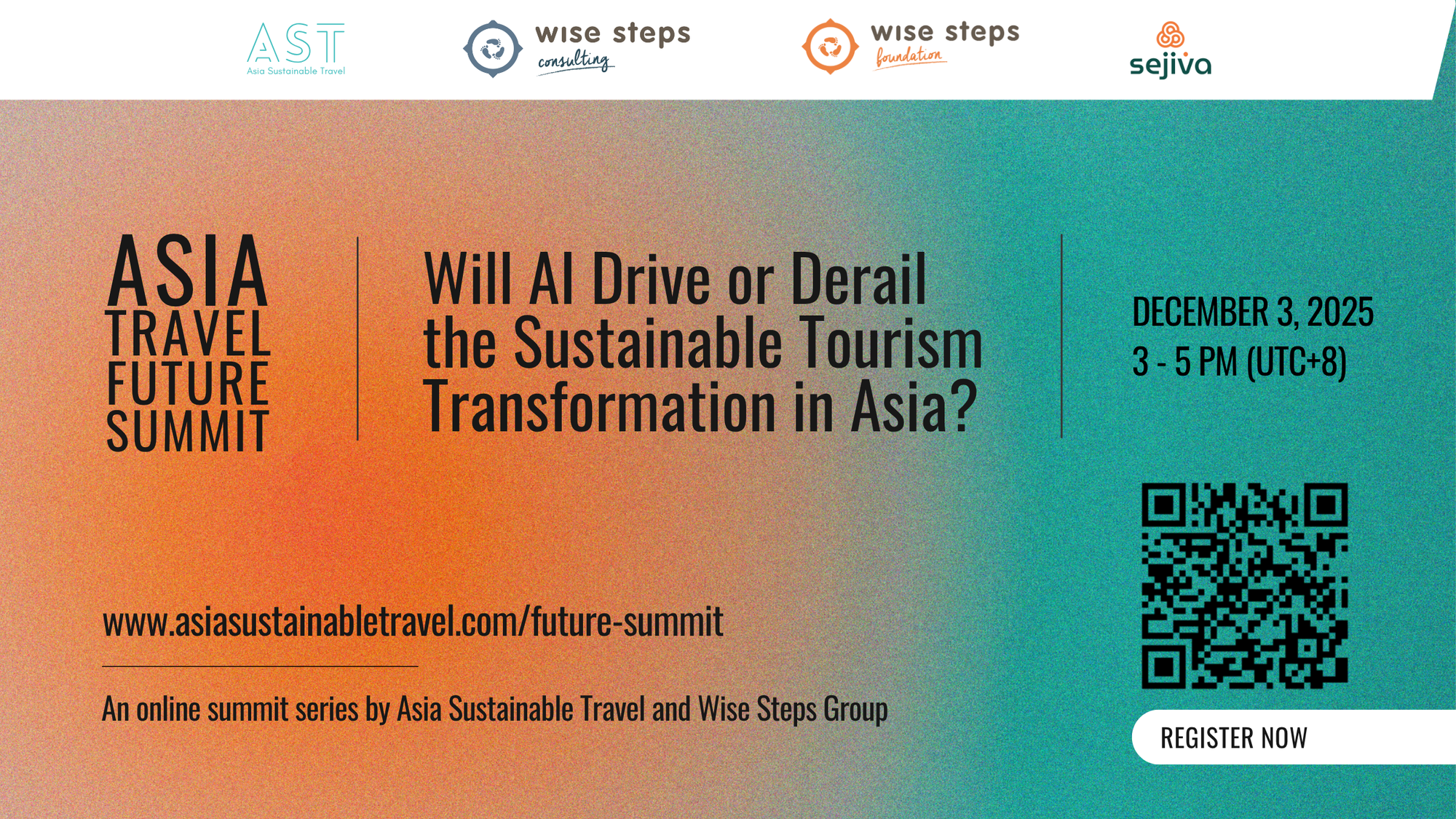
Will AI drive or derail the sustainable travel transformation in Asia?
There's no question that AI and technology are transforming travel, driving operational efficiency, offering accurate occupancy forecasts, and enhancing personalized service.
Yet, its rising energy and water demands, as well as data privacy concerns, also raise a pressing question: how do we innovate responsibly and ethically?
Asia Sustainable Travel (co-founded by MTC's Certified Trainer for the Philippines, Rhea Vitto Tabora) joined forces with Wise Steps Group for the inaugural Asia Travel Future Summit on December 3, 2025 from 3 PM to 5 PM (UTC+8).
Speakers include:
• Julie Cheetham, Chief Operations Officer of Travalyst
• Chris Legaspi, Chief Commercial Officer of Archipelago International
• Dimitri Syrris, Founder & CEO of Baotree
• Benjamin Lephilibert, CEO & Founder of Lightblue
• Fernanda Rodak, Pacific Asia Travel Association (PATA), Manager – Sustainability and Social Responsibility
• Tara Schwenk, Senior Director of Digital Strategy at Lemongrass Marketing
They will cover these topics:
→ How to balance AI-driven efficiency with measurable sustainability outcomes
→ Practical frameworks for responsible data collection and AI-powered marketing
→ Where human expertise adds irreplaceable value in an AI-enabled operation
About Meaningful Tourism Weekly
Meaningful Tourism Weekly is published every Thursday by Meaningful Tourism Centre (MTC) - London and Kathmandu in collaboration with Travel Asia Now, led by Rhea Vitto Tabora. This partnership enhances the newsletter’s professional production and distribution, bringing added value to our readers.
Each issue features an Editorial, updates on MTC activities, a Best Practice Example, a profile of an MTC-certified trainer, news about upcoming events, and, occasionally, additional op-ed pieces from guest authors. Carefully selected news items, including videos and podcasts, are also included, with links to their original sources in the Meaningful Tourism News section.
Subscription to Meaningful Tourism Weekly is free, with the addition of a paid content section that includes a library of surveys, exclusive articles, conference presentations, and statistical data, offering subscribers invaluable resources.
Sponsorship opportunities are available for those interested in supporting this initiative.
For more information about MTC's training programs, market research, product adaptation, consulting services, conferences, strategy development, and marketing, visit our website or email us at info@meaningfultourismcentre.org.