The future of tourism is Afro-Asian



Dear reader,
according to UN calculations, about 132 million babies will be born on Planet Earth in 2026, assuming that no nuclear war will put an end to human history. That will add another about 1.6% to the 8.2 billion human beings alive by the end of 2025. Those born during the first six weeks will – according to the Chinese lunisolar calendar – still be Water Snakes, while those born after the start of the new year on February 17th will be Fire Horses, stronger and more aggressive than most other of the 60 possible combinations of zodiac sign and element. Strength will certainly be needed in the coming decades of disappearing middle-class jobs and increasing disruption of the global economy including tourism due to climate change.
Meaningful Tourism, as part of the sustainability discourse, often speaks about the obligation of preserving the planet for future generations. The UN calculations also reveal an important truth about which continent these newborns will grow up, providing a picture not distorted by the ups and downs of immigration streams.
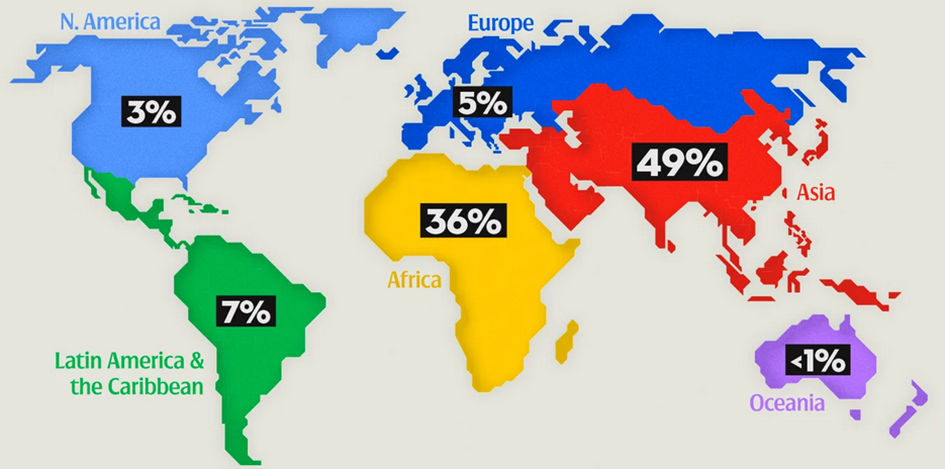
As shown in the graph below (based on Visual Capitalist), the Americas, Europe and Australia together will be the home of only one out of seven babies. More than one out of three will be born in Africa, and almost every second child will grow up in Asia.
The growth rate of about 1.6% can also put to rest the fears of earlier decades that overpopulation will be the most important problem of mankind in the 21st century. Taking into account the people who are dying, we have reached an annual growth rate of about 0.85% for the total population. By the end of the second quarter of the 21st century, that rate will have dropped to 0.5%, or even lower if the influence of climate change is factored in.
The number of people obviously does not directly correspond with buying power. In the last decade, the number of people living in poverty increased by about 100 million, remaining at 10% of the total population. However, the percentage of persons who are affluent enough to use aircraft for travelling doubled from about 5% to about 10% in the first quarter of the 21st century.
The graph clearly confirms that, in the coming years, Western family travel will be replaced more and more by seniors from the Global North travelling as couples or in small groups. The graph also shows that for the establishment of a Meaningful Tourism economy, the need to educate African and Asian kids about what kind of tourism will be needed to still provide them as adults with jobs and careers in the tourism industry, and for the industry itself to move away from a growth path based on further quantitative growth of the current tourism hotspots.
As you may have noticed, the Meaningful Tourism Weekly took a short break during the Chinese New Year holidays. We have been using the time to prepare an additional segment of Meaningful Tourism, providing exclusive content on top of the free content, which will continue to be offered. The good news: You will be required to make a one-time payment only to get lifelong access to the exclusive content, helping the Meaningful Tourism Movement to develop further, and giving you the background information and preferential treatment reserved for our Meaningful Tourism network members. Look out for the new structure starting in March!
As always, all best wishes from the Meaningful Tourism Weekly team in Kathmandu and Manila and from the whole Meaningful Tourism community to all our readers!
PS: Many of the Meaningful Tourism Weekly readers kindly sent today good wishes for the start of a new year in the life of your humble editor. From a certain age, it becomes less obvious why the fact of getting older should be a cause for annual celebrations; nevertheless, many thanks to all the well-wishers!


Meaningful Tourism in three fairs in Asia – Weekly update
MTC, including its section COTRI, is supporting three major tourism fairs and conferences taking place in April, May and June 2026 in Pakistan and China. For all three fairs, special MTC RECOMMENDED EXHIBITOR and COTRI RECOMMENDED EXHIBITOR packages are available for exhibitors using MTC and COTRI to book their booth at no additional cost.
In the past two weeks, MTC has added additional videos highlighting the background and advantages of participating in one or more of the fairs. They can be found on the MTC YouTube channel and on Instagram.

The transcripts of the texts of all videos published will be published in the exclusive content section of Meaningful Tourism Weekly as well for your reference.
More detailed information is available on the MTC website and in the January 22, 2026 edition of this publication, Meaningful Tourism Weekly.
 Prof. Dr. Wolfgang Georg Arlt
MTC welcomes three new Certified Trainers
Following a train-the-trainer workshop earlier this month, three experts from Pakistan and India qualified for certification as Meaningful Tourism trainers and as part of the Meaningful Tourism movement. In the coming weeks, we will introduce them with a short CV and a brief answer to the interview question how can Meaningful Tourism support sustainable tourism development in the region or country where the trainer is located.
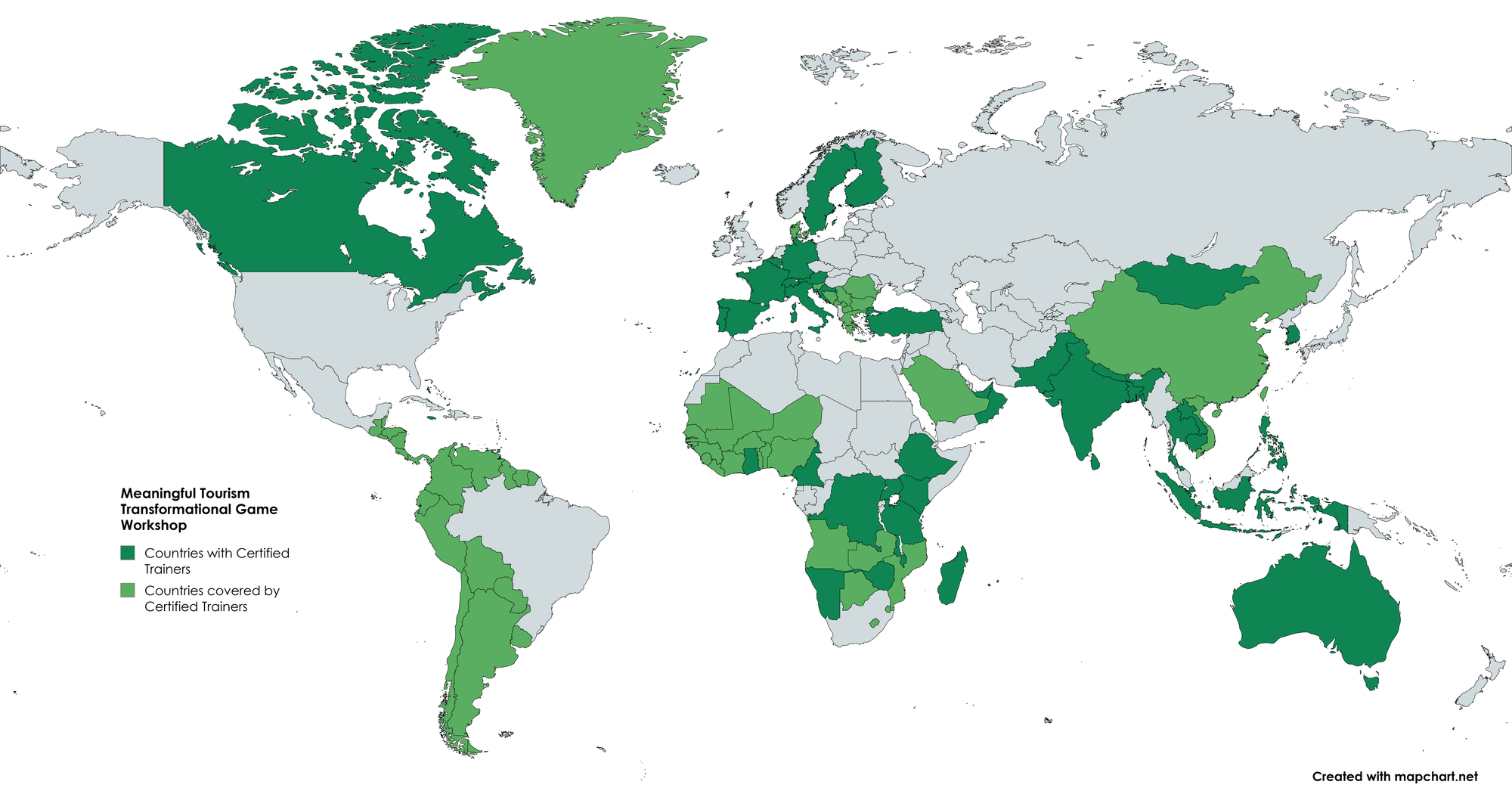
You will find in this edition of Meaningful Tourism Weekly an updated version of the introduction for all Certified MTC trainers, as well as a map showing the areas they cover for offline training and services.
MTC starts global program for hotels to profit from Carbon Credit Trading
Based on a partnership with AIROI Inc., based in Palo Alto and in Bangalore, MTC, together with its trainers and other distribution partners, is starting in March a global program to provide hotels, hotel groups, and other tourism and hospitality service providers with the chance to profit in a triple way from sustainable behaviour:
- Reducing the consumption and cost of electricity and water, as well as reducing waste production
- Earning Carbon credit income without any effort
- Elevating the image and perception of guests as responsible green service providers within the Meaningful Tourism economy
You will find information videos on the MTC YouTube channel and on the MTC website. In the coming editions of Meaningful Tourism Weekly, we will also share examples of successful implementation and the simple steps necessary to profit from the cooperation with MTC and the premier provider of Carbon Credit trading services.

Meaningful Tourism Community: The Meaningful Tourism Transformational Game Workshop Trainer
Iyasmin Khandekar - Certified Trainer for West Bengal, India

Iyasmin Khandekar is a dedicated Tourism Management professional from West Bengal, India, with a strong interdisciplinary foundation in English Literature and Education. A Gold Medalist (Rank 1) in her MBA in Tourism Management from The University of Burdwan, she combines academic excellence with a growing research focus on digital integrity, crisis communication, and trust in destination governance.
Meaningful Tourism Weekly: What is the current situation of tourism in India and how can the Meaningful Tourism Paradigm help to support its development?
Iyasmin Khandekar: Tourism in India is expanding steadily, supported by strong domestic demand, infrastructure development, and increasing policy attention toward cultural, spiritual, heritage, and nature-based destinations. However, development patterns remain uneven across regions, reflecting differences in governance capacity, ecological sensitivity, and institutional coordination. This unevenness calls for more region- specific planning models that account for local environmental and socio-economic conditions rather than uniform growth strategies.
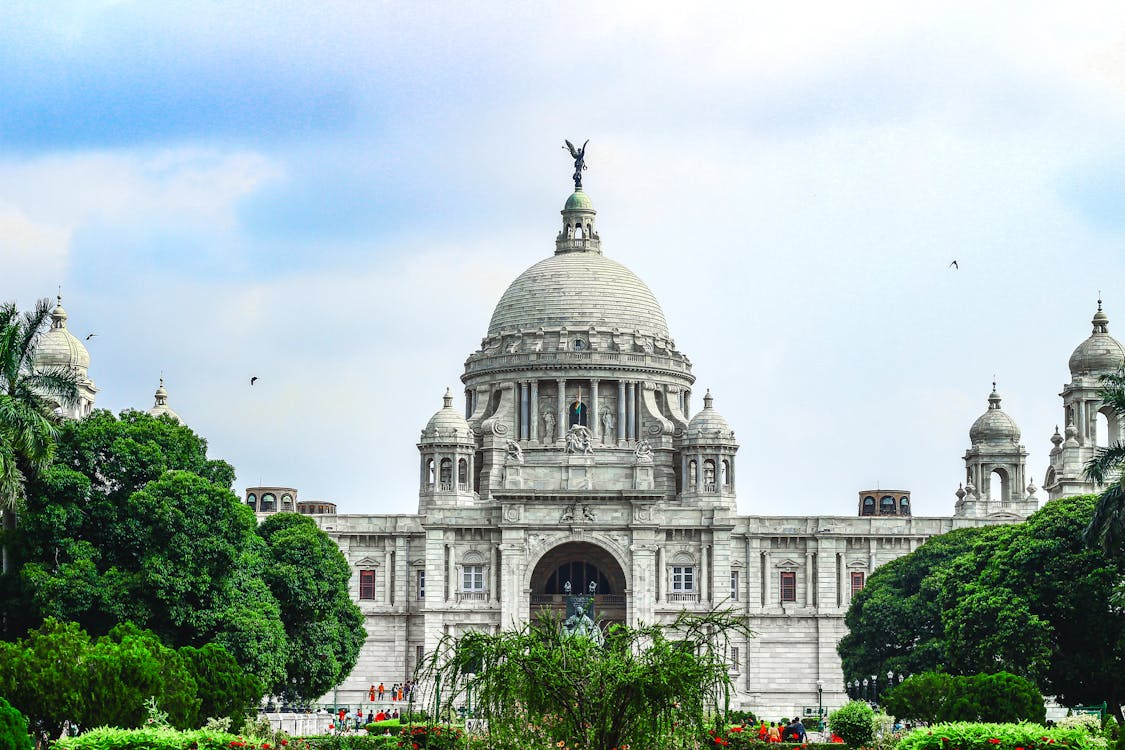
While overtourism affects certain ecologically fragile destinations, broader structural pressures are also visible. In some dryland and semi-arid regions, infrastructure and industrial expansion in environmentally sensitive landscapes raise concerns about long-term ecological stability. Natural landforms in such areas often function as protective buffers against desertification, wind erosion, and climatic vulnerability. Their degradation may increase exposure for surrounding communities, highlighting the importance of integrated land-use planning and environmental risk assessment within tourism and development policy.
Across multiple destinations, infrastructure growth has progressed faster than environmental monitoring systems. Waste management gaps, river pollution, and pressure on fragile ecosystems continue to affect biodiversity and long-term destination viability. These dynamics indicate the need for stronger alignment between tourism planning, environmental governance frameworks, and enforceable monitoring mechanisms.
Several remote heritage and spiritual destinations also face connectivity limitations and fragmented visitor information systems. Strengthening infrastructure equity and improving coordinated destination information platforms would enhance visitor experience while supporting more balanced local economic participation.
Local communities remain central to tourism economies, yet their participation in decision-making processes is often limited. During ecological or economic crises, these communities experience disproportionate vulnerability. Institutionalising participatory governance and equitable benefit-sharing mechanisms is therefore essential for building destination resilience.
In the contemporary digital environment, destination perceptions are increasingly shaped by online narratives. Visitors rely heavily on digital platforms for information and risk assessment, particularly during crises. This underscores the importance of digital integrity, transparent communication protocols, and credible information management systems as integral components of responsible destination governance.
The Meaningful Tourism paradigm provides a practical and structured framework to address these interconnected challenges. By integrating measurable impact indicators, stakeholder collaboration, responsible governance, and transparent communication practices, it supports destinations in aligning growth with social sustainability and environmental responsibility. It encourages continuous monitoring, accountability, and adaptive learning processes that strengthen resilience over time.
In the Indian context, this approach can guide tourism development toward a more inclusive, balanced, and sustainable trajectory.
MTC Certified Trainers
Please find below an overview of all our Certified Trainers for the Meaningful Tourism Transformational Game Workshop, along with the World Map showing the countries currently covered directly or indirectly.
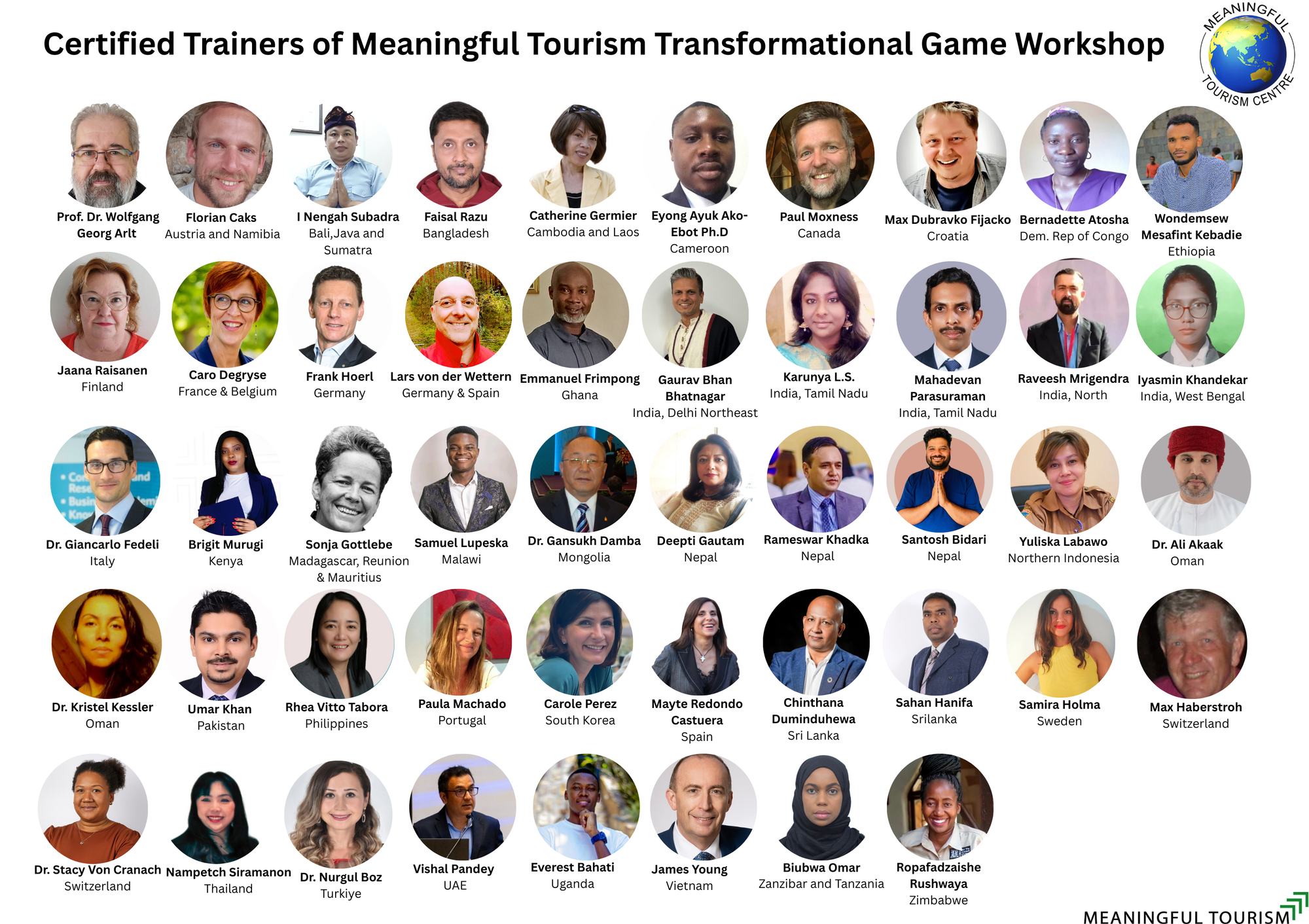
The network of MTC Certified Trainers is constantly growing. As shown on the map, many countries and regions worldwide are already served by dedicated experts. However, MTC is continuously looking for professionals with experience in training or lecturing and a passion for sustainable tourism to join the network and fill the blanks on the map.


Pakistan Travel Mart (PTM) 2026
April 3–5, 2026: Karachi
April 7–8, 2026: Lahore
Guangzhou International Travel Fair (GITF) 2026
May 21–23, 2026

Beijing International Travel & Lifestyle Fair (BITLF)
June 12–14, 2026
About Meaningful Tourism Weekly
Meaningful Tourism Weekly is published every Thursday by Meaningful Tourism Centre (MTC) - London and Kathmandu in collaboration with Travel Asia Now, led by Rhea Vitto Tabora.
Each issue features an Editorial, updates on MTC activities, a Best Practice Example, a profile of an MTC-certified trainer, news about upcoming events, and, occasionally, additional op-ed pieces from guest authors. Carefully selected news items, including videos and podcasts, are also included, with links to their original sources in the Meaningful Tourism News section.
Subscription to Meaningful Tourism Weekly is free, with the addition of a paid content section that includes a library of surveys, exclusive articles, conference presentations, and statistical data, offering subscribers invaluable resources.
Sponsorship opportunities are available for those interested in supporting this initiative.
For more information about MTC's training programs, market research, product adaptation, consulting services, conferences, strategy development, and marketing, visit our website or email us at info@meaningfultourismcentre.org,.