There is nothing more practical than a good theory
Dear reader,
“There is nothing more practical than a good theory,” as the famous psychologist Kurt Lewin observed already in the 1950s.
Meaningful Tourism (the one with the capital “M”) is based on a sound scientific base, as is showing also in the growing number of academic articles and book chapters that have been published already or will be published in the coming months in different journals and edited books. Meaningful Tourism is a practical tool to create a sustainable future for companies and destinations; however, it can only work when combined with research and theoretical backing. Otherwise, it might be diluted to a “little bit more meaningful” approach, offering oversimplified and unsustainable quick-fix promises.
In June 2025, your humble editor, PROF M, published an article in the Bali Journal of Hospitality, Tourism and Culture Research to introduce the Meaningful Tourism paradigm.


In the latest edition, just published, the editor and Certified MTC Trainer Assoc. Prof. I Nengah Subadra honoured the Meaningful Tourism Movement with a Special Focus topic examining the development of the Meaningful Tourism paradigm and its application, especially in Africa and Asia. There is an introduction, part of which you can read in the edited section below, and a conclusion. More importantly, two major articles deal with the importance of Meaningful Tourism for sustainable tourism development in Africa and Asia.
Africa's tourism industry has demonstrated significant growth, leading the way in terms of international arrivals. This growth has been driven by improved air connectivity, relaxed visa regulations, and an increasing interest in discovering the oldest inhabited continent where humanity originated.
However, despite this growth and increased visibility, Africa still faces challenges related to safety concerns or perceptions, governance, high transportation costs, and poor infrastructure. These challenges are compounded by a lack of coordinated planning and international cooperation, resulting in a high percentage of lost and dispersed tourism revenue.
The development of the Meaningful Tourism Paradigm in Cameroon, Kenya, Tanzania, South Africa, and Zimbabwe offers a transformative approach, as shown in one of the articles in the BJHTCR, with several examples.
In Cameroon, Meaningful Tourism is used to mitigate sustainability fatigue and shift the focus toward culturally rich experiences, reinforcing community identity and environmental accountability within tourism narratives.
Kenya highlights eco-tourism and its certification framework nationwide to expand sustainability principles and benefits, particularly in urban environments.
This vision is similarly embraced by South Africa and Zimbabwe, where Meaningful Tourism complements existing governmental strategies centred on capacity building, product innovation, and policy coherence through collaboration and empowerment of stakeholders.
Tanzania and Zanzibar are also investing in Meaningful Tourism as both a practice and a self-assessment tool to enhance their tourism offerings, embracing opportunities in eco-tourism and halal tourism.
Asia's rapid growth in international tourism, particularly the emergence of China as a dominant source market, highlights the need for more sustainable and inclusive tourism practices. As Asia's significance in global tourism continues to expand, there is an increasing need to transition toward a Meaningful Tourism paradigm focusing on authentic niche tourism products involving and benefiting all six stakeholders.
This approach is especially relevant in countries and destinations such as Mongolia, Nepal, North and Northeast India, which are discussed in the second main article. This shift ensures that tourism yields measurable benefits and subjective satisfaction for all parties involved, aiming for holistic sustainability rather than merely imposing restrictions.
Although these destinations face unique challenges, they have embraced the Meaningful Tourism Movement through various initiatives and unique product development, offering transformative experiences and revenue, both in the short and long term.
Mongolia's ambitious plan to boost visitor numbers and in-destination spending through nomadic tourism presents an opportunity for economic growth and local impact. The "Ger and Nature" concept in Mongolia, supported by the UN PAGE, aims to integrate local nomadic herder communities into tourism activities while promoting sustainability and cultural authenticity.
In India, community-oriented tourism in the northern and northeastern states, alongside artisan-led tourism development, reflects a shift towards meaningful and inclusive tourism models.
Similarly, Nepal's focus on sustainable tourism practices, despite challenges such as natural disasters and the COVID-19 pandemic, demonstrates a commitment to creating positive shared value for visitors, host communities, and the environment.
Overall, Mongolia, Nepal, North and Northeast India have identified the Meaningful Tourism Paradigm as a key tool that aligns with national tourism policies, encourages stakeholder collaboration, and offers authenticity. The paradigm emphasizes genuine experiences, cultural respect, and community empowerment while advocating for environmental sustainability and equitable benefits for all stakeholders.
You can find all four articles for free download here:
 I Nengah Subadra, Made Sudiarta, Ida Bagus Nyoman Krisna Prawira Yuda, I Wayan Bratayasa (Author)
Happy reading!
As always, all best wishes from the Meaningful Tourism Weekly team in Kathmandu and Manila and from the whole Meaningful Tourism community to all our readers!


Meaningful Tourism in three fairs in Asia in the second quarter of 2026
MTC, including its section COTRI China Outbound Tourism Research Institute, is proud to be associated with three major tourism fairs and conferences taking place in Pakistan and China in April, May, and June 2026.
For all three fairs, special MTC RECOMMENDED EXHIBITOR and COTRI RECOMMENDED EXHIBITOR packages are available for exhibitors using MTC and COTRI to book their booth at no additional cost. The short- and long-term results of participation will be enhanced by better preparation, improved performance, and better follow-up. The packages are available exclusively to exhibitors booking through MTC and COTRI at info@meaningfultourismcentre.org.
All three fairs also include international tourism conferences, which will have Meaningful Tourism as a major topic.
You will find news and insights for these events every week for the coming months here in Meaningful Tourism Weekly.

Pakistan Travel Mart (PTM) 2026
April 3–5, 2026: Karachi, April 7–8, 2026: Lahore
MTC RECOMMENDED EXHIBITOR package at PTM will include free webinars for the preparation, special contact services with buyers and other visitors selected based on the offers, and customised products of exhibitors for the South Asian source market.
PTM International Tourism Conference will include Meaningful Tourism topics and speakers.
Guangzhou International Travel Fair (GITF) 2026
May 21–23, 2026: Guangzhou
COTRI RECOMMENDED EXHIBITOR package at GITF will include:
Before GITF
• Online Webinar – How to prepare for GITF: Right products, right stories, right connections
• Presentation in COTRI Weekly in a special article
• Individual online consulting – One hour with CEO COTRI Prof. Dr. W.G. Arlt
• Practical help – Finding local staff, Chinese name cards, etc.
• Identification of best fitting Chinese distribution partners for the offered products
During GITF
• Welcome dinner and tips for success at the fair, the evening before opening
• Logo “COTRI Recommended Exhibitor” for stand and name cards
• Preference for CTW Award applications
• Preference for GITF conference participation
• Support of meetings with relevant business partners for the offered products
After GITF
• One day after fair meetings with special interest contacts relevant for products
• Mentioning in COTRI Weekly editorials and articles
• Establishment of network for further cooperation and joint activities
• Online or offline full-day workshops for the company/destination
• Support of FAM trips, delegation visits, and marketing in China with preferential conditions
• Preference for future fairs and conference participation
GITF Conference
Organised by COTRI, the 2026 conference will have the topic: “China’s outbound tourism at the start of the second quarter of the 21st century: Meaningful Tourism, Customised Experiences”.
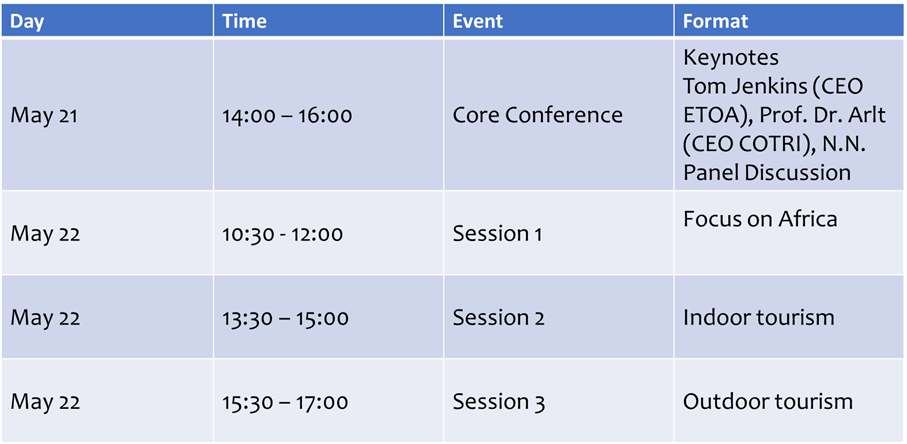
The GITF conference consists of a two-hour core conference with international Keynote Speakers and three in-depth topical sessions, each lasting 90 minutes.

Beijing International Travel & Lifestyle Fair (BITLF)
June 12–14, 2026: Beijing
BITLF will take place for the first time in 2026 in Beijing, combining tourism and lifestyle in line with the recent trends in China. While GITF is covering the South of China, BITLF attracts buyers and visitors from the North of China. The WTCF World Tourism Cities Federation Annual Summit and the China International Tourism Investment Conference are taking place both on June 10th and 11th, directly before BITLF, making it possible to visit three major events with one trip.
The COTRI RECOMMENDED EXHIBITOR package at BITLF will include the same important elements for a successful fair participation as for GITF (see above).
Organised by COTRI, the 2026 conference at BITLF will also have a similar topic: “China’s outbound tourism at the start of the second quarter of the 21st century: Meaningful Tourism, Customised Experiences”.
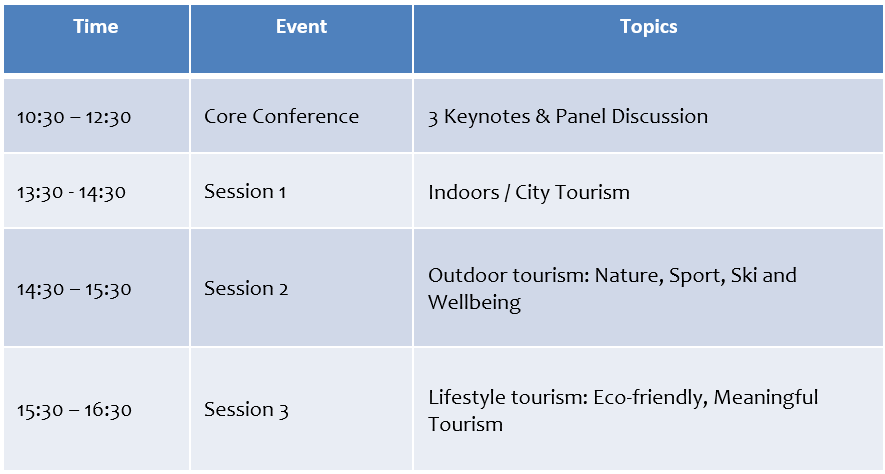
The Beijing International Travel and Lifestyle Fair conference consists of a two-hour core conference and three focused topical sessions, each lasting 60 minutes, on June 12, 2026.
Webinar discusses the changed demand structure of China’s Outbound travellers to Europe in the coming years
China, which had become a mainstay of Europe’s inbound tourism market, has experienced an uneven recovery following the COVID years. From around 15 million arrivals in 2019, the end of the pandemic has still resulted in only about half that number in 2024. The unevenness is furthermore evident in the geographic spread of demand. While some Schengen countries are expected to return to pre-pandemic levels in the near term, the UK is projected to reach 2019 volumes only toward the end of the decade.
The European Tourism Association (ETOA) organised a webinar on January 13, 2026 to discuss the current situation and look into the immediate future.
Three panellists were invited: Mr. Scott (Jinxiang) Huang, General Manager of Beijing-based G2 Travel, David Edwards, Tourism Insight Expert of ETOA, and – you guessed it – your humble editor, PROF M, this time in his function as CEO of COTRI China Outbound Tourism Research Institute, a section of the Meaningful Tourism Centre Ltd. The chair was taken over by the long-standing CEO of ETOA, Mr. Tom Jenkins.
Among the issues were visa and access problems, the impact of rising costs across Europe, the shortage of suitable accommodation, and demographic changes within China.
All panellists agreed that these "hard" circumstances currently have less influence than "soft" issues with regard to the evolving Chinese traveller preferences and the growing challenge for group operators posed by self-booking.
This is precisely the point where Meaningful Tourism starts to play a key role. While the upper middle-class travellers stay more than before within the East and Southeast Asian region, spending less money during shorter trips, the truly affluent Chinese are now sophisticated and experienced enough to have clear ideas and demands for the way their special interest-driven journeys should be customised according to Chinese wishes.
The Meaningful Tourism Centre is offering, as part of the process of becoming a Distinguished Meaningful Tourism Movement member, source market-specific trainings, not the least for the biggest tourism source market in the world, China.
The webinar is available online as a video recording:

Meaningful Tourism Community: The Meaningful Tourism Transformational Game Workshop Trainer
Rameswar Khadka, Certified Trainer for Nepal

Rameswar Khadka is a seasoned Tourism Development Specialist and Trainer with 18 years of experience in design, delivery, result management and capacity building in tourism development programs and projects in Nepal and South Asia.
With a Masters of Arts in Rural Development Studies and a BA in Sociology/Anthropology, he has a multidisciplinary background such as tourism, economic analysis, research, and social development, as well as a unique set of skills in tourism planning, community-based tourism development, capacity building, and ecologically friendly tourism promotion, all built on extensive field experience and collaboration with government agencies, INGOs, and local communities.

Meaningful Tourism Weekly: What is the current situation of tourism in Nepal and how can the Meaningful Tourism Paradigm help to support its development?
Rameswar:
Nepal at a Crossroads: Embracing Meaningful Tourism for a Resilient Future
Nepal’s tourism sector is showing signs of recovery, yet it remains at a defining crossroads. In 2025, the country welcomed just over one million international visitors, an encouraging rebound following the pandemic and recent disruptions, but still below pre-COVID levels. While Nepal’s dramatic Himalayan landscapes, rich cultural heritage, and adventure tourism continue to attract global travelers, the sector faces persistent challenges that limit its full potential.
Constraints such as limited international air connectivity, congestion at key gateways, infrastructure gaps in emerging destinations, and strong seasonality continue to affect growth. In addition, Nepal’s tourism remains vulnerable to external shocks, whether political instability, climate-related events, or global economic uncertainty. Nepal illustrates a broader global dilemma: how to rebuild tourism not just faster, but better.

This is where the concept of Meaningful Tourism becomes relevant. Moving beyond a narrow focus on arrival numbers, meaningful tourism emphasizes quality over quantity, seeking to generate positive economic, social, cultural, and environmental outcomes for host destinations and visitors alike. It calls for tourism that enriches local communities, preserves cultural identity, and safeguards fragile ecosystems, while offering travelers deeper, more authentic experiences.
In Nepal, adopting this paradigm could reshape the sector’s trajectory. Community-based tourism, immersive cultural routes, and high-value, low-impact trekking experiences can help spread benefits beyond traditional hubs and reduce pressure on overcrowded destinations. Empowering local enterprises, guides, and homestay operators can also reduce economic leakage and strengthen rural livelihoods.
For international travel professionals and enthusiasts, Nepal’s journey offers an important lesson: long-term competitiveness in tourism depends on meaning, responsibility, and resilience. If Nepal strategically embraces meaningful tourism, it has the potential not only to recover but to emerge as a global model for purpose-driven, sustainable travel in mountain destinations worldwide.
MTC Certified Trainers
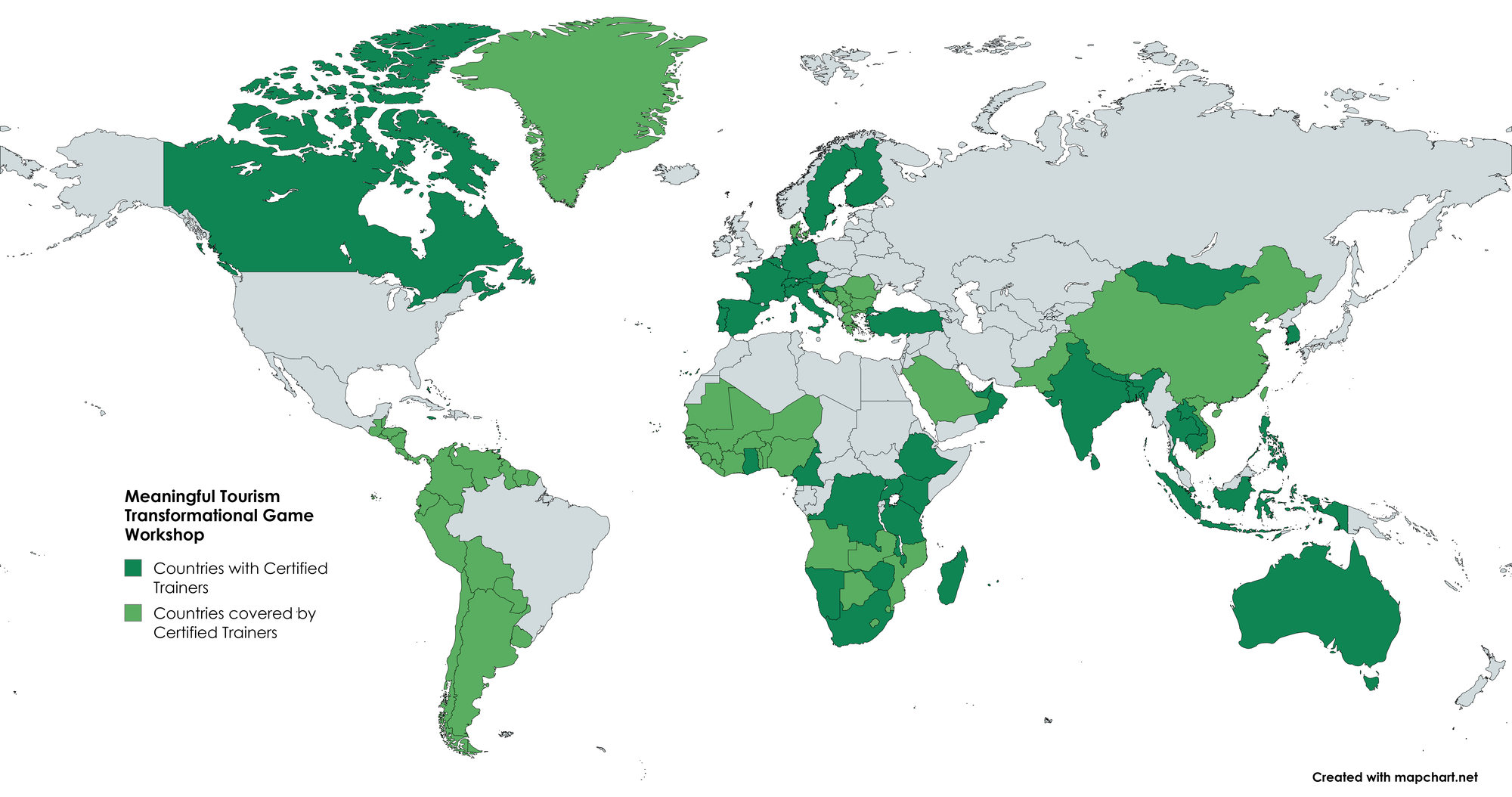
Please find below an overview of all our Certified Trainers for the Meaningful Tourism Transformational Game Workshop, along with the World Map showing the countries currently covered directly or indirectly.
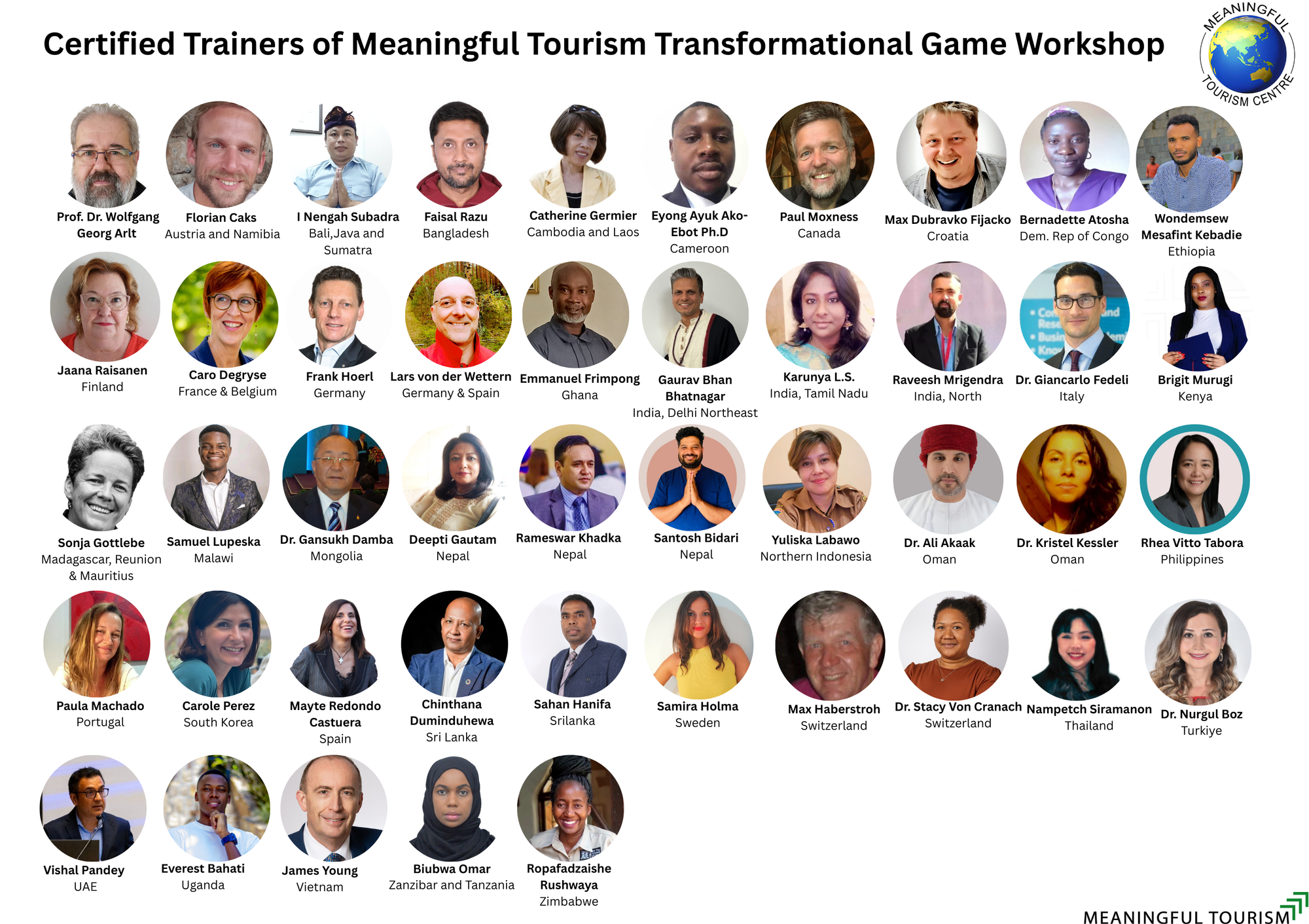
The network of MTC Certified Trainers is constantly growing. As shown on the map, many countries and regions around the world are already served by dedicated experts. However, MTC is continuously looking for professionals with experience in training or lecturing and a passion for sustainable tourism to join the network and fill the blanks on the map.
The next Train-the-Trainer workshop will take place in the last week of January 2026. If you are interested in becoming a Certified Trainer for the Meaningful Tourism Transformational Game Workshop, providing different kinds of Implementation Support, or helping with establishing a Carbon Credit trading initiative, please contact us at office@meaningfultourismcentre.org.


Pakistan Travel Mart (PTM) 2026
April 3–5, 2026: Karachi
April 7–8, 2026: Lahore
Guangzhou International Travel Fair (GITF) 2026
May 21–23, 2026

Beijing International Travel & Lifestyle Fair (BITLF)
June 12–14, 2026
About Meaningful Tourism Weekly
Meaningful Tourism Weekly is published every Thursday by Meaningful Tourism Centre (MTC) - London and Kathmandu in collaboration with Travel Asia Now, led by Rhea Vitto Tabora.
Each issue features an Editorial, updates on MTC activities, a Best Practice Example, a profile of an MTC-certified trainer, news about upcoming events, and, occasionally, additional op-ed pieces from guest authors. Carefully selected news items, including videos and podcasts, are also included, with links to their original sources in the Meaningful Tourism News section.
Subscription to Meaningful Tourism Weekly is free, with the addition of a paid content section that includes a library of surveys, exclusive articles, conference presentations, and statistical data, offering subscribers invaluable resources.
Sponsorship opportunities are available for those interested in supporting this initiative.
For more information about MTC's training programs, market research, product adaptation, consulting services, conferences, strategy development, and marketing, visit our website or email us at info@meaningfultourismcentre.org.