A Message from the Future

Dear reader,
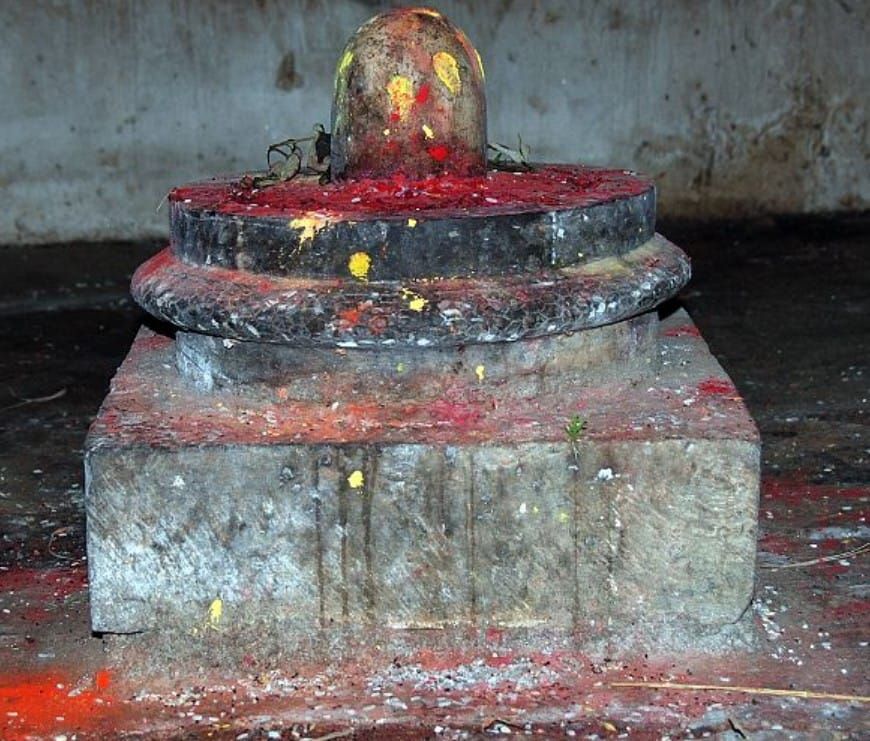
during a walk, contemplating the lack of results of COP31, your humble editor came upon a strange object in a small roadside temple in the weichbild of Kathmandu, which turned out to be a self-starting, self-translating time capsule. The readers of Meaningful Tourism Weekly are provided here with the world-exclusive transcript of the message of this time capsule as follows:
“Summary of Control and Research Report Sol3 (‘Planet Earth’), Solar system QCPX5-20017788, Time unit 58876.
As part of the regular Control and Research visit to the system conducted every X2 period (representing about 8.5 million orbital revolutions of Sol3 around its sun, called “years” in this report), the team found that bacteria are still representing the biggest part of living biomass (about 70%) on the planet. However, it was noted that there was an interesting short period defined by the research team as “The Human Episode”, which apparently was missed by the team to witness by just a couple of 1,000 years.
Since the last visit of a Control and Research team, humanoids developed on this planet as part of a minor group of lifeforms called mammals, remaining without any significant impact on the planet’s ecosystem for a couple of hundred thousand years. The findings of the team show, however, that Homo Sapiens, the most aggressive form of humanoids, within 20,000 years after eliminating all competing forms of humanoids, achieved the establishment of a combination of structured production of calories, called agriculture, and of bureaucratic and accounting methods, which resulted in the regular and relatively reliable production of surplus calories. This in turn allowed the establishment of hierarchical structures of communities with a small number of members freed from food production tasks to develop first levels of philosophical and scientific approach to the universal questions.
Even though they never represented even 0.1% of the total living biomass, Homo sapiens managed within just 10,000 years to develop structures which enabled this form of mammals to radically change the global ecosystem in a way benefiting them in their material life, including a dramatic expansion of life expectancies and the number of human units existing at the same time.
Unfortunately, the technology and forms of organization of the society and economy developed especially towards the end of the Human Episode resulted not only in the reduction of the necessary diversity of the ecosystem but also in moving it beyond the very narrow range of composition of the surrounding air, levels of temperature, purity of water, and other aspects on which the physical as well as economic existence of this form of mammals itself relied.
For reasons the Control and Research team was unable to establish, the existing and sufficient knowledge, technology and economic resources were not used to stop and reverse this trend. In fact, the more urgent the need for a radical change became, the less resources seem to have been dedicated to such an endeavour. After a number of tipping points were reached about 11,000 years into the Human Episode, the vast majority of the, at that time, about nine billion living homo sapiens mammal units perished within a century. A minority, according to the research results estimated at between 200 and 500 million units, managed to survive for a short period of a further couple of hundred years, before the Human Episode ended. No Homo sapiens managed during that time to reach any place beyond the solar system Sol3 is located in.
The planet has returned to its situation before the Human Episode, with biodiversity about to reach the previous level again. Basic developments, like the drift of continents, continue as before.
The next Control and Research team is scheduled to visit the planet by X2 time unit 58877.
The forecast unit of the team has named cockroaches as the most likely candidate for any new development of a lifeform able to substantially influence the global ecosystem to be found during the next visit, while bacteria are expected to be found to have remained as the dominant lifeform with regard to quantity in biomass for the next 8.5 million orbital revolutions of Sol3.
Note:
According to Control and Research team regulations, this summary of the report is deposited on the surveyed planet, to be ready for a single activation at a time when the disclosure of any information given within the report cannot result anymore in changes in the main development of the future described within it by any intelligent lifeform finding and activating it.
Love thy neighbour!”
With these words, the audio transmission ended and the device transformed itself into a piece of stone resembling a lingam. As a proof, your humble editor includes a photo of the device in its form of a revered lingam.
As always, all the best wishes from the Meaningful Tourism Weekly team in Kathmandu and Manila, and from the whole Meaningful Tourism community to all our readers!


Summary of the latest edition of Travel Dialogues South Asia Podcast
Every week, MTC and its partners TravelDailyNews Asia-Pacific and Tanneri Chaso provide a new episode of the TRAVEL DIALOGUES SOUTH ASIA series of podcasts concentrating on the development of Meaningful Tourism in South Asia, including Pakistan, India, Maldives, Sri Lanka, Nepal, Bhutan, and Bangladesh.
This week, Aayusha Prasain explained how community-led tourism in Nepal can support rural livelihoods, empower women, diversify destinations, preserve culture and strengthen climate resilience through locally created visitor experiences and enterprises sustainably.
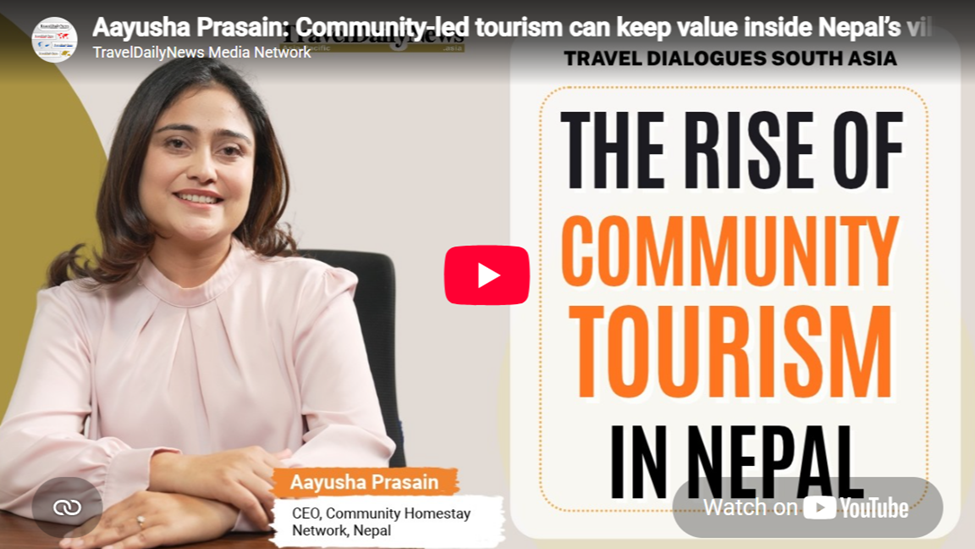
Community-led tourism in Nepal can become much more than an alternative accommodation model. For Aayusha Prasain, CEO of Community Homestay Network (CHN), its greater potential lies in enabling local people to create tourism products, build businesses and retain more of tourism’s economic value within their own communities.
Speaking with your humble editor as part of the Travel Dialogues South Asia podcast series on TravelDailyNews Asia-Pacific in the Tanneri Chaso studio in Kathmandu, Prasain presented a model in which communities are not peripheral participants in tourism but creators of the visitor experience itself.
That distinction matters. CHN’s approach combines community development with product creation, training, marketing and commercial distribution, seeking to turn local tourism initiatives into viable businesses rather than projects dependent on goodwill or external support.
From CSR project to tourism business
Community Homestay Network began in Panauti in 2012 as a Corporate Social Responsibility initiative. Its perceived potential eventually led to the operation being legally registered as a separate company in 2017.
Today, CHN works with 51 communities across Nepal involving 408 households. It co-creates tourism products with residents, provides training and product-development support, and takes responsibility for marketing and sales.
Commercial distribution is an important part of the model. CHN operates as a B2C online travel agency while also working with more than 40 B2B partners.
That structure illustrates one of the most important messages from Prasain’s interview: community tourism needs a functioning route to market. Creating an attractive local experience is not enough if communities cannot reach travellers, tour operators and other distribution partners capable of generating sustainable demand.
Tourism as a response to rural outmigration
For many rural destinations, tourism development is also closely connected to demographic pressures.
CHN sees locally generated economic opportunities as one way of giving younger people additional reasons to remain in their communities rather than moving elsewhere for work. Maintaining viable livelihoods can also help protect rural infrastructure, traditions and skills that become harder to sustain as populations decline.
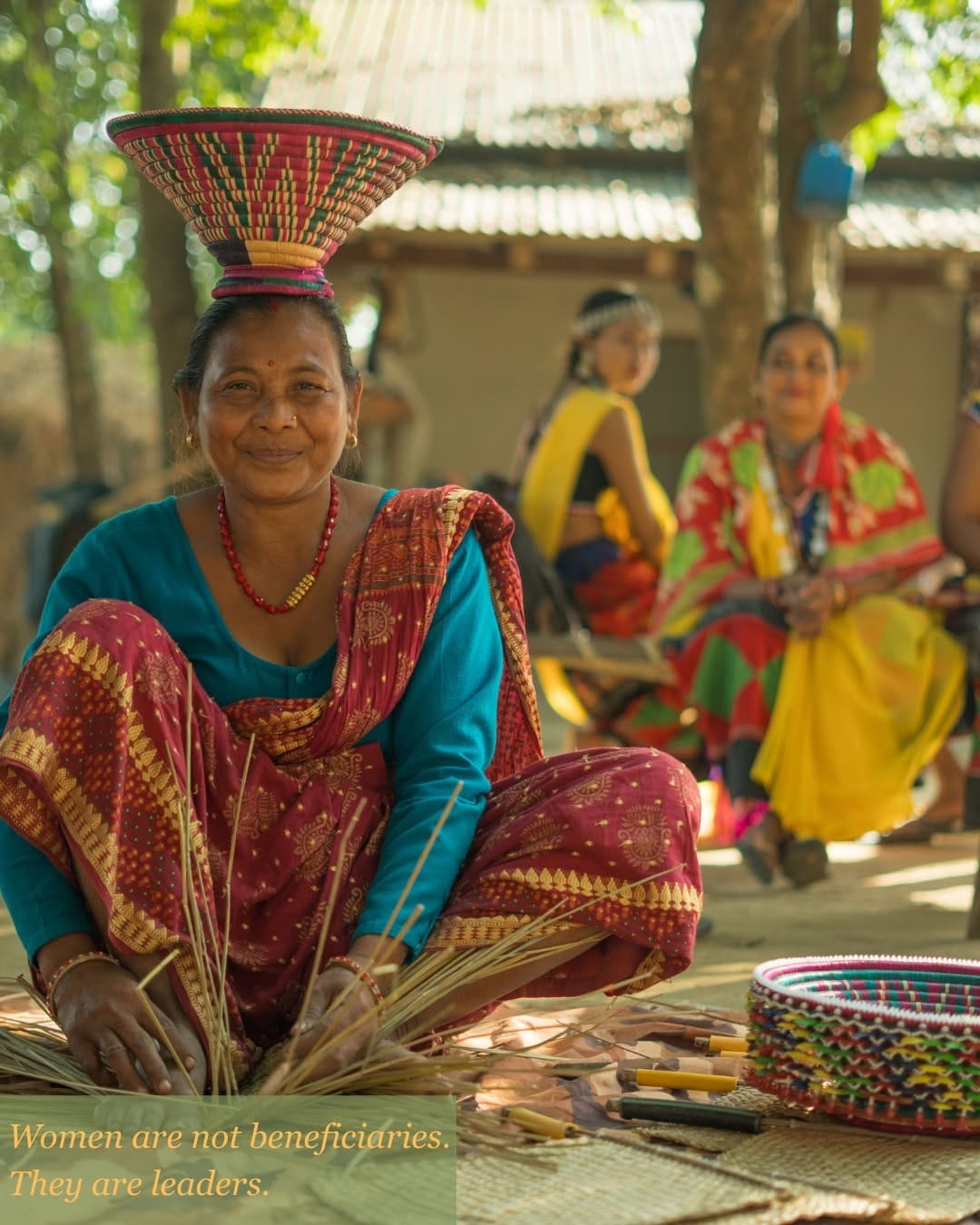
Women’s entrepreneurship is another important component.
Panauti provides one example. Women involved in the homestay initiative subsequently inspired younger residents to establish complementary businesses, including a bicycle station. The result illustrates how empowering one group of entrepreneurs can stimulate wider economic activity within the destination.
The implication for community-led tourism in Nepal is significant. Tourism’s impact does not have to stop with the household providing accommodation. When local supply chains and related activities develop around visitors, the economic effect can spread more broadly through the community.
Panauti shows the value of destination diversification
Panauti also demonstrates how community tourism can support destination diversification.
The ancient town near Bhaktapur was previously not established as a tourism destination. It now receives around 2,000 to 3,000 visitors annually, including approximately 1,500 overnight stays.
For Nepal’s tourism sector, this offers two potential benefits. It channels visitor spending directly into local communities while also providing travellers with alternatives to the country’s most established tourism sites.
This approach could become increasingly relevant as destinations look beyond simple visitor-volume growth towards better geographical distribution of tourism.
Instead of concentrating demand in a limited number of established attractions, community-based products can create reasons to visit places that historically sat outside mainstream itineraries.
A homestay should be more than a bed
Prasain’s interpretation of a homestay extends considerably beyond accommodation.
CHN treats each community as an opportunity to build distinctive experiences around local traditions, knowledge and skills. Its approach reflects a one-village, one-product philosophy in which tourism products are developed according to what makes individual communities different.
Examples include mask painting in Thimi, pottery, learning Ranjanalipi script in Kirtipur, traditional fan making in Bhada and weaving in Panauti.
These activities respond to growing traveller interest in participatory experiences rather than passive sightseeing.
Working in fields, learning a traditional craft or understanding how a locally produced object is made can connect visitors more directly with the people, skills and economic systems behind a destination.
But Prasain also challenges a potentially problematic interpretation of authenticity.
Local residents should not become theatrical props constructed for visitors. Communities are contemporary societies, and the tourism experience should therefore be created with them rather than built around a romanticised image of how outsiders expect local people to live.
Moving Nepal beyond mountains and trekking
That principle also applies to Nepal’s wider destination positioning.
Internationally, Nepal remains strongly associated with mountains, trekking and spiritual imagery. CHN wants to broaden that narrative by giving greater visibility to entrepreneurship, women’s empowerment, cultural diversity and everyday community life.
Such repositioning could help Nepal reach travellers interested in more than its established adventure-tourism proposition.
It could also support destination resilience by creating a more diversified portfolio of experiences and geographical areas capable of attracting visitors.

Climate resilience is becoming part of the tourism product
Climate change, however, is increasingly influencing how these communities must plan for tourism.
Nepal’s vulnerability affects agriculture, water resources, trekking routes and local livelihoods, making climate adaptation directly relevant to tourism development.
CHN has worked with organisations including ICIMOD on projects that incorporate practical resilience measures into local tourism. In Dhanagutta, initiatives have included rainwater harvesting and water-recharge ponds.
The objective is not only to protect community resources but also to integrate environmental awareness into the visitor experience.
Prasain also emphasises that private tourism businesses cannot tackle these challenges alone.
CHN works with local governments, NGOs and youth and women’s advocacy organisations to raise awareness around sustainable destination management and the responsible use of local resources.
Crisis communication without minimising the problem
Recent flooding in Nepal has also highlighted the importance of accurate destination communication during crises.
CHN temporarily paused normal marketing activity and focused instead on providing clear information from the ground, identifying which areas were affected.
The approach sought to avoid two extremes: minimising the seriousness of a disaster and creating the impression that an entire country was inaccessible because some areas had been affected.
For destinations increasingly exposed to climate-related events, this distinction is becoming strategically important.
Tourism recovery depends not only on physical infrastructure but also on credible communication capable of explaining precisely what has happened, where disruption exists and where tourism can continue normally.
Building preparedness into women-led enterprises
CHN does not claim to have a single emergency mechanism that can respond to every crisis. Instead, resilience is being integrated into its training programmes.
Disaster and risk-resilience modules are being incorporated into support for women-led enterprises.
The organisation also recognises that disasters can affect women differently, particularly where entrepreneurs also carry significant family and care responsibilities. Preparedness and recovery therefore need to reflect those realities rather than applying a uniform model to every business owner.
From participation to ownership
The broader lesson from Prasain’s conversation is that community-led tourism in Nepal becomes more powerful when communities move from participation towards ownership.
A homestay alone does not guarantee meaningful local benefit. The stronger model combines entrepreneurship, distinctive products, market access, skills, environmental resilience and collaboration with destination stakeholders.
For Nepal, that approach could simultaneously diversify tourism geographically, preserve local knowledge, generate opportunities for women and younger residents and provide travellers with experiences rooted in genuine community life.
The challenge is to ensure these experiences remain commercially viable without turning the communities themselves into products.
That balance may ultimately be where community tourism delivers its greatest value: not by asking local people to perform tourism for visitors, but by giving them the tools and market access to decide what tourism in their own communities should become.
The full podcast can be found here:
https://www.traveldailynews.asia/column/interviews/community-led-tourism-nepal-aayusha-prasain/
All videos are also available on the Meaningful Tourism Centre YouTube Channel.


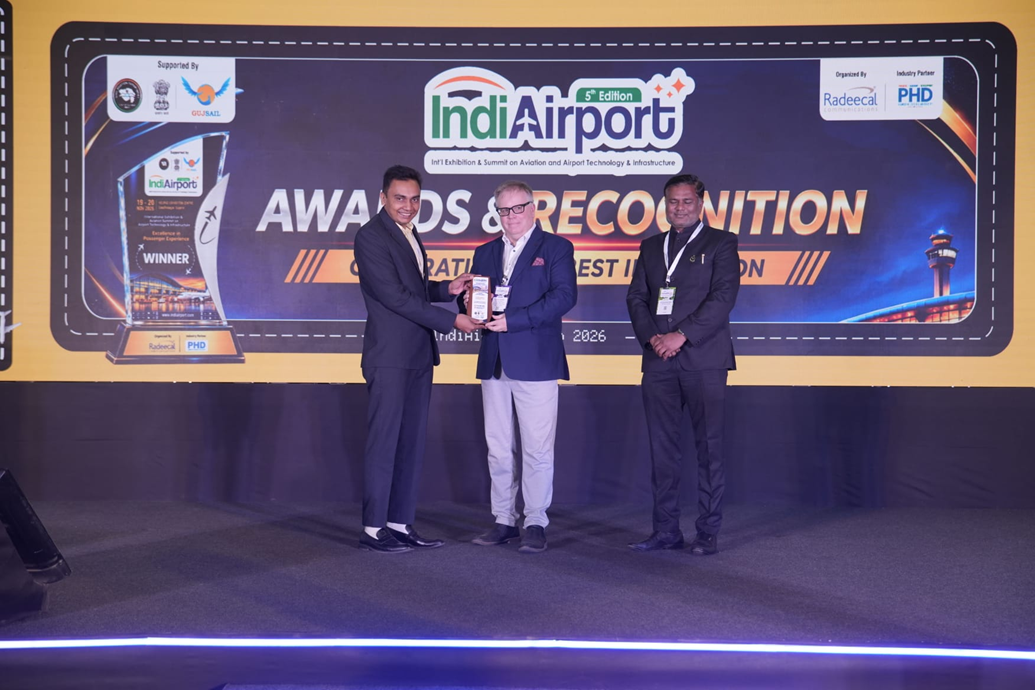
THE FIRST SIX HOURS program finds great interest in India
The Tourism Crisis Communication Management program MTC is developing together with Flying Media (Hungary), received a warm welcome and much interest during the IndiAirport Fair on November 19/20.
Sven Klawunder, CEO of Flying Media, talking with decision makers of Air India, New Delhi Airport, Indian Railways and other interested organisations. He also provided information during his Keynote speech at the bigger aviation fair in India, which resulted in great interest from several universities and training institutions as well as from state administration units.
Flying Media also won not only the Media Marketing Award 2026, but also two other awards from the Aviation Industry and the Chamber of Commerce.
MTC as guest at the Shivapatra Media
Your humble editor was recently invited as a guest to the podcast series of the Shivapatra Media group in Kathmandu, an influential online news portal in Nepal.
For almost an hour, the topics concentrated on tourism in Nepal today and tomorrow and the role Meaningful Tourism can play to improve the quantity and quality of the services offered in the country.
Nepal is full of tourism potential, from the highest mountain to Buddha's birthplace, from friendly locals to low prices, from a moderate climate to low levels of crime. And yet, Nepal's share of all global tourism arrivals is decreasing. The share of arrivals to Nepal of all international arrivals reached a peak in 2018 with 0.084%, before plunging in 2025 to 0.076%.
In terms of population, Nepal is home to 0.36% of the global population. So even to reach the average level of international tourism arrivals per inhabitant, Nepal would need to have four to five million international arrivals per year instead of just a little more than one million. Even worse, the numbers for income per international tourist show that the spending is also at a level of a fifth of the global average.
In a nutshell: A destination with tourism destination potential well above average, neighbouring major source markets, is realising a fifth of a fifth of the average level, or 4% of its potential to just reach average results.
In the podcast, the visit of the Prime Minister of Nepal to India, with increasing visitor numbers from India and increasing customized qualitative levels will be one item on the agenda.
In the next issue of Meaningful Tourism Weekly we will provide the URL for the podcast after it is published.

Meaningful Tourism Innovation Lab (MTIL) Nepal Resumes Operations
Meaningful Tourism Innovation Lab Nepal, together with the Meaningful Tourism Centre, resumed office operations on 17 November, following the festive-season break.
The office had initially been scheduled to reopen from 16 November, but the government later declared an additional public holiday for Chhath Puja, postponing the reopening by one day.

Operational Intelligence, Sustainability Visibility and the Future of Hospitality Infrastructure
By Jabir Ahmad
Hospitality sustainability depends on the decisions made every day inside hotels: what is purchased, how resources are used, how employees work, and what guests are told. When these activities are managed separately, it becomes difficult to connect sustainability commitments with evidence of progress. Better operational intelligence can help close that gap, provided it supports benefits for people and places as well as business performance.
In many hotels, operational reporting, procurement records, food and beverage data, guest communication, and sustainability activities sit across different departments and systems. A property may communicate ambitious environmental goals while its teams struggle to assemble a consistent picture of what is happening. Fragmentation makes it harder to identify priorities, assign responsibility, and distinguish completed improvements from intentions.
This operational disconnect is one of the reasons GreenCert was created. GreenCert is positioned as a smart hospitality operational intelligence platform, with the aim of connecting operational reporting, sustainability visibility, food and beverage insights, and guest experience. Its focus is operational integration rather than functioning as a standalone certification scheme.
This approach connects with the Meaningful Tourism framework, which emphasises measurable benefits and satisfaction for all six tourism stakeholders: visitors, host communities, employees, businesses, governments, and the environment. Applied to hospitality, this means looking beyond a hotel's environmental performance to consider how operational decisions affect people and places. Improvements in food procurement, for example, could support local suppliers, help employees communicate sourcing practices, give guests clearer information, and reduce environmental pressures while strengthening business performance. GreenCert aims to support this approach through better operational visibility and more informed decision-making. However, data alone cannot demonstrate benefits for every stakeholder; it must be complemented by stakeholder feedback and evidence of outcomes. As a certified Meaningful Tourism trainer in Saudi Arabia, I see this connection between operational intelligence and stakeholder wellbeing as an important direction for hospitality development.
Guest communication is one practical area where this connection matters. A sustainability claim is more useful when a guest can understand the practice behind it, the period covered, and the evidence available. Information about sourcing, waste prevention, or resource use should distinguish measured results from targets and estimates. Transparency also requires acknowledging gaps rather than presenting an incomplete picture as a comprehensive assessment.
This is relevant to luxury hospitality, where service quality and comfort can be supported by clear information about how an experience is delivered. Credibility depends on consistency between public messaging and operational practice. Employees need the knowledge and time to explain those practices accurately, without being expected to defend claims they cannot verify.
Food and beverage operations offer a useful example. Purchasing, menu planning, storage, preparation, and service all influence waste and resource use. Recording waste consistently can help a team identify where losses occur and test changes. Procurement information can help clarify supplier relationships and sourcing decisions. These records become more valuable when teams use them to improve practice and assess the consequences of their decisions.
A Meaningful Tourism perspective also asks who experiences those consequences. Does a purchasing change create reliable opportunities for local suppliers? Does a new reporting process help employees or increase their workload? Do guests understand the information provided? Does reduced waste translate into an environmental improvement? Answers require a combination of operational records, dialogue, and appropriate measures, rather than a dashboard alone.
For operators, the priority should be useful information that supports action. Clear definitions, consistent reporting periods, named responsibilities, and proportionate data collection are essential. A small set of dependable indicators can be more useful than a large collection of figures that teams cannot interpret or maintain. Environmental measures should sit alongside relevant business indicators and feedback from employees, guests, and local partners.
This approach is particularly relevant to expanding tourism markets such as Saudi Arabia. New properties and destination developments have an opportunity to establish reporting responsibilities, supplier relationships, and feedback processes from the outset. Existing hotels can begin with a specific operational challenge, establish a baseline, and review whether changes deliver the intended benefits.
Operational intelligence can provide part of the infrastructure for more meaningful hospitality. Its value lies in helping people make better decisions and examine their results. The ambition should be hospitality in which environmental progress, business resilience, guest experience, and stakeholder wellbeing can be considered together, with clear evidence of what has improved and where further work is needed.
About the author
Jabir Ahmad is the Founder and CEO of Jecoluxe, founder of GreenCert and TourismShift, and a certified Meaningful Tourism trainer in Saudi Arabia. His work focuses on hospitality technology, operational intelligence, and connecting tourism knowledge with practical experience.

Meaningful Tourism Community: The Meaningful Tourism Transformational Game Workshop Trainer
Max Dubravko Fijacko - Certified Trainer for Croatia
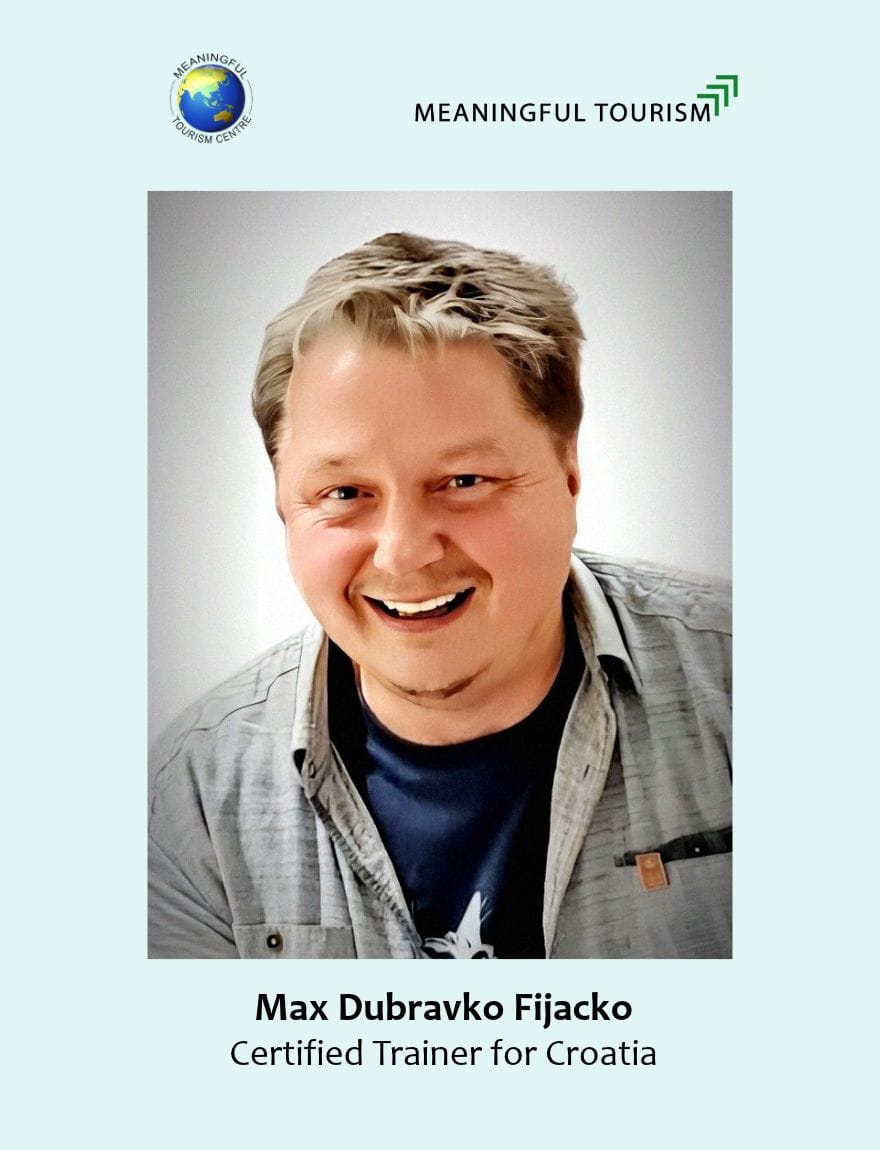
Meet Max Dubravko Fijacko, a passionate heritage interpreter from Croatia, dedicated to enriching tourism through meaningful storytelling and cultural experiences. Certified by Interpret Europe as both an interpreter and trainer, Max has shared his expertise not only across Croatia but also internationally in Austria, Slovenia, Armenia, Albania, Kosovo, and Macedonia. He holds a sommelier certification and has completed WSET education, strengthening his focus on culinary tourism. Max is a certified trainer for the EUROPARC Federation and one of the trainers for the Meaningful Tourism Game Workshop. He runs a private tour agency and serves on several national and European tourism panels. His innovative E.A.T. program has earned him the national “Simply the Best” award and international recognition.
Meaningful Tourism Weekly asked Max about the state of tourism in Croatia and the role the Meaningful Tourism paradigm can play in supporting development in the country.
His answer:
Tourism in Croatia: A Journey from Coast to Connection
Croatia's 180-year tourism legacy—rooted in hospitality, pristine nature, and cultural pride—is evolving into a model for balanced, value-driven travel. While the Adriatic coast captivates with its beauty, rural areas hold Croatia's heartbeat: family farms preserving heirloom recipes, artisans crafting timeless traditions, and communities thriving in harmony with nature's rhythms. Here, travelers don't just observe - they connect. They knead dough for štrukli in Zagorje, hunt truffles beneath Istria's oak canopies, and share stories over Slavonian hearths, where hospitality is a way of life.
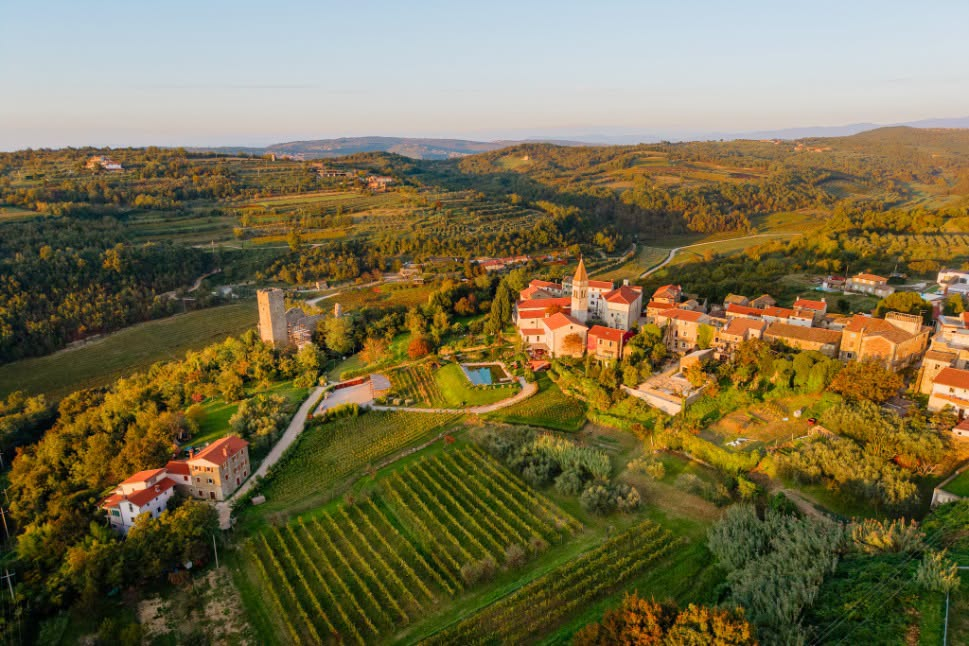
Meaningful Tourism transforms these moments into lasting change. By anchoring journeys in universal values—protecting nature, honoring heritage, and empowering communities—visitors become allies. They leave not just with photos, but with a resolve to safeguard ecosystems, celebrate cultural roots, and champion fairness far beyond Croatia's borders. Initiatives like the Sunflower Award, which highlights rural innovation, prove that sustainability isn't new here but a thread woven into Croatia's story for generations.
The path forward is clear: Croatia's future lies in tourism that nourishes both people and place. By valuing stewardship over shortcuts and human bonds over crowds, every journey strengthens the ties between humanity and heritage. This is how destinations endure - not by chasing trends, but by living their values, ensuring that Croatia's legacy inspires not just admiration, but shared responsibility for a better world.
MTC Certified Trainers
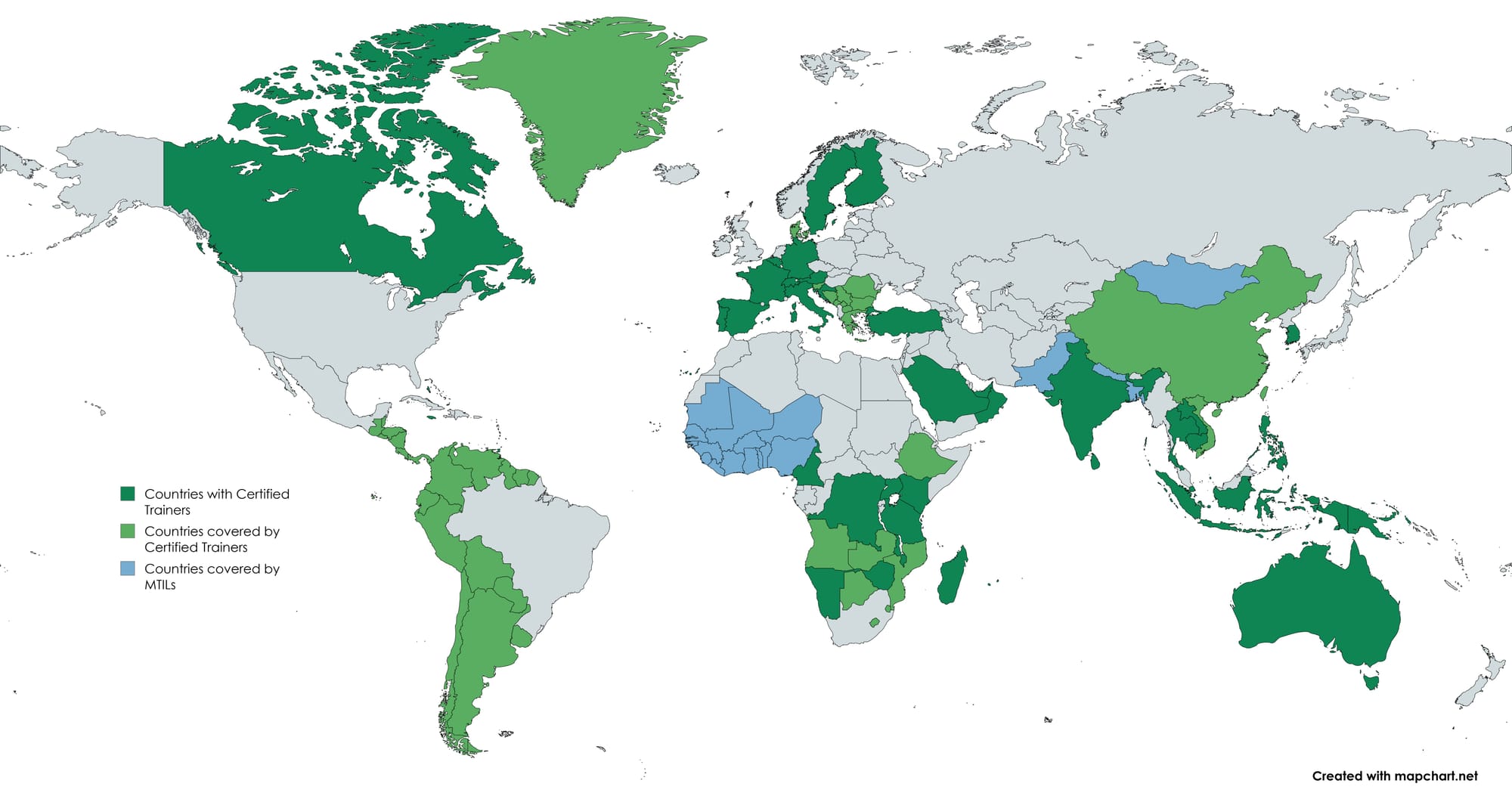
Below is an overview of all Certified Trainers for the Meaningful Tourism Transformational Game Workshop, along with the World Map showing the countries we currently cover.
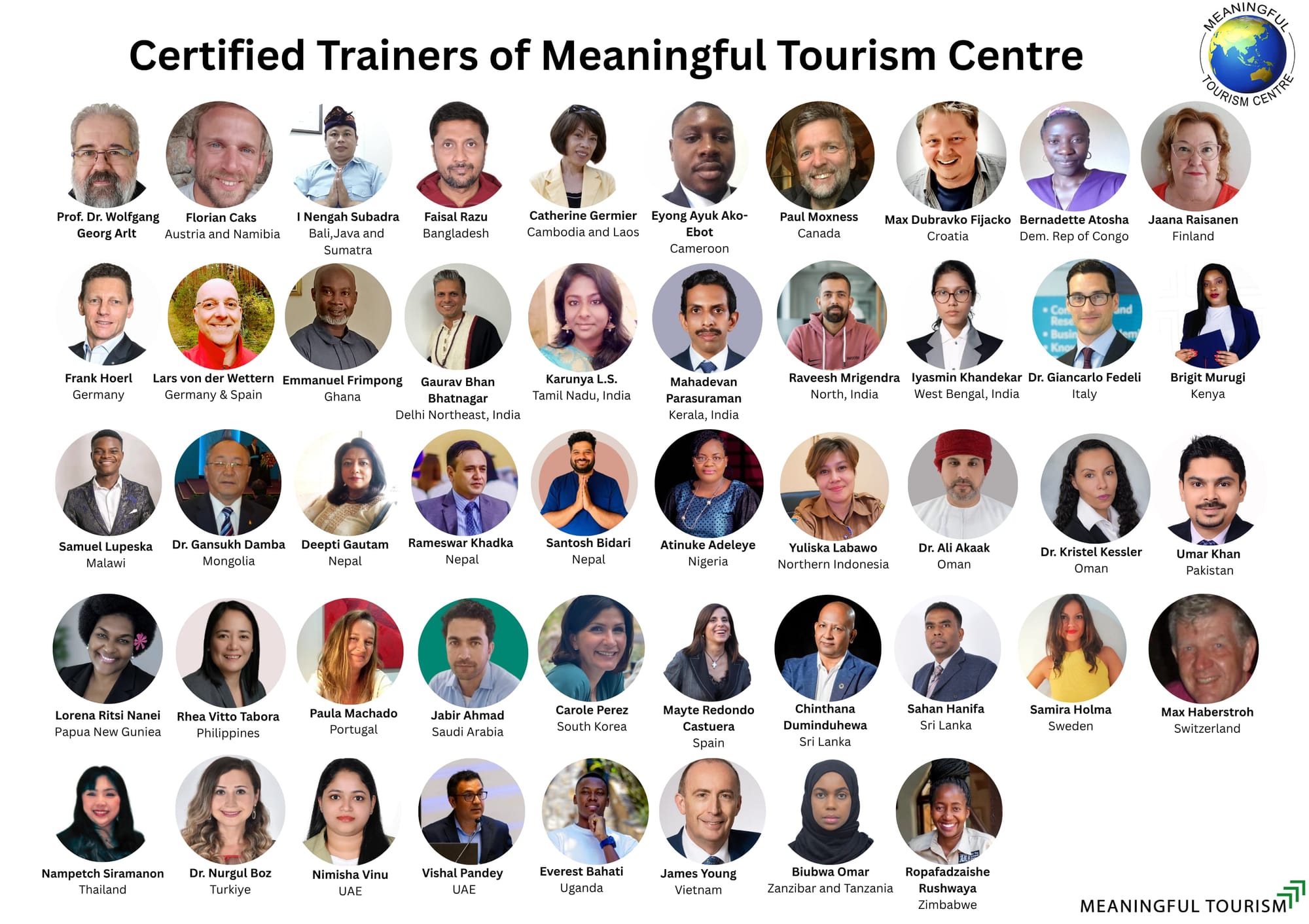
The MTC Certified Trainer network is constantly growing. As the map shows, dedicated experts already serve many countries and regions worldwide. However, MTC is continuously looking for professionals with experience in training or lecturing and a passion for sustainable tourism to join the network and fill the gaps on the map.
About Meaningful Tourism Weekly
Meaningful Tourism Weekly is published every Thursday by Meaningful Tourism Centre (MTC) - London and Kathmandu, in collaboration with Travel Asia Now, led by Rhea Vitto Tabora.
Each issue features an Editorial, updates on MTC activities, a Best Practice Example, a profile of an MTC-certified trainer, news about upcoming events, and, occasionally, additional op-ed pieces from guest authors. The Meaningful Tourism News section also includes carefully selected news items, including videos and podcasts, with links to their original sources.
Subscription to Meaningful Tourism Weekly is free, with the addition of a paid content section that includes a library of surveys, exclusive articles, conference presentations, and statistical data, offering subscribers invaluable resources.
Sponsorship opportunities are available for those interested in supporting this initiative.
For more information about MTC's training programs, market research, product adaptation, consulting services, conferences, strategy development, and marketing, visit our website or email us at info@meaningfultourismcentre.org.