Mobilising Green Resilient Investment

Dear reader,
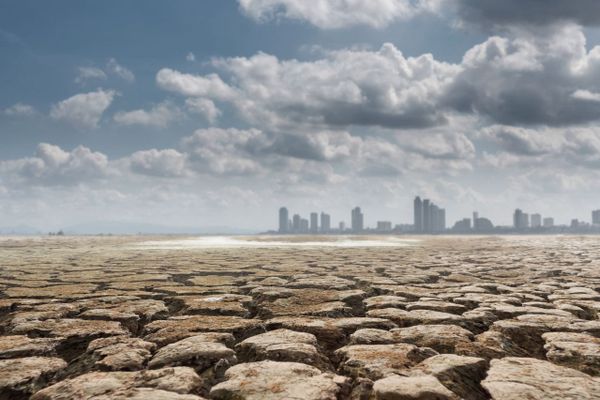
the good news of the week concerns the hope that the biggest polluter on the planet, the USA, will come back to the fight against Climate disaster the world has still to start in earnest. The bad news, also for the tourism industry, can be seen everyday in the news: Extreme weather events killing people, destroying infrastructure and damaging tourism. Additionally, the resulting frustration and anxiety especially of young people results in political unrest, which is also preventing tourists from visiting to cities which are shown in the media as full of burning barricades and clouds of tear gas.
International tourist arrivals are forecast to reach a record 1.57 billion in 2026, despite geopolitical tensions, rising travel costs and slower growth, according to the WTM Global Travel Report 2026, released this week at the WTM in London.
International overnight arrivals increased by only two percent in comparison with 2025. The experts at Tourism Economics nevertheless happily forecast that international arrivals will reach 2.2 billion by 2032, continuing linear projections as if the world would not face serious disruptions in the years to come.
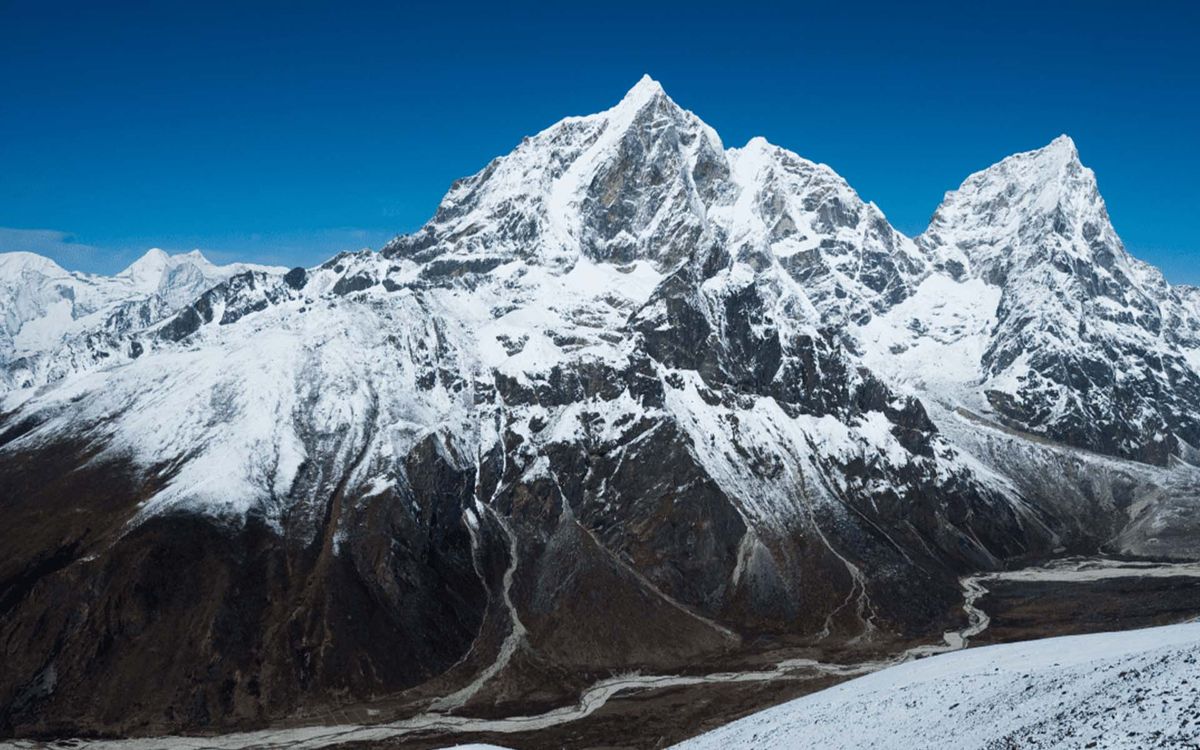
Closer to reality are the experts at the International Centre for Integrated Mountain Development (ICIMOD). In Asia, as stated by ICIMOD based in Lalitpur/Nepal, the Hindu Kush Himalaya mountain range (HKH) is providing glaciers, rivers, biodiversity, and ecosystem services that support the water, energy, food, and livelihoods of nearly two billion people.
At the same time, it is one of the world’s most climate-vulnerable regions, warming at nearly twice the global average and increasingly exposed to glacier melt, floods, and extreme weather. This makes the HKH both a vital global asset and a fragile epicentre of climate risk. Recurrent hazards, including glacial lake outburst floods, landslides, and slow-onset cryosphere loss, expose the region to escalating disaster risk and to residual loss and damage that adaptation alone cannot prevent.
There is no doubt that responding at the required scale will need much more investment in climate-resilient and environmentally sustainable development in the coming years. Especially, the HKH faces unique challenges including climate-induced hazards, livelihood loss, and migration that demand investment at greater scale, speed, and with a stronger focus on resilience and long-term impact.
A key constraint slowing down the process of moving from dialogue to capital mobilization is the absence of clear and consistent criteria for defining and classifying green, transition, and resilience investments in mountain contexts.
A technical workshop, which will be held by ICIMOD in Lalitpur later this month, will address the lack of such frameworks, which creates uncertainty in assessing investment opportunities and makes it more challenging to direct finance towards climate-resilient and sustainable mountain development.
The workshop aims to:
- Build a shared understanding of what constitutes a green and sustainable investment and the role of taxonomies in guiding investment decisions.
- Contextualize green investment for the HKH by integrating climate, mountain, ecosystem, environmental, and development considerations.
- Develop a baseline on the taxonomy landscape across the HKH, including progress, implementation challenges and opportunities for comparability and interoperability.
- Link taxonomies to investment opportunities and financing pathways, including investment readiness, pipelines and capital mobilisation.
- Consult finance-sector, policy, and ecosystem stakeholders to validate barriers faced by enterprises in financing mountain adaptation solutions.
- Facilitate regional peer learning and identify practical actions to advance taxonomy implementation and inform the HKH knowledge product.
Your humble editor has been invited to participate in one of eight sessions, named From Green to Resilient and Bankable: Assessing Investment Opportunities in the HKH. The session will explore green, resilient, and bankable investment opportunities across the HKH region, using case examples from priority sectors in the HKH, including tourism. By identifying key gaps, risks, enabling conditions, and financing approaches that need to be addressed, it should help to turn promising green opportunities into resilient and bankable projects and investable pipelines.
Preparation for the next extreme weather event, earthquake or flood is part of such projects which need a budget to finance the permanent preparedness not only for relief on the ground but also for crisis communication in tourism. The Meaningful Tourism movement is therefore also involved in the creation of workshops and labs within the THE FIRST SIX HOURS program, which help to avoid the “second wave” of destruction of the tourism brand and accordingly the livelihood of many local residents relying on income from tourism-related jobs.
At the same time, the “clear and consistent criteria for defining and classifying green, transition, and resilience investments in mountain contexts” looked for need to include a holistic approach which involves, as in the Meaningful Tourism paradigm, all stakeholders and their benefits and satisfaction.
Watch out for the report on the workshop in the MTC news section of the last edition in November of Meaningful Tourism Weekly!
As always, all the best wishes from the Meaningful Tourism Weekly team in Kathmandu and Manila, and from the whole Meaningful Tourism community to all our readers!


Summary of the latest edition of Travel Dialogues South Asia Podcast
Every week, MTC and its partners TravelDailyNews Asia-Pacific and Tanneri Chaso provide a new episode of the TRAVEL DIALOGUES SOUTH ASIA series of podcasts concentrating on the development of Meaningful Tourism in South Asia, including Pakistan, India, Maldives, Sri Lanka, Nepal, Bhutan, and Bangladesh.
This week we discussed what South Asia must change to attract high-value GCC travellers.
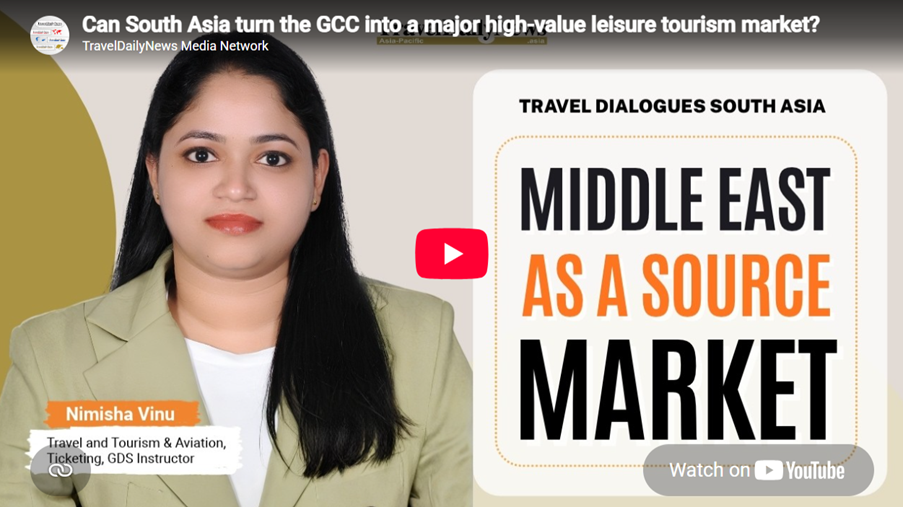
South Asia has significant potential to attract high-value GCC leisure travellers, but stronger marketing, premium infrastructure, easier visas and better destination positioning remain essential for growth.
South Asia has the natural assets, culture and hospitality to attract significantly more leisure travellers from Gulf Cooperation Council countries. However, converting that potential into tourism demand requires destinations to understand that GCC nationals have different expectations from the region’s established VFR market.
The opportunities and obstacles surrounding GCC travellers to South Asia were discussed by Nimisha Vinu, a Dubai-based expert in travel, tourism and aviation education, and Prof. Dr Wolfgang Georg Arlt during Travel Dialogues South Asia.
Their discussion highlighted an important distinction between the large number of South Asian expatriates travelling home from the Gulf and the smaller but higher-value segment of GCC nationals travelling primarily for leisure.
The full podcast can be found here:
https://www.traveldailynews.asia/column/interviews/gcc-travellers-south-asia-tourism/
All videos are also available on the Meaningful Tourism Centre YouTube Channel.

The GCC-South Asia market is dominated by VFR
Millions of Indians, Sri Lankans, Pakistanis, Bangladeshis and Nepalis live and work across GCC countries.
Their regular journeys home create substantial traffic between the Gulf and South Asia. But this Visiting Friends and Relatives (VFR) segment is driven primarily by family relationships rather than destination marketing.
It therefore needs to be distinguished from the leisure opportunity.
GCC nationals from countries including Saudi Arabia, Oman, the UAE, Kuwait and Qatar represent a smaller but potentially high-value market. Their motivations are centred primarily on leisure and recreation.
For South Asian destinations, increasing visitor numbers from the Gulf therefore requires more than benefiting from established air traffic and expatriate movements.
The challenge is to convince GCC nationals to choose South Asia specifically for their holidays.
The Maldives provides a regional benchmark
Within South Asia, the Maldives already holds a particularly strong position among GCC leisure travellers.
According to the discussion, the destination’s combination of ultra-luxury accommodation, privacy and high-end services appeals strongly to Gulf nationals.
Repeat visitation is also significant. The discussion cites approximately 30,000 Saudi tourists visiting the Maldives by August.
This provides an important comparison for other destinations in the region.
India, Sri Lanka and Pakistan already receive visitors from the Gulf, but their potential extends considerably further. Inland regions and destinations such as Nepal also have opportunities to attract leisure travellers beyond established beach and VFR demand.
Escaping the Gulf summer creates an opportunity
Climate could become an important competitive advantage.
GCC residents experience extremely hot summer conditions. This creates demand for destinations offering cooler temperatures during the same period.
Mountainous areas of Nepal, Bhutan and Pakistan can provide that contrast.
This means South Asia does not necessarily need to compete with the Maldives by replicating a luxury beach proposition.
Different destinations can build products around their own advantages.
Mountains, cooler weather, natural landscapes, heritage and cultural experiences could provide alternative reasons for Gulf travellers to visit the region.
The challenge is making those advantages visible in the GCC market.
South Asia needs stronger destination positioning
Vinu identifies marketing and perception as major barriers to growth.
Some destinations are failing to communicate even their inherent competitive advantages effectively.
Pakistan, for example, offers a naturally halal-friendly environment, but the discussion suggests that such attributes are not being sufficiently incorporated into destination positioning.
More broadly, South Asian destinations are not yet sufficiently “audible and visible” in GCC markets compared with the Maldives.
This highlights a fundamental tourism marketing issue.
Having the right tourism assets is not enough if potential visitors do not associate those assets with the destination.
For GCC travellers to South Asia, stronger storytelling needs to explain not simply what destinations contain, but why their tourism products correspond with Gulf travellers’ expectations.
High-value travellers expect high standards
Marketing, however, cannot compensate for weaknesses in the actual visitor experience.
Cleanliness is identified in the discussion as an important concern.
GCC travellers are accustomed to high standards in their home countries and may expect comparable levels of cleanliness and modern facilities when travelling abroad.
This creates challenges for destinations seeking higher-spending visitors.
Luxury accommodation alone cannot create a premium destination experience if the infrastructure surrounding it does not meet similar standards.
The entire journey matters.
Domestic transport can undermine the experience
Transport within the destination is one example.
Poor roads and traffic can reduce the quality of a journey even when the principal tourism attractions are strong.
The discussion also highlights the absence of business-class or premium options on some domestic flights, citing Nepal as an example.
For price-sensitive travellers, these limitations may be manageable.
For a high-spending family accustomed to premium aviation and sophisticated infrastructure in the Gulf, they can become significant barriers.
Ground transportation presents a similar issue.
The discussion points to limited luxury transport alternatives, including helicopter connections, compared with competing destinations.
Attracting a premium market therefore requires destinations to examine the complete tourism supply chain, not simply hotel inventory.
Visa processes need to become easier
Accessibility begins before the traveller boards an aircraft.
Online visa procedures across South Asia can be uneven and confusing, according to the discussion.
For destinations competing for discretionary leisure travel, unnecessary complexity creates friction.
A potential visitor comparing several destinations may have little reason to persist with a difficult process when another country provides a simpler alternative.
Reliable and efficient visa systems are consequently identified among the conditions required for stronger future growth from GCC markets.
Arabic-speaking service can make a difference
Language also matters.
The discussion notes that GCC nationals often prefer service personnel who can communicate in Arabic.
For hotels, tour operators and other tourism businesses seeking this market, language capability can therefore form part of product adaptation.
This reflects a broader lesson.
Attracting high-value GCC travellers cannot rely solely on translating marketing campaigns into Arabic.
The visitor experience itself needs to reflect an understanding of the market.
Safety is partly a communications challenge
Perception of safety presents another obstacle.
A destination can have low crime levels but still struggle if potential travellers do not perceive it as safe.
Nepal is cited as an example. The discussion describes it as having low crime rates, while noting that this is not communicated effectively enough.
This distinction between reality and perception is critical.
Destination competitiveness depends not only on actual conditions but also on what potential visitors believe those conditions to be.
For emerging source markets, communication therefore becomes part of the tourism product.
Climate events create another layer of uncertainty
Climate change further complicates the issue.
Recent floods in Nepal and India, together with heatwaves and forest fires in vulnerable regions, can affect perceptions of stability and safety.
The discussion consequently identifies effective crisis response and communication as increasingly important for tourism destinations.
For GCC travellers unfamiliar with the geography of a South Asian country, an event affecting one region can potentially influence perceptions of the destination as a whole.
Destinations seeking to develop these markets therefore need systems capable of communicating conditions clearly and rapidly when disruptions occur.
Meaningful tourism could support future demand
Despite these challenges, Vinu sees considerable potential.
South Asia combines natural beauty, cultural and heritage assets and hospitality, providing a broad foundation for leisure tourism development.
Changing traveller preferences could strengthen that opportunity.
Vinu expects a significant increase in GCC leisure travel to South Asia during the next five to seven years.
The outlook is linked to the post-pandemic desire to travel, growing interest in Meaningful Tourism and sustainability, and improving airline connectivity. The discussion cites FlyDubai’s connection to Pokhara as an example.
These trends could favour destinations able to offer something beyond conventional luxury.
Nature, culture, local interaction and cooler mountain environments can provide differentiated experiences for Gulf travellers looking for new destinations.
South Asia still needs to “do its homework”
The potential, however, will not translate automatically into demand.
Vinu argues that South Asian destinations need to “do their homework.”
That means improving destination marketing and storytelling. It means investing in infrastructure, cleanliness and sophisticated amenities.
Visa procedures need to become more reliable and efficient.
Destinations also require effective crisis-response systems capable of dealing with climate-related events and communicating accurately with international markets.
The opportunity surrounding GCC travellers to South Asia therefore involves much more than promotional campaigns.
It requires product development.
The Maldives has demonstrated that GCC nationals will travel repeatedly to South Asia when the proposition meets their expectations.
Other destinations have different assets and do not need to replicate the Maldivian model. Mountains, cooler climates, heritage, culture and meaningful experiences provide alternative opportunities.
But converting those assets into a competitive tourism proposition will require the region to address the complete visitor journey.
For South Asia, the GCC market may represent substantial untapped potential.
Realising it will depend on whether destinations can combine their existing natural and cultural strengths with the visibility, accessibility, infrastructure, service standards and confidence expected by high-value Gulf travellers.

New MTC book project asking the question “Why is Nepal poor?”
MTC headquarters are based in Nepal, a country with a lot of unutilized potential not only in tourism.
Your humble editor has teamed up with Khem Lakai Sir, a widely known and respected pioneer in education in Nepal. His GATE Global Academy of Tourism Education hosted the first MTC office in the country, as co-editor.
In the spirit of Meaningfulness to give all stakeholders a voice, the book will gather 50 persons from all walks of life to provide answers based on their personal and professional insights.
Nepal is home to a young, relatively well-educated population with a high level of English proficiency, constituting about 0.3% of mankind in the 50th biggest country in the world in terms of size.
It has a moderate climate, few dangerous animals, and low levels of pollution outside the main cities. The society is hospitable, tolerant towards different religions and enjoys a high level of security with a very low crime rate.
Nepal is situated between the two most populous countries in the world and can be reached by half of mankind within four hours by air transport, providing access to a huge potential customer group for tourism and agricultural products, green energy, herbs and medicinal plants, and more.
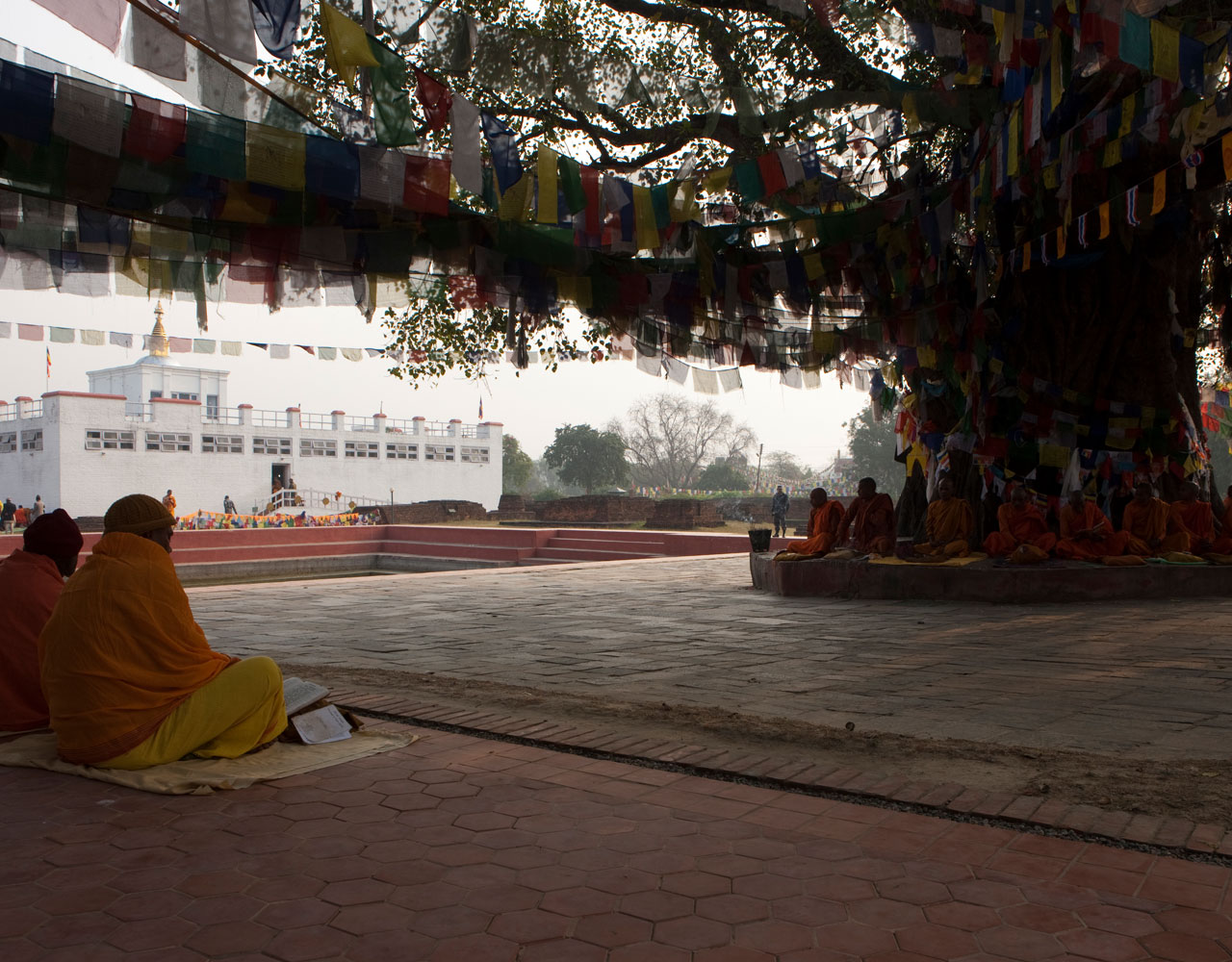
It has a rich heritage of culture, architecture, and arts, including the birthplace of the Buddha, as well as natural beauty, with the highest mountain in the world recognized as its main icon. Politically, it is a strictly neutral country, not conceived as a threat by any nation, with an image built up by the many Nepalis working outside the country, as a home of friendly, warmhearted, and hardworking people.
In times of internet and services as major part of the global industry the fact that the country is landlocked is not a serious disadvantage anymore.
And yet: Nepal is the fifth poorest country in the world outside of Africa, with only 10% of the global average GDP per capita, receives 1% of the global average FDI, less than 0.1% of international tourist arrivals, has a seriously underdeveloped transport infrastructure, no functioning public transport systems, an outdated banking and taxation system, lower than global and regional average numbers for hospitals, doctors and life expectancy, higher than average numbers for infant mortality, mental illnesses and suicide rates and a ranking as 72nd out of 122 countries in the Global Hunger Index.
It has fallen behind its neighbours in the region in the development in almost all economic and societal aspects in the first quarter of the 21st century, ranking in most categories in the penultimate position in South Asia, just ahead of Afghanistan.
The question is a simple one: Why is Nepal poor?
Far from being the “Switzerland of Asia”, it falls behind countries like Turkmenistan and Mongolia in GDP per capita, with Southeast Asian countries like for example Malaysia reporting eight times the GDP per capita, compared to Nepal.
50 selected persons will be asked to answer the question “Why is Nepal poor?” in 1,000 words. It is planned to issue a second volume based on the answers discussing the question “What can be done to get Nepal out of the Poverty Trap it is in”? However, this first volume will concentrate on what can be seen as the main reason(s) for the current situation rather than on what actions should be taken to improve it.
Nepal and the world are in a situation of dramatic changes caused by the increasingly severe consequences of climate change and growing international conflicts, as well as by the technological progress in Artificial Intelligence and Robotics.
Many countries witness the young generation demonstrating their anxiety and frustration with the current situation, resulting in some countries, again including Nepal, in changes in government and the direction of policies.
Therefore, it seems to be the right time to collect insights from people from all kinds of personal situations, experiences and professions about the reasons for a lack of, at least, a snail's pace of development, which will also provide insights for the rest of the world.
The book will be published online and offline in English and in Nepali. The book launch will be used for a public discussion, which will be streamed online.
The next festival
In the coming week, Nepal is celebrating Tihar, the Nepali version of the Hindu festival of lights called Diwali in northern India and Deepavali in southern India. Both festivals share the core theme of celebrating the victory of light over darkness and of good over evil; however, they differ in regional traditions, rituals, and focus.
Because of Tihar, the MTC office will be closed in the coming week and, accordingly, there will be no Meaningful Tourism Weekly published.


Meaningful Tourism Innovation Lab (MTIL) Nepal
The Meaningful Tourism Innovation Lab Nepal will, together with the Meaningful Tourism Centre, be closed in the coming week on the occasion of Tihar.
MTIL Pakistan
MTIL Pakistan is moving on from planning to implementation. Community tourism in the Hunza has been proposed as the first pilot project under MTIL Pakistan. Coastal tourism and Halal tourism are under discussion as the next areas for engagement of MTIL Pakistan.
The proposed national Halal tourism project has now gained strong visibility in Pakistan’s travel media. The initiative has been featured in leading publications including The Nation, Travel Port, Weekly Travel Explorer and Sabre, underlining growing industry interest in structuring and promoting Pakistan’s halal-compliant tourism offer, including the potential of halal medical tourism, within the MTIL Pakistan framework. One example of the press coverage is the article “Hunza Community Tourism Proposed as Pilot Project under MITL,” published on 17 October 2026.
 STAFF REPORT

A first Roundtable Meeting at Federation House in Karachi is planned within this month to involve different stakeholders of the tourism industry in Pakistan in the work of MTIL Pakistan. Prof. Dr Wolfgang Georg Arlt will attend the meeting online.
These developments confirm that MTIL Pakistan is progressing from concept to action, with the Hunza pilot, the emerging Halal tourism roadmap and the upcoming Karachi roundtable forming the core milestones highlighted in the coming week’s news.

Tranquil Travels and Tours Ongoing project and Interest
By Atinuke Adeleye, Founder of Tranquil Travels and Tours
Tourism is more than travelling from one destination to another. It is about people, communities, culture, businesses and the environment that make those experiences possible. As the founder of Tranquil Travels and Tours and a tourism sustainability advocate, I have become increasingly convinced that the future of tourism depends not only on what happens within the tourism industry, but also on how we educate the people who live in and around tourism destinations.
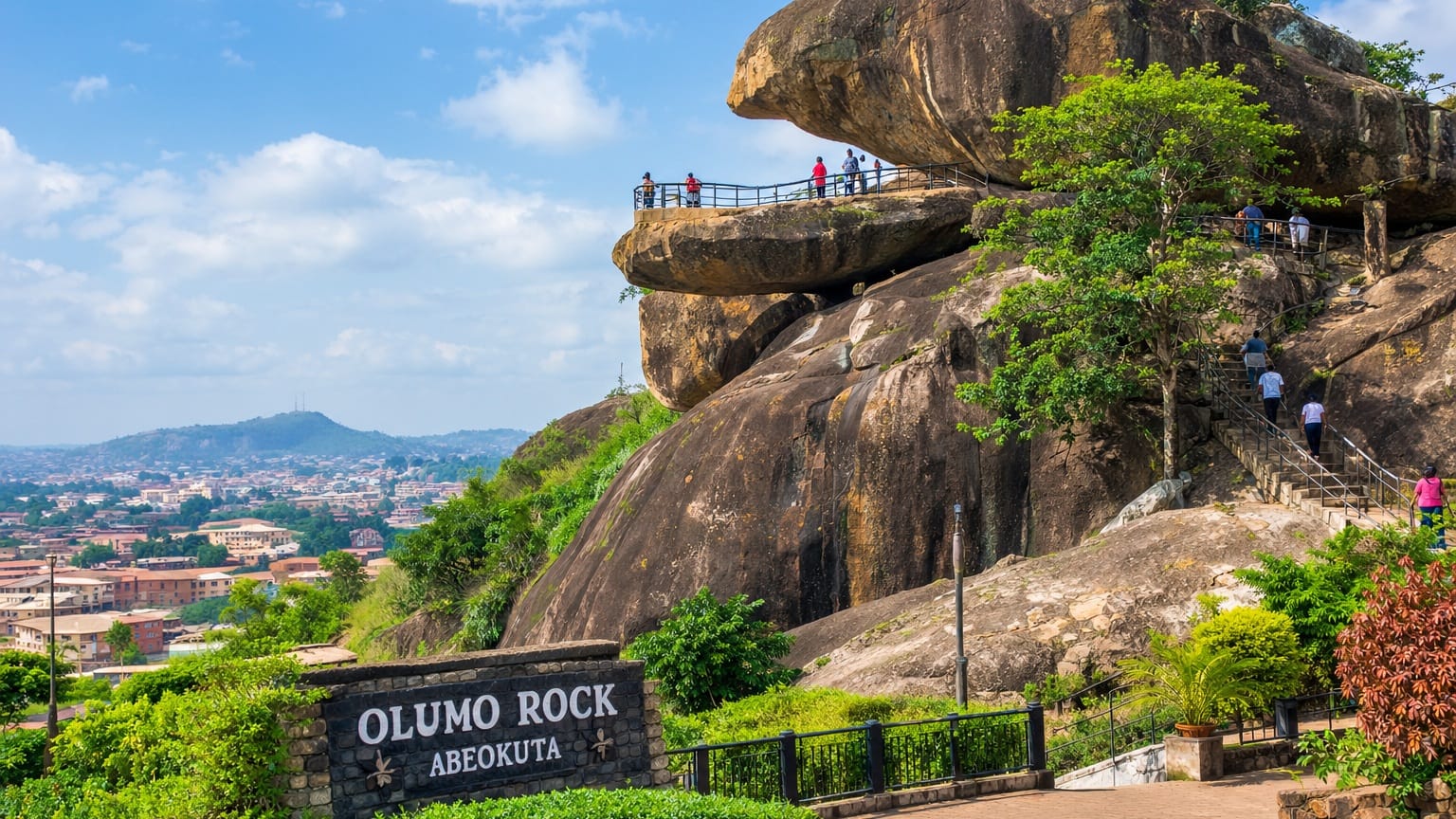
This belief has led me to develop a project focused on educating students and local communities about sustainability and its importance to tourism and everyday life because one of the problems of tourism in Nigeria is a lack of information hence, educating people will create a lot of awareness.
The project is built around a simple idea: sustainability should not remain a concept discussed at conferences or in corporate reports. It should become something people understand, practice and take ownership of from an early age.
Starting with Education
Students are an important part of this vision because they represent the future workforce, entrepreneurs, community leaders and decision-makers of our destinations. Through educational sessions, discussions and practical activities, the project seeks to introduce students to basic sustainability principles and help them understand how their everyday actions can influence the environment and their communities.
The conversations go beyond environmental protection. Students are encouraged to think about waste management, responsible consumption, conservation, local culture, community development and the role tourism can play in creating economic opportunities.
For communities, the project focuses on helping people understand that tourism can become a tool for local development when communities are actively involved. Local people should not simply be recipients of tourism activity; they can become guides, storytellers, entrepreneurs, artisans, food producers, conservation partners and custodians of cultural heritage.
Connecting Sustainability with Meaningful Tourism
My work aligns strongly with the Meaningful Tourism paradigm, which recognises six important stakeholders: visitors, host communities, tourism employees, tourism and hospitality businesses, government, and the environment. Meaningful Tourism emphasises creating objective benefits and subjective satisfaction for these stakeholders rather than focusing only on visitor numbers.
This perspective has influenced how I think about sustainability education. If we want tourism to become genuinely sustainable, we need to bring different stakeholders into the conversation early.
Education can help create that common understanding.
From Awareness to Action
The goal of the project is not simply to tell people that sustainability is important. It is to help them understand what they can actually do.
For students, this could mean developing sustainability projects within their schools, reducing waste, protecting their surroundings or identifying ways tourism can support their communities.
For communities, it could mean identifying local tourism assets, preserving cultural traditions, supporting local businesses, improving environmental practices and developing tourism experiences that create income while respecting local identity.
This approach reflects the Meaningful Tourism emphasis on practical action, stakeholder alignment and measurable improvement through SMART KPIs.
Looking Ahead
Though the project is still gathering momentum, my ambition is to build a model that can be replicated across schools and communities and eventually connected to tourism destinations and businesses.
I believe Africa, and particularly Nigeria, has an opportunity to develop a different tourism story, one where tourism growth is connected to education, community empowerment, cultural preservation and environmental responsibility.
For me, Meaningful Tourism begins long before the tourist arrives. It begins with how we prepare the people and places that will receive them.
Through Tranquil Travels and Tours, my goal is therefore not only to promote travel, but to contribute to building a tourism culture where people understand the value of their environment, appreciate their communities and recognise tourism as a pathway to sustainable development.
If we want a sustainable tourism future, we must educate the people who will create it.

Meaningful Tourism Community: The Meaningful Tourism Transformational Game Workshop Trainer
Dr. Giancarlo Fedeli - Certified Trainer for Italy
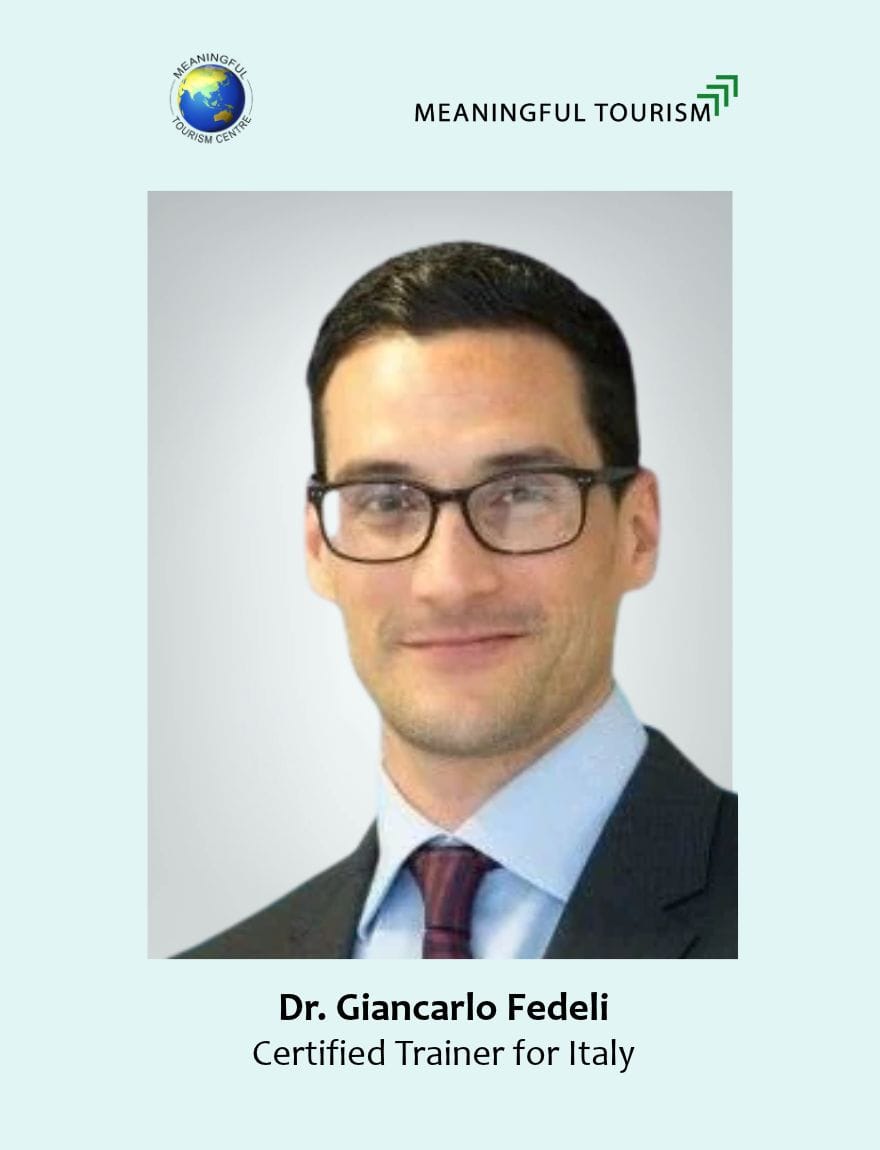
Dr. Giancarlo Fedeli, Ph.D., is an Associate Professor of Marketing and Management at the Università degli Studi di Bergamo, focusing on the intersections of tourism, technology, and marketing. He previously served as Professor of Tourism Management at IMC Krems University of Applied Sciences in Austria and spent several years at Glasgow Caledonian University’s Moffat Centre for Travel & Tourism, where he contributed to more than 50 international projects. Multilingual in English, Italian, Spanish, and German, he has taught and led research across Europe and Asia, combining academic expertise with practical consultancy in tourism marketing, business development, and strategic planning.
Meaningful Tourism Weekly: What is the current situation of tourism in Italy and how can the Meaningful Tourism Paradigm help to support its development?
Giancarlo: Few countries embody the very essence of tourism like Italy. Synonymous with culture, art, cuisine, and breathtaking landscapes, Italy is not only one of the world's most visited nations but also a benchmark for what global tourism aspires to be. From Rome's Colosseum to Venice's canals, Tuscany's vineyards to the Amalfi Coast's cliffs, Italy offers an unrivalled variety of experiences that continues to attract millions.

Post-pandemic, the sector is thriving again: arrivals and spending are climbing, especially from loyal markets such as the United States, Germany, and France, while global events like the Jubilee reaffirm Italy's central place in the global tourism map.
But leadership comes with pressure. Inflation has pushed up costs, making domestic travel less accessible for Italians. World-famous cities are facing overtourism, which strains housing, infrastructure, and the quality of life for residents, while also placing heritage and the environment at risk.
Meanwhile, the global traveller is evolving. Tourists no longer seek only monuments and museums; they desire authenticity, sustainability, and memorable encounters with people and places. Italy's challenge is to adapt without losing its soul.
The Meaningful Tourism paradigm provides a timely solution. Rather than chasing visitor numbers, it seeks to maximize benefits for all stakeholders: travellers, residents, employees, businesses, government, and the environment. It measures success through heritage preservation, community well-being, and environmental quality as much as through arrivals. For Italy, this means spreading tourism beyond peak seasons, showcasing hidden gems beyond the overcrowded classics, and embedding visible sustainability practices that resonate with responsible travellers.
By adopting this vision, Italy can move from being not just the most beloved destination, but the most meaningful one; demonstrating that global leadership in tourism is not about volume, but about creating value that endures for visitors and communities alike.
MTC Certified Trainers
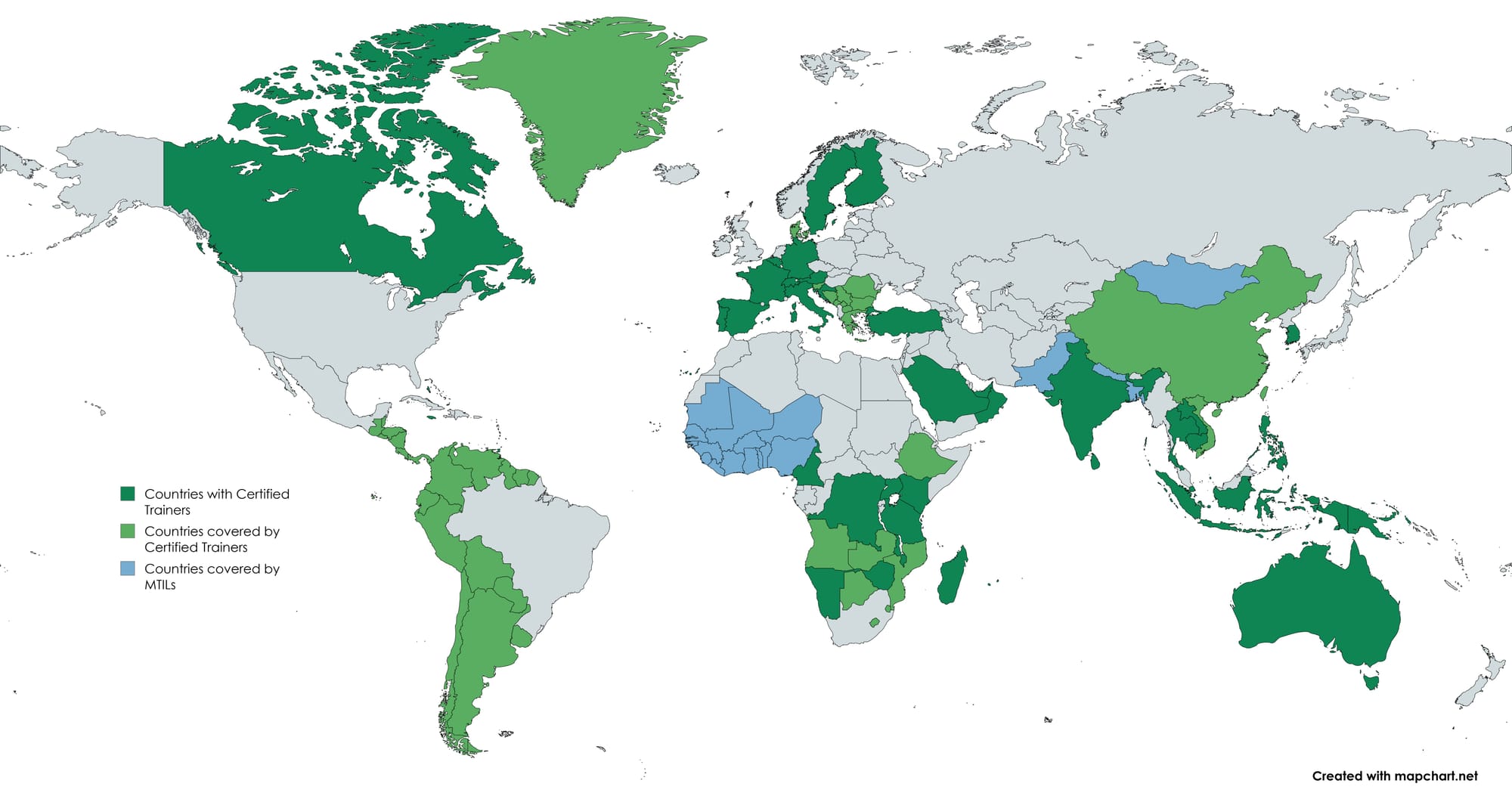
Below is an overview of all Certified Trainers for the Meaningful Tourism Transformational Game Workshop, along with the World Map showing the countries we currently cover.
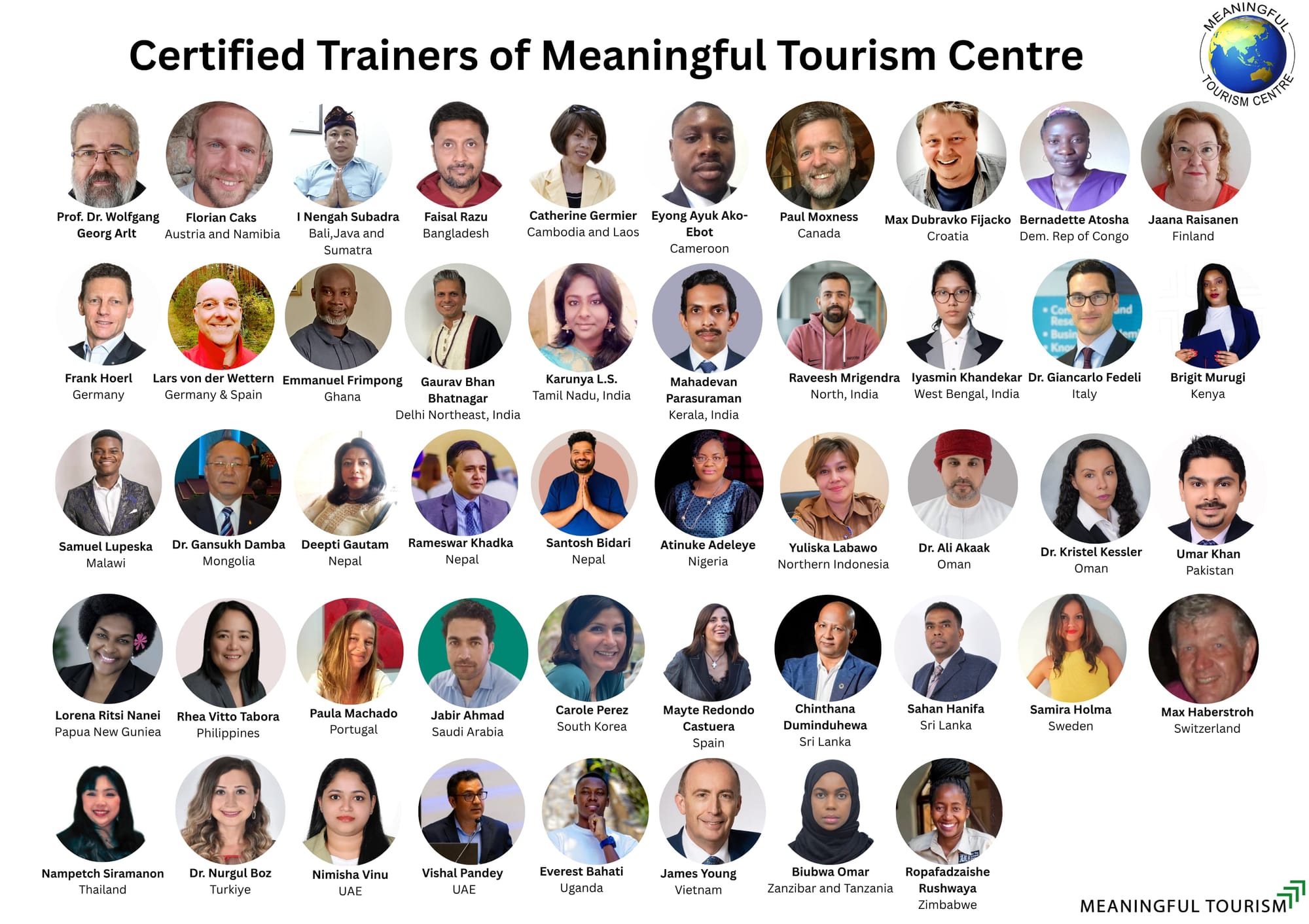
The MTC Certified Trainer network is constantly growing. As the map shows, dedicated experts already serve many countries and regions worldwide. However, MTC is continuously looking for professionals with experience in training or lecturing and a passion for sustainable tourism to join the network and fill the gaps on the map.
About Meaningful Tourism Weekly
Meaningful Tourism Weekly is published every Thursday by Meaningful Tourism Centre (MTC) - London and Kathmandu, in collaboration with Travel Asia Now, led by Rhea Vitto Tabora.
Each issue features an Editorial, updates on MTC activities, a Best Practice Example, a profile of an MTC-certified trainer, news about upcoming events, and, occasionally, additional op-ed pieces from guest authors. The Meaningful Tourism News section also includes carefully selected news items, including videos and podcasts, with links to their original sources.
Subscription to Meaningful Tourism Weekly is free, with the addition of a paid content section that includes a library of surveys, exclusive articles, conference presentations, and statistical data, offering subscribers invaluable resources.
Sponsorship opportunities are available for those interested in supporting this initiative.
For more information about MTC's training programs, market research, product adaptation, consulting services, conferences, strategy development, and marketing, visit our website or email us at info@meaningfultourismcentre.org.