Crisis is the new normal

Dear reader,
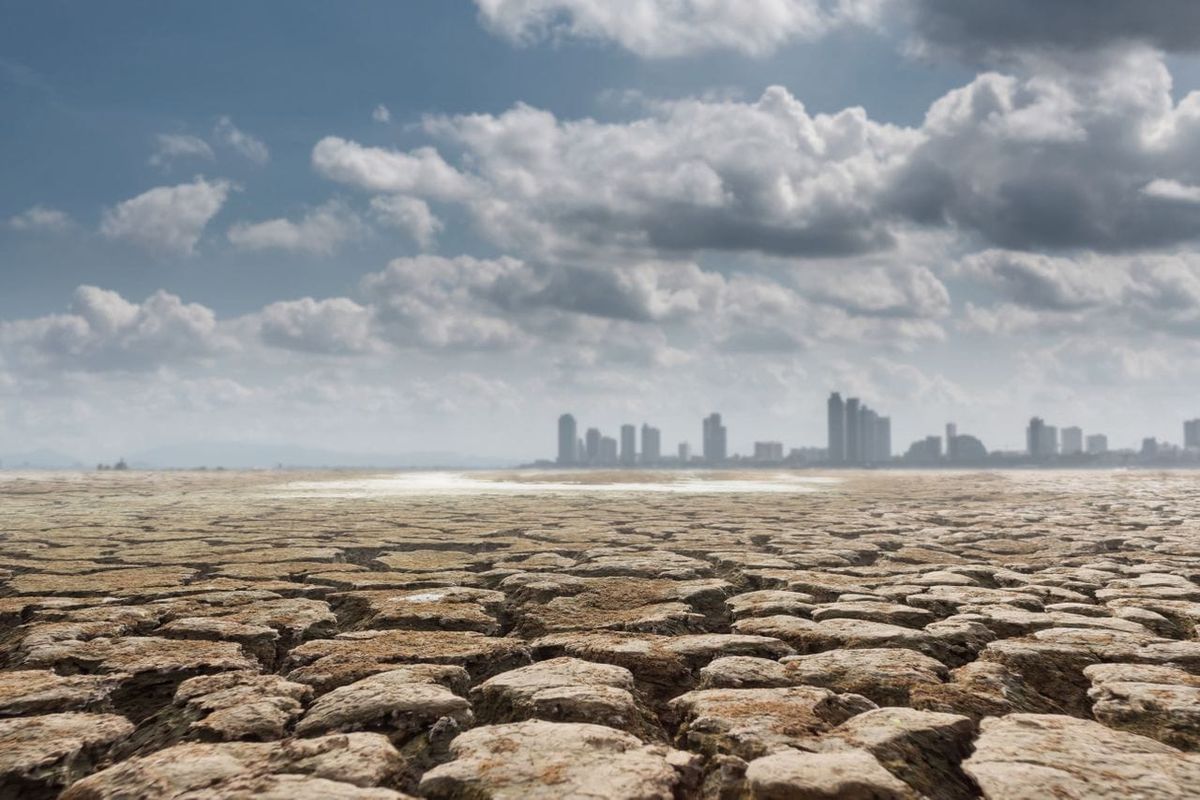
four years ago, the then WMO World Meteorological Organization Secretary-General Prof. Petteri Taalas pointed out that the negative trend in climate change will continue until at least the 2060s, even if all global greenhouse gas emissions and pollution would stop tomorrow, as the massive volume of heat and greenhouse gases already trapped by human activity will drive global warming and extreme weather for generations to come.
Climate change operates on a timescale of decades to centuries. Because greenhouse gases persist in the atmosphere for a very long time, the planet will continue to warm for several decades regardless of current emission cuts. The WMO SG explicitly warned that the "game is practically lost" when it comes to stopping glacier melt and sea level rise. These specific impacts will continue to worsen for hundreds or even thousands of years. As global temperatures are rising, the frequency and duration of heatwaves will continue to increase. This creates a vicious cycle where heatwaves trigger severe wildfires, which in turn degrade global air quality and harm ecosystems, even under low-emission scenarios.
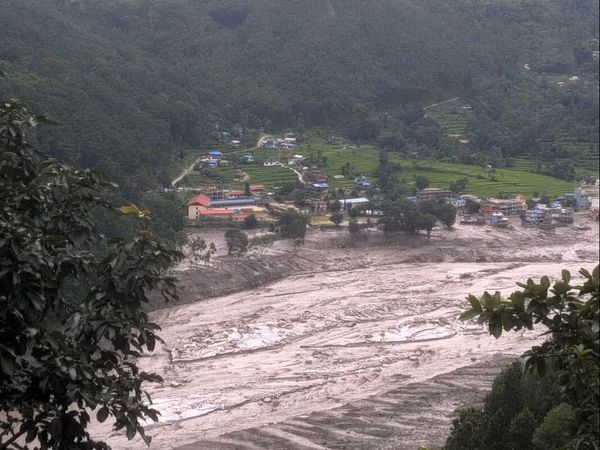
The upcoming IPCC Intergovernmental Panel on Climate Change Working Group II Seventh Assessment Report, of which your humble editor has the honour to contribute a tiny bit, will in 2007 certainly come to the same conclusion, as this year has already seen many of these forecasts moving into the daily news. In Nepal, where MTC and your humble editor are based, a series of floodings generated by landslides have killed thousands of people; megacities from Santiago de Chile to Istanbul to Bangkok witnessed unprecedented floodings, record-low water levels of the main European rivers have crippled logistics and the economy.
The results for tourism are manyfold. Directly in the form of potential visitors cancelling trekking tours in Nepal or city breaks around the world. Frankfurt airport is lacking Kerosine as the transport via the Rhine river has become impossible. Ferries in the Mediterranean have to stop their services.
Indirectly, there is a growing general reluctance to travel anywhere for fear of ending up in the middle of natural catastrophes - or rocket attacks on airports.
The tourism industry needs to react in two ways: On the one hand, developing new tourism offers which rely less on outdoor activities and more on transformative experiences within communities within a Meaningful Tourism Economy. On the other hand, by developing the tools and instruments to be prepared for immediate reaction to tourism crises in communication, especially with the international market.
Due to AI and social media, there is a very limited window of opportunity to influence the narrative and to prevent long-lasting damage to the brand or company image. As pointed out earlier here, crises are no longer made global only by press conferences or television news. A smartphone video, a social post, an automatic translation or an AI-generated summary can shape international perception before a destination has activated its communication architecture. During the flooding a few days ago in Nepal, it took only 30 minutes for the first Facebook group to be started to warn communities downstream, long before the government sent out official warning SMS. Within a few hours, smartphone videos could be found on YouTube.com.
That is why MTC is working together with our partner Flying Media to start the FIRST SIX HOURS academy, offering offline workshops and labs of different intensity, online trainings, publications and certification courses for vocational training and higher education institutions.
Following the research results of WMO and IPCC, there is an urgent need for all private and public tourism stakeholders to update and professionalize their tourism crisis communication management.
Next week, the Dashain festival brings public life in Nepal to a standstill, there will be no Meaningful Tourism Weekly published. After the festive season, MTC will organize a special additional training for its Certified MTC trainers worldwide for THE FIRST SIX HOURS workshops and labs. To keep up with the project, please refer to TheFirstSix.info.
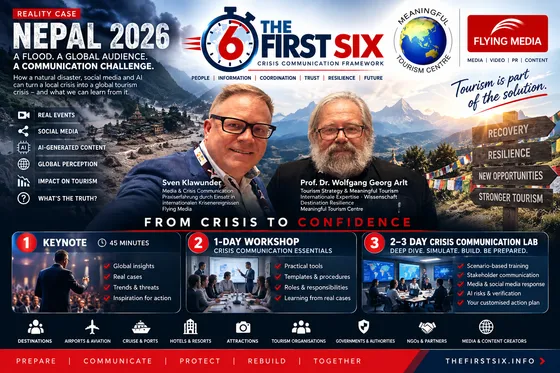

Your humble editor will use the Dashain time to visit ITB ASIA next week in Singapore, hoping to meet some of our readers there.
As always, all best wishes from the Meaningful Tourism Weekly team in Kathmandu and Manila, and from the whole Meaningful Tourism community to all our readers!


Happy Dashain!
In the coming week, Nepal, home of MTC, is celebrating the festival of Dashain. It is celebrated to honour the triumph of good over evil, specifically commemorating the victory of the Hindu goddess Durga over the demon Mahishasura and Rama's victory over the demon king Ravan. It is Nepal's longest and most significant festival, lasting for 15 days, out of which one week is designated as public holidays.
On the tenth and most important day, family members receive a Tika sign made of a mixture of red vermilion, yogurt, and rice from their elders along with blessings for prosperity and protection. People travel back to their ancestral homes from across the country and abroad to gather, feast, fly kites, and set up traditional bamboo swings.
This year, the severe floods, which cost many lives, are dampening the festive mood and the many damaged roads and bridges are making transportation difficult. Due to the severance of connections to China, many goods did not arrive on time and prices are jumping up even more than in normal festive seasons. The local airlines have added flights in the evening to the normal schedule to cope with the many travellers who would rather spend some extra money on airfare than dare to use road transport. Unfortunately, the domestic travellers do not have to compete with international guests for tickets, as many have cancelled their visits to the country due to the worldwide reporting on the floods.
The MTC office will be closed in the coming week; your humble editor will be in Singapore for ITB ASIA.

Meaningful Tourism Innovation Lab Nepal
Two new videos have been produced by the Meaningful Tourism Innovation Lab (MTIL) Nepal.
The first video explains what a MTIL is, why it is needed, introduces how to start a Meaningful Tourism Innovation Lab (MTIL) in a country and outlines the benefits for partner organizations. It is available on the Meaningful Tourism Centre website and on YouTube:
The second video provides an example of Meaningful Tourism workshops. It documents the “Meaningful Tourism & AI” workshop held on 10 August 2026 in Lalitpur/Nepal. It showcases how Meaningful Tourism tools and artificial intelligence can be combined in practical tourism. This video is also available via the Meaningful Tourism Centre website and on YouTube.
Meaningful Tourism Innovation Lab Pakistan
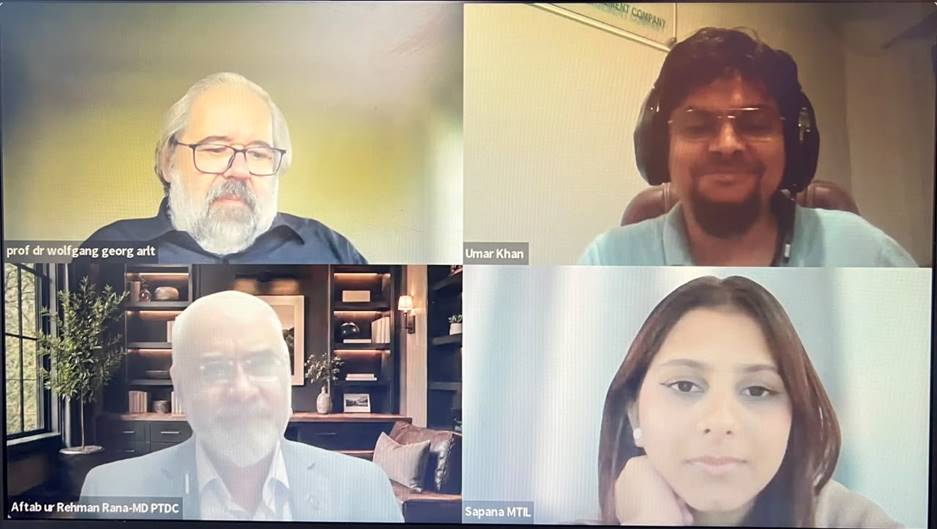
Meaningful Tourism Innovation Lab (MTIL) Pakistan is moving forward, as was shown in an online meeting with Mr. Aftab‑ur‑Rehman Rana, Managing Director of the PTDC Pakistan Tourism Development Corporation, Salman Javed, Convener of the Federation of Pakistan Chambers of Commerce & Industry Standing Committee on Tourism Economy; Umar Khan, Founder & CEO of the DMC Born Xplorer, Meaningful Tourism Trainer, and leader of the Meaningful Tourism Innovation Lab Pakistan, Prof. Dr. Wolfgang Georg Arlt, Executive Director MTC, and Sapana Adhikari, Secretariat Meaningful Tourism Innovation Lab Nepal.
The meeting with the two distinguished Pakistani tourism decision makers focused on how the Meaningful Tourism approach – aiming to create benefits and satisfaction for visitors, local communities, employees, businesses, governments and the environment – can be implemented in Pakistan through the MTIL structure. Both experts expressed their support for the Meaningful Tourism paradigm as a next step forward and a new framework for tourism development in Pakistan.
The MTIL was described as a platform to connect public and private stakeholders, improve coordination between federal and provincial tourism bodies, and support dialogue between stakeholders beyond the silos of limited communication.
All participants agreed that among the many tasks waiting to be tackled, the most important ones should be prioritized and addressed in the form of pilot projects, for example, for the further development of community‑based tourism in the northern areas.
The development of SMART Key Performance Indicators (KPIs) for all stakeholders, tailored to the situation in Pakistan, was also addressed.
The potential of halal tourism and halal medical tourism was another key topic, noting that Pakistan already offers halal‑compliant conditions but has not yet systematically promoted or branded this advantage in international markets. In this context, MTIL Pakistan was identified as a suitable mechanism to structure and advance work on halal‑focused tourism offerings and their marketing.
All participants agreed that the Meaningful Tourism Innovation Lab Pakistan is an important step forward to support the development of tourism in the country. Two dedicated roundtables in Pakistan for Meaningful Tourism and for Halal Tourism will be organized, making it possible to bring additional partners on board and define concrete next steps. More workshops and trainings are also planned to be incorporated into the Sustainable Destinations Forum within the Pakistan Travel Mart 2027.

Meaningful Tourism Community: The Meaningful Tourism Transformational Game Workshop Trainer
Lorena Ritsi-Nanei - Certified Trainer for Papua New Guinea
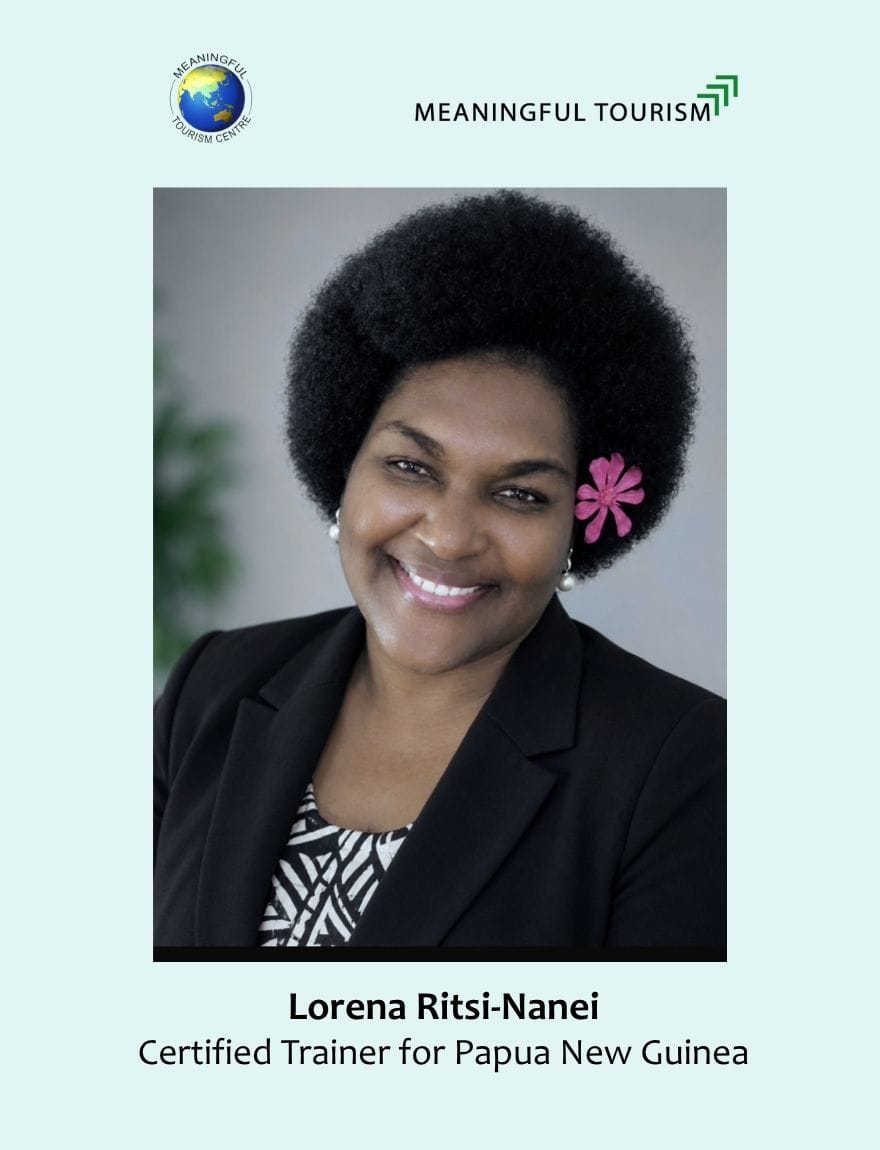
Lorena Ritsi-Nanei is an experienced tourism and hospitality professional from Bougainville, Papua New Guinea, with over 15 years of experience in tourism development, cultural heritage promotion, and government administration. She currently serves as the Interim Chief Executive Officer of the Bougainville Arts, Culture and Tourism Authority and Director of Tourism and Hospitality. Her expertise includes sustainable and community-based tourism, tourism product development, stakeholder coordination, and policy implementation. She holds a Bachelor’s Degree in Business and Management, majoring in Tourism and Hospitality Management, and has completed professional training in sustainable tourism.
Meaningful Tourism Weekly: What is the current situation of tourism in Papua New Guinea, and how can the Meaningful Tourism Paradigm help to support its development?
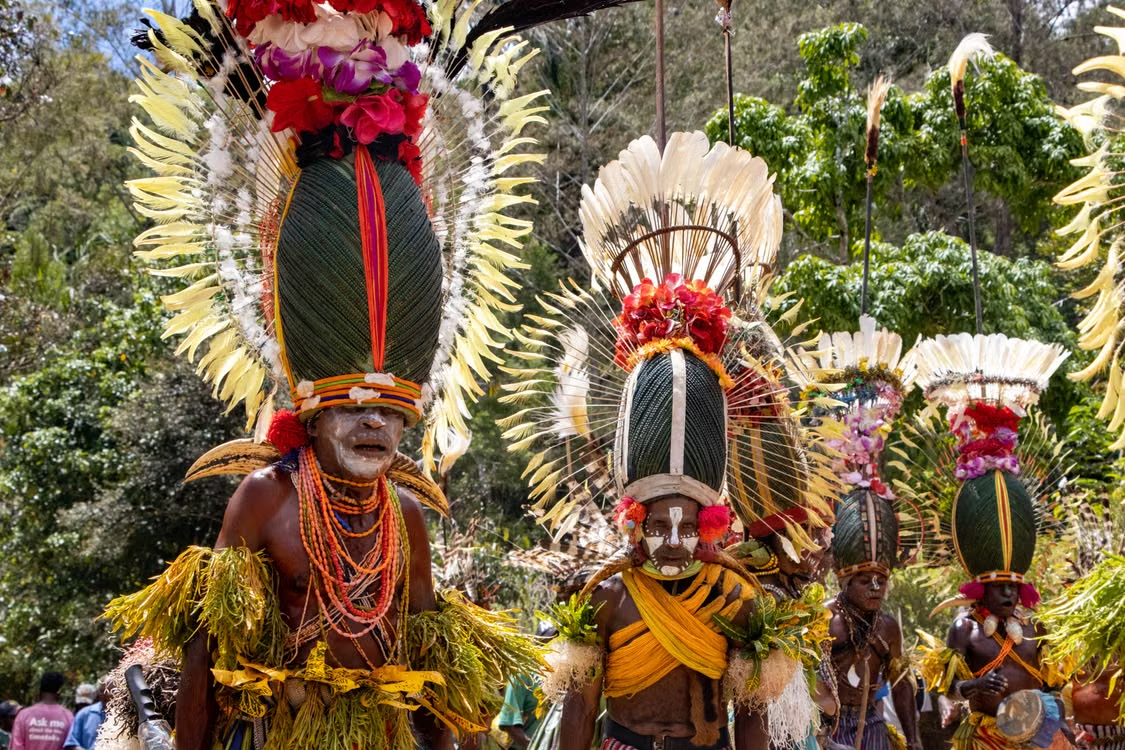
Lorena: Papua New Guinea (PNG) has the potential to become one of the Pacific region’s most distinctive and compelling tourism destinations. Its extraordinary cultural diversity, Indigenous knowledge, rich biodiversity, traditional festivals, world-class diving, trekking opportunities and significant World War II heritage provide a strong foundation for developing a competitive and sustainable tourism industry.
However, the central challenge is not simply attracting more visitors. It is building a coordinated, adequately resourced and inclusive tourism industry that translates the country’s natural and cultural advantages into sustainable economic opportunities, stronger local enterprises and lasting benefits for communities.
The Meaningful Tourism paradigm offers a valuable framework for addressing this challenge. Rather than measuring success primarily through visitor arrivals, expenditure or marketing reach, it encourages a broader assessment of tourism’s contribution to economic prosperity, community wellbeing, cultural preservation, environmental protection and stakeholder satisfaction.
For PNG, this means moving beyond promoting destinations to developing tourism that genuinely benefits the people, communities and places that make the country unique.
The Current Situation of Tourism in Papua New Guinea
PNG possesses considerable tourism potential, but unlocking that potential requires stronger coordination between national policy, destination development, investment, infrastructure, workforce capacity and community participation.
Several key issues deserve attention.
a. Converting tourism potential into viable destinations
PNG has diverse tourism assets, including cultural festivals, traditional village experiences, marine environments, mountain trails, biodiversity and wartime heritage. However, many destinations require improved accessibility, visitor facilities, safety arrangements, accommodation, reliable information and market-ready tourism products.
Destination promotion must therefore be matched by investment in the services and infrastructure needed to deliver a safe, authentic and satisfying visitor experience.
b. Strengthening coordination and institutional capacity
Tourism development requires effective collaboration between the PNG Tourism Promotion Authority (PNGTPA), national government agencies, provincial and autonomous regional administrations, tourism authorities, customary landowners and private-sector operators.
Clear institutional responsibilities, coordinated destination planning and adequate resourcing are essential to translate national policy into practical outcomes at the local level.
c. Increasing community participation and economic benefits
Customary landowners and local communities are central to PNG’s tourism offering. Yet their participation must extend beyond providing access to land or cultural attractions. Communities need opportunities to own and operate tourism enterprises, participate in decisions, develop skills and receive fair economic returns.
Tourism development should strengthen local livelihoods and enterprise opportunities rather than leave communities carrying the costs of development while benefits flow elsewhere.
d. Protecting cultural and environmental assets
PNG’s cultural traditions, sacred sites, Indigenous knowledge and natural environments are among its most valuable tourism assets. Their protection must be integral to tourism planning, not treated as a secondary consideration.
Communities and cultural custodians should determine how their heritage is documented, interpreted and shared with visitors, supported by appropriate consent, recognition and benefit-sharing arrangements.
e. Improving tourism data and evidence-based planning
Reliable information about visitor arrivals, travel purposes, expenditure, satisfaction, employment and local economic benefits is essential for sound decision-making.
The 2025 International Visitor Survey, reportedly released in June 2026 by the Pacific Tourism Organisation and PNGTPA, may provide a useful evidence base once its findings and publication details are verified. Such evidence should inform investment decisions, destination priorities and tourism performance monitoring.
How the Meaningful Tourism Paradigm Can Support PNG
Meaningful Tourism provides a framework for assessing whether tourism creates positive and fairly distributed outcomes for the people and places involved.
Its value lies in balancing the interests of visitors, host communities, tourism businesses, workers, government and the environment.
Five practical priorities can help PNG apply this approach.
1. Make customary landowners and communities genuine development partners.
Involve communities in destination planning from the outset. Establish transparent benefit-sharing arrangements and support community-owned accommodation, guiding services, handicrafts, cultural experiences and locally managed tourism enterprises.
2. Improve destination readiness and visitor experience.
Strengthen visitor information, tourism standards, safety, guide training, accommodation quality, booking arrangements and transport connections. Marketing should accurately reflect the services and experiences available at each destination.
3. Safeguard cultural authenticity and Indigenous knowledge.
Develop community-led protocols for cultural tourism, photography, storytelling, sacred sites and the use of traditional knowledge. Recognise the authority of cultural custodians and ensure they participate in decisions and receive appropriate benefits.
4. Strengthen local enterprises, skills and employment.
Improve access to business training, finance, digital platforms, product development and domestic and international tourism networks. Encourage stronger connections between tourism operators and local suppliers so that a greater proportion of tourism expenditure remains within PNG communities.
5. Measure meaningful outcomes.
Complement traditional tourism indicators with measures of local employment, household and community income, participation by locally owned businesses, stakeholder satisfaction, cultural heritage protection and environmental conditions.
These indicators would help policymakers determine not only whether tourism is growing, but also whether that growth is delivering meaningful and equitable benefits.
What Meaningful Tourism Means for Bougainville and BACTA
For the Autonomous Region of Bougainville, the Meaningful Tourism paradigm provides a practical framework for operationalising the mandate of the Bougainville Arts, Culture and Tourism Authority (BACTA) to develop and promote and regulate arts, culture and tourism.
Bougainville has opportunities to develop distinctive tourism experiences grounded in its cultural identity, natural landscapes, coastal attractions, community traditions and significant historical heritage.
Bougainville Arts Culture Tourism Authority can help translate these assets into coordinated destination development programmes that place communities and cultural custodians at the centre of decision-making.

A. Develop distinctive, community-based destinations
Support the development of cultural and historical heritage trails, coastal attractions, nature-based experiences, community-based accommodation and locally guided tourism products.
Destination planning should involve customary landowners, community leaders, tourism operators and relevant government agencies to ensure that development is locally supported and appropriately managed.
B. Safeguard and promote cultural heritage
Work with cultural custodians to document heritage sites and stories with appropriate community consent. Develop cultural tourism protocols and support artists, cultural groups, traditional knowledge holders and heritage associations.
Cultural heritage should be treated as a living community asset, with its protection and integrity taking precedence over commercial promotion.
C. Build community capacity and enterprise opportunities
Support tourism associations, accommodation providers, local guides, transport operators, artisans and small businesses to improve their products, service standards, business management and access to tourism markets.
Capacity-building programmes should be linked to real destination opportunities and measurable improvements in local participation and income generation.
D. Use evidence to guide tourism investment
Build on initiatives such as Numa Numa Trail GIS mapping to identify and document cultural, historical, environmental and tourism assets.
GIS mapping can help establish a clearer picture of destination potential, landownership considerations, community priorities, access requirements and conservation needs. This information can support destination development plans, investment proposals and future funding decisions.
E. Strengthen institutional coordination and resourcing
BACTA’s ability to deliver meaningful tourism outcomes will depend on adequate operational funding, skilled personnel, effective partnerships and clear programme priorities.
Stronger coordination with the ABG, PNGTPA, tourism businesses, cultural institutions, customary landowners and development partners would help align destination promotion with practical development requirements.
A useful starting point would be to pilot Meaningful Tourism in one or two Bougainville destinations, establish baseline information with participating communities, agree on measurable outcomes and use the results to guide future investment and programme funding.
Strategic Recommendations for Papua New Guinea
To translate the Meaningful Tourism paradigm into practical results, national tourism leadership could consider the following priorities:
1. Integrate meaningful outcomes into tourism policy implementation. Incorporate appropriate social, cultural, economic and environmental indicators into the implementation and monitoring of the National Tourism Policy 2025–2045.
2. Establish a Meaningful Tourism pilot programme. Bring together PNGTPA, subnational tourism authorities, customary landowners, communities, tourism businesses and relevant government agencies to test the framework in selected destinations.
3. Strengthen destination management. Coordinate marketing, infrastructure, visitor services, skills development, safety, conservation and tourism product development rather than treating these as separate activities.
4. Improve tourism data and reporting. Develop a stronger evidence base covering visitor numbers, travel purposes, expenditure, local economic retention, employment, community participation and stakeholder satisfaction.
5. Direct investment towards measurable outcomes. Mobilise government funding, private investment and development partnerships around destination readiness, local enterprise development, cultural protection and environmental sustainability.
6. Strengthen subnational implementation capacity. Ensure provincial and autonomous regional tourism institutions have the mandates, resources, technical support and partnerships necessary to translate national priorities into local development programmes.
7. Recognise communities as tourism development partners. Embed community participation, cultural consent, transparent benefit-sharing and local ownership into tourism planning and implementation.
Conclusion
Papua New Guinea has exceptional natural and cultural advantages that can support a distinctive and sustainable tourism industry. The challenge is to translate these strengths into an accessible, competitive and inclusive sector that generates tangible benefits for communities and the national economy.
The Meaningful Tourism paradigm offers a way to measure success beyond visitor arrivals and marketing performance. It encourages a development approach in which economic viability, community wellbeing, cultural integrity, environmental responsibility and stakeholder interests are considered together.
For the Autonomous Region of Bougainville, this approach provides an opportunity to position tourism as more than an economic activity. It can support cultural preservation, local enterprise, community participation, employment and the responsible development of the region’s unique destinations.
The ultimate measure of tourism success should not be how many people visit PNG, but how well tourism improves the lives of its people while protecting the cultural and natural heritage that makes the country distinctive.
Meaningful Tourism can help PNG pursue that vision by ensuring that tourism growth is not only commercially successful, but also socially beneficial, culturally respectful and environmentally.
MTC Certified Trainers
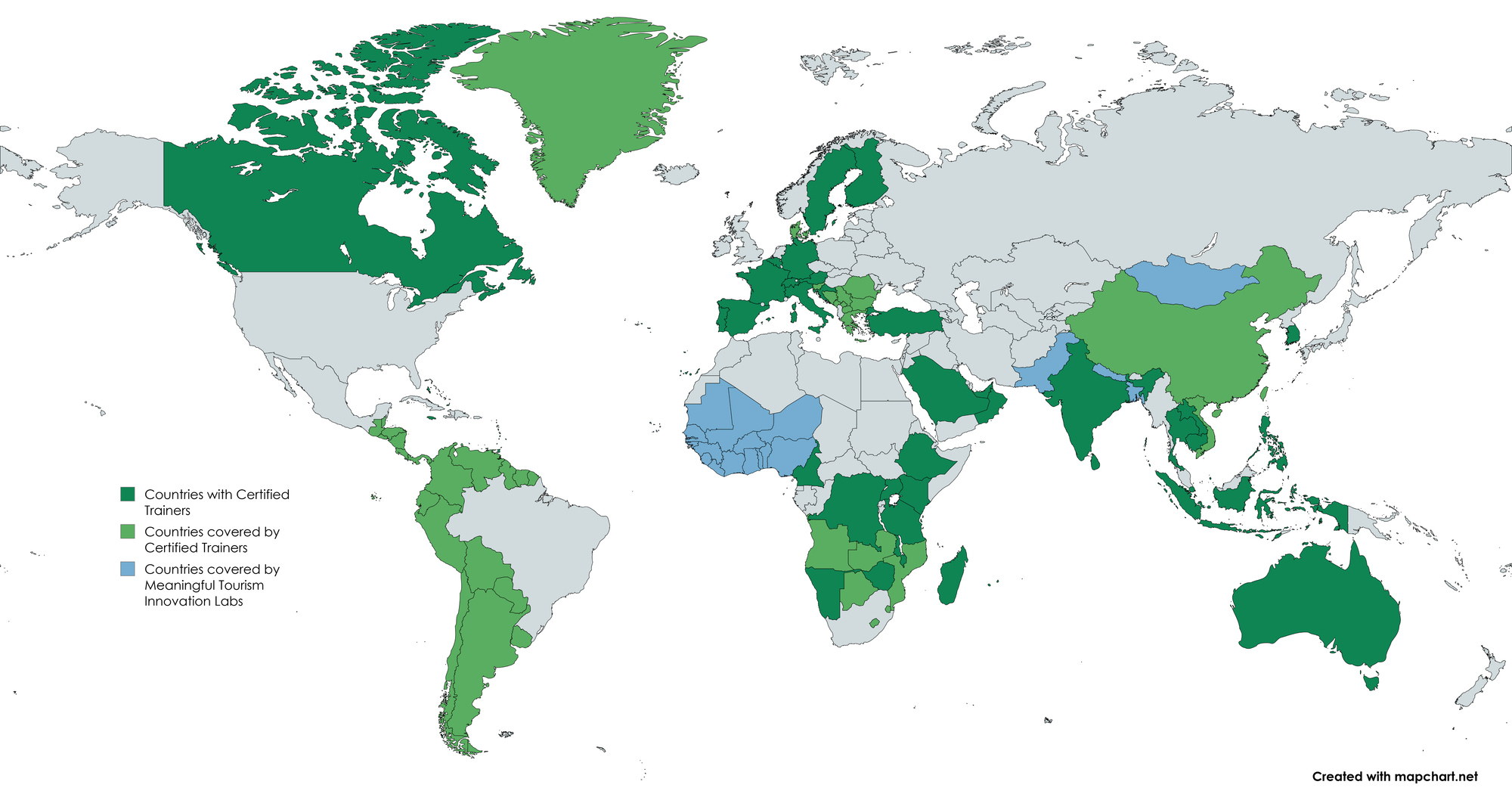
Below is an overview of all Certified Trainers for the Meaningful Tourism Transformational Game Workshop, along with the World Map showing the countries we currently cover.
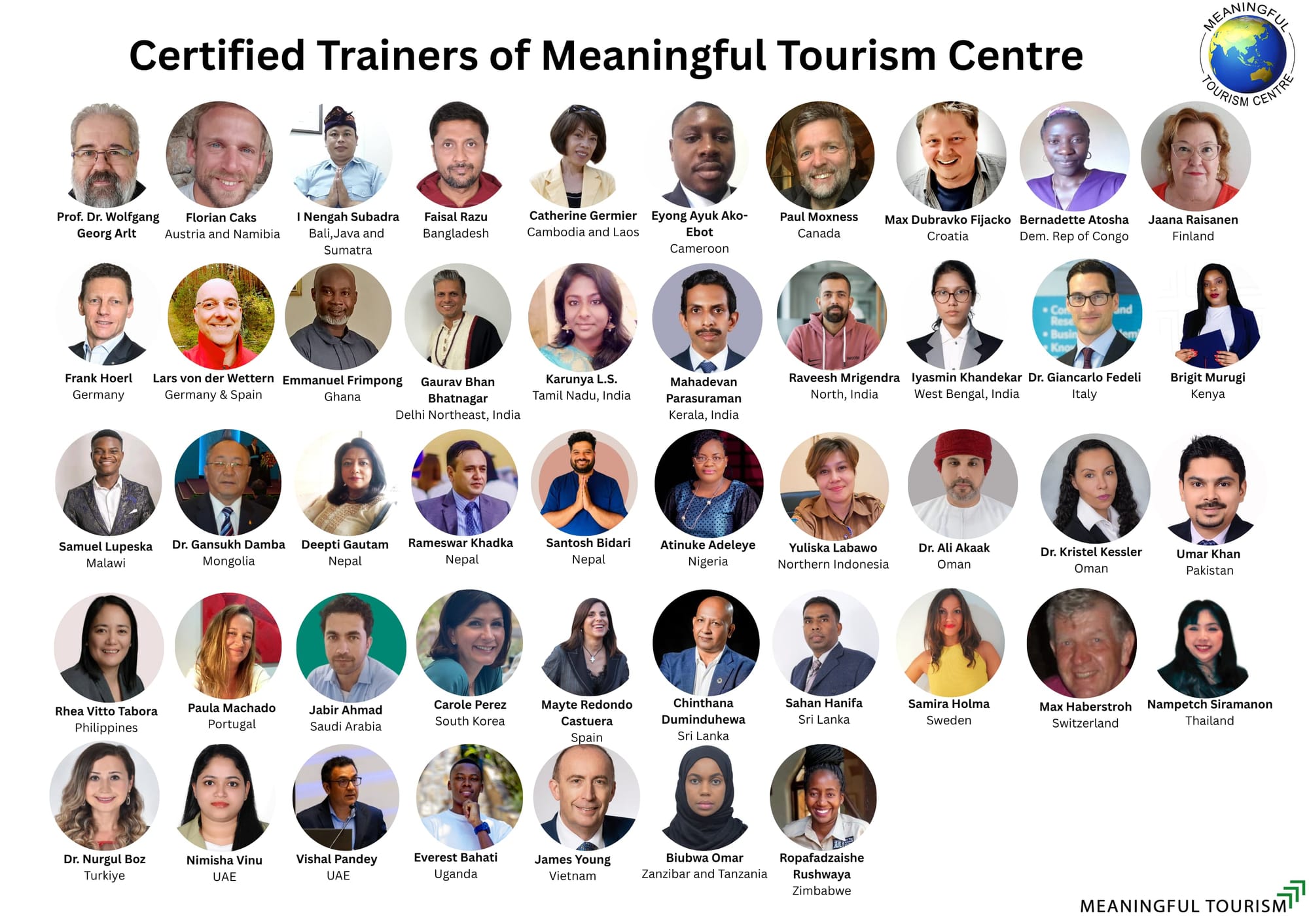
The MTC Certified Trainer network is constantly growing. As the map shows, dedicated experts already serve many countries and regions worldwide. However, MTC is continuously looking for professionals with experience in training or lecturing and a passion for sustainable tourism to join the network and fill the gaps on the map.

ITB Asia 2026
21-23 October 2026
Sands Expo & Convention Centre, Singapore

ITB Asia, Asia’s Largest Travel Trade Show, is an annual 3-day B2B trade show and convention designed to bring together the key travel industry leaders in the region. It brings together international exhibitors and buyers from the MICE, Leisure, and Corporate segments.
About Meaningful Tourism Weekly
Meaningful Tourism Weekly is published every Thursday by Meaningful Tourism Centre (MTC) - London and Kathmandu, in collaboration with Travel Asia Now, led by Rhea Vitto Tabora.
Each issue features an Editorial, updates on MTC activities, a Best Practice Example, a profile of an MTC-certified trainer, news about upcoming events, and, occasionally, additional op-ed pieces from guest authors. The Meaningful Tourism News section also includes carefully selected news items, including videos and podcasts, with links to their original sources.
Subscription to Meaningful Tourism Weekly is free, with the addition of a paid content section that includes a library of surveys, exclusive articles, conference presentations, and statistical data, offering subscribers invaluable resources.
Sponsorship opportunities are available for those interested in supporting this initiative.
For more information about MTC's training programs, market research, product adaptation, consulting services, conferences, strategy development, and marketing, visit our website or email us at info@meaningfultourismcentre.org.