Benefits for all stakeholders in the Meaningful Tourism Economy


Dear reader,
every tourism publication these days is full of statements that we need to change the way tourism is organized. Fifty years ago, Hans Magnus Enzensberger coined the phrase “the tourist destroys what he seeks by finding it”, describing how the mass pursuit of pristine, authentic places inherently ruins their quiet charm, natural beauty, and local culture through overcrowding and commercialization. The number of international and domestic tourism trips has increased more than tenfold since then, and what Enzensberger considered overcrowding would not bother anyone today.
What has changed as well is that the need for change is not only the result of 1.5 billion international and more than 10 billion (or even more, depending on your definition) domestic trips pushing the boundaries of carrying capacity for many destinations and for the planet. On top of tourists' behaviour are also climate change and AI, as well as the growing economic and political instability, which will start to kill many forms of tourism and replace it with new forms.
Statements about the necessary change range from “Regeneration”, which covers only a small part of the problem and puts the local stakeholders into a passive role, to “Degrowth” which is a nice idea but not compatible with an economy built on, whether we like it or not, continuous growth.
Meaningful Tourism is offering a holistic approach by involving all stakeholders and their benefits and satisfaction. Still, there is often the question asked “Nice to help saving the planet, but how does my company or destination practically benefit from using Meaningful Tourism tools?”
In a nutshell, the answer goes like this:
The Meaningful Tourism paradigm is not an academic game, but aims to help companies and destinations to survive and thrive in the coming years based on benefits to all stakeholders in a Meaningful Tourism Economy
Benefits for Visitors/Guests:
- Host communities welcome them and to not see them as intruders, destroyers or competitors, enabling visitors to experience local nature and culture or to have successful business, educational, spiritual or health trips
- Employees in service-providing companies are happy with their jobs and therefore happy to provide personalized services to the customers
- Companies offer customized products supporting transformational experiences
- Governments help visitors with easy entry regulations and foreigner-friendly politics
- The environment is taken care of by all stakeholders, enabling visitors to enjoy nature and be part of eco-friendly behaviour
Benefits for Host communities/Destinations:
- Visitors treat the local culture, both heritage and modern, of host communities with respect and interest, adding opportunities for interesting encounters and exchanges between guests and hosts. Destinations can monetize their unique offers and create clearly recognizable branding
- Tourism is providing jobs and income in urban and rural communities, with employees in service-providing companies getting full-time jobs and clear career paths without discrimination or the danger of jobs moving overseas
- Companies can use local workforces with longer retention times and higher levels of engagement and pride in their work
- Governments can use tax income from tourism to improve infrastructure which can be used also by locals and to finance education and training, reducing urbanization pressure and brain-drain
- The environment is taking care of by all stakeholders including visitors, enabling locals to enjoy nature

Benefits for Employees:
- Visitors feel like guests and therefore treat service providers like hosts and not like servants, adding opportunities also for employees for interesting encounters and exchanges between guests and employees, using their local knowledge and learning about the specific behaviour and needs of different kind of customers
- Host communities benefit from jobs and income getting good full-time jobs so that locals do not have to move to big cities or abroad for work and young people working in tourism understand the value of local culture and traditions as a reason for tourists to visit
- Companies are providing local workforces with jobs which are interesting, fairly paid and offering career paths
- Governments provide education and training to enable employees to reach higher level positions and increased income
- The environment is taking care of by all stakeholders so employees do not need to defend working in an industry which unnecessarily pollutes the environment

Benefits for Companies:
- Visitors use customized offers with less price competition and less dependence of third-party sales channels, recognizing and appreciating motivated staff interaction and efforts to minimize ecological footprints
- Host communities see companies as beneficial part of their society and not as an alien threat, gaining from integration into the offers of companies with job provision, local sourcing, support of local cultural activities
- Employees are easier to recruit, provide better services and stay longer with the company, providing local knowledge for customized and diversified products
- Governments understand the importance of tourism companies as part of the local and national economy and provide funding for education and training of employees, infrastructure and tourism-friendly policies
- The environment is taking care of by the company to protect the product, show engagement for the region and the planet and increasing the image with customers and employees.
Benefits for Governments:
- Visitors provide additional spending which increases the GDP, they learn about the country and may consider investment or retiring in the country
- Host communities can be provided with jobs, opportunities to start businesses on different scales and tourism marketing can steer visitors to underdeveloped areas in the country, therefore strengthening rural economies and help to finance the support of local culture
- Employees need only limited skills for the entrance level, but can be training to move up the career ladder in tourism, which can provide job opportunities also for women and for handicapped persons
- Companies can be supported, especially those with local ownership, to create reliable tax paying entities creating larger numbers of jobs per revenue than other industries by providing funding for education and training of employees, and developing infrastructure and tourism-friendly policies
- Governments receive a return on investment in environmental protection through increased tax income and job creation from tourism, so they can pay more attention to this activity
Benefits for Environment:
- Visitors feel like guests or even part of the local community and therefore pay more attention to minimize their ecological footprint and have more interest for local flora and fauna
- Host communities understand the importance of protecting the environment both for their own well-being and for keeping the destination attractive for visitors
- Employees likewise see it as part of their job to safeguard the environment in their professional activities
- Companies get benefits from environmental protection by improving the product and the branding of their own offers and of the destination
- Governments receive a return on investment in environmental protection through increased tax income and job creation from tourism, so they pay more attention to this activity
The control of the benefits as well the satisfaction levels of all stakeholders is done in a Meaningful Tourism Economy using SMART Key Performance Indicators, which create transparency and clear indications in which fields adjustments and improvements are necessary. In such a model there is no need for compromises or balancing acts as the alignment of interests is visible and controllable.
This week’s editorial became a bit longer in the end, still your humble editor hopes that it helps to show the practical advantages of moving towards a Meaningful Tourism Economy.
As always, all best wishes from the Meaningful Tourism Weekly team in Kathmandu and Manila, and from the whole Meaningful Tourism community to all our readers!


Summary of the latest edition of Travel Dialogues South Asia Podcast
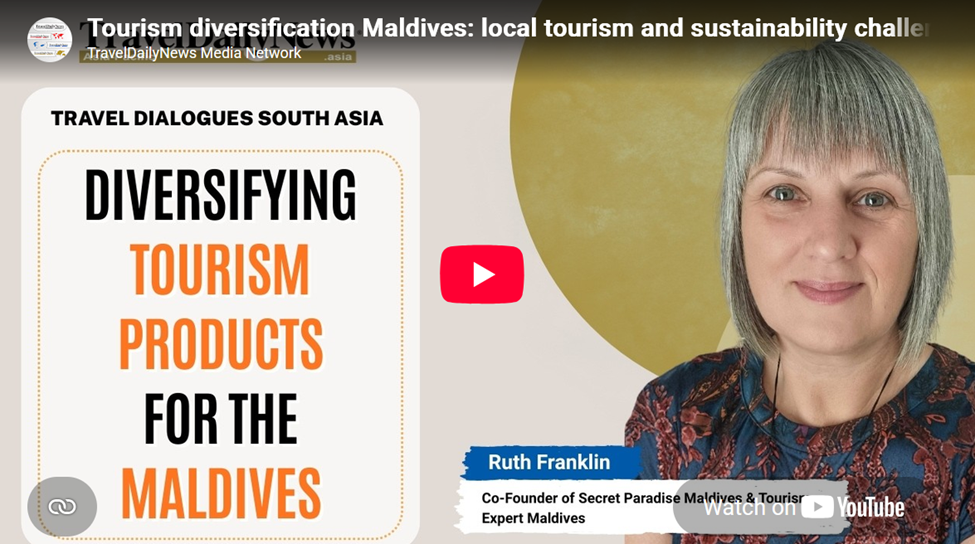
Every week, MTC and its partners TravelDailyNews Asia-Pacific and Tanneri Chaso provide a new episode of the TRAVEL DIALOGUES SOUTH ASIA series of podcasts concentrating on the development of Meaningful Tourism in South Asia, including Pakistan, India, Maldives, Sri Lanka, Nepal, Bhutan, and Bangladesh.
Tourism diversification Maldives is reshaping the destination through local island tourism, community experiences and new markets, while raising sustainability and capacity challenges.
The transformation of tourism diversification Maldives was explored in a Travel Dialogues South Asia discussion between tourism expert and tour operator Ruth Franklin and your humble editor PROF M.
The full podcast can be found here:
https://www.traveldailynews.asia/column/interviews/tourism-diversification-maldives/
All videos are also available on the MTC YouTube channel.

Tourism diversification Maldives: local tourism and sustainability challenges
From luxury resorts to local island tourism
The Maldives has long been positioned as an exclusive luxury destination, where visitors typically remain within resort environments with limited interaction with local communities. This traditional model is now evolving, driven by the rapid growth of local island tourism.
Guesthouses on inhabited islands have become the fastest-growing accommodation segment, offering more affordable options and enabling travellers to engage directly with local culture. This shift is a central pillar of tourism diversification Maldives, expanding the destination’s appeal beyond high-end travellers.
Community-based experiences and positive impact tourism
The emergence of community-focused tourism initiatives is redefining the visitor experience. Companies such as Secret Paradise Maldives have developed models that prioritise positive impact travel, offering experiences that include cultural exchange, shared meals and conservation activities.
These initiatives aim to integrate tourism more closely with local communities, creating economic opportunities while preserving cultural identity. This approach reflects a broader industry shift towards meaningful and responsible travel.

Expanding tourism products and experiences
The Maldives is also diversifying its tourism offering beyond its core strengths of beaches, marine life and diving. New segments include water sports such as surfing, health and wellness tourism, and immersive cultural experiences such as cooking and traditional crafts.
While resort operators are increasingly incorporating cultural elements into their offerings, the local tourism sector continues to play a key role in delivering authentic experiences. The development of these products supports the continued evolution of tourism diversification Maldives.
Halal tourism and regional demand
Local island tourism naturally aligns with halal travel requirements, given the Maldives’ Muslim cultural context. This provides a competitive advantage in attracting Muslim travellers seeking environments that respect their cultural and religious needs.
Regional markets are gaining importance, particularly from countries such as Bangladesh and Pakistan, where demand is driven by affordability and proximity. At the same time, China remains a key source market, with repeat visitation supported by the diversification of tourism experiences.
Capacity growth and sustainability challenges
Despite positive growth trends, the sector faces significant structural challenges. One of the key issues is the rapid expansion of accommodation capacity, which in some cases is outpacing demand, leading to underutilised inventory.
At the same time, increased tourism activity is placing pressure on infrastructure, including waste management systems and water resources. Uncontrolled development risks undermining the environmental assets that form the foundation of the destination’s appeal.
These challenges highlight the need for a balanced approach to tourism diversification in the Maldives, aligning growth with sustainability.
Stakeholder collaboration and future outlook
The successful development of the tourism sector requires close collaboration between government authorities, industry stakeholders and local communities. Strategic planning and coordinated action are essential to ensure that diversification efforts deliver long-term benefits.
In addition, tourism is seen as a key driver of employment, particularly for younger generations, offering opportunities in community-based and experience-driven tourism models.
The outlook for tourism diversification Maldives remains positive, provided that stakeholders address capacity management, environmental sustainability and cultural preservation. The continued evolution of the sector is expected to strengthen the Maldives’ position as a diversified and competitive global tourism destination.
Ebook published: Meaningful Tourism Weekly – The best 25 editorials July 2025 to June 2026
As a regular reader of Meaningful Tourism Weekly, you know that we provide every week insights and practical information for the development of a Meaningful Tourism Economy with an editorial written by your humble editor, Prof. Dr. Wolfgang Georg Arlt FRGS FRAS, a.k.a. PROF M.
The editorial tries to bring together future as well as past and present trends in tourism, sometimes relating also to personal experiences from almost five decades working in international tourism.
This eBook brings together 25 of the Meaningful Tourism Weekly editorial of the last twelve months from July 2025 through June 2026. They have been selected with regard to content that is not connected with short-term developments or events, giving instead insights and some food for thought which will hopefully still be useful to the reader in the foreseeable future and will provide easy access to those readers who only recently subscribed to the Meaningful Tourism Weekly.
The publication has been produced with the help of MTC staff including Sweta Acharya, Sakshi Paudel and Pragya Khanal in Kathmandu and the team of Asia Sustainable Travel (AST) and Travel Asia Now under the leadership of Rhea Vitto Tabora in Manila. Without their diligent and passionate work, the Meaningful Tourism Weekly as well as this eBook would not be possible to exist.
The eBook is available for 18 USD, provided in two versions as PDF and as eBook optimized for the Thorium reader.
Order your copy by sending an email to info@meaningfultourismcentre.org.
Meet PROF M in Mumbai
Messe Berlin Singapore office, the organisers of ITB India, has confirmed that your humble editor will give a 30-minute presentation during the conference happening as part of the fair on the 1st or 2nd of September. The title has been fixed as “Meaningful Tourism as a tool for sustainable tourism development in India and beyond”. The exact time will be published in one of the upcoming editions of Meaningful Tourism Weekly.
Any reader present in Mumbai on these days is welcome to make an appointment for a personal meeting.

First Meaningful Tourism & AI Workshop starting on Monday, August 10th, 2026 organised by MTIL Nepal
The workshop will be presented by the two leaders of the Meaningful Tourism Innovation Lab Nepal (MTIL), your humble editor PROF M and Mr. Suman Baral, AI expert and manager of I.Stem Lab, the MTC partner for the MTIL Nepal.
Nepal is wasting 97% of its international tourism potential. Compared to international averages, the country is realizing only about 3% of its potential to earn money added from outside to the economy and to create jobs and support regional development from international tourism.
The workshop will introduce the Meaningful Tourism tools which can be used by private and public stakeholders to change that within a Meaningful Tourism Economy.
The workshop will be held in English from 10 a.m. in the morning until 4 p.m. in the afternoon at: The Entrance Cafe, Chakupat, Lalitpur
Venue map: https://maps.app.goo.gl/Nagf1RgmdvmNwaQW6
There is major interest in participation with a few seats left. More information and registration for participation at https://mt.meaningfultourismcentre.org/meaningful-tourism-artificial-intelligence-workshop-2/, or contact Ms. Sapana Adhikari at info@meaningfultourismcentre.org, or by telephone 970 708 2726.
MTIL Network growing
After the establishment of Meaningful Tourism Innovation Labs (MTIL) in Nepal, Bangladesh and West Africa, discussions are going well to dramatically increase the number of MTILs within the coming weeks, with Pakistan, India, Indonesia, Mongolia and Central Africa at an advanced level already and other countries including KSA and Turkiye in the pipeline.
With the network spreading across Asia and Africa, next to local trainings, projects and other activities, there will also be collaborative international research projects and an annual international conference held every year in a different country, organized by one of the MTILs together with MTC.

Meaningful Tourism Community: The Meaningful Tourism Transformational Game Workshop Trainer
Rhea Vitto Tabora - Certified Trainer for the Philippines
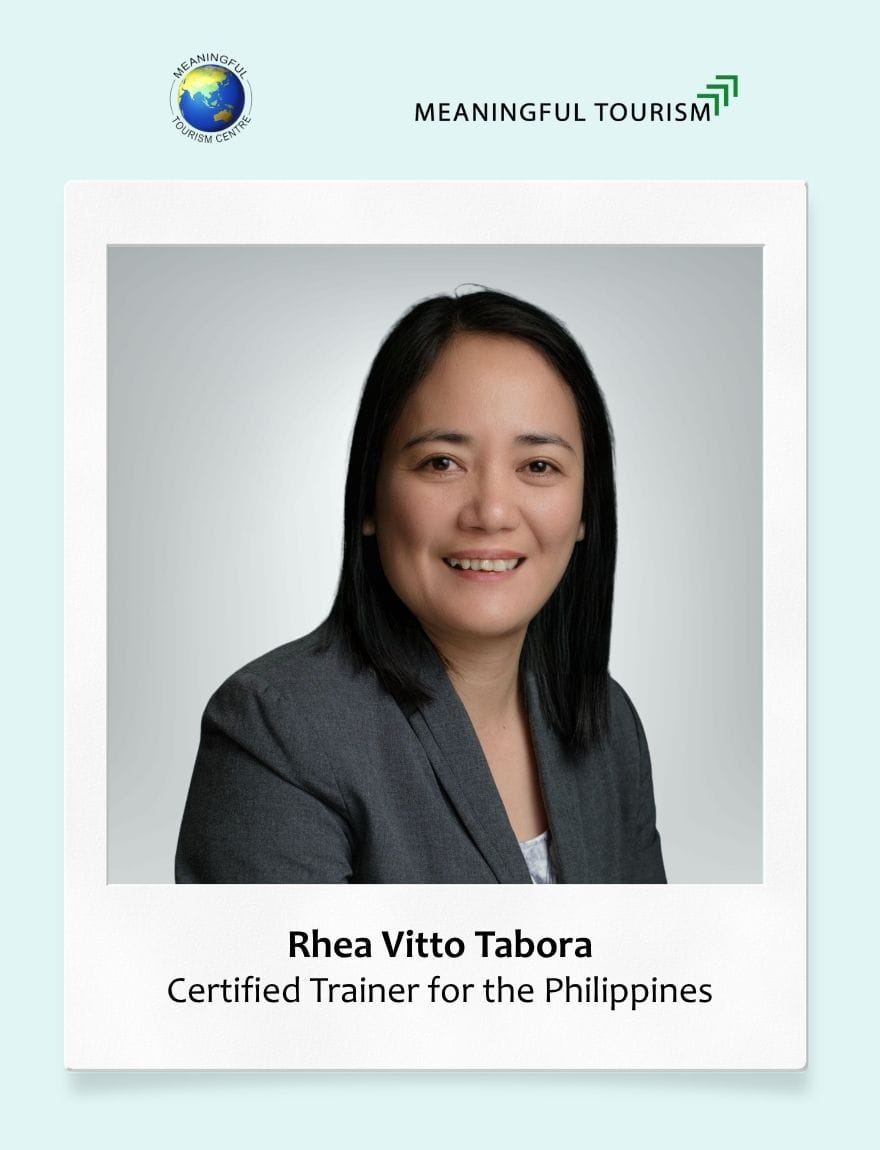
Rhea Vitto Tabora is the Founding Editor of Travel Asia Now, a digital publication highlighting stories of Asia’s unique travel experiences, inspiring travelers to explore the region responsibly and meaningfully. She is also the Co-Founder of Asia Sustainable Travel, a media and intelligence company that provides sustainability insights, toolkits, and Asia-focused marketing solutions for hotels and destinations seeking to grow responsibly.
With 20+ years of experience in hospitality, PR, branding, sales, and marketing across Vietnam, Indonesia, and the Philippines, Rhea helps properties communicate their sustainability efforts honestly, craft marketing strategies that drive direct bookings, and build guest loyalty without greenwashing.
She is a certified Meaningful Tourism trainer, a travel journalist and writer, and shares her expertise as a speaker and moderator at industry events across Southeast Asia.
Meaningful Tourism Weekly: What is the current situation of tourism in the Philippines, and how can the Meaningful Tourism paradigm help to support its development?
Rhea: Tourism in the Philippines is in a period of recovery, but also of correction. The demand is there. Travelers still want our islands, our culture, our food, and the warmth that Filipinos naturally bring to hospitality. But growth alone is not enough. Many destinations are dealing with familiar pressures: environmental strain, waste, water issues, uneven infrastructure, seasonal employment, and the risk of communities being left out of the benefits. In some places, tourism still feels extractive rather than regenerative.
That is why I find the Meaningful Tourism paradigm so useful. It gives us a more honest way to look at development. Instead of asking only how to attract more visitors, it asks whether tourism is creating real value for all six stakeholders: travelers, host communities, employees, businesses, governments, and the environment.
This is especially relevant in the Philippine context. We need to pay close attention to who benefits, who bears the cost, and what kind of tourism model we are reinforcing. Meaningful Tourism is practical because it is not just about ideals or certifications. It starts with an audit of the current situation, identifies strengths and weaknesses, then sets measurable indicators and KPIs based on local realities and shared decision-making.
In simple terms, it helps destinations move away from surface-level sustainability and toward better alignment. A beach town, for example, should not be judged only by arrivals or hotel occupancy, but also by community wellbeing, staff satisfaction, environmental health, and business resilience.
For the Philippines, this approach can help destinations grow with more balance, avoid repeating old mistakes, and build a tourism industry that people are still proud of ten or twenty years from now.

MTC Certified Trainers
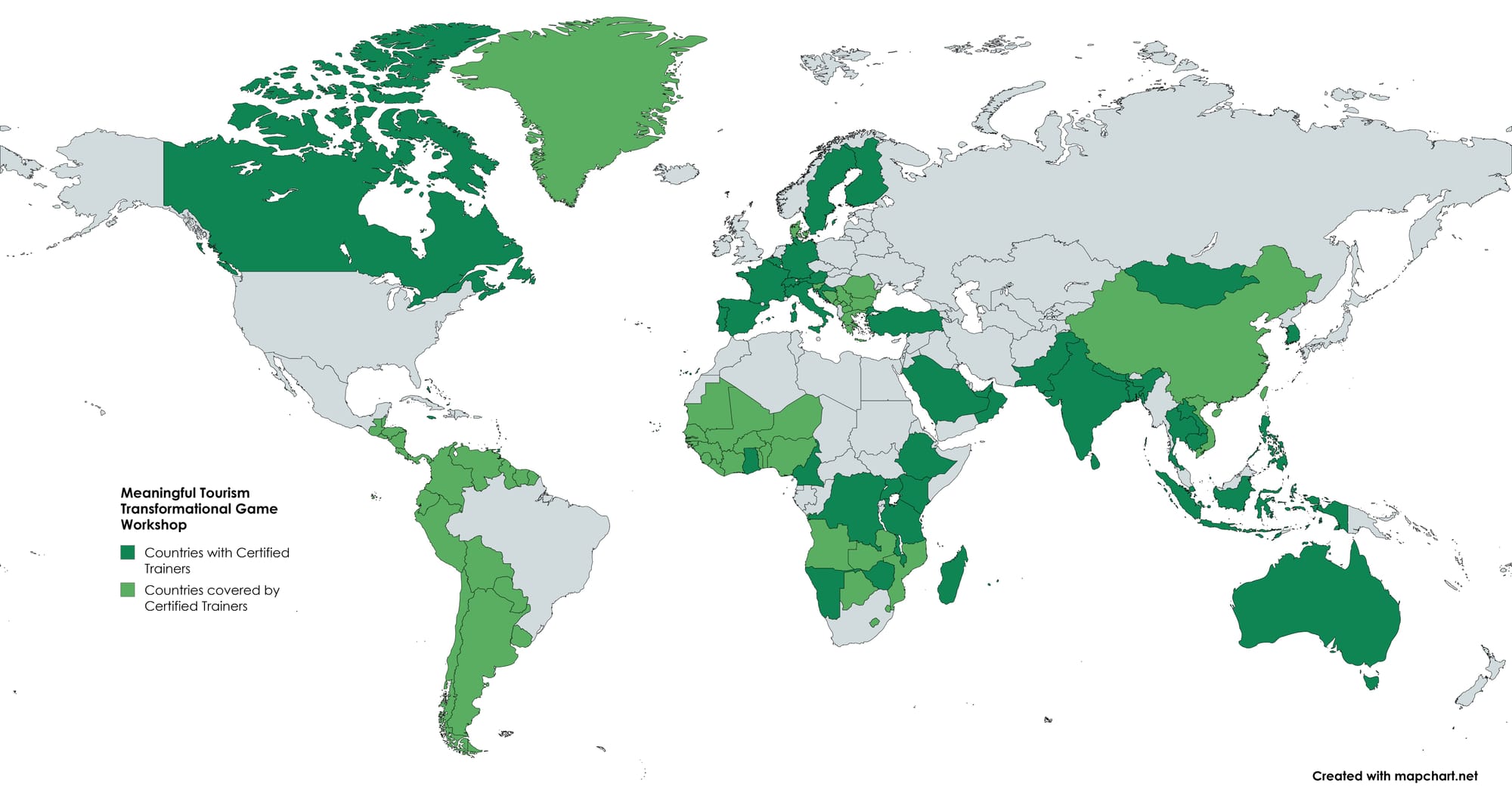
Please find below an overview of all our Certified Trainers for the Meaningful Tourism Transformational Game Workshop, along with the World Map showing the countries currently covered directly or indirectly.
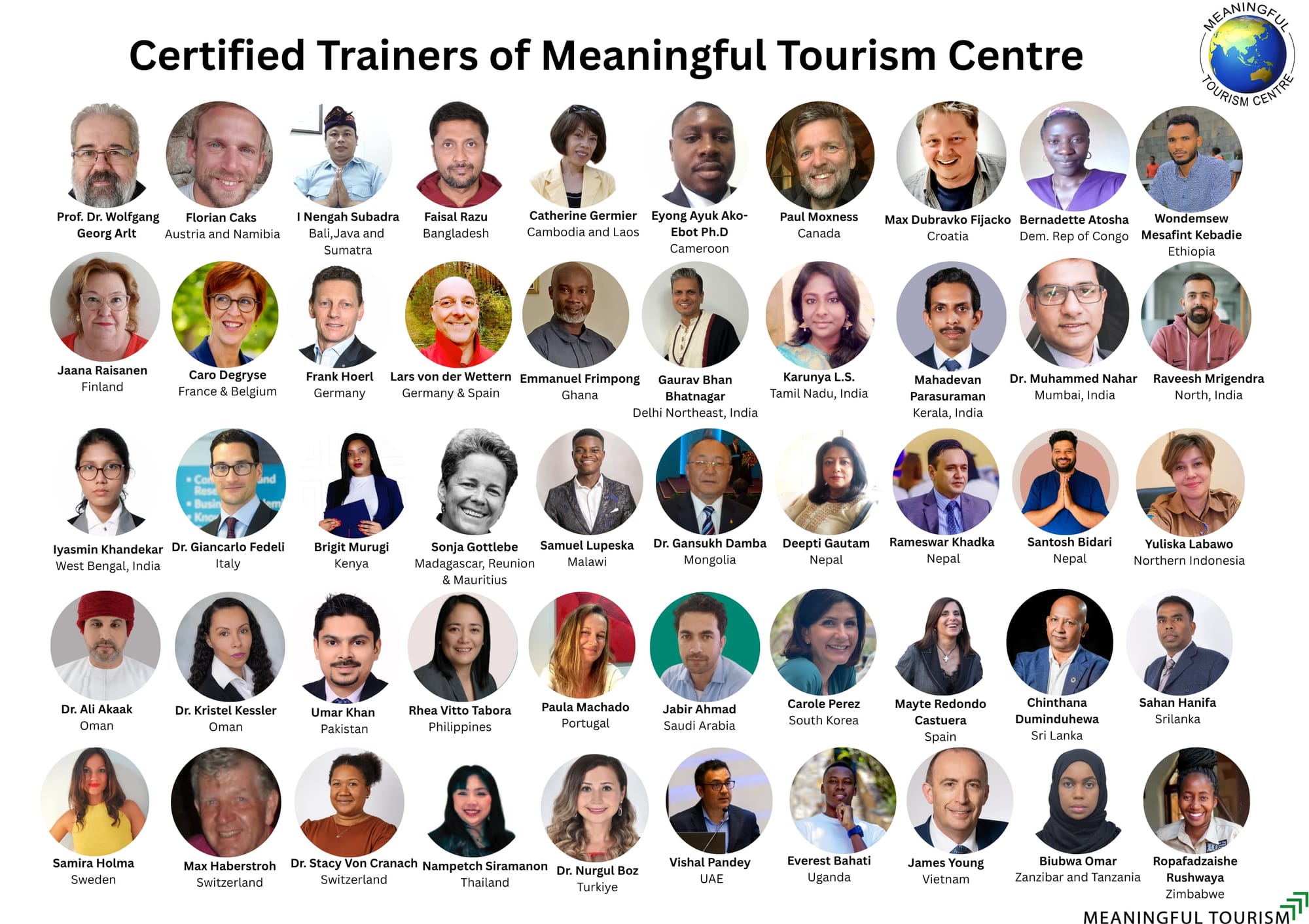
The network of MTC Certified Trainers is constantly growing. As shown on the map, many countries and regions worldwide are already served by dedicated experts. However, MTC is continuously looking for professionals with experience in training or lecturing and a passion for sustainable tourism to join the network and fill the blanks on the map.

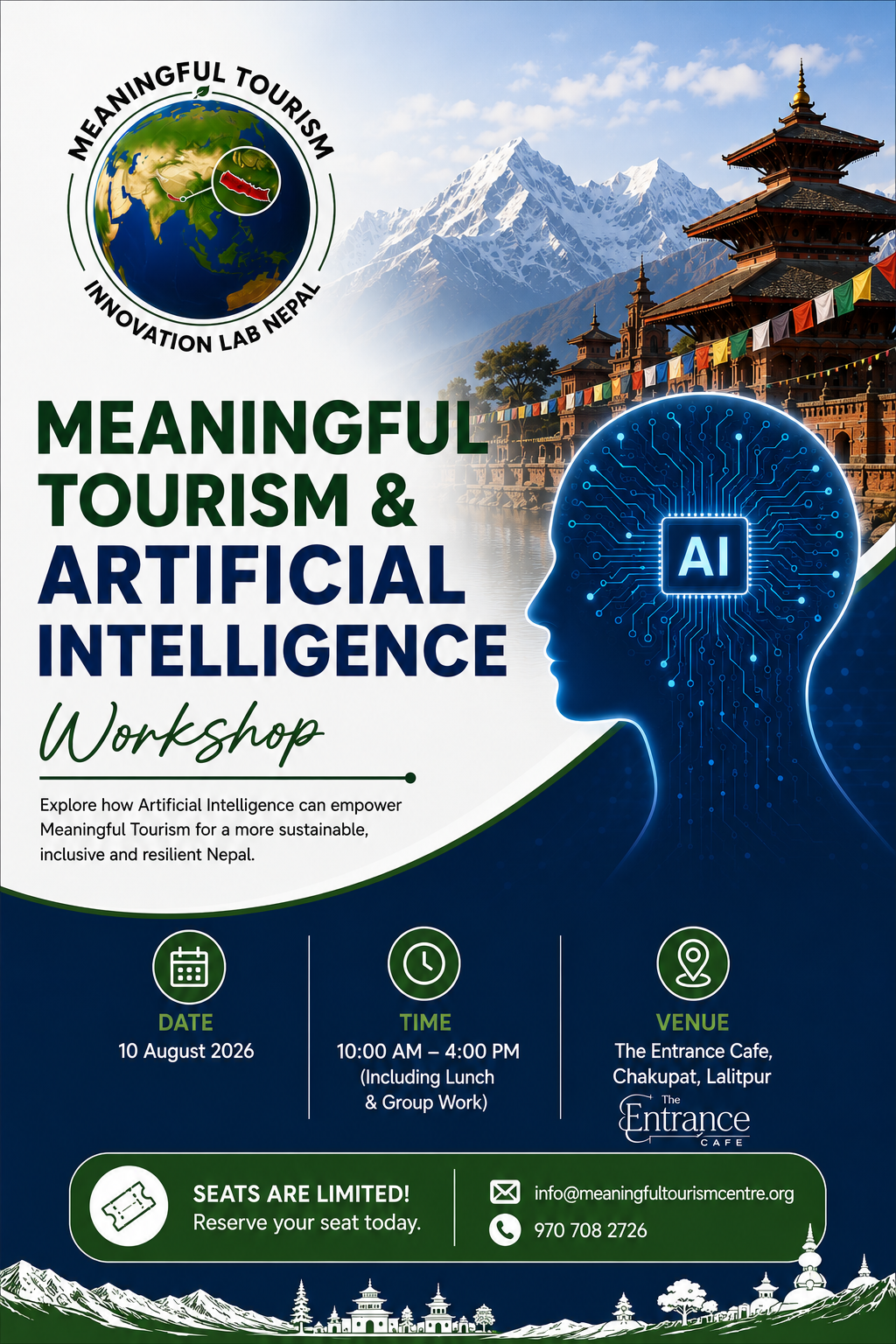
The two leaders of the Meaningful Tourism Innovation Lab (MTIL), Prof. Dr. Wolfgang Georg Arlt FRGS FRAS, Executive Director of the Meaningful Tourism Centre, and Mr. Suman Baral, co-leader of the I.Stem Lab, will provide the first full-day workshop to give you a head-start for a better future of tourism for your company or organisation and for a better future of tourism in South Asia.
The MTIL Meaningful Tourism Innovation Lab Nepal promotes the development of a Meaningful Tourism Economy, providing practical tools for companies and organisations to be more successful in their work for profitable and sustainable tourism.
On August 10, 2026, the workshop will start with Prof. Dr. Arlt explaining the tools of Meaningful Tourism, which is based on the insight that all stakeholders need benefits and satisfaction from tourism to be able to provide quality and to attract the right kind of international customers.
After that, Suman Baral will provide examples of how Artificial Intelligence can be integrated into a Meaningful Tourism approach to guarantee visibility in the international market, quality control, and more efficient ways of work and promotion.
After a joint lunch, we will work together to learn how to apply Meaningful Tourism and AI tools with the help of practical examples.
To celebrate the start of the work of the Meaningful Tourism Innovation Lab Nepal, a special fee for your association members: the standard fee is NPR 7,000 per person, but members of your association pay only NPR 6,000 per person, provided they indicate their association membership when registering.
Participants will receive:
- A certification of participation from the Meaningful Tourism Innovation Lab
- A certification as Level 1 member of the Meaningful Tourism Movement
- A copy of the latest eBook of the Meaningful Tourism Centre
- Free lunch
- Coffee and tea during the workshop
The workshop will be held in English from 10 a.m. until 4 p.m.
Venue: The Entrance Cafe, Chakupat, Lalitpur
Venue map: https://maps.app.goo.gl/Nagf1RgmdvmNwaQW6
Reservation at info@meaningfultourismcentre.org, or by telephone +977 976 8566 567
ITB India
September 1 - 3, 2026
Jio World Convention Centre, Mumbai, India

Prof. em. Dr. Wolfgang Georg Arlt FRGS FRAS, Executive Director of Meaningful Tourism Centre and CEO of China Outbound Tourism Research Institute (COTRI), will give a 30-minute presentation during the conference happening as part of the fair on the 1st or 2nd of September.
The title has been fixed as “Meaningful Tourism as a tool for sustainable tourism development in India and beyond”. The exact time will be announced in one of the upcoming editions of Meaningful Tourism Weekly.
About Meaningful Tourism Weekly
Meaningful Tourism Weekly is published every Thursday by Meaningful Tourism Centre (MTC) - London and Kathmandu in collaboration with Travel Asia Now, led by Rhea Vitto Tabora.
Each issue features an Editorial, updates on MTC activities, a Best Practice Example, a profile of an MTC-certified trainer, news about upcoming events, and, occasionally, additional op-ed pieces from guest authors. Carefully selected news items, including videos and podcasts, are also included, with links to their original sources in the Meaningful Tourism News section.
Subscription to Meaningful Tourism Weekly is free, with the addition of a paid content section that includes a library of surveys, exclusive articles, conference presentations, and statistical data, offering subscribers invaluable resources.
Sponsorship opportunities are available for those interested in supporting this initiative.
For more information about MTC's training programs, market research, product adaptation, consulting services, conferences, strategy development, and marketing, visit our website or email us at info@meaningfultourismcentre.org.