Borrowed time, borrowed place


Dear reader,
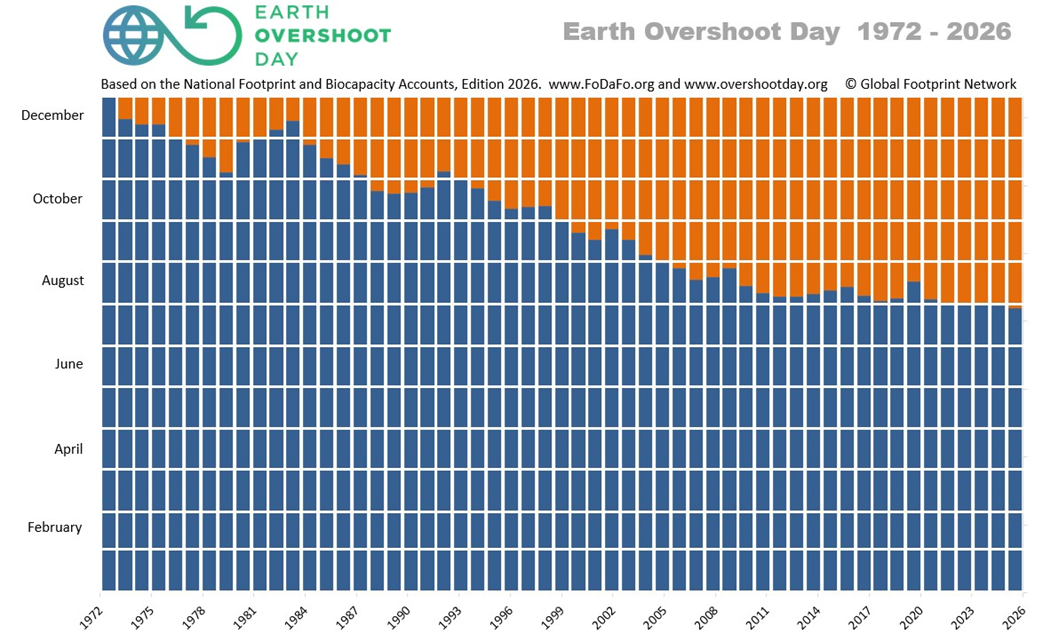
today mankind has consumed all the planet has to offer for the whole year. Earth Overshoot Day marks the date when humanity’s demand for ecological resources and services in a given year exceeds what Earth can regenerate in that year. Climate change, biodiversity loss, and extreme weather events (to name a few) are all various impacts of global ecological overshoot.
According to the Global Footprint Network, Earth Overshoot Day is computed by dividing the planet’s biocapacity (the amount of ecological resources Earth is able to generate that year), by humanity’s Ecological Footprint (humanity’s demand for that year), and multiplying by 365, the number of days in a year. In 2026 it falls on July 30th.
The measurement was started in 1972, when on December 31st the end of the year also was the end of the planets ability to regenerate. By 2006 this day plummeted down to the end of August, in 2022 it reached the end of July.
Mankind is living now in a way which would need 1.73 earths to be just sustainable, with five out of twelve months based on a credit taken out which everybody surviving in the coming decades will have to pay back.
Tourism is living more than other industries on “borrowed time, borrowed places”, as much of what we are selling is nature as well as culture, heritage and infrastructure made by mankind for other purposes than tourism. Massive forest fires in the south of Europe forcing tens of thousands of holidaymakers to flee, unheard-of tornado in northern Europe, heat waves on all continents killing 100,000s of people, rising sea levels causing salination of ground water which destroys traditional communities based on farming the now contaminated soil – the game-changing effects of climate change are in the news every day, and tourism is one of the first industry sector suffering from its effects. “Heatcation” letting travellers flee from unhealthy levels of temperature is no longer a phenomenon restricted to the Middle East.
The Global Footprint Network experts are clearly stating that as much as individuals have the power to better their homes and communities, the greatest potential for large-scale impact lies with governments and businesses who align their policies and strategies with the reality of our finite planet.
Interestingly, reducing international air traffic by 50% would only bring the Overshoot Day forward by one day. More holistic policies and strategies, as the Meaningful Tourism paradigm and tools are providing, are needed instead of quick-fix solutions.
Companies, organisations and destinations need to adapt towards a Meaningful Tourism Economy approach both for their direct benefit of creating benefits and satisfaction for all stakeholders. Embracing Creative Destruction to construct – with the help of AI and other technologies – a better future, in fact in many cases a path to survival, both for themselves and for the society.
Your humble editor moved last week from Kathmandu, one of the most heavily polluted cities in the world, to Pokhara, the “tourism capital” of Nepal. This text is written with a view from the desk towards paddy fields, cranes and water buffalos with the Annapurna mountain range, reaching more than 8,000 meters, in the background. Pokhara`s new airport will after three years of hibernation see from September the first international scheduled flight connection with Dubai – assuming the war is allowing it. Finally, international travellers coming from Europe, Africa and the Middle East do not have to choose between regularly delayed domestic flights or spending six hours for driving 200 km between Kathmandu and Pokhara on a bumpy mountain road prone to landslides.
The local hotel association came up with the harebrained idea to welcome the new visitor groups with a 25% discount on accommodation and a 10% discount on restaurant bills. If you try to kill a brand from the start by communicating yourself as a ”cheap” destination, that’s the way to do it. Visitors coming all the way to Pokhara are looking for quality, not for discounts. The Meaningful Tourism Innovation Lab Nepal is starting a series of workshops which hopefully will help to improve tourism and hospitality in Nepal. More information is found in the new category MTIL News below.
As always, all best wishes from the Meaningful Tourism Weekly team in Kathmandu and Manila, and from the whole Meaningful Tourism community to all our readers!

Travel Dialogues South Asia Podcast Summary
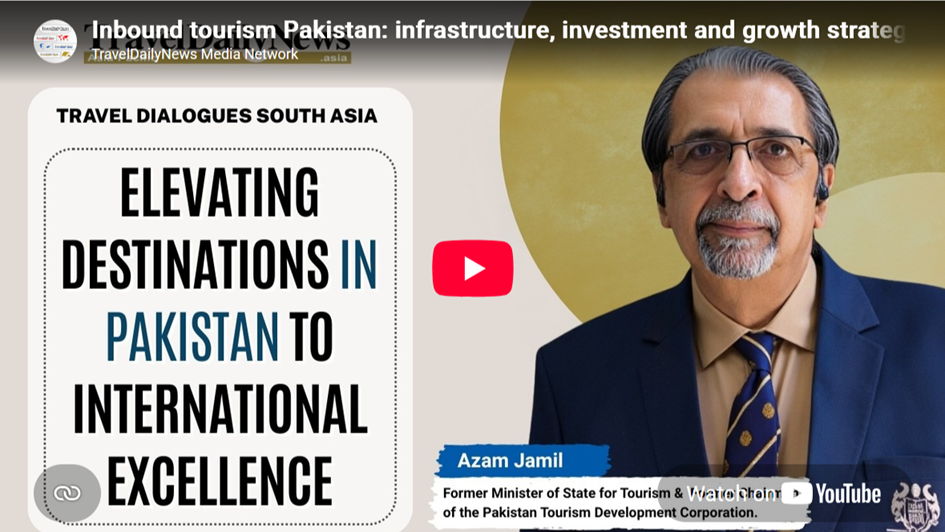
Every week, MTC and its partners TravelDailyNews Asia-Pacific and Tanneri Chaso provide a new episode of the TRAVEL DIALOGUES SOUTH ASIA series of podcasts concentrating on the development of Meaningful Tourism in South Asia, including Pakistan, India, Maldives, Sri Lanka, Nepal, Bhutan, and Bangladesh.
The development of inbound tourism to Pakistan was analysed in a Travel Dialogues South Asia discussion between Azam Jamil and your humble editor.
Inbound tourism Pakistan is evolving through improved education, infrastructure development and private investment, aiming to attract higher-value visitors and increase repeat travel demand.
The full podcast can be found here: https://www.traveldailynews.asia/column/interviews/inbound-tourism-pakistan/
Inbound tourism Pakistan: infrastructure, investment and growth strategy
A sector with strong fundamentals and experience
Pakistan’s tourism sector is supported by extensive expertise across both public and private sectors. The discussion highlights a long-standing industry foundation, combined with growing engagement in training and professional development.
A key trend is the transition from vocational training to structured undergraduate programmes in tourism and hospitality. These programmes increasingly follow international standards, enabling graduates to pursue global career opportunities and contributing to the professionalisation of the sector.
This shift supports the long-term development of inbound tourism Pakistan, particularly in enhancing service quality and operational standards.
From visitors to repeat tourists
A central concept highlighted in the discussion is the distinction between a “visitor” and a “tourist”. A visitor experiences a destination once, while a tourist returns multiple times.
The strategic objective for inbound tourism Pakistan is therefore to convert first-time visitors into repeat travellers. This requires consistent service delivery, positive experiences and reliable infrastructure, which collectively build trust and destination loyalty.
Repeat visitors are also seen as key brand ambassadors, contributing to word-of-mouth promotion and long-term demand growth.
Infrastructure as a critical constraint
Despite its natural assets, Pakistan faces significant challenges in backend services and infrastructure. While destinations offer mountains, lakes and cultural heritage, the absence of essential facilities limits the overall visitor experience.
Examples include inadequate hotel amenities, limited roadside assistance and insufficient public facilities along major tourism routes such as the Karakoram Highway. These gaps affect accessibility, safety and comfort for international travellers.
The development of inbound tourism Pakistan therefore depends heavily on addressing these operational fundamentals rather than focusing solely on destination promotion.
Rethinking government and community roles
The discussion emphasises the importance of redefining the role of government in tourism development. Rather than directly operating facilities, public authorities are encouraged to act as facilitators by providing land, infrastructure and regulatory support.
At the same time, local communities particularly younger generations can play a key role in managing tourism services. This approach promotes ownership, ensures better maintenance and creates local economic opportunities.
Such models are increasingly relevant for inbound tourism Pakistan, where sustainable growth depends on collaboration between public authorities, communities and private stakeholders.
Investment models and private sector growth
The private sector is adapting to changing market dynamics, with a growing focus on smaller, boutique-style hotels rather than large-scale developments. Properties with 40–60 rooms are seen as more aligned with current demand for personalised and authentic experiences.
New investment models are also emerging, where investors develop hotel infrastructure while specialised management companies operate the properties. This structure reduces operational risk and enables broader participation in tourism investment.
These developments are strengthening the foundation for inbound tourism Pakistan, particularly in attracting higher-value segments.
Targeting quality and niche tourism segments
The strategic focus is shifting towards attracting quality travellers rather than increasing volume alone. Segments such as cultural tourism, nature-based experiences, medical tourism and halal tourism are identified as key growth areas.
This approach supports higher spending, longer stays and increased repeat visitation, contributing to a more sustainable tourism model.
Regional markets, including South Asia, Southeast Asia and the Middle East, also present significant opportunities for inbound demand.
Outlook for tourism growth
The outlook for inbound tourism Pakistan remains positive, supported by increasing awareness of structural challenges and the need for targeted improvements.
By prioritising infrastructure, enhancing service quality and leveraging private sector investment, Pakistan is positioned to strengthen its competitiveness in the global tourism market.
The transition towards quality-driven growth and repeat visitation is expected to play a central role in shaping the future of the country’s tourism industry.

New Premises
The Meaningful Tourism Centre and the Meaningful Tourism Innovation Lab Nepal are united under one roof now in Lalitpur, facilitating the close cooperation between both organisations. Further Meaningful Tourism Innovation Labs are in the pipeline in several countries.
ITB India Presentation and Cooperation
Messe Berlin, the organisers of the ITB India in Mumbai (September 1-3), confirmed that your humble editor will give a 30-minute presentation about Meaningful Tourism during the conference accompanying the fair. Exact date, time, and title of the presentation will be published next week.
Also in India, MTC is discussing with PATA India Chapter to enter into a closer cooperation, bringing the Vision of PATA Headquarter for a Meaningful Pacific-Asia Tourism Economy also to one of its biggest and most active country chapter.

Meaningful Tourism and AI Workshop in Kathmandu on August 10, 2026
The MTIL secretariat has started its work in the new premises, with the first task to organise the Meaningful Tourism & AI Workshop for Nepal on August 10, 2026.
Nepal is wasting 97% of its international tourism potential. The global average of international visitors per inhabitant is 18 per 100. For Nepal, given its many attractions, fortunate location, low prices and low seasonality, it should be able to realize 30 arrivals per 100 inhabitants, or 9 million arrivals per year. Last year, Nepal received only 1.2 million international arrivals, less than 15% of the potential number.
The global average of international visitors spending per day is about 150 USD. For Nepal, the amount has fallen to 34 USD, less than a quarter of the average.
As a result, Nepal is realizing only about 3% of its potential to earn money added to the economy from outside and to create jobs from international tourism.
Furthermore, AI is taking over from Google for searching travel information. Companies still relying on Facebook for online marketing information become invisible for potential customers.
How to be successful using Meaningful Tourism tools and simple AI applications for successful and sustainable tourism business in Nepal? The answer is provided in the workshop organized by the Meaningful Tourism Innovation Lab Nepal on August 10, 2026.
If you are interested to see your humble editor and I.Stem leader Suman Baral (well, their avatars, to be correct) giving more details about the workshop, please visit the MTC YouTube channel: https://www.youtube.com/@MeaningfulTourism or go to https://mt.meaningfultourismcentre.org/meaningful-tourism-artificial-intelligence-workshop-2/
Information is also provided in the Events section below.
MTIL Network in Growing
After the Daffodil International University, Department of Tourism and Hospitality Management became the partner for the MTIL Meaningful Tourism Innovation Lab Bangladesh and the African Tourism Research Network, the partner for the MTIL West Africa, further MTILs are close to starting in Pakistan and Mongolia.
The workshop during the establishment of the MTIL Bangladesh in Dhaka received a lot of media attention, including this article in one of the major publications of the country with the headline “Meaningful Tourism Key to Unlocking Bangladesh's Tourism Potential”:
 FE ONLINE DESK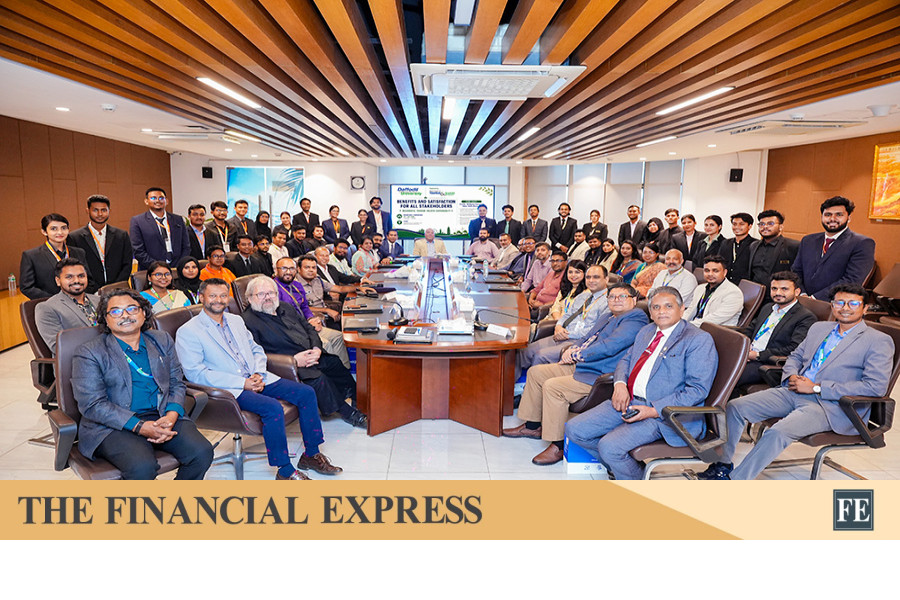

Meaningful Tourism Community: The Meaningful Tourism Transformational Game Workshop Trainer
Sahan Hanifa - Certified Trainer for Sri Lanka
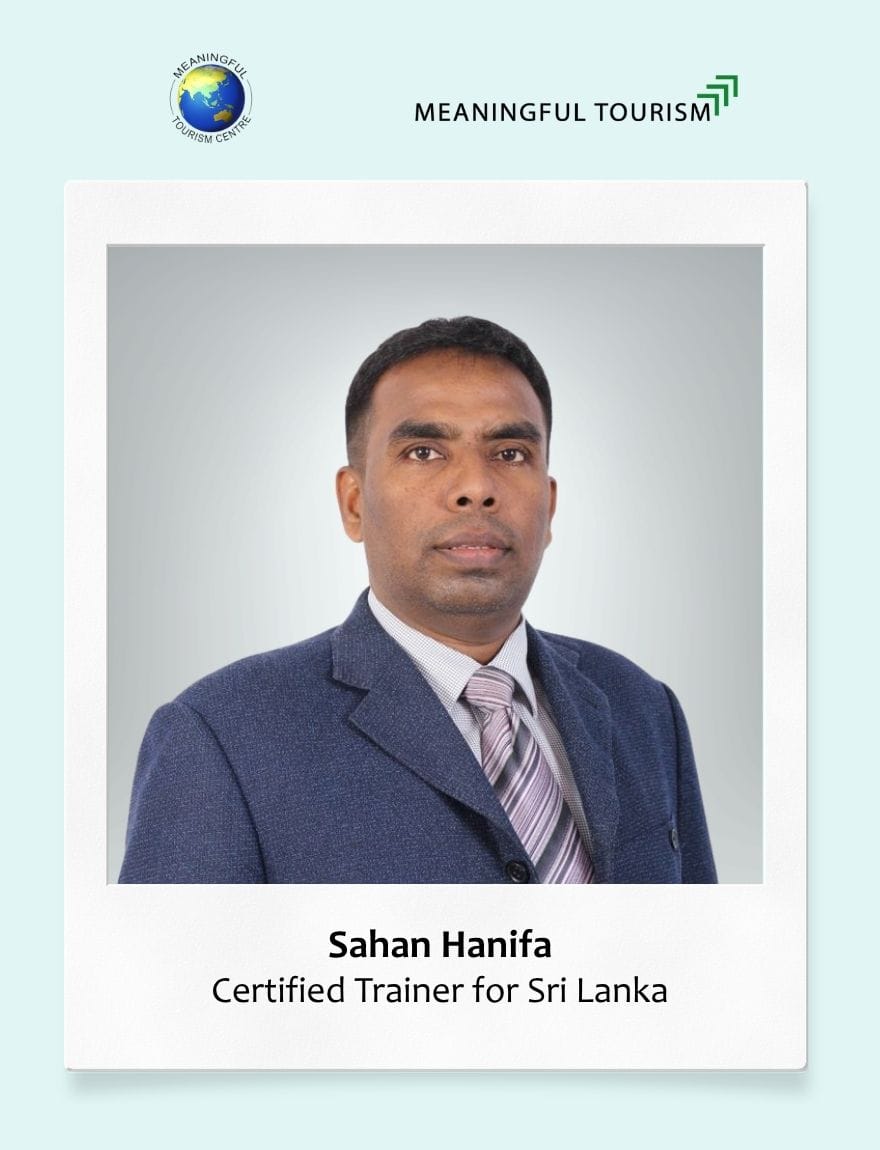
Sahan Hanifa is an accomplished Project Manager with more than 15 years of experience leading engineering, consultancy, and technology-driven projects across the UAE, KSA, Maldives, and Sri Lanka. He holds a B.Sc. (Hons) in Engineering from the University of Ruhuna and has held key roles with Huawei Technologies, Tamdeed Projects, and Sensetrone Consultancy.
Specializing in project execution, contract management, and financial oversight, he has a strong track record of delivering large-scale, multi-phase initiatives on time and within budget.
His expertise in stakeholder engagement, risk management, and performance analytics enables him to drive operational efficiency and ensure successful outcomes in complex environments.
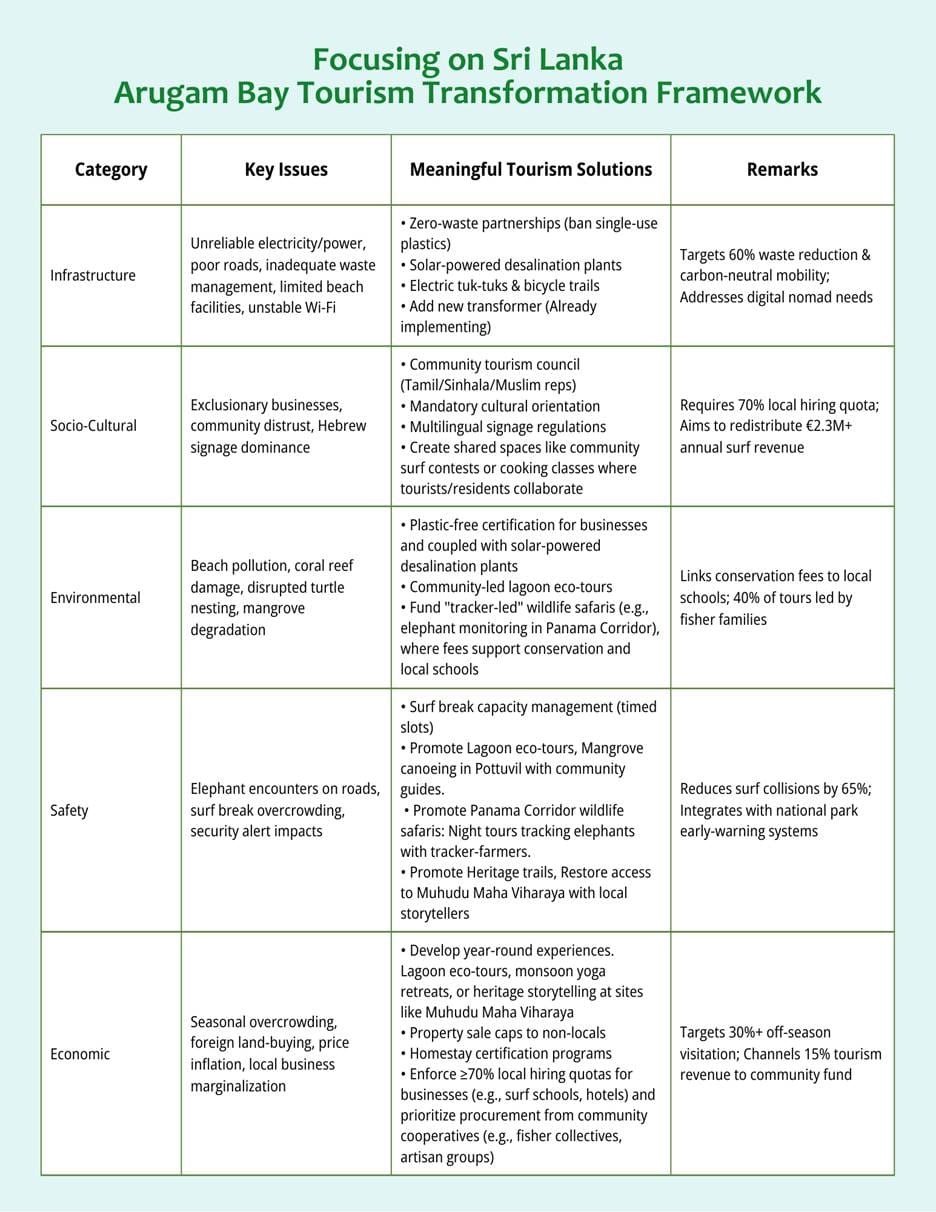
The Meaningful Tourism Weekly asked Sahan Hanifa: What is the current situation of tourism in Sri Lanka and how can the Meaningful Tourism Paradigm help to support its development?
His answer:
MTC Certified Trainers
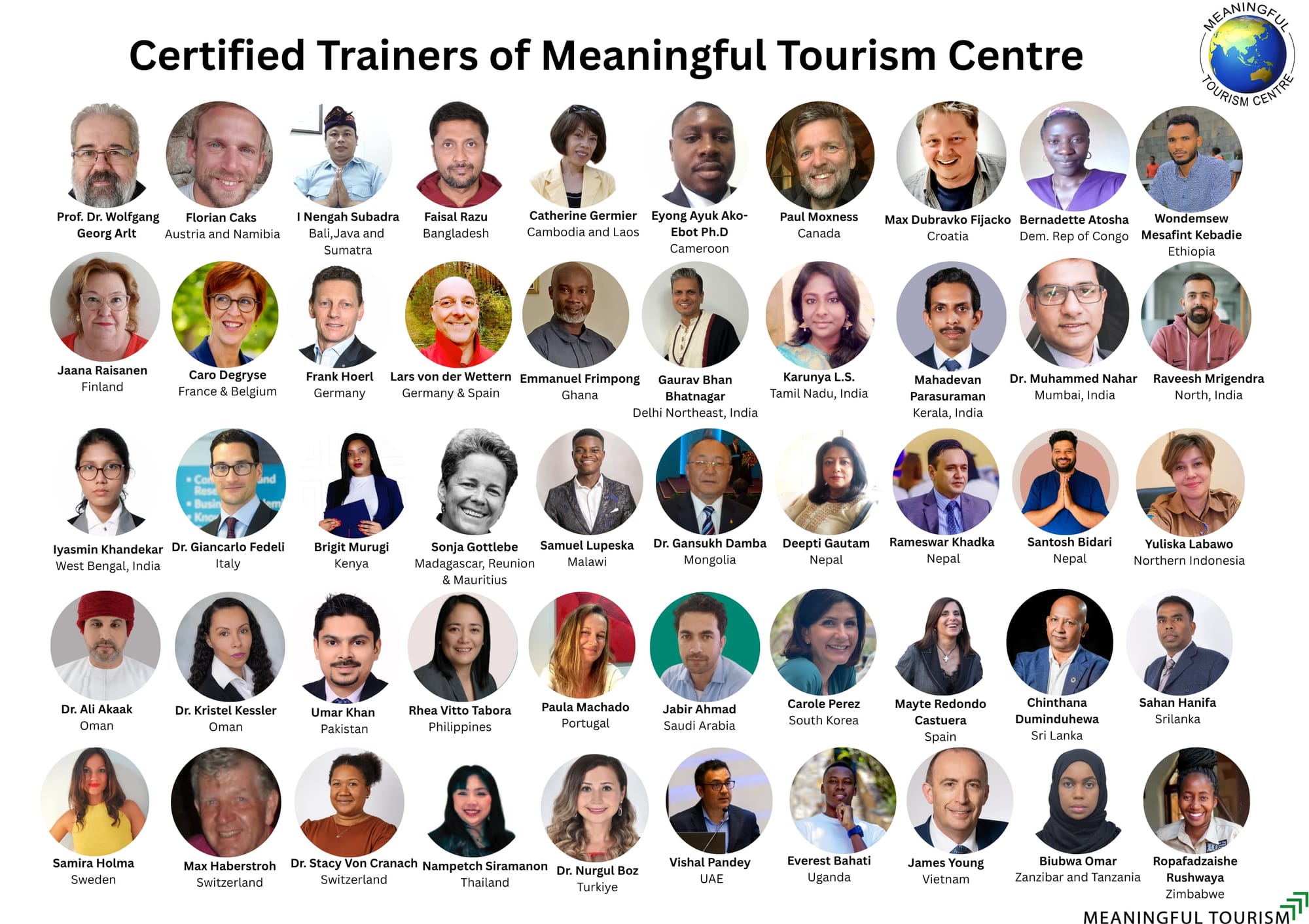
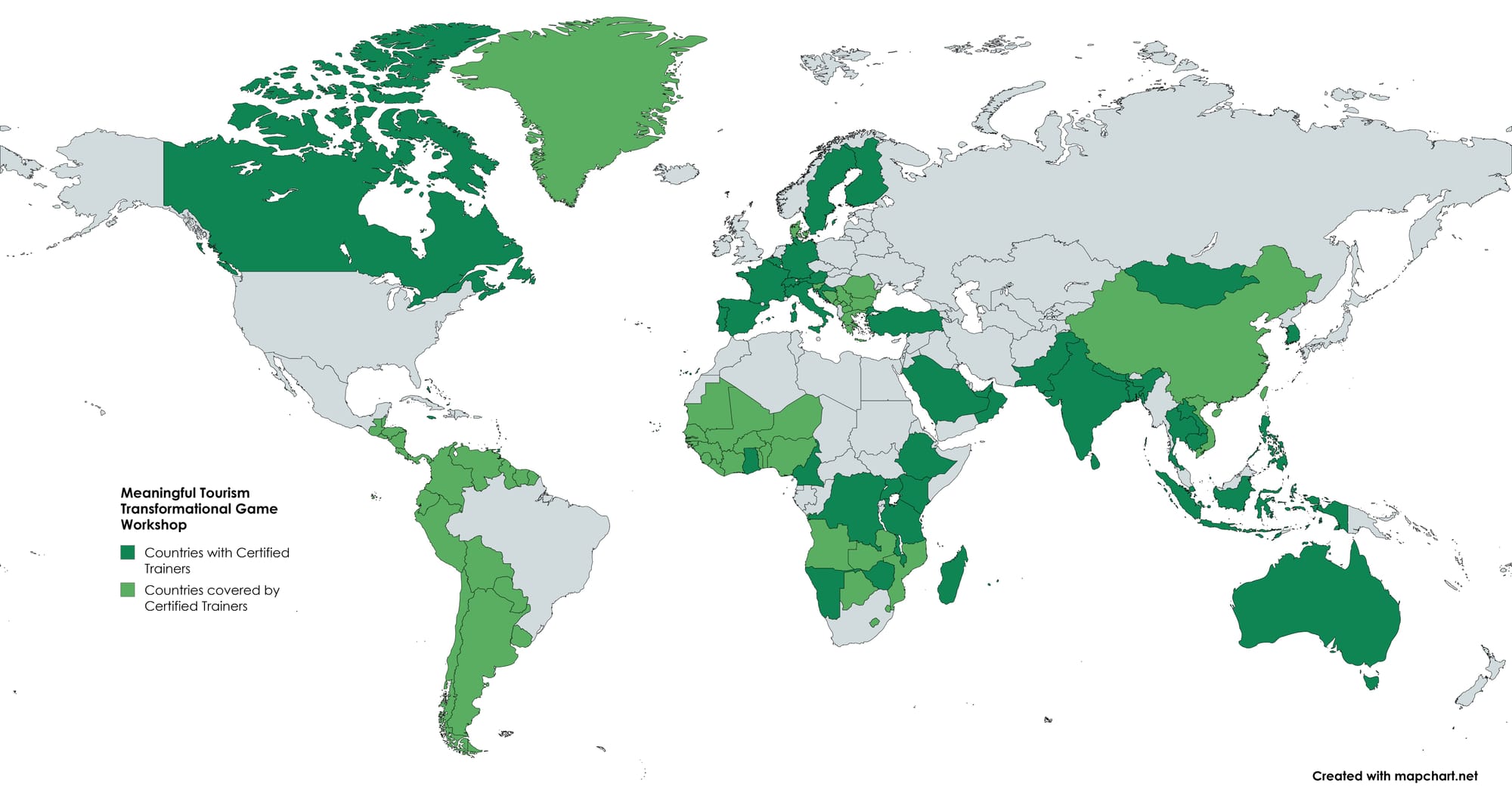
Please find below an overview of all our Certified Trainers for the Meaningful Tourism Transformational Game Workshop, along with the World Map showing the countries currently covered directly or indirectly.
The network of MTC Certified Trainers is constantly growing. As shown on the map, many countries and regions worldwide are already served by dedicated experts. However, MTC is continuously looking for professionals with experience in training or lecturing and a passion for sustainable tourism to join the network and fill the blanks on the map.

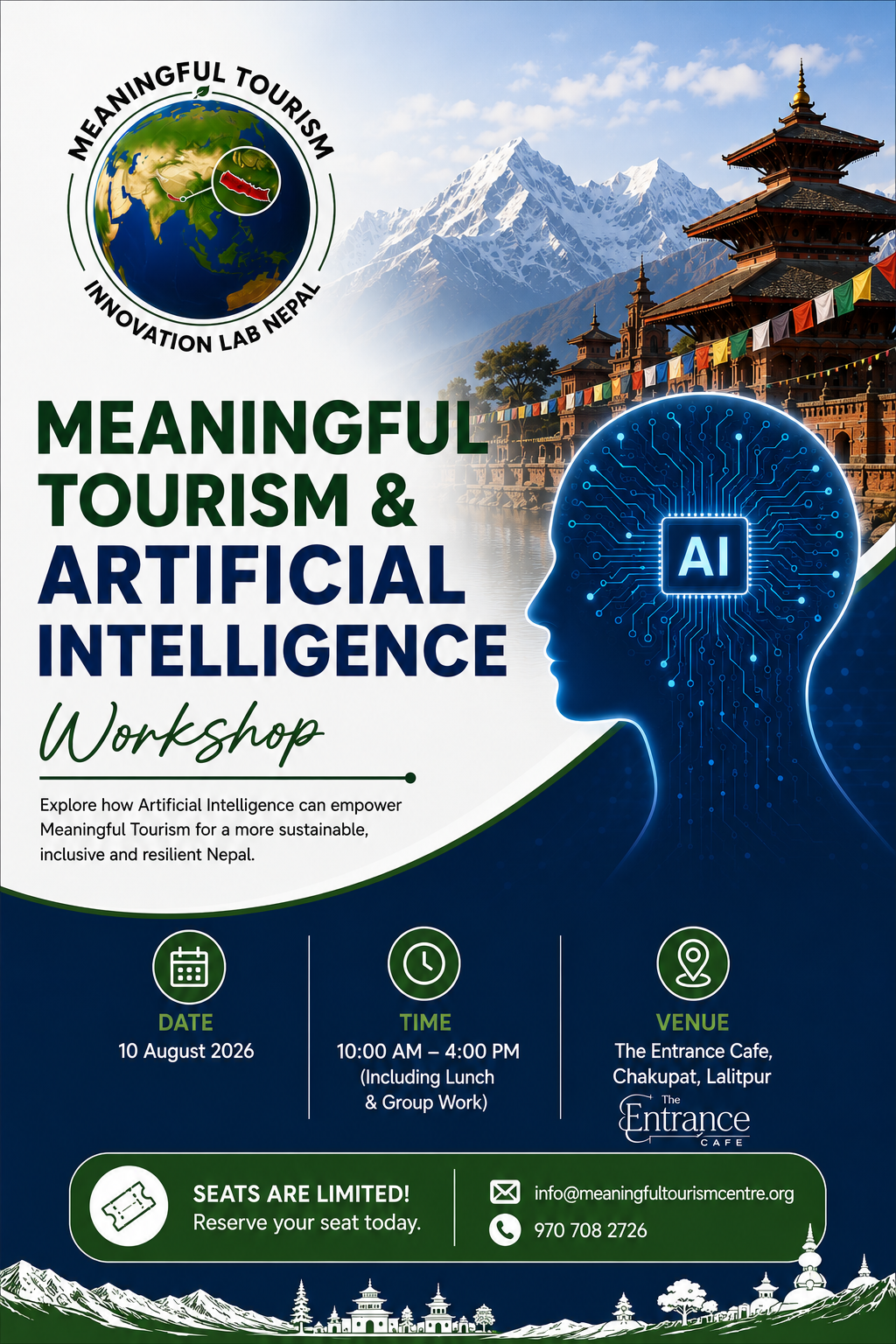
The two leaders of the MTIL Meaningful Tourism Innovation Lab, Prof. Dr. Wolfgang Georg Arlt FRGS FRAS, Executive Director of the Meaningful Tourism Centre, and Mr. Suman Baral, co-leader of the I.Stem Lab, will provide the first full-day workshop to give you a head-start for a better future of tourism for your company or organisation and for a better future of tourism in South Asia.
The MTIL Meaningful Tourism Innovation Lab Nepal promotes the development of a Meaningful Tourism Economy, providing practical tools for companies and organisations to be more successful in their work for profitable and sustainable tourism.
On August 10, 2026, the workshop will start with Prof. Dr. Arlt explaining the tools of Meaningful Tourism, which is based on the insight that all stakeholders need benefits and satisfaction from tourism to be able to provide quality and to attract the right kind of international customers.
After that, Suman Baral will provide examples of how Artificial Intelligence can be integrated into a Meaningful Tourism approach to guarantee visibility in the international market, quality control, and more efficient ways of work and promotion.
After a joint lunch, we will work together to learn how to apply Meaningful Tourism and AI tools with the help of practical examples.
To celebrate the start of the work of the Meaningful Tourism Innovation Lab Nepal, a special fee for your association members: the standard fee is NPR 7,000 per person, but members of your association pay only NPR 6,000 per person, provided they indicate their association membership when registering.
Participants will receive:
- A certification of participation from the Meaningful Tourism Innovation Lab
- A certification as Level 1 member of the Meaningful Tourism Movement
- A copy of the latest eBook of the Meaningful Tourism Centre
- Free lunch
- Coffee and tea during the workshop
The workshop will be held in English from 10 a.m. until 4 p.m.
Venue: The Entrance Cafe, Chakupat, Lalitpur
Venue map: https://maps.app.goo.gl/Nagf1RgmdvmNwaQW6
Reservation at info@meaningfultourismcentre.org, or by telephone +977 976 8566 567
About Meaningful Tourism Weekly
Meaningful Tourism Weekly is published every Thursday by Meaningful Tourism Centre (MTC) - London and Kathmandu in collaboration with Travel Asia Now, led by Rhea Vitto Tabora.
Each issue features an Editorial, updates on MTC activities, a Best Practice Example, a profile of an MTC-certified trainer, news about upcoming events, and, occasionally, additional op-ed pieces from guest authors. Carefully selected news items, including videos and podcasts, are also included, with links to their original sources in the Meaningful Tourism News section.
Subscription to Meaningful Tourism Weekly is free, with the addition of a paid content section that includes a library of surveys, exclusive articles, conference presentations, and statistical data, offering subscribers invaluable resources.
Sponsorship opportunities are available for those interested in supporting this initiative.
For more information about MTC's training programs, market research, product adaptation, consulting services, conferences, strategy development, and marketing, visit our website or email us at info@meaningfultourismcentre.org.