China intensifies support of green tourism



Dear reader,
China is by far the biggest producer of sustainable power generated by wind, sun and water in the country as well as the main source of hardware like solar panels or IT elements of green energy production. The megacities have turned from extreme levels of air pollution to green cities populated by EVs and electric scooters, with millions of new trees planted, and new recreational areas and parks.
At the same time, China is still responsible for one third of all global CO² emissions, even though for pollution per person, countries like Saudi-Arabia, USA and Russia are reporting far worse level.
In tourism, sustainability and “green” issues have become much more prominently discussed in China in the current decade than before. As your humble editor is also the CEO of COTRI China Outbound Tourism Research Institute, which was started 22 years ago and is now a part of the Meaningful Tourism Centre, he was invited last year by the People's Government of Mentougou District, Beijing, to speak at the Third Yongding River Green Development Forum and the Symposium on Ecological Protection and Green Development, which took the topic "Ecological Integration - Harmonious Coexistence".
Mentougou is a district under the administration of the city of Beijing; however, it is covered to 93% by forests and mountains. Mentougou District has gained popularity as a leisure tourist destination, especially for the inhabitants of Beijing, attracted by the highest mountain in Beijing and several temples dating back more than 1,000 years. With increasingly frequent heatwaves tormenting also the inhabitants of Beijing, an area like Mentougou, rather easily reachable by metro trains, sees increasing numbers of visitors going on a short “coolcation”.
Partly as a result of the contacts from the Mentougou conference, your humble editor is, well, humbled, to announce that he has been appointed as Vice Chairman of the Green Tourism Special Committee of the World Green Design Organization (WGDO), under the leadership of Professor Dong Suocheng, one of the most famous experts on sustainability within the Chinese Academy of Sciences (CAS) and director of the Northeast Asia Sustainable Development Research Centre.
According to the organisers at the Institute of Geographic Sciences and Natural Resources Research of the CAS, “the Green Tourism Special Committee was officially launched during the Green Forum of the 2026 Zhongguancun Forum Annual Conference in Beijing on March 26, 2026. WGDO, established in Brussels in 2013, is the world’s first international non-profit organization dedicated to promoting green design and sustainable development. It has received official recognition from the European Union and holds consultative status with the United Nations Economic and Social Council (ECOSOC), playing an important role in advancing global green development initiatives.
In response to the global transition toward sustainability and the urgent need for green transformation in the tourism sector, WGDO is strongly supporting the development of the Green Tourism Special Committee, chaired by Professor Dong Suocheng. The Committee aims to build an international collaborative platform dedicated to advancing the green transformation and sustainable development of the global tourism sector.
Its core missions include:
(1) developing international standards and evaluation systems for green tourism;
(2) supporting and demonstrating innovative green tourism projects and best-practice models;
(3) facilitating industry exchange, capacity building, and professional empowerment;
(4) strengthening international cooperation, dialogue, and global communication on green consumption and sustainable tourism;
(5) launching a special initiative on rural green tourism development;
(6) promoting a green transition initiative for the ice and snow tourism industry; and
(7) advancing public welfare and science communication related to sustainable tourism.
Through these efforts, the Committee seeks to foster innovation, enhance global collaboration, and contribute meaningfully to the achievement of the UN Sustainable Development Goals.
The international launch of the Committee is planned to happen during the “Green Design and Sustainable Fashion Summit” in August at the Palais des Nations of the United Nations Office at Geneva.
This top-level engagement of CAS for sustainable tourism is an important step in the fight for a sustainable future. More than 10% of all international and domestic trips are undertaken by Chinese; the way the industry caters to them is structured, and the way their behaviour is informed by “green” concerns plays a crucial role. COTRI, as part of the Meaningful Tourism Centre, will certainly try to be useful within this organisation and to promote the establishment of a Meaningful Tourism Economy as the way to a “green” tourism.
In another positive development, this week saw the opening of the Meaningful Tourism Innovation Lab. More about it in MTC News below.
As always, all best wishes from the Meaningful Tourism Weekly team in Kathmandu and Manila, and from the whole Meaningful Tourism community to all our readers!


Meaningful Tourism Innovation Lab Nepal started!
In the last edition, we introduced the Meaningful Tourism Innovation Lab (MTIL) Nepal as the next step of supporting the translation of insights into concrete action to build a Meaningful Tourism Economy for the stakeholders involved.
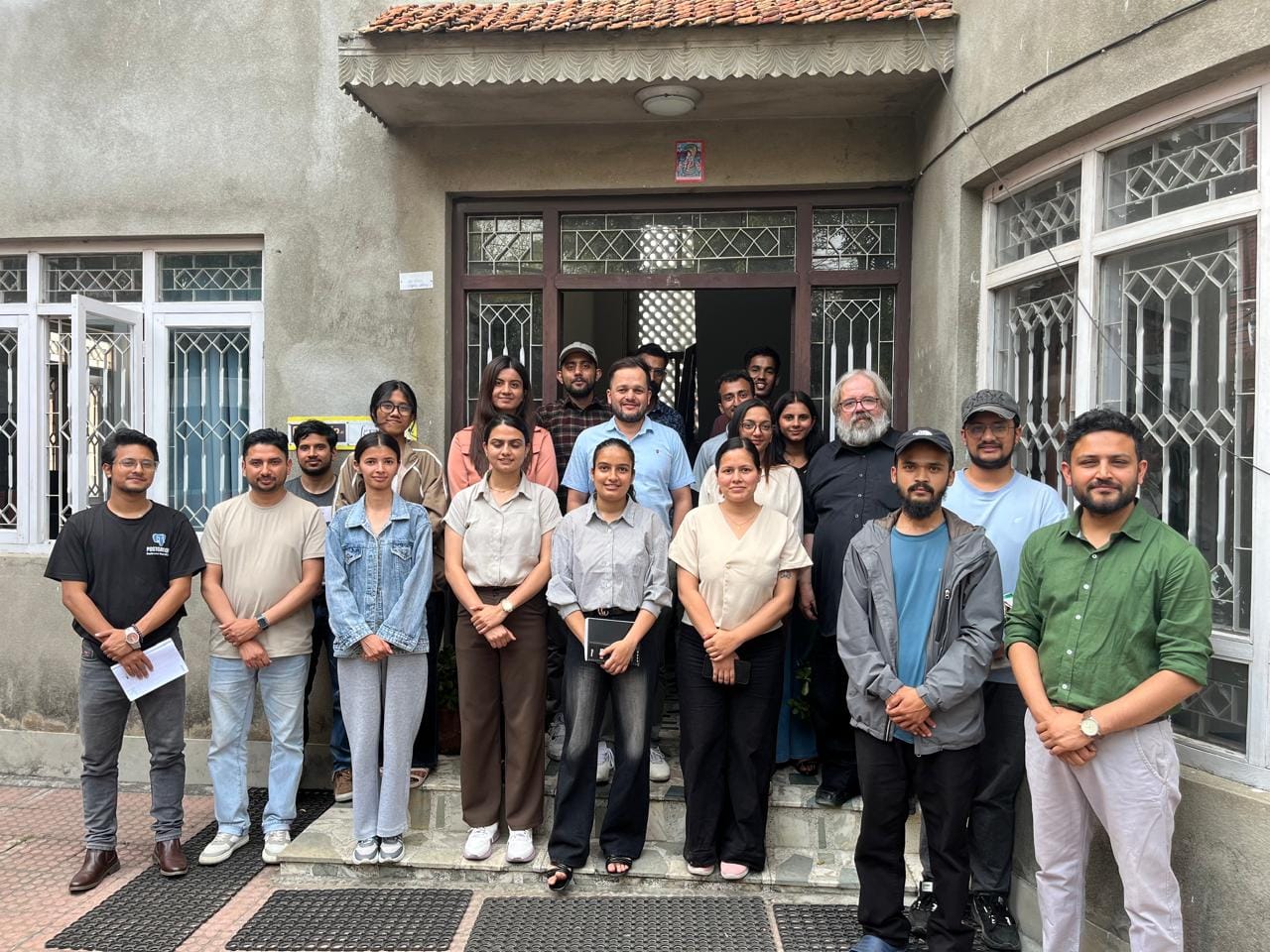
This week, the “soft opening” took place with a workshop in the offices of MTC partner I:Stem in Lalitpur for all staff members of both organisations (plus the I:Stem dog). The MTIL Nepal secretariat will start working from June 1, 2026.
The announcement reads as follows:
We are standing at a pivotal crossroads. The global tourism industry currently faces a critical disconnect: a "growth-at-all-costs" mindset that often leaves local communities, environments, and even travelers themselves unfulfilled. If you are struggling with stagnant sustainable practices, fragmented research, or the commercial limitations of traditional travel models, you are not alone. These are not just hurdles; they are symptoms of a paradigm in need of a fundamental shift.
The Opportunity: Building the New Economy
We are excited to announce the launch of the Meaningful Tourism Innovation Lab. This is an invitation to move beyond "travel" and help establish a Meaningful Tourism Economy. In this system, every stakeholder, from the host community to the individual explorer, derives genuine value.
Supported by the strategic guidance of Prof. Dr. Wolfgang Georg Arlt from the Meaningful Tourism Centre, and the technical expertise of I.STEM Lab, represented by Suman Baral, Er. Nischal Acharya, Gyanesh K Karna and Arun Bista, this initiative is designed to be the bridge between theory and transformative action.
Our Mandate
The Meaningful Tourism Innovation Lab will serve two critical functions:
- Being the Nexus & Think Tank: A centralized hub for developing and deploying the Meaningful Tourism paradigm
- Being a Global Coordinator: The primary node for an international network of innovation labs, starting in Nepal and scaling to at least ten other within a year.
A Shared Vision
This isn't just a local initiative; it is a global movement. The "Meaningful Tourism Economy" has been the official vision statement of the Pacific Asia Travel Association (PATA) since last year. We are operationalizing that vision.
Let’s connect.
Together, we can redefine what it means to move through the world.
New overview for MTC products and services and the three levels of certified Meaningful Tourism movement membership
MTC has updated the information about all products and services, including those provided by the Meaningful Tourism Innovation Labs.
Please download the brochure below to see how the different levels of certified membership can be reached.

Meaningful Tourism Community: The Meaningful Tourism Transformational Game Workshop Trainer
Jabir Ahmad - Certified Trainer for Saudi Arabia
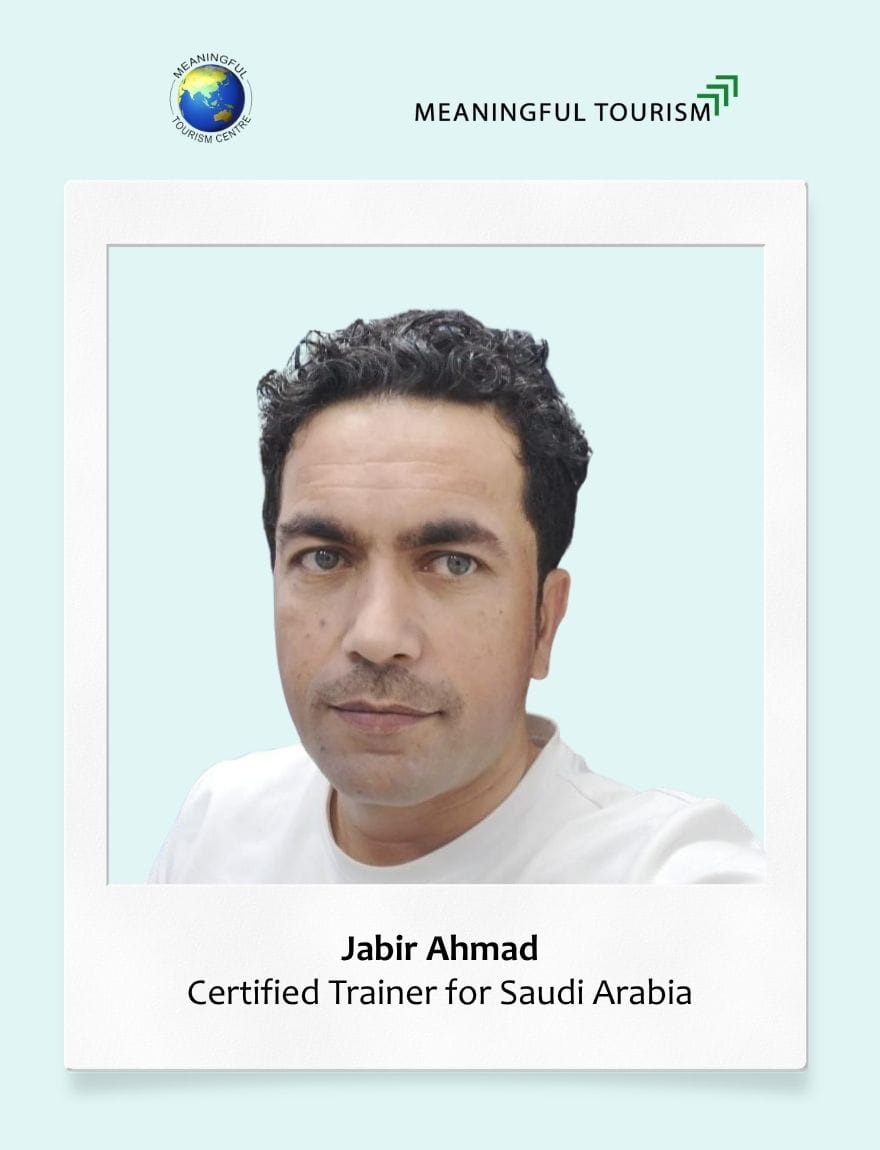
Jabir Ahmad is the Founder and CEO of GreenCert & Jecoluxe, a smart hospitality operational intelligence and sustainability platform focused on connecting hotel operations, guest experience, and measurable sustainability performance. He brings extensive experience in technology leadership, large-scale infrastructure, cloud technologies, and software systems, with a strong focus on operational efficiency, innovation, and digital transformation across hospitality and tourism ecosystems.
Meaningful Tourism Weekly: What is the current situation of Tourism in Saudi Arabia, and how can the Meaningful Tourism paradigm help support its development?
Jabir Ahmad: Saudi Arabia is currently experiencing one of the fastest tourism transformations globally. Through Vision 2030, the Kingdom is not only investing heavily in tourism infrastructure, hospitality, cultural destinations, and international positioning, but is also redefining how tourism contributes to economic diversification, cultural preservation, and long-term national development.
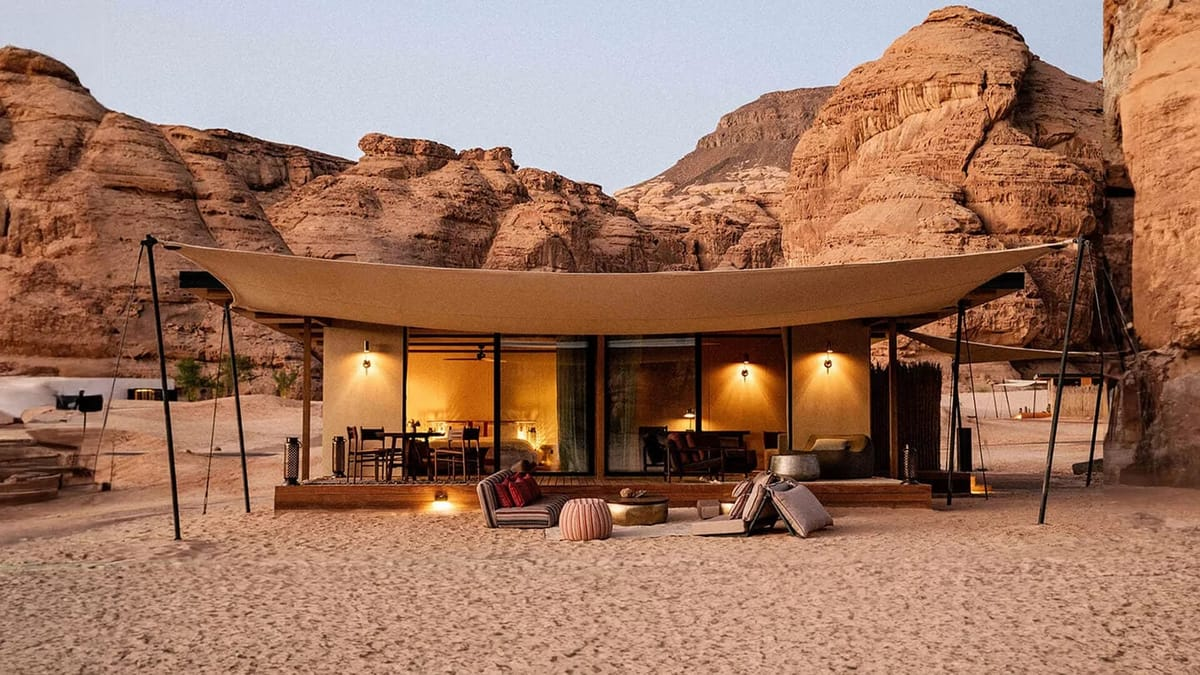
The country has already made significant progress through projects such as AlUla, the Red Sea, Diriyah, NEOM, and the rapid expansion of hospitality and entertainment sectors across Riyadh, Jeddah, and other regions. However, as tourism scales rapidly, one of the most important challenges will be ensuring that growth remains meaningful, credible, and sustainable rather than purely transactional or volume-driven.
This is where the Meaningful Tourism paradigm becomes highly relevant.
Meaningful Tourism encourages destinations and hospitality operators to move beyond traditional tourism models focused only on occupancy, revenue, and visitor numbers. Instead, it emphasizes authenticity, cultural connection, local participation, environmental responsibility, guest awareness, and long-term positive impact.
In Saudi Arabia, this approach can help ensure that tourism development remains aligned with local identity and community value creation. It can also support hospitality operators in creating more transparent and measurable guest experiences, where sustainability, operational responsibility, and cultural storytelling become integrated parts of the tourism journey rather than marketing narratives alone.
The future of tourism globally is increasingly moving toward trust, transparency, measurable impact, and operational credibility. Travelers are becoming more conscious about how destinations operate, how hotels manage resources, how communities benefit, and whether sustainability claims are genuinely supported by action.
Saudi Arabia has a unique opportunity to position itself not only as a major tourism destination, but as a global example of how tourism growth, cultural authenticity, sustainability, and meaningful hospitality experiences can evolve together in a more integrated way.
MTC Certified Trainers
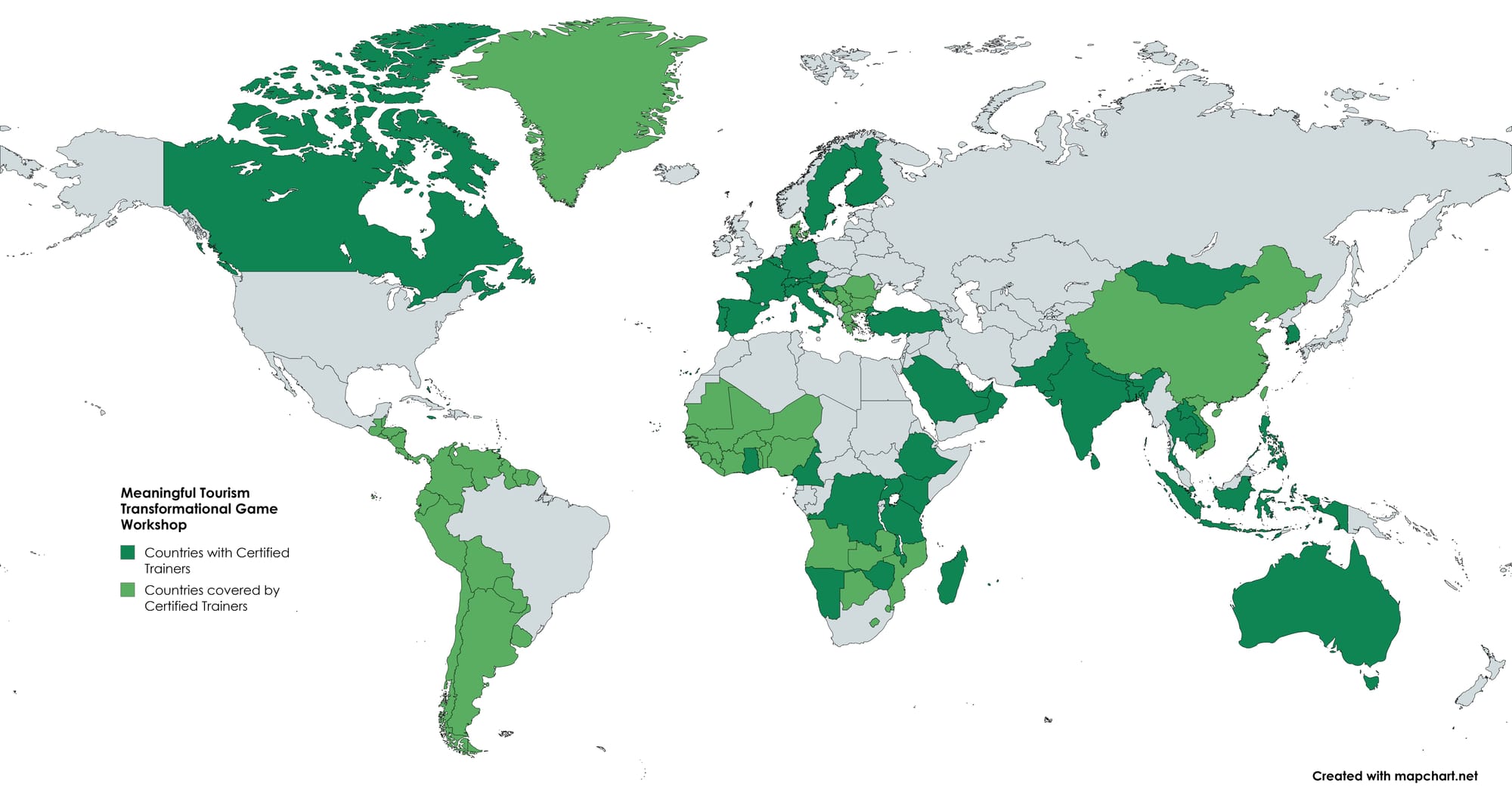
Please find below an overview of all our Certified Trainers for the Meaningful Tourism Transformational Game Workshop, along with the World Map showing the countries currently covered directly or indirectly.
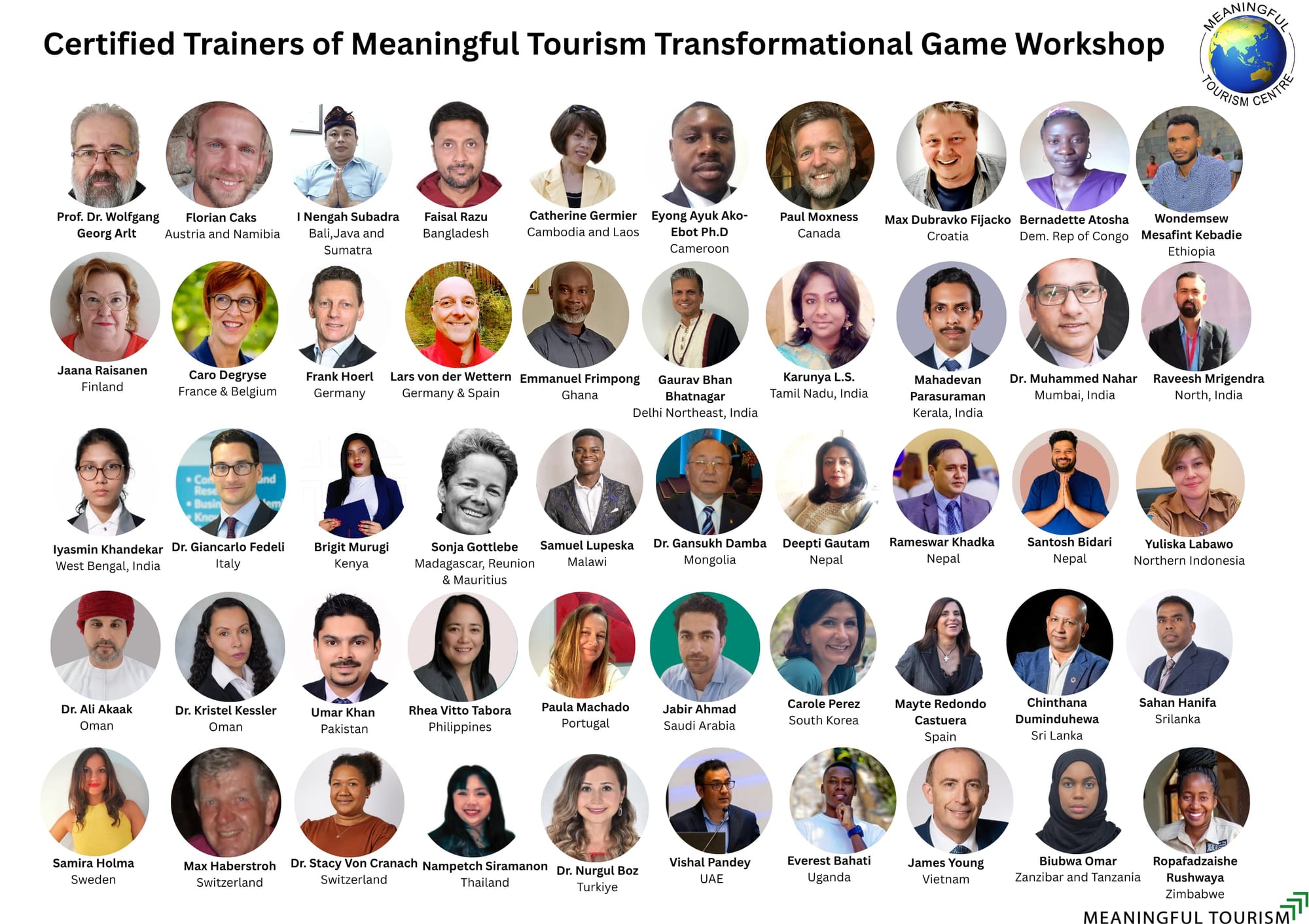
The network of MTC Certified Trainers is constantly growing. As shown on the map, many countries and regions worldwide are already served by dedicated experts. However, MTC is continuously looking for professionals with experience in training or lecturing and a passion for sustainable tourism to join the network and fill the blanks on the map.
About Meaningful Tourism Weekly
Meaningful Tourism Weekly is published every Thursday by Meaningful Tourism Centre (MTC) - London and Kathmandu in collaboration with Travel Asia Now, led by Rhea Vitto Tabora.
Each issue features an Editorial, updates on MTC activities, a Best Practice Example, a profile of an MTC-certified trainer, news about upcoming events, and, occasionally, additional op-ed pieces from guest authors. Carefully selected news items, including videos and podcasts, are also included, with links to their original sources in the Meaningful Tourism News section.
Subscription to Meaningful Tourism Weekly is free, with the addition of a paid content section that includes a library of surveys, exclusive articles, conference presentations, and statistical data, offering subscribers invaluable resources.
Sponsorship opportunities are available for those interested in supporting this initiative.
For more information about MTC's training programs, market research, product adaptation, consulting services, conferences, strategy development, and marketing, visit our website or email us at info@meaningfultourismcentre.org.