FOF Fear of the Future and Emotional Companionship for Meaningful Tourism in China



Dear reader,
the introduction of the acronym FOF, Fear of the Future, has resulted in quite a number of feedback, mostly agreeing that the lovely times of FOMO Fear of Missing Out is coming to an end. Unfortunately, for a significant additional number of people the challenge of deciding which of 150 kinds of strawberry jam to buy will be replaced with the question if they can still afford such luxury.
In international tourism, about 15% of the 8.3 billion current human inhabitants of our planet who have ever used an airplane, will be affected on another level by the drastic changes caused by AI and Climate Change. Still, the ecosystem of tourism needs to react to these changes.
The most important international tourism source market, responsible for almost 10% of all international trips, is China. Accordingly, it was very encouraging for your humble editor to see how many new and innovative activities are taking place to welcome and satisfy Chinese outbound travellers during the online event to celebrate the Chinese Tourist Welcome (CTW) Award 2026.
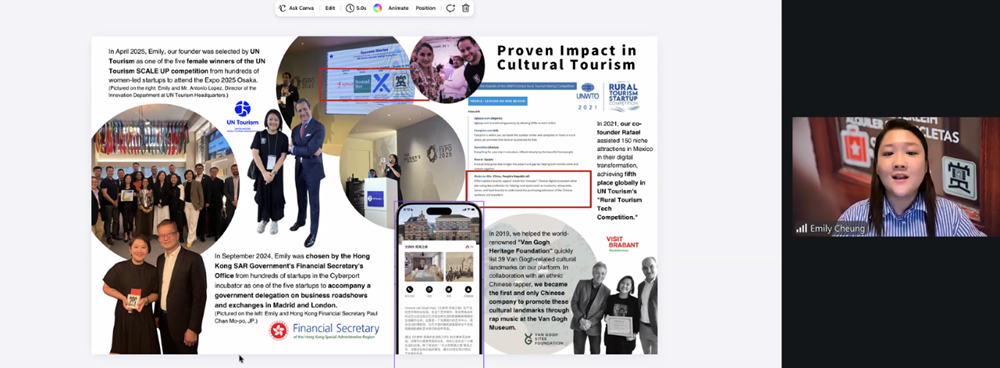
As reported earlier, COTRI China Outbound Tourism Research Institute, a section of the Meaningful Tourism Centre, and its partners, the Tourism Institute based in Belgium and the COTRI partner office in Beijing/China, offered an online event today to start their new cooperation to support both inbound and outbound tourism to and from China. Your humble editor, Reza Soltani (President, Tourism Institute), and Prof. Yang Jingjing (COTRI China) co-hosted the online show introducing the new structure and presenting the winners of the Chinese Tourist Welcome (CTW) Award 2026. Almost all winners were present, and several of them shared their insights and projects with the audience.
By a lucky coincidence, China's Ministry of Culture and Tourism issued the Tourism Five-year Plan for 2026-2030 this week, aiming at accelerating the construction of China as a “tourism powerhouse” with the number of inbound tourist arrivals in 2030 growing to 190 million, spending more than 150 billion USD. Your humble editor quoted, in a short presentation, Chinese experts pointing out that “When foreign tourists personally experience China's culture, history and modern achievements, it helps enhance China's international image and cultural influence.”
For domestic tourism, the target for 2030 is no less than mind-boggling: 8.3 billion trips with total domestic tourism spending amounting to 7.7 trillion RMB (1 trillion Euro).
The new Five-Year Plan also includes interesting statements about the new development of tourism in China: The inclusiveness of tourism is to be further developed by adapting to the needs of different tourist groups by launching customized and personalized tourism products and routes.
A stronger focus on the health and wellness, emotional companionship, and interest-based social needs of the elderly is envisaged, translated into developing themed products such as wellness tourism and nostalgia tours.
Not all governments in the world have reached the level of understanding of tourism to see that, for example, “emotional companionship” is a key product of tourism, reflecting the growing influence of FOF and the need for a Meaningful Tourism Economy to deliver emotional companionship in a satisfying way.
The CTW Award 2026 winners already showed how to respond to the new demand from China, and many related their activities directly to the Meaningful Tourism approach, from new platforms for short-rental accommodation in Mauritius to gastronomy-based customised tours in France and from IT solutions helping cultural SMEs and small specialised shops around the world to use Chinese social media in a simple and cost-efficient way.
China is already the No. 1 outbound tourism market and the No. 1 domestic tourism market; the aim is to also become the No. 1 inbound tourism market in the world. Inbound tourism is not only an economic factor for China (plan for 2030: about 15% of total Chinese tourism revenue) but alsoa soft power instrument – Marketing has to take this into consideration. Domestic tourism quality is improving; outbound tourism is no longer automatically more prestigious and preferred.
For international tourism service providers, the need to offer customised high-quality products for Chinese outbound market to create interest in discovering new destinations or to produce reasons for return visits is apparent as is the need to connect inbound and outbound activities and to demonstrate support of tourism in both directions.
Both the Five-Year Plan and the practical experiences with Chinese visitors in 2026 show clearly the need to integrate Chinese tourism activities into a Meaningful Tourism Economy.
The online CTW Award presentation lasted two hours; however, almost all participants stayed for the entire duration and praised the level and quality of the information provided by COTRI and the Award winners themselves.

If you missed it, you can find the video here:
 r
r
The full edition of the Meaningful Tourism Weekly this week includes, besides this editorial, also an interesting guest article “Transforming the Last Mile with Sustainable Tourism in India” and further information.
So, if you are reading this Editorial on LinkedIn, make sure to move to the full edition of the Meaningful Tourism Weekly Newsletter on https://meaningful-tourism-weekly.ghost.io/.
If you subscribe to the full edition on Ghost, free of charge, you will receive the complete weekly edition in your email inbox.
As always, all best wishes from the Meaningful Tourism Weekly team in Kathmandu and Manila, and from the whole Meaningful Tourism community to all our readers!


Travel Dialogues South Asia Podcast Summary
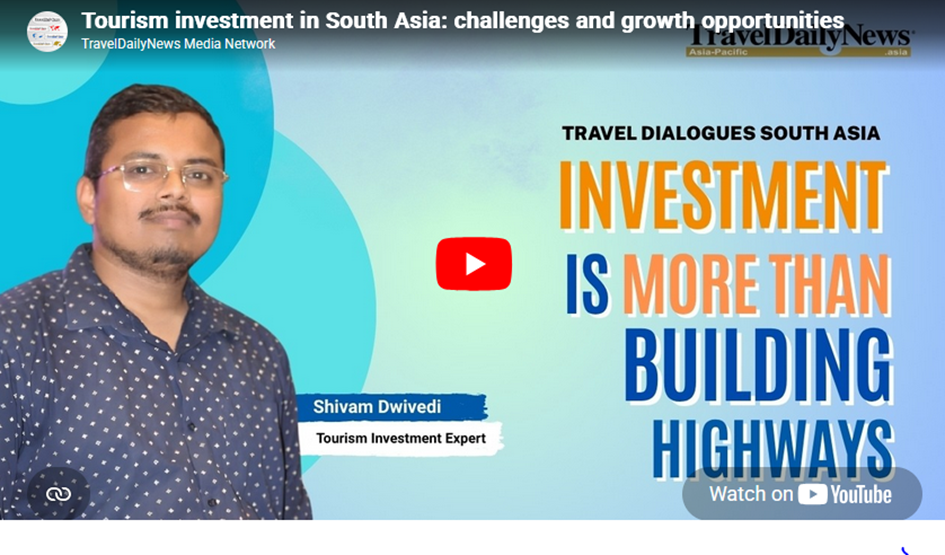
In the latest edition of the Travel Dialogues South Asia podcast, your humble editor talked with Shivam Dwivedi, an expert in investment banking from Bhopal, India, focusing on the structural challenges and opportunities shaping the region’s tourism economy.
Key insight: Tourism investment in South Asia highlights infrastructure gaps, safety issues and opportunities in medical tourism and cultural assets for sustainable growth.
South Asia represents approximately 25% of the global population, encompassing key destinations such as India, Pakistan, Nepal, Sri Lanka, Bangladesh and the Maldives. Despite its scale and diversity, the region captures only around 2% of global international tourist arrivals.
This imbalance highlights the significant untapped potential for tourism investment in South Asia, particularly when compared with leading global destinations such as France, Spain and Italy, which attract substantially higher visitor volumes and tourism revenue.
Structural gaps limiting tourism growth
A key barrier to growth is the gap between available tourism assets and the quality of on-ground infrastructure and services. Basic facilities, including clean and well-maintained public toilets, remain inconsistent across destinations, directly impacting visitor satisfaction.
Service quality also presents challenges, with a limited number of certified and professional tourist guides available to support international travellers. This affects the overall experience, particularly for first-time visitors unfamiliar with the region.
Safety concerns further constrain tourism development, especially in urban environments where visitors may feel restricted in their mobility, particularly after dark. At the same time, poor maintenance of cultural and historical sites reduces the perceived value of key attractions.
Governance and investment inefficiencies
Although governments in the region allocate significant budgets to tourism development, inefficiencies in implementation limit the impact of these investments. Issues such as misallocation of resources and lack of operational oversight reduce the effectiveness of large-scale funding initiatives.
As a result, tourism investment in South Asia often fails to address fundamental needs at destination level, prioritising large projects over essential infrastructure and service improvements.
Opportunities in high-value tourism segments
Despite these challenges, South Asia offers strong opportunities in specialised, high-value tourism segments. Medical tourism is identified as a key growth driver, particularly in India and Nepal, where internationally trained medical professionals and modern facilities provide competitive pricing compared to Western markets.
Traditional wellness and Ayurvedic treatments also represent a unique regional advantage, attracting travellers seeking holistic health experiences. These segments remain under-promoted and present opportunities for targeted investment and marketing.
In addition, the region’s extensive cultural and historical heritage, combined with diverse landscapes, provides a strong foundation for experiential and niche tourism development.
Strategic priorities for investment
The discussion emphasises the need to reorient tourism investment in South Asia towards fundamental improvements that directly impact the visitor experience. Cleanliness, safety, reliable services and consistent maintenance of public spaces should be prioritised over advanced technological solutions.
Investment in human capital is also critical, particularly in developing skilled tourism professionals, including guides who can deliver high-quality, informative and engaging experiences.
At the same time, targeted digital marketing strategies are required to promote niche tourism products, including medical and wellness tourism, to international audiences.
Community engagement and sustainable growth
Engaging local communities is identified as a key factor in achieving sustainable tourism development. When communities are directly involved and benefit economically from tourism, they are more likely to support preservation efforts and contribute to the authenticity of the visitor experience.
This approach aligns with broader goals of inclusive growth, ensuring that tourism investment in South Asia delivers benefits beyond investors to local populations and regional economies.
Outlook for tourism investment
The long-term outlook for tourism investment in South Asia remains positive, supported by the region’s cultural richness, natural diversity and growing global interest in alternative destinations.
However, unlocking this potential will require a strategic shift towards addressing core infrastructure gaps, improving service quality and strengthening governance frameworks. By focusing on these priorities, South Asia can enhance its competitiveness and position itself more effectively within the global tourism market.
More information here:
https://www.traveldailynews.asia/column/interviews/tourism-investment-south-asia/

The Folk Tales: Transforming the Last Mile with Sustainable Tourism in India
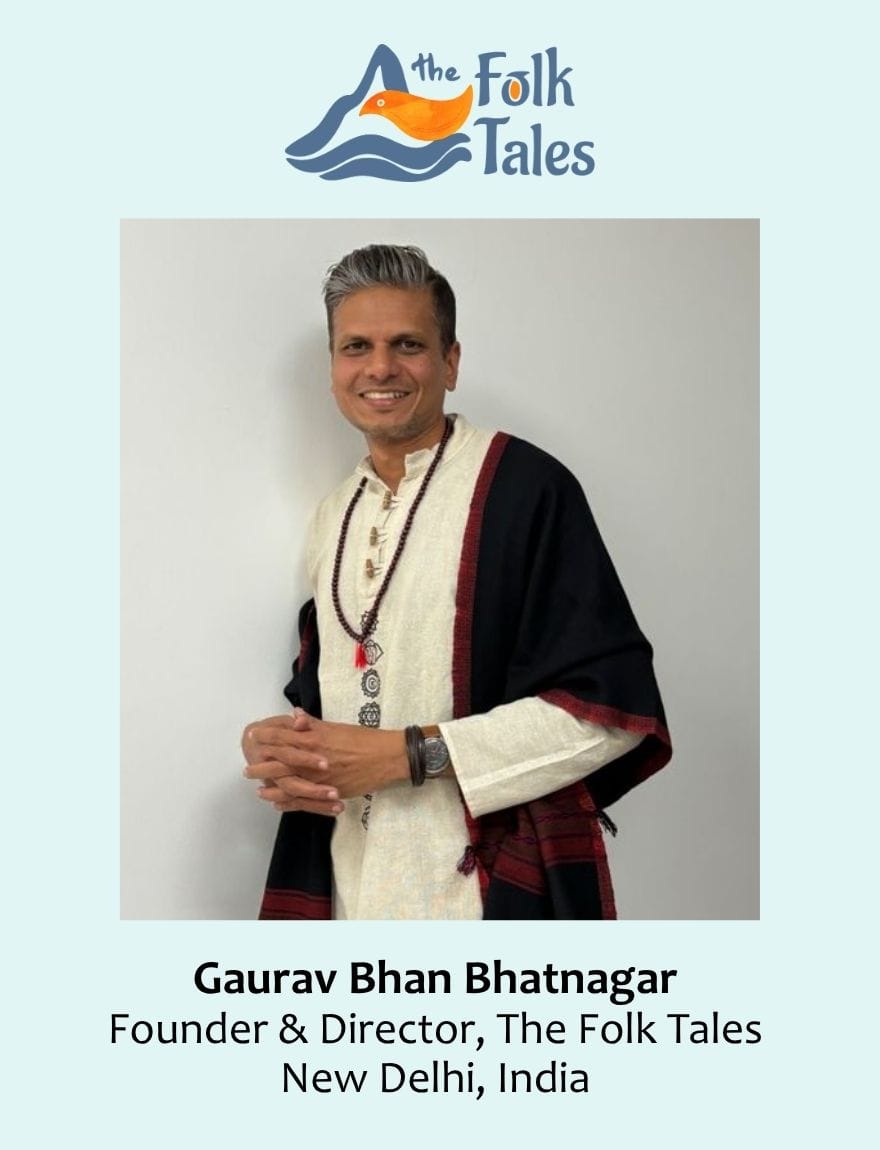
By Gaurav Bhan Bhatnagar
Is it still a surprise that destinations from Venice to Bali, Dubrovnik, and Barcelona are struggling with over-tourism?
Studies show that around 80% of global travelers visit just 10% of destinations, putting intense pressure on a small set of iconic places while countless rural communities and off-beat destinations remain invisible.
According to the BBC article, Disneyland to living city: Dubrovnik’s fight against over-tourism, the ‘Pearl of the Adriatic’ is inundated with cruises and budget airlines. The tourists outnumber the locals 27:1. In India, the usual tourist spots such as the Taj Mahal and Kerala’s backwaters are swamped with tourists who spend one or two nights at a destination and move on, contributing little (if any) to the local economy.
At The Folk Tales, curated conscious journeys deliberately flip this pattern by taking curious travelers beyond the usual circuits into India’s lesser-known villages and small towns, ensuring that tourism benefits truly reach the last mile.
Why the last mile matters
According to the World Tourism Barometer by UN Tourism, international tourist movement accounted to an estimated 1.52 billion, a solid 60 million more than that in 2024.
Keeping aside the temporary hiccup caused by the US-Iran conflict, global tourism is projected to grow with Asia-Pacific contributing a 6% rise. This raises sharp questions about who actually gains, and who pays the price in terms of displacement, congestion, and environmental degradation.
In India, sustainable and responsible tourism is no longer an optional and exclusive product. Estimates show that the country’s tourism will grow, supported by sustainable stays, rural tourism routes, and community-led experiences. This broader shift opens space for globally recognized initiatives like The Folk Tales, where community participation, small and micro entrepreneurs, artisans, and guides become central actors rather than an afterthought.
Sustainable tourism approach in India
Sustainable tourism does not mean skipping iconic destinations like the Taj Mahal and doing only villages. It means prioritizing community ownership, cultural integrity, and low-impact travel with more nights at each destination, exploring the lesser-known parts of India, and bringing to the forefront native stories, music, arts & crafts, and architecture.
Trips are intentionally slow and small-group, allowing guests to stay in homestays and community-run accommodations, and those hotels that actively support sustainability. A traveler engages in storytelling, not historical dates and facts picked from history books and Wikipedia.
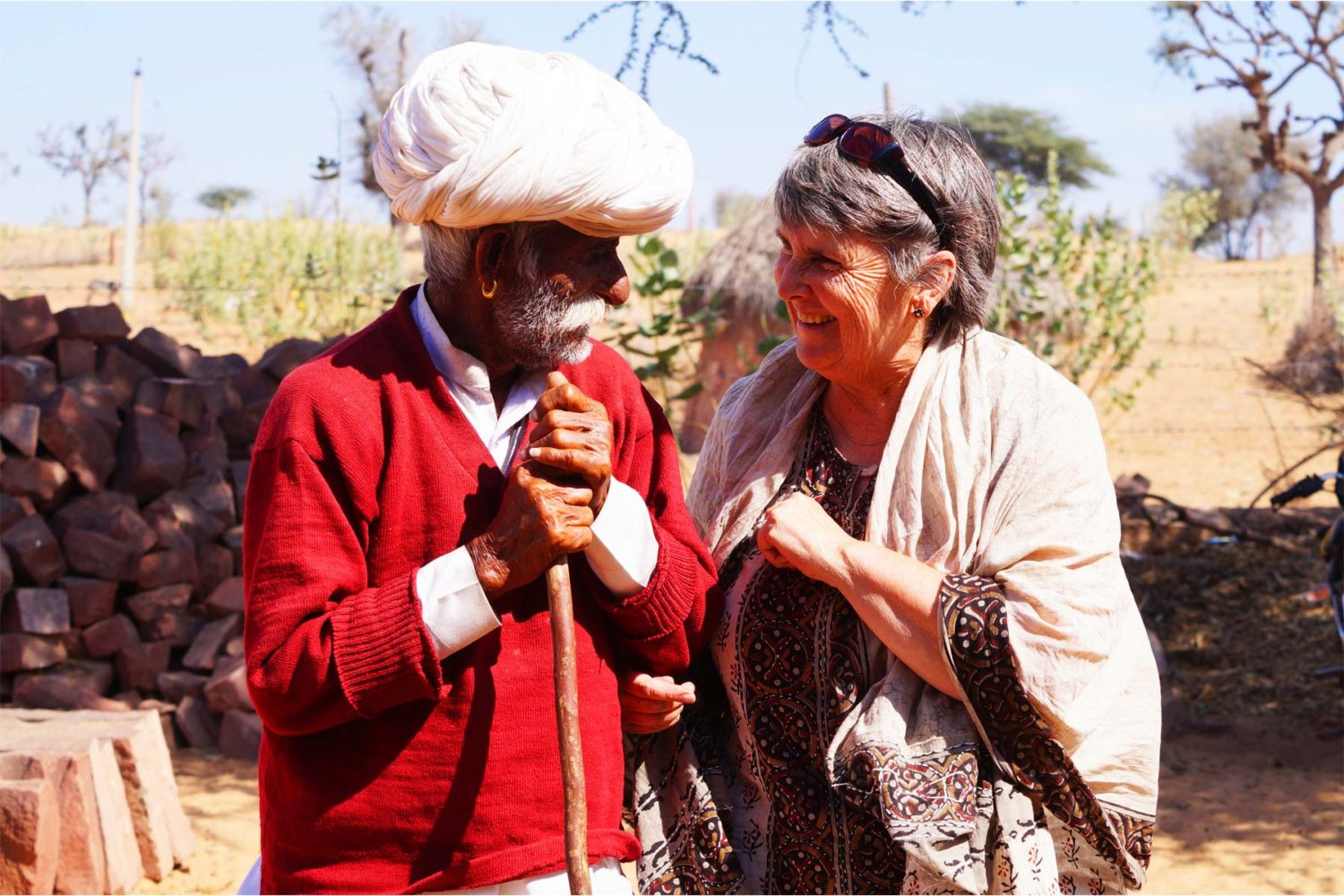
For example, a day spent with the camel conservation community in Rajasthan gives a traveler insight into the life of the Raika community. This experience far outshines a mere camel ride that not only exploits the animal but also does not facilitate any cultural immersion.
The Folk Tales creates and executes travel products directly with the last-mile communities building agency over their narratives, economic benefits, and quality control for our B2B and B2C clients.
Technology transformation in sustainable tourism
According to Roadrunner, a leader in cost-effective and sustainable waste management, and average office worker disposes 10,000 sheets of paper and 500 paper cups annually. Half of all printouts are thrown away within the first 24-hours and 30% lie printed yet unused in the xerox machine.
In-line with the Indian Government’s Digital India initiative, back-end operations of The Folk Tales are 100% digital and powered by Indian technologies and systems.
Project Kathakar: Owning India’s narratives through women-led walking tours
In association with Sakha Consulting Wings
‘Kathakar’ is a Sanskrit word that translates to a storyteller. While The Folk Tales provides equitable skill-based work opportunities to both genders, Project Kathakar is focusing on women from Delhi’s under-served communities.
Under this initiative, the women are trained as tour guides. They receive training not only on destinations, but also listening, speaking, body language, and English. This provides them an unparalleled opportunity to interact with a global audience while sharing India’s story with the world.
Linking travel experiences to UN Sustainable Development Goals
Sustainable tourism in India naturally aligns with United Nations Sustainable Development Goals (SDGs) where tourism is explicitly recognized as a lever for change.
SDG 8 (Decent Work and Economic Growth) calls for policies that create jobs and promotes local culture and products, with indicators that track a direct contribution to the GDP. By building itineraries around local crafts, heritage walks, and community-based experiences, The Folk Tales supports dignified livelihoods for all its partners, including the guides, artisans, drivers, and hosts.
SDG 12 (Responsible Consumption and Production) and SDG 13 (Climate Action) are reflected in the efforts to reduce waste on tours, encourage mindful resource use, and promote lower-carbon choices such as trains, hybrid vehicles, and longer stays in fewer locations.
Pre-departure briefing informs guests about local environmental realities, from water usage to waste management, turning each journey into an opportunity for reflection on how individual travel choices intersect with environmental boundaries.
The emphasis on cultural preservation through storytelling supports SDG 11 (Sustainable Cities and Communities), which includes protecting cultural and natural heritage, by spotlighting living traditions—from folk music to regional cuisines—that might otherwise be sidelined in mass tourism circuits.
In an era when over-tourism and geo-tagging threatens the very places people travel to, sustainable tourism finds a balance between the highlights and lesser known places, making it rewarding for tourists, hosts, and destinations.

Meaningful Tourism Community: The Meaningful Tourism Transformational Game Workshop Trainer
Dr. Kristel Kessler - Certified Trainer for Oman
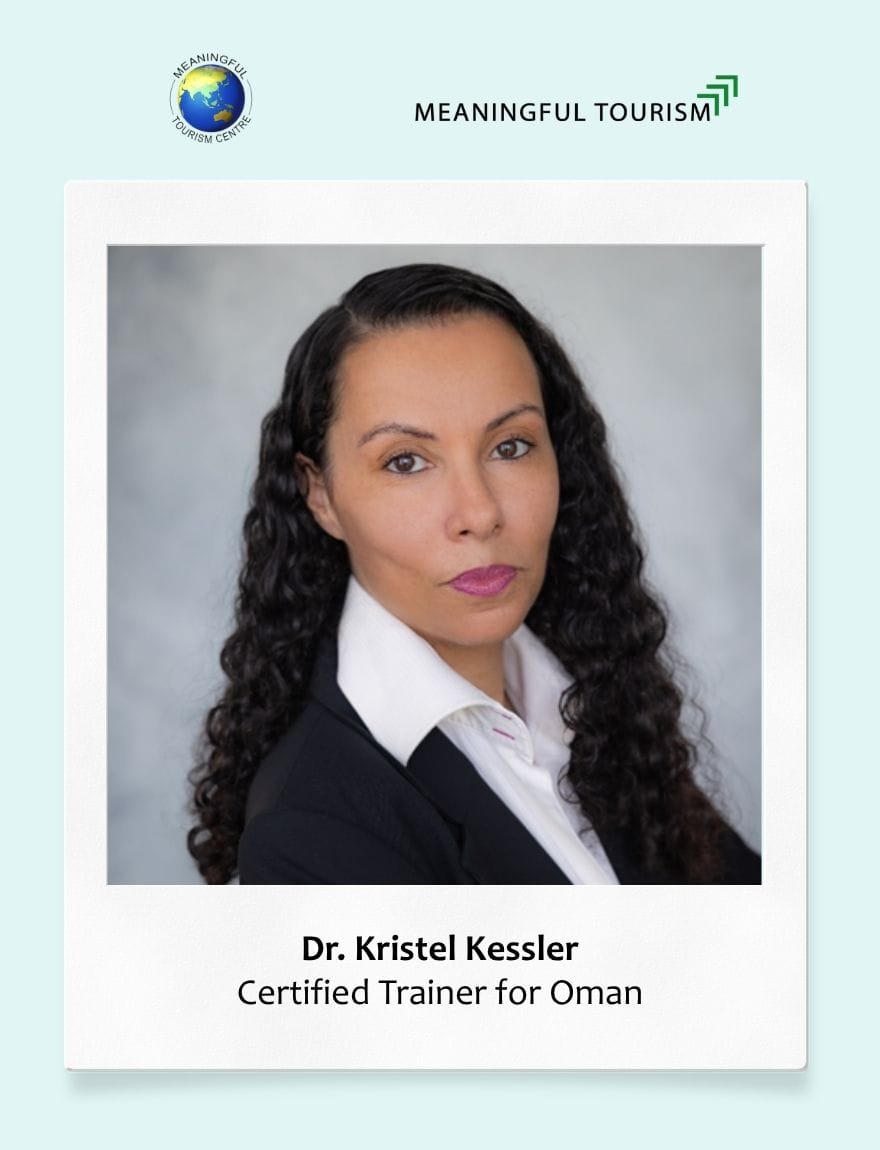
Dr. Kristel Kessler is an international expert in heritage and religious tourism, with over 15 years of experience in the UK, France, and Oman. A French national with a Ph.D. from Leeds Beckett University (UK), her research focuses on Islamic tourism, sacred sites, and heritage attractions. Dr. Kessler has built a diverse career spanning academia and industry. She has held leadership and freelance roles within the airline and travel sectors, and has lectured and mentored university students in both Europe and the Middle East.
Recognized for her innovative work, Dr. Kessler has conceptualized the notion of Mosque Tourism and developed pioneering frameworks that enable destinations to valorize their sacred heritage, positioning sacredness as a distinctive branding and development tool. She is also a certified trainer with the Meaningful Tourism Centre for Oman. In addition to her academic and training roles, Dr. Kessler is an entrepreneur with established businesses in Oman. She combines rigorous academic insight with practical expertise to support the conceptualization, development, and promotion of heritage and religious tourism initiatives through international projects, collaborations, and strategic partnerships.
What is the current situation of Tourism in Oman, and how can the Meaningful Tourism paradigm help to support its development?
Tourism is increasingly viewed as a key driver of economic diversification in Oman, supporting the country’s transition away from reliance on hydrocarbons and gas. Under Vision Oman 2040, the national strategy for the economic and social planning of the country, Tourism is expected to play a central role in national development. Oman’s tourism strategy stands apart from that of its GCC neighbours, positioning the country as a distinctive destination within the Gulf region. This differentiation is rooted in its rich cultural heritage, diverse natural landscapes, and strong sense of authenticity.
However, as global tourism demand continues to grow, Oman faces a critical challenge: How to balance expansion with the preservation of the very assets that make it unique? This tension between growth and conservation highlights the need for a holistic and future-oriented approach to tourism development.
In this context, the Meaningful Tourism Paradigm offers a valuable framework for policymakers and industry leaders. Rather than focusing on volume-driven growth, it emphasizes the creation of experiences that foster personal fulfilment, deeper cultural connections, and shared value for all stakeholders. For Oman, this approach aligns closely with its existing cluster tourism model, which prioritizes heritage-based experiences, community engagement, and nature-focused activities showcasing both tangible and intangible assets.
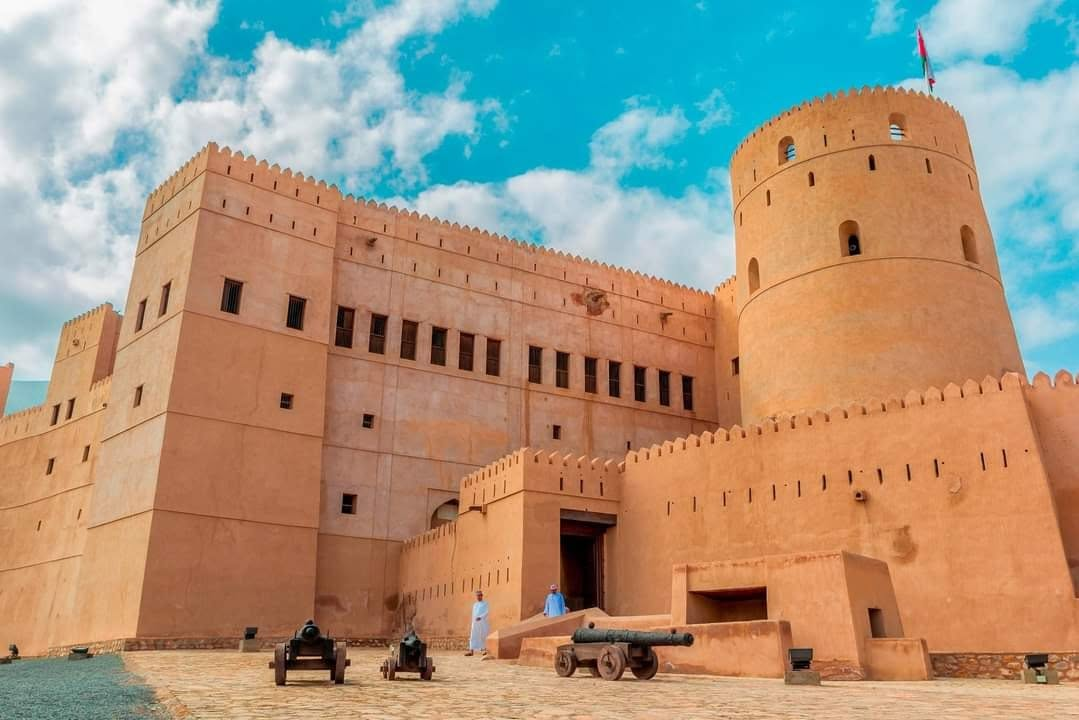
By integrating the principles of the Meaningful Tourism Framework, Oman can further strengthen its competitive position. Fostering transformative experiences, enhancing stakeholder collaboration, and building resilience within tourism systems will not only improve visitor satisfaction but also ensure long-term sustainability. In doing so, Oman has the potential to position itself as a regional leader in purpose-driven tourism and serve as a model for sustainable and meaningful destination development.
MTC Certified Trainers
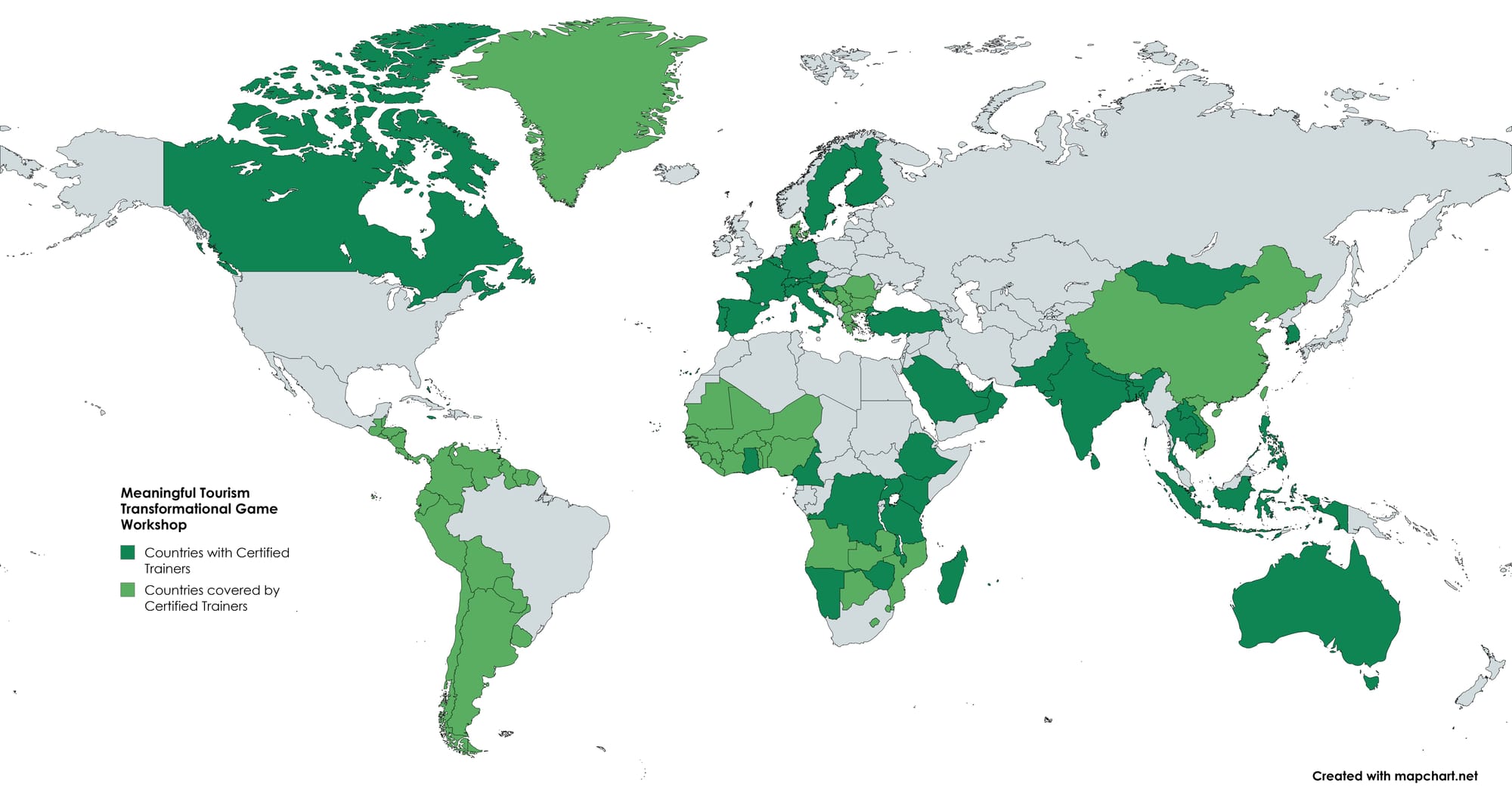
Please find below an overview of all our Certified Trainers for the Meaningful Tourism Transformational Game Workshop, along with the World Map showing the countries currently covered directly or indirectly.
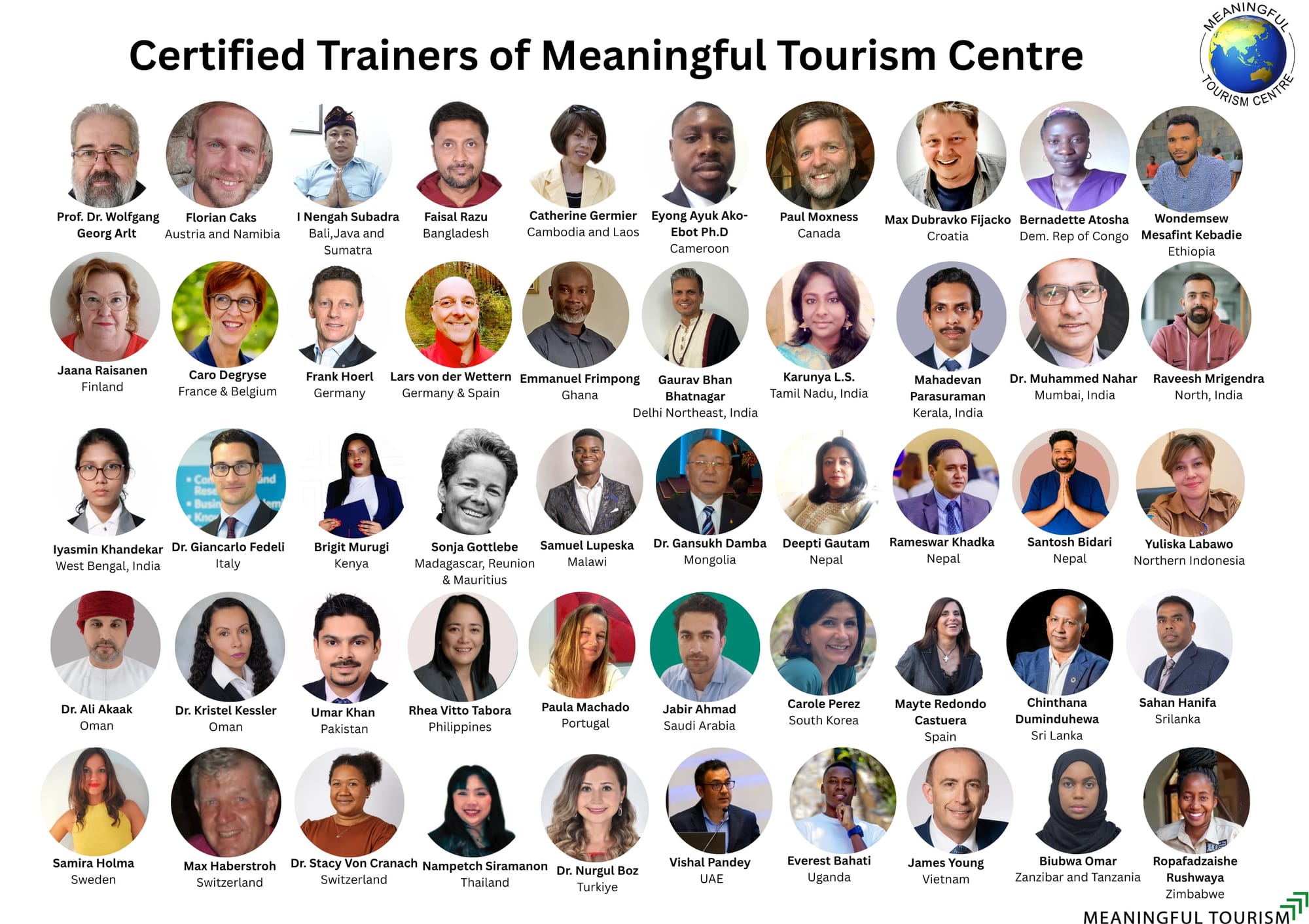
The network of MTC Certified Trainers is constantly growing. As shown on the map, many countries and regions worldwide are already served by dedicated experts. However, MTC is continuously looking for professionals with experience in training or lecturing and a passion for sustainable tourism to join the network and fill the blanks on the map.

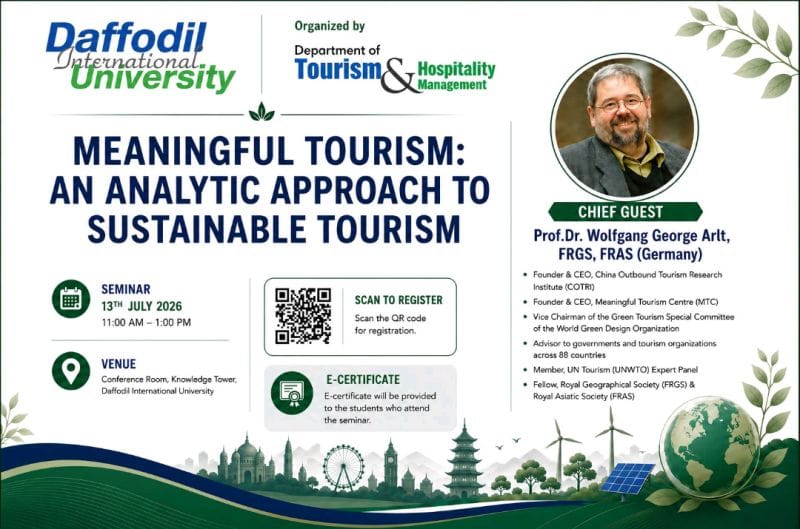
Meaningful Tourism: An Analytic Approach to Sustainable Tourism
A seminar organised by the Department of Tourism & Hospitality Management
July 13, 2026 | Daffodil International University, Bangladesh
About Meaningful Tourism Weekly
Meaningful Tourism Weekly is published every Thursday by Meaningful Tourism Centre (MTC) - London and Kathmandu in collaboration with Travel Asia Now, led by Rhea Vitto Tabora.
Each issue features an Editorial, updates on MTC activities, a Best Practice Example, a profile of an MTC-certified trainer, news about upcoming events, and, occasionally, additional op-ed pieces from guest authors. Carefully selected news items, including videos and podcasts, are also included, with links to their original sources in the Meaningful Tourism News section.
Subscription to Meaningful Tourism Weekly is free, with the addition of a paid content section that includes a library of surveys, exclusive articles, conference presentations, and statistical data, offering subscribers invaluable resources.
Sponsorship opportunities are available for those interested in supporting this initiative.
For more information about MTC's training programs, market research, product adaptation, consulting services, conferences, strategy development, and marketing, visit our website or email us at info@meaningfultourismcentre.org.