Meaningful Halal Tourism


Dear reader,
the Asia-Pacific region is the most dynamic tourism region in the world. It is also the first region for which the major regional organisation, PATA, has adopted as Vision Statement the aim to achieve A Meaningful Asia-Pacific Tourism Economy. PATA together with UN Tourism also supported the work of two long-standing friends and partners of the Meaningful Tourism Centre and your humble editor, Fazal Bahardeen, CEO of Singapore-based CrescentRating, and Dr. Jens Thraenhart, CEO of Chameleon Strategies, who published last week an interesting handbook for the region, the Asia Pacific Outbound Traveler Handbook 2026, which covers 26 source markets across East, Southeast, South, Central, and West Asia. A condensed version is available for free digital download at Asia Travel Trends.
Especially interesting is the analysis provided by Fazal Bahardeen of the shared values, faith-based needs, and core behaviours of Muslim travellers, which in his view form an incredibly powerful, unifying bond across borders. This collective identity is presented as the absolute foundation of Muslim-friendly travel.
However, the reader is reminded that these travellers are not a monolith. While united by deep universal values, a Muslim traveller from Indonesia still possesses distinct cultural nuances compared to one from Saudi Arabia or Kazakhstan. To succeed, destinations must treat these shared Muslim values as their non-negotiable bedrock, while layering source-market-specific execution on top. The book provides insights to bridge this gap for all 26 source markets.
Fazal Bahardeen will also be a guest in the coming weeks of Travel Dialogues South Asia podcast, which MTC together with DailyTravelNews.asia has started with great success. Your humble editor will speak to the CEO of CrescentRating about Halal tourism especially to South Asia, however, there will be certainly lessons to be learned also for all members of the Meaningful Tourism movement regardless of their geographical affiliation.
If you are reading this Editorial on LinkedIn, make sure to move to the full edition of the Meaningful Tourism Weekly newsletter on https://meaningful-tourism-weekly.ghost.io/. There you will find, besides this editorial, also the summary of the latest Travel Dialogues South Asia podcast, talking about tourism and Wellbeing in Nepal with the leading Nepali tourism expert Khem Lakai.
As not to concentrate only on Asia-Pacific, there is also an interesting guest article by Emmanuel Frimpong about the latest report on the tourism development in Ghana and how it relates to the growth of a Meaningful Tourism Economy in West Africa. If you subscribe to the full edition on Ghost, free of charge, you will receive the complete weekly edition in your email box.
Next week, we will talk about another part of Asia and an online event to start the new partnerships of COTRI and MTC which will happen on July 9th, 2026, so stay tuned!
As always, all best wishes from the Meaningful Tourism Weekly team in Kathmandu and Manila, and from the whole Meaningful Tourism community to all our readers!


Travel Dialogues South Asia Podcast Summary
Sustainable tourism in Nepal: repositioning beyond mountaineering
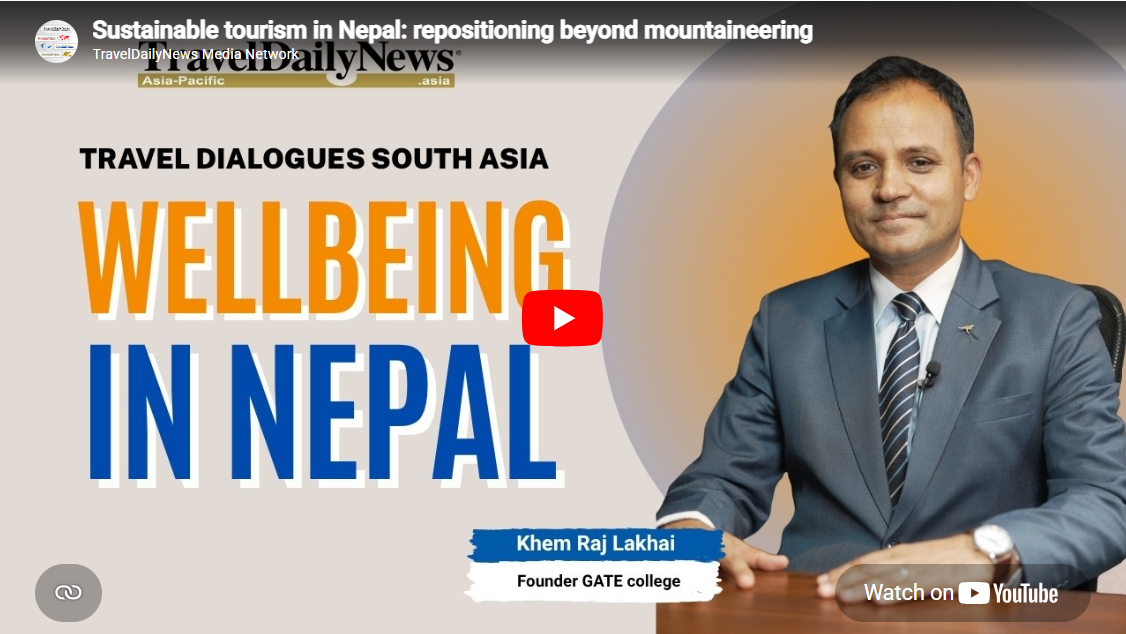
Sustainable tourism in Nepal is shifting towards wellness, culture and high-value experiences, aiming to diversify beyond mountaineering and strengthen global positioning.
The future of sustainable tourism in Nepal was examined in a Travel Dialogues South Asia discussion between your humble editor and Wolfgang Georg Arlt and Khem Lakai, a leading tourism expert and Chair of the PATA Nepal Chapter.
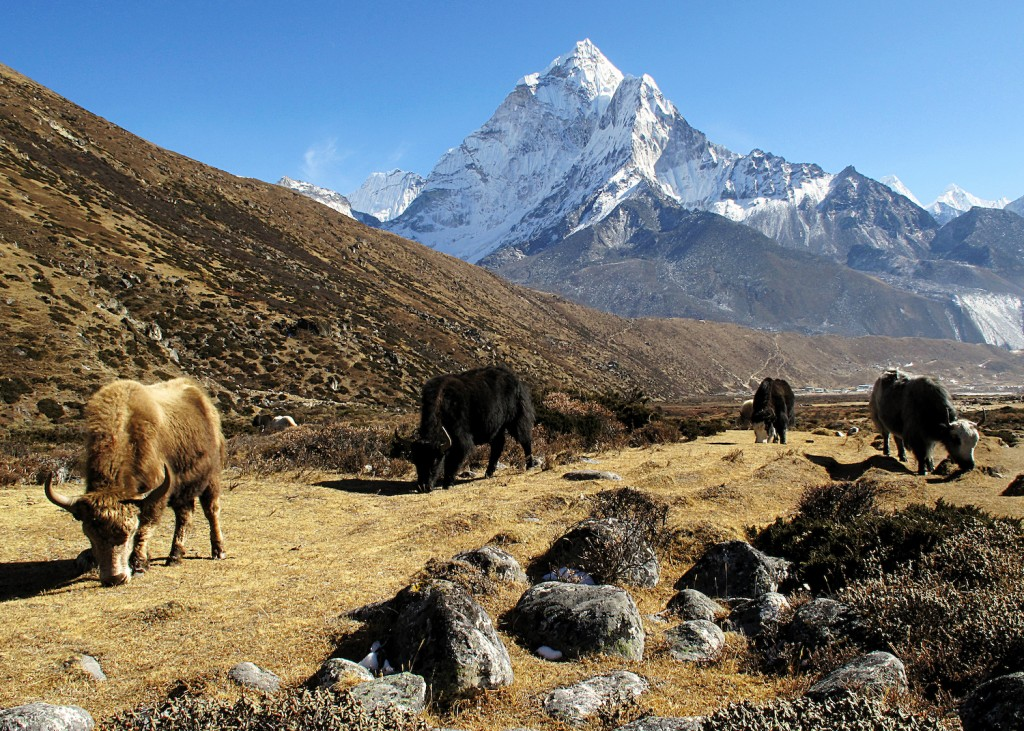
Nepal’s global tourism image has long been dominated by mountaineering and iconic peaks such as Mount Everest. While this positioning has delivered international recognition, it has also limited the country’s broader tourism potential.
The discussion highlights the need to reposition Nepal as a multidimensional destination, leveraging its cultural diversity, spiritual heritage and wellness offerings. Nepal is presented not only as a destination for adventure tourism, but also as a “living museum” of traditions, communities and natural assets.
Cultural, spiritual and wellness potential
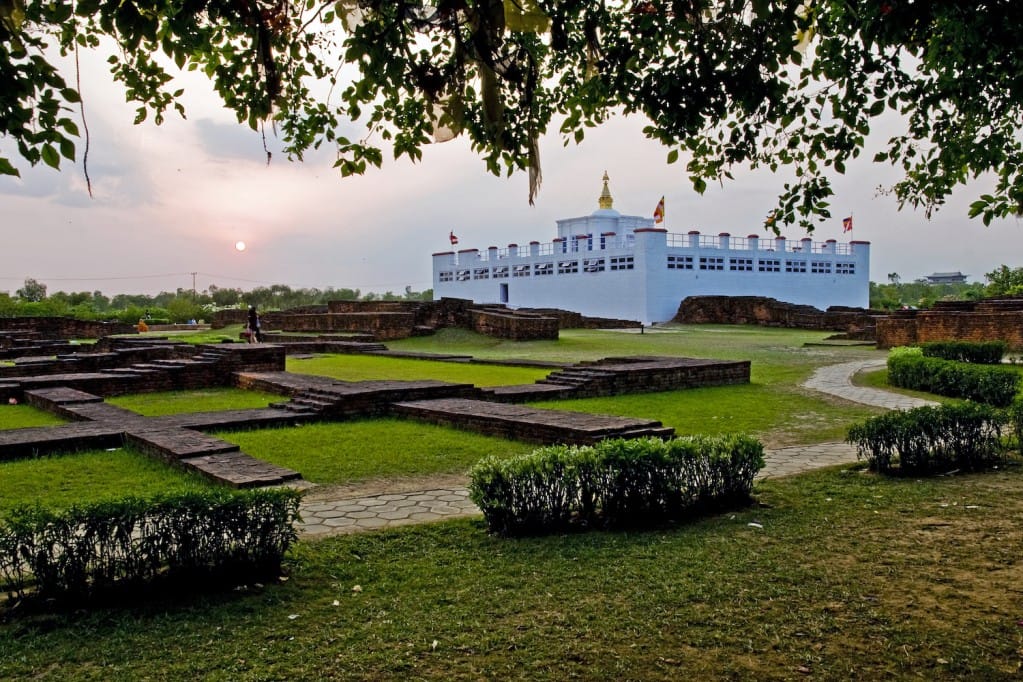
Nepal’s identity as the birthplace of Buddha in Lumbini provides a strong foundation for developing spiritual and wellness tourism. The country’s traditions of meditation, philosophy and community life align with the growing global demand for meaningful and transformative travel experiences.
Tourists are increasingly seeking opportunities for self-discovery, connection and well-being, moving away from purely transactional travel. Nepal’s authentic lifestyle, cultural depth and human connection are positioned as key differentiators in the global tourism market.
The development of structured wellness programmes, meditation retreats and immersive cultural experiences is identified as essential for strengthening sustainable tourism in Nepal.
Structural challenges and limitations
Despite its strong potential, Nepal faces several structural challenges that constrain tourism growth. One of the most significant issues is the continued focus on arrival numbers as the primary performance indicator, which does not reflect the overall value generated by tourism.
Low daily visitor spending, which in 2025 was reported as just 33 USD, highlights the need to attract higher-value travellers and develop more comprehensive tourism products. At the same time, tourism activity remains concentrated in key destinations such as Kathmandu, Pokhara and Chitwan, limiting regional development.
Infrastructure constraints also present challenges, including underutilised regional airports, limited road connectivity and restrictions affecting international air access. These factors reduce accessibility and impact the overall visitor experience.
Diversification and decentralisation strategies
A key priority for sustainable tourism in Nepal is the diversification of tourism products and the decentralisation of visitor flows. Developing new destinations across the country can help distribute economic benefits more evenly while protecting established areas from over-tourism.
There is also a need to create value-added experiences that encourage longer stays and higher spending. These include guided heritage experiences, community-based tourism, wellness retreats and cultural immersion programmes.
Improving accessibility to remote but high-potential destinations must be balanced with the preservation of environmental and cultural integrity, ensuring that development remains sustainable.
Regional cooperation and market opportunities
Regional collaboration within South Asia is identified as a significant opportunity for tourism development. Cross-border tourism initiatives, particularly in the context of Buddhist pilgrimage routes, could connect Nepal with neighbouring destinations and create integrated travel experiences.
Such cooperation would enhance the visibility of the region and allow Nepal to benefit from shared marketing efforts and infrastructure development. The expansion of sustainable tourism in Nepal is therefore closely linked to broader regional strategies.
Towards high-value tourism growth
The discussion emphasises the importance of shifting from volume-driven growth to a value-based approach. This includes focusing on visitor experience, community benefits and environmental sustainability, rather than solely increasing arrival numbers.
Ensuring that tourism contributes positively to local communities is central to this approach. A destination that provides a high quality of life for its residents is better positioned to deliver meaningful experiences to visitors.
The outlook for sustainable tourism in Nepal remains positive, provided that strategic repositioning, infrastructure investment and product development are implemented. By aligning its natural, cultural and spiritual assets with evolving global demand, Nepal has the potential to strengthen its position as a leading sustainable Meaningful Tourism destination.
Originally published in Travel Dialogues South Asia

Ghana'S 2025 Tourism Report: Progress, Questions, and the Road Ahead
By Emmanuel Frimpong, Tourism Researcher, Consultant and Industry Analyst

The release of Ghana's 2025 Tourism Report by the Ghana Tourism Authority (GTA) offers another opportunity for stakeholders to assess the performance of one of the country's most important economic sectors. Published under the theme "Resilience and Sustainable Growth," the report presents a mixed picture of optimism, resilience and emerging concerns that require serious attention from policymakers, investors and industry practitioners.
The headline figures are encouraging. Ghana recorded 1,306,962 international tourist arrivals in 2025 compared to 1,288,804 arrivals in 2024, representing a growth of 1.4 percent. Domestic tourism also remained robust, with over 1.79 million visits recorded across 55 tourist attractions nationwide. The number of licensed tourism enterprises increased, while segments such as conferences, entertainment and travel trade services also recorded growth.
Particularly noteworthy was the performance of the December tourism season. International arrivals during December 2025 increased by more than 11 percent compared with the previous year, reaffirming Ghana's position as one of Africa's leading festive and diaspora tourism destinations. The success of the "December in GH" initiative and the broader Black Star Experience continues to demonstrate the power of event-based tourism in attracting international visitors.
However, beyond these positive indicators lies a more complex story.
The Growth Paradox
One of the most debated aspects of the report is the apparent contradiction between increasing visitor arrivals and declining tourism receipts. While Ghana welcomed more visitors in 2025, tourism earnings reportedly fell from approximately US$4.82 billion in 2024 to about US$4.34 billion in 2025. This suggests that although more tourists visited Ghana, they spent less on average during their stay.
This raises important questions for the sector. Are tourists shortening their stays? Are they spending more on informal services that are not fully captured in official data? Has the market shifted toward lower-spending visitor segments? Or does the issue point to broader concerns regarding tourism data collection and measurement?
These are questions that demand deeper research and industry-wide discussion.
Domestic Tourism: A Strong Foundation
One of the strongest messages emerging from the report is the growing importance of domestic tourism. For many years, Ghana's tourism narrative focused heavily on international arrivals. The 2025 figures reinforce the fact that domestic tourism remains the industry's most resilient pillar.
The challenge now is to convert domestic visitation into stronger economic value. While visitor numbers at tourist sites continue to increase, many attractions still struggle with inadequate visitor facilities, poor interpretation services, limited digital presence and low visitor spending opportunities.
Future investments must focus on improving visitor experiences rather than simply increasing visitor numbers.
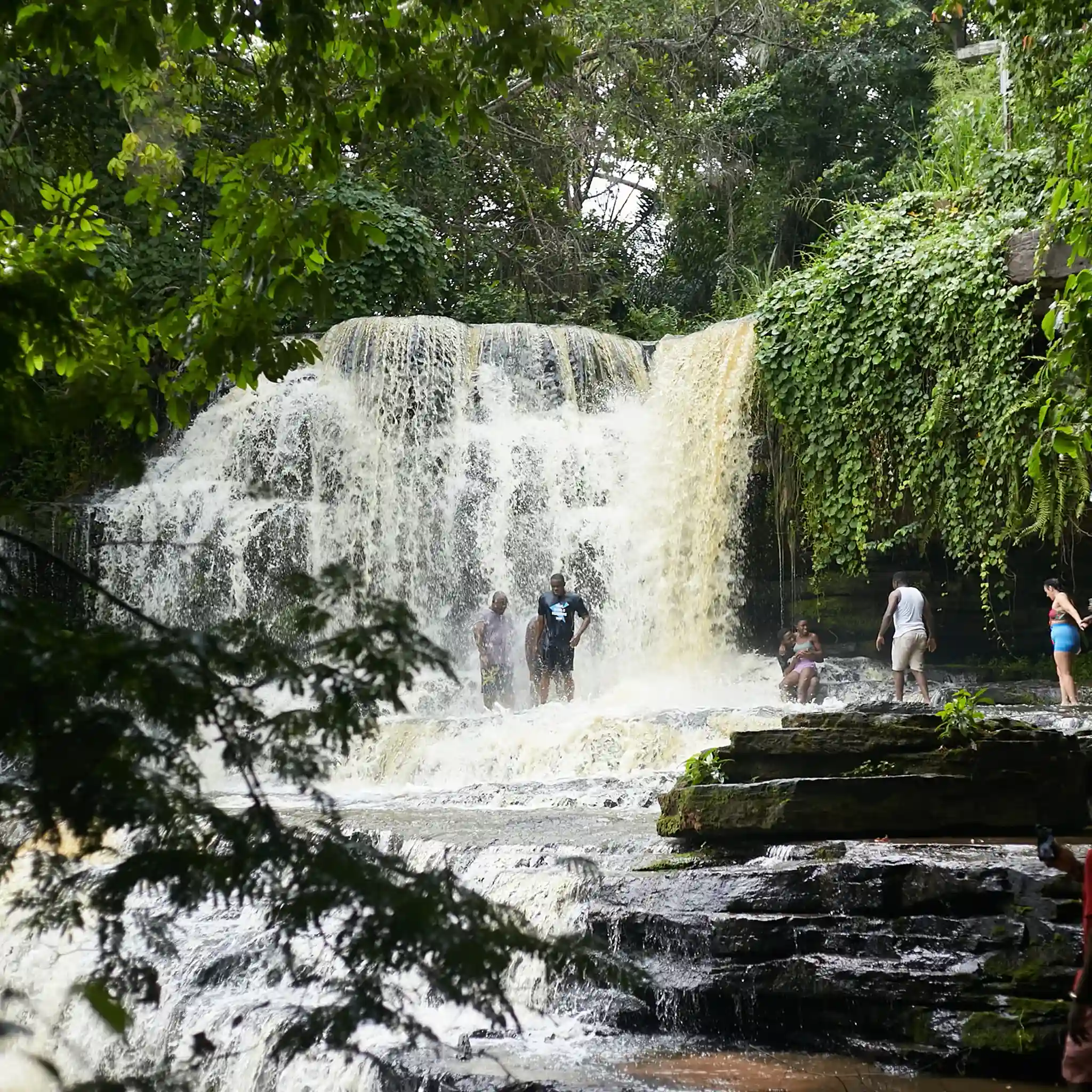

Photo credit: Visit Ghana
The Data Question
Perhaps the most critical issue raised by the report relates to tourism statistics and data integrity.
Globally, tourism planning is increasingly driven by reliable and transparent data. Investors, governments and international development partners rely on accurate statistics to make informed decisions. Several industry observers have called for greater transparency in tourism accounting and renewed efforts toward the full implementation of a Tourism Satellite Account (TSA) framework in Ghana.
A fully operational TSA would provide a more comprehensive understanding of tourism's contribution to GDP, employment, investment and foreign exchange earnings. It would also improve Ghana's credibility within international tourism markets and among development partners.
The Untapped Potential of Intra-African Tourism
Another issue that deserves greater attention is the relatively limited focus on intra-African tourism.
While the diaspora market remains important, Ghana must increasingly position itself as a destination for African travellers. The implementation of visa liberalization policies, the African Continental Free Trade Area (AfCFTA), improved air connectivity and regional integration efforts create significant opportunities for attracting visitors from neighbouring countries and across the continent.
The future sustainability of Ghana's tourism sector cannot depend solely on long-haul international markets.
Infrastructure and Visitor Experience
The report highlights growth, but growth alone should not be our ultimate objective.
Stakeholder discussions continue to point to recurring challenges, including transportation difficulties, inconsistent service quality, destination management issues, sanitation concerns and limited tourism infrastructure in several emerging destinations. These challenges affect visitor satisfaction and influence spending behaviour. Community discussions and industry feedback continue to identify infrastructure, customer service and destination management as areas requiring improvement.
If Ghana is to compete effectively with leading African destinations such as Rwanda, Kenya and South Africa, greater attention must be paid to the quality of the overall visitor experience.
Looking Ahead
The 2025 Tourism Report confirms that Ghana's tourism industry remains resilient and continues to grow. However, the report should not be viewed solely as a celebration of success. Rather, it should serve as a catalyst for critical reflection and strategic action.
The key priorities moving forward should include:
- Strengthening tourism data systems and implementing a Tourism Satellite Account.
- Increasing tourism value and visitor spending rather than focusing exclusively on arrival numbers.
- Accelerating infrastructure development at tourism destinations.
- Enhancing service quality across the tourism value chain.
- Expanding intra-African tourism marketing and partnerships.
- Supporting community-based tourism enterprises and local participation.
- Diversifying tourism products beyond seasonal and event-based tourism.
The future of Ghana's tourism sector will not be determined merely by the number of visitors who arrive at our borders. It will be determined by the quality of experiences we provide, the value generated for local communities and businesses, and the strength of the systems we build to support sustainable tourism development.
The 2025 Tourism Report provides useful evidence of progress. The real challenge now is transforming that progress into long-term competitiveness, inclusiveness and sustainable growth.
While the Ghana Tourism Authority's 2025 Tourism Report highlights encouraging growth in international arrivals, tourism receipts, and investment activity, the true measure of success extends beyond economic indicators. Meaningful Tourism emphasises the quality of visitor experiences, the preservation of cultural heritage, environmental sustainability, and the extent to which local communities benefit from tourism development. As Ghana continues to position itself as a leading tourism destination in Africa, it is essential that growth is accompanied by policies and practices that create authentic connections between visitors and host communities while safeguarding the country's cultural and natural assets for future generations.
The concept of Meaningful Tourism also raises important questions about inclusivity, impact, and long-term sustainability within Ghana's tourism ecosystem. The 2025 report presents an opportunity to examine whether tourism growth is translating into improved livelihoods for local communities, greater participation of women and youth, stronger support for small and medium-sized tourism enterprises, and enhanced conservation outcomes. Beyond celebrating positive performance indicators, stakeholders must consider how tourism can contribute more effectively to national development goals, community empowerment, and social cohesion. By embedding the principles of meaningful tourism into policy formulation, destination management, and investment decisions, Ghana can ensure that tourism growth creates lasting value for visitors, businesses, communities, and the nation as a whole.

Meaningful Tourism Community: The Meaningful Tourism Transformational Game Workshop Trainer
Ropafadzaishe Rushwaya - Certified Trainer for Zimbabwe
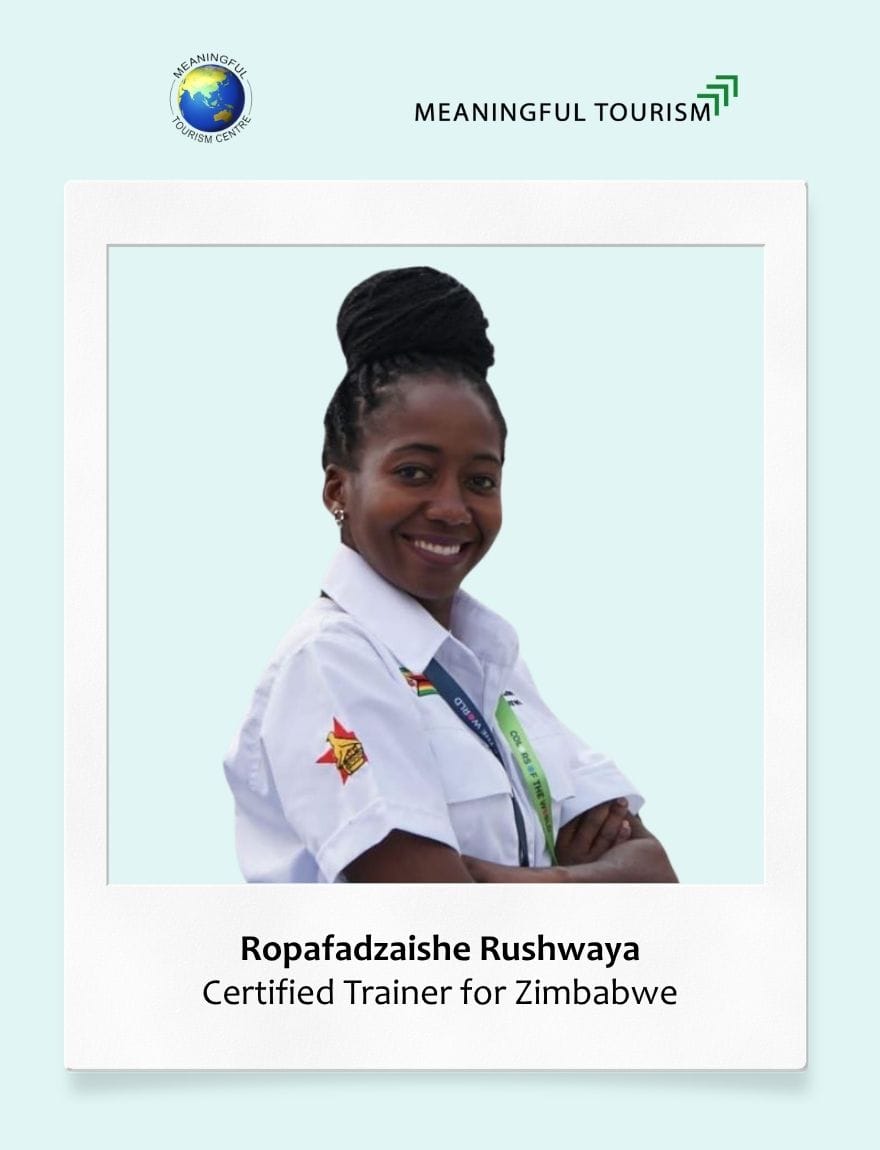
Ropafadzaishe Rushwaya is a passionate and purpose-driven hospitality and tourism professional with over a decade of experience spanning luxury lodges, destination marketing, and guest relations.
Deeply committed to sustainable tourism models that uplift local communities and protect natural environments, she has become an advocate for practices that balance economic growth with cultural and ecological responsibility.
Holding dual Master’s degrees in Tourism & Hospitality and Strategic Management, she combines strategic vision with hands-on execution to drive meaningful change. Her dedication has been recognized with the 2024 Presidential Award from the Hospitality Association of Zimbabwe.
Today, she continues to lead initiatives that promote sustainability, empower local talent, and shape a resilient, inclusive future for tourism.
The Meaningful Tourism Weekly asked Ropa: What is the current situation of tourism in Zimbabwe, and how can the Meaningful Tourism Paradigm help to support its development?
Her answer:
Zimbabwe’s tourism industry remains anchored in its rich natural and cultural heritage. Visitors are drawn to iconic sites such as the wildlife-rich national parks of Mana Pools, Hwange, and Gonarezhou; the spectacular Victoria Falls; and the ancient Great Zimbabwe Monuments, which testify to early African civilization. Beyond these renowned attractions, it is the warmth, smiles, and vibrant culture of Zimbabwe’s people that leave a lasting impression on tourists.
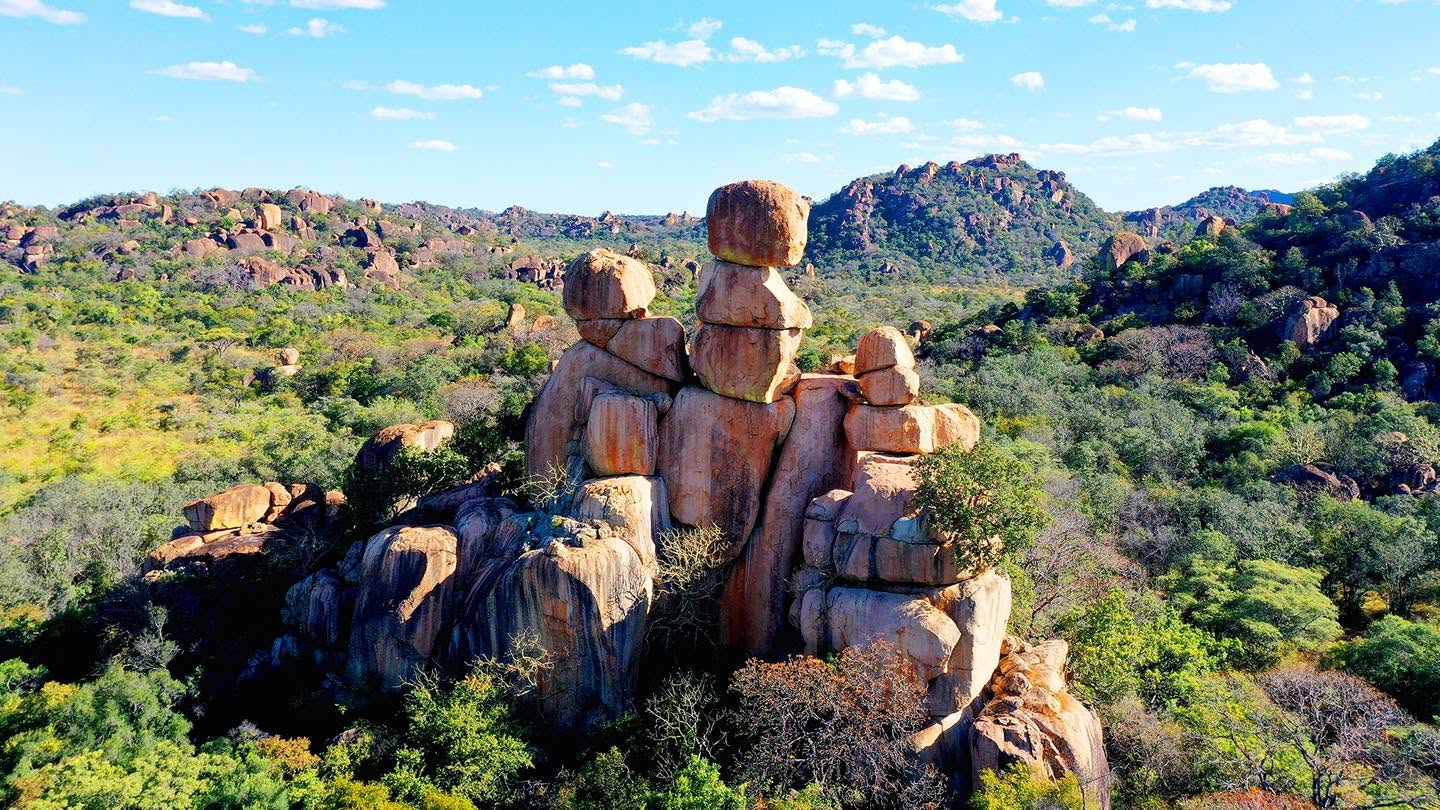
Over the years, Zimbabwe’s tourism landscape has evolved, influenced by both positive developments and external challenges. Economic fluctuations, global crises, and local constraints have affected visitor arrivals and investment. Yet, the government and the Ministry of Tourism are actively working to transform the sector by boosting GDP contribution and increasing tourist numbers through targeted strategies.
Initiatives include the “ZimBhoo” campaign, which encourages domestic tourism, promotes MICE (Meetings, Incentives, Conferences, and Exhibitions) tourism, and hosts high-profile events such as the UN Gastronomy Conference. Campaigns such as Amai’s Cookout have also successfully highlighted Zimbabwe’s culinary heritage and cultural richness nationwide.
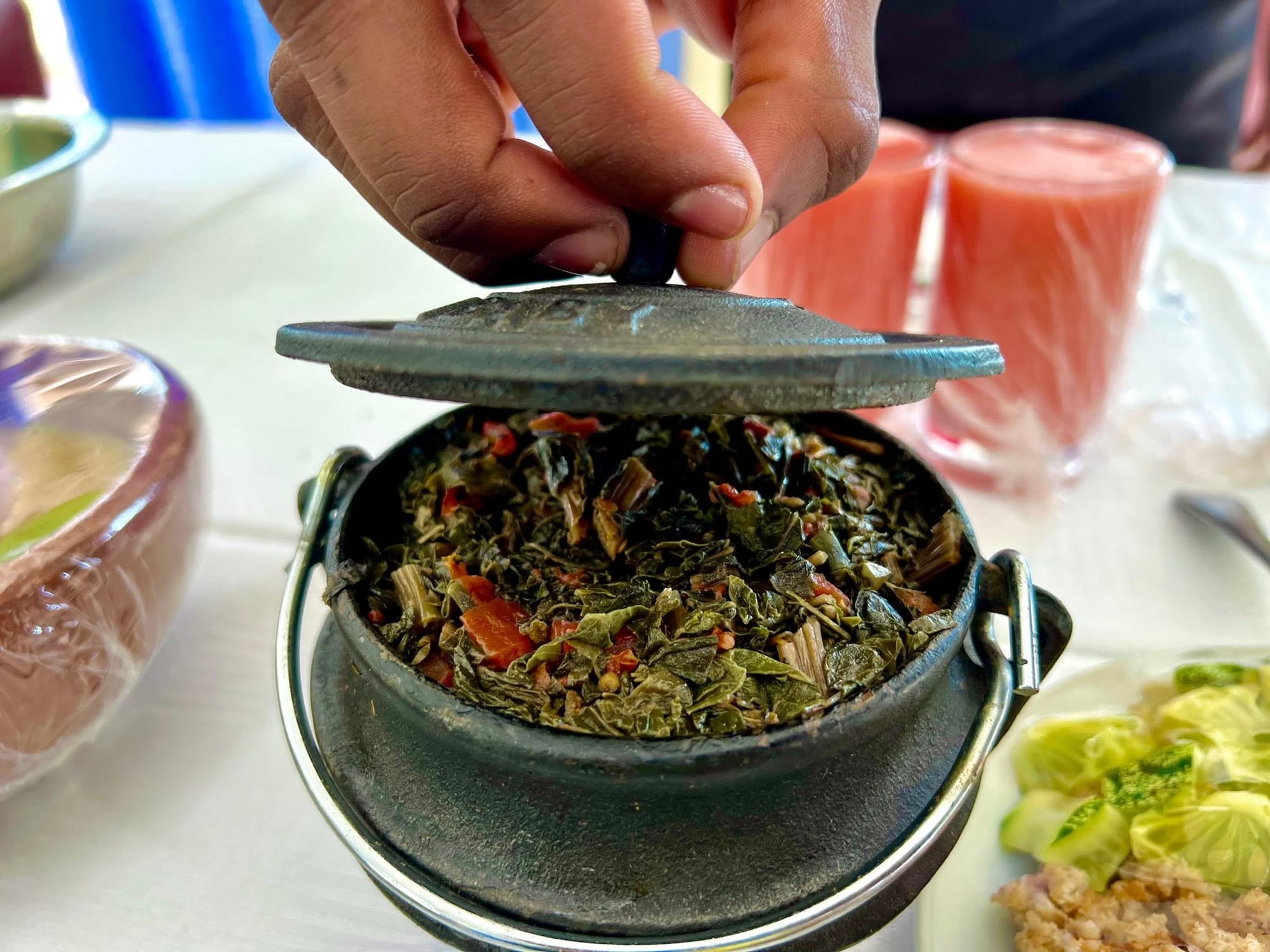

Zimbabwe takes pride in its rich gastronomic heritage. Photo credit: Tourism Zimbabwe
The Meaningful Tourism paradigm supports this transformation by ensuring that all stakeholders truly benefit from tourism. Local women and children earn income by selling arts, crafts, and handmade products; men benefit from carving and marketing stone sculptures; and investors help expand employment opportunities by building new hotels and lodges. The agricultural sector finds steady markets for fresh produce through tourism outlets, while universities and lecturers enhance their curricula and research focused on sustainable, inclusive tourism.
Ultimately, Meaningful Tourism promotes fair distribution of tourism’s benefits, values local culture and environment, and encourages collaboration across sectors. By integrating these principles, Zimbabwe’s tourism can grow not only in numbers but also in resilience, quality, and positive impact for communities and the nation as a whole.
MTC Certified Trainers
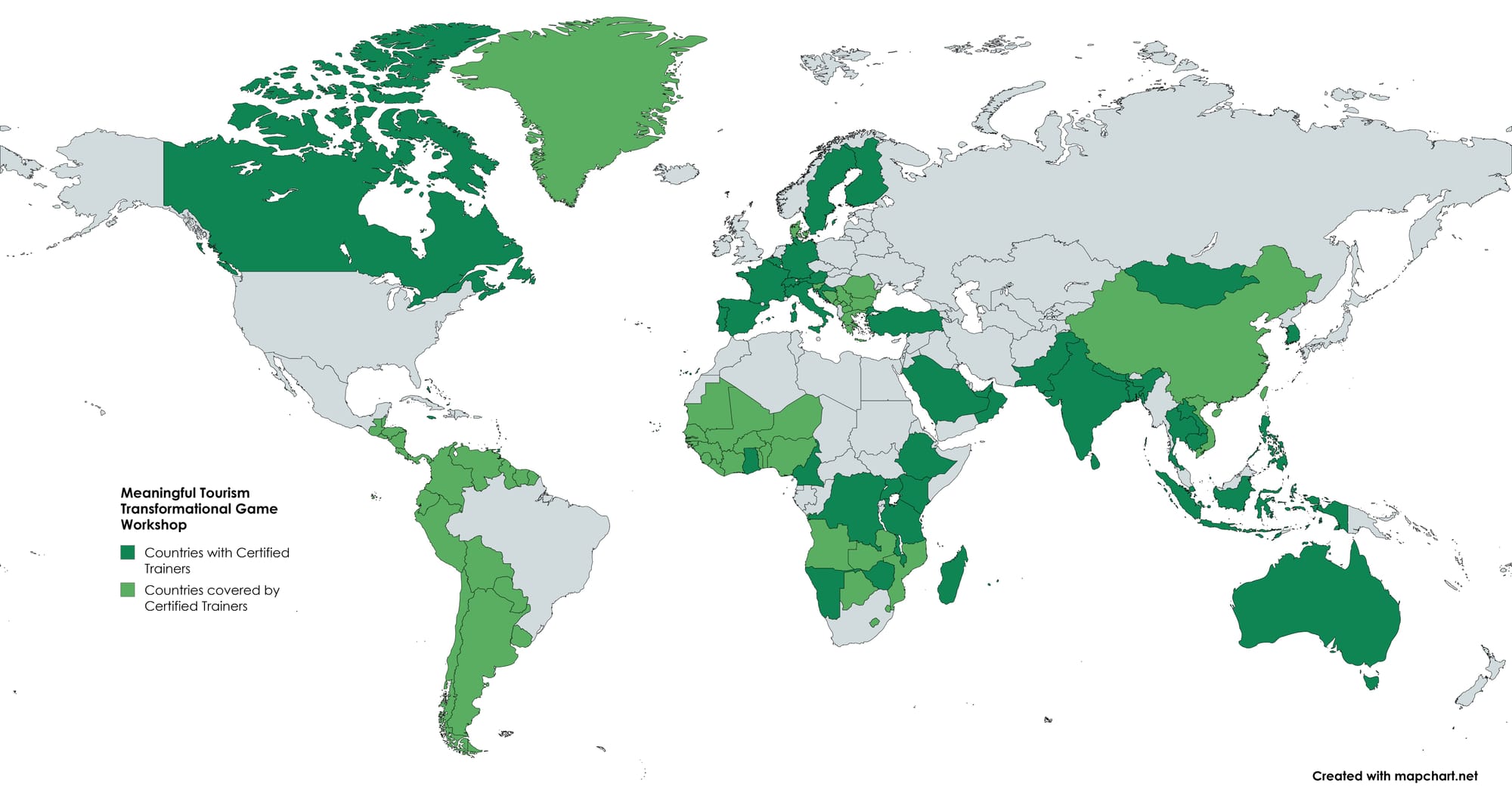
Please find below an overview of all our Certified Trainers for the Meaningful Tourism Transformational Game Workshop, along with the World Map showing the countries currently covered directly or indirectly.
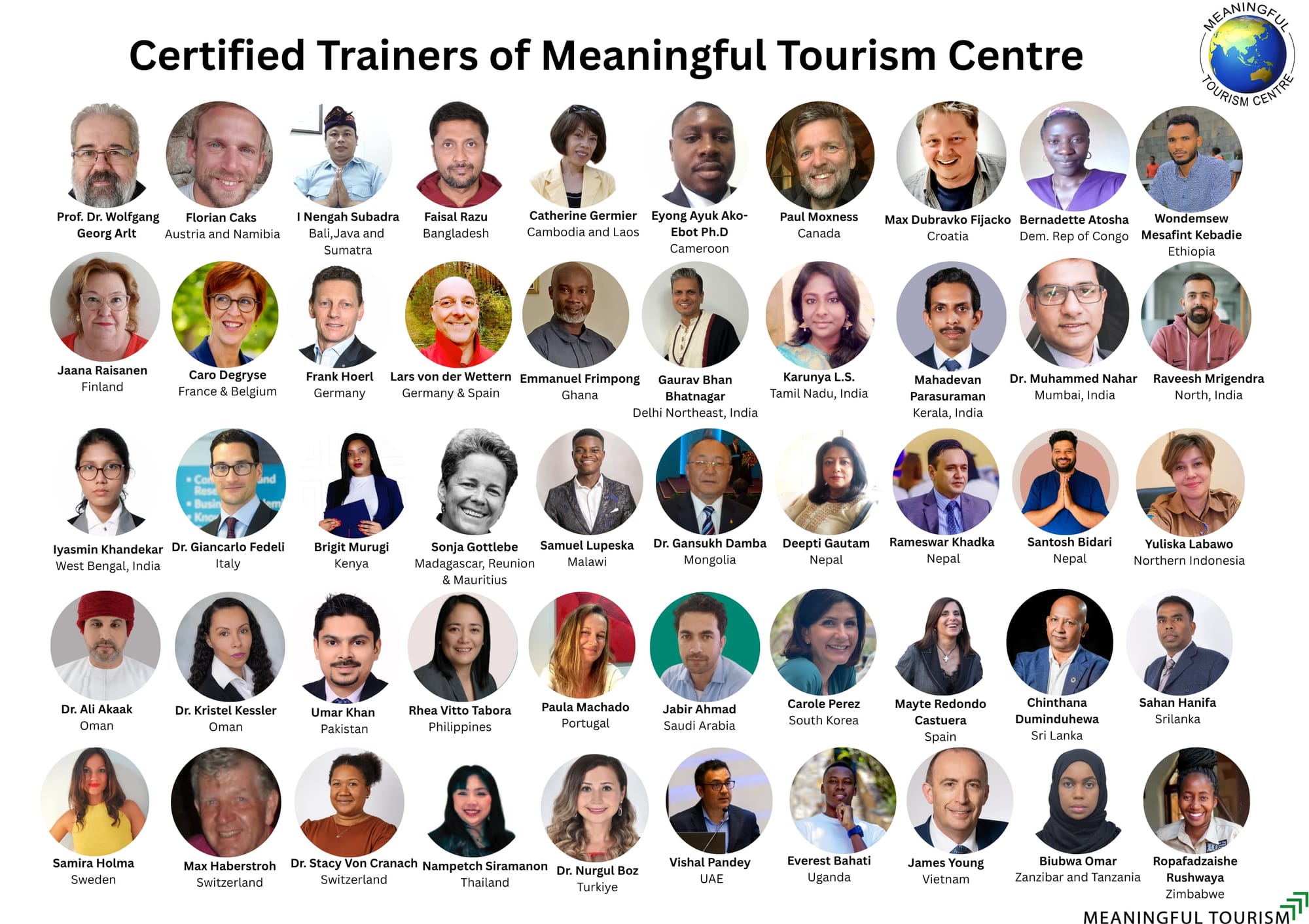
The network of MTC Certified Trainers is constantly growing. As shown on the map, many countries and regions worldwide are already served by dedicated experts. However, MTC is continuously looking for professionals with experience in training or lecturing and a passion for sustainable tourism to join the network and fill the blanks on the map.
About Meaningful Tourism Weekly
Meaningful Tourism Weekly is published every Thursday by Meaningful Tourism Centre (MTC) - London and Kathmandu in collaboration with Travel Asia Now, led by Rhea Vitto Tabora.
Each issue features an Editorial, updates on MTC activities, a Best Practice Example, a profile of an MTC-certified trainer, news about upcoming events, and, occasionally, additional op-ed pieces from guest authors. Carefully selected news items, including videos and podcasts, are also included, with links to their original sources in the Meaningful Tourism News section.
Subscription to Meaningful Tourism Weekly is free, with the addition of a paid content section that includes a library of surveys, exclusive articles, conference presentations, and statistical data, offering subscribers invaluable resources.
Sponsorship opportunities are available for those interested in supporting this initiative.
For more information about MTC's training programs, market research, product adaptation, consulting services, conferences, strategy development, and marketing, visit our website or email us at info@meaningfultourismcentre.org.