Climate Resilience is not an option anymore


Dear reader,
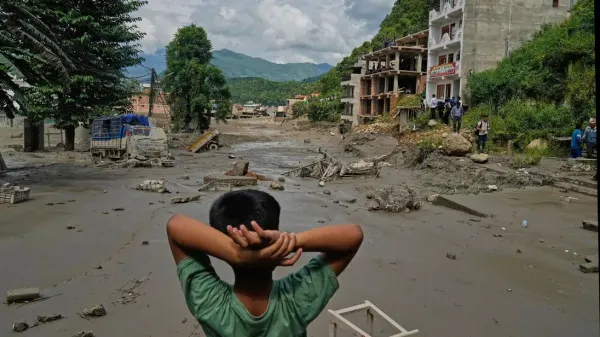
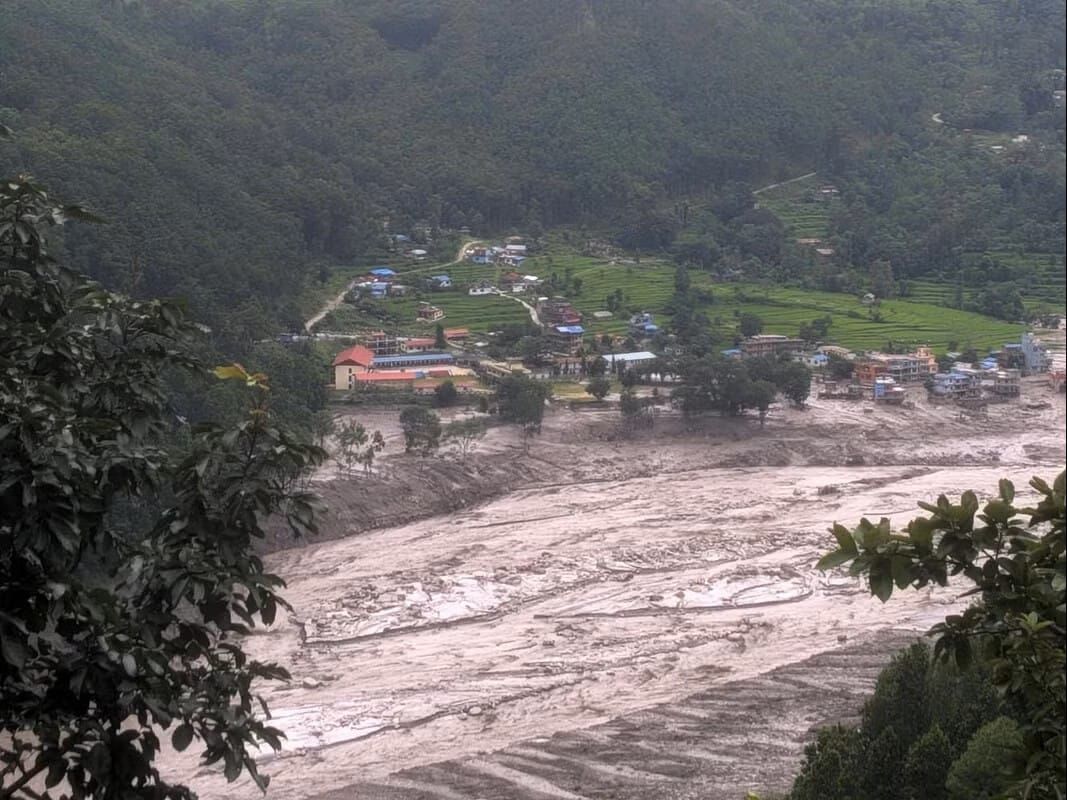
three weeks after the flood in Nepal, the fate of several thousands of victims is still not clear. Many are probably buried under meters of mud and rubble which obliterated villages in several valleys close to the Chinese border. The main road connecting the capital Kathmandu with the western part of the country is still not fully restored to its former status, which was lamentable already before the tragic event of August 26, 2026. Similar to other infrastructure projects in the country, many plans have been made for airports, highways, bridges and tunnels in the past, but were not, or only at a snail's pace, turned into reality.
A positive fact which has become clear in the meantime is the confirmation that the communication between Nepal and India worked well enough to enable the Indian water management organisations to open the floodgates of dams located at the border between the two countries, avoiding flooding or the destruction of the dams when the waves arrived there about eight hours after the collapse of the mountainside in the Langtang mountains. Luckily, the Ganges carried less water than normal for this stage of the Monsoon season, so that further downstream the floodwaters could move forward without problem to end in the Bay of Bengal without killing anybody in India.
The schoolmaster who saved 1,600 children by ordering them away from the school before it was washed away had only 15 minutes warning time. The information came, according to press reports, by a private call from a friend upstream, not from any official warning system.
Last week, your humble editor informed here about the THE FIRST SIX project, which will provide, starting next month, a series of workshops and labs about Tourism Crisis Communication Management to protect the brand of destinations and companies in the aftermath of such tragic events and how Meaningful Tourism tools can help. The next MTIL workshop in Kathmandu will also deal with this topic.
However, also for the directly endangered local communities and their guests, early warning systems can only work, if all stakeholders are involved.
On that fateful day, instruments recorded at 8:37am, instruments recorded what was initially interpreted as an earthquake near Nepal’s border with China. Within seven minutes later, CCTV cameras recorded the Gyirong Port border post being destroyed by a massive wave of debris and water, a video which has become iconic.
It took another half hour before an emergency SMS alert was sent at 9:15am. But by that time, several thousand people had already died. Many discussions have centred on the question if a better-integrated warning system combining seismic readings, satellite images and other observations could have helped to recognise faster what was happening and to alert people further downstream.
The short answer is no, as existing early-warning systems have mostly been designed around particular hazards such as regular rain-caused floods or glacial lake outburst floods. A large-scale collapse of rock and ice, which turns into a devastating debris flow and flood, is harder to predict and control. However, as warming destabilises glaciers and thaws permafrost, such events are likely to happen more often in the coming years in Nepal and elsewhere, while at the same time roads and hydropower projects have resulted in more buildings close to the river, threatening more people including tourists and pilgrims.
For sudden, cascading events such as the flood, a warning has value only if it travels the whole distance – from a sensor in the mountains, through scientific agencies, national and local authorities, to households in the valleys and plains below, in the minutes that matter.
Therefore, using an approach based on Meaningfulness, all stakeholders need to be involved in the warning structure. Community-based flood warning exists in some areas in Nepal, but the community-level systems are not integrated with national and cross-border monitoring. The technology for such systems exists; however, it is physically and financially impossible to have sophisticated sensor systems installed in all mountain areas of the world.
Similar to building trust in a destination brand in the times after a disaster, which is often the time before the next one, with a communication strategy based on a Meaningful Tourism approach, such a warning system capable of turning observations into rapid action can only work if it brings together all stakeholders.
If you want to support the Nepali people, come to Nepal now; the country is safe and welcomes every visitor even more than before. If you do not have the opportunity to travel to the country, the Prime Minister Disaster Relief Fund is the central account for donations. Information can be found here:


As always, all best wishes from the Meaningful Tourism Weekly team in Kathmandu and Manila, and from the whole Meaningful Tourism community to all our readers!


Summary of the latest edition of Travel Dialogues South Asia Podcast
Every week, MTC and its partners TravelDailyNews Asia-Pacific and Tanneri Chaso provide a new episode of the TRAVEL DIALOGUES SOUTH ASIA series of podcasts concentrating on the development of Meaningful Tourism in South Asia, including Pakistan, India, Maldives, Sri Lanka, Nepal, Bhutan, and Bangladesh.
Bangladesh’s “last mover’s advantage” could reshape its inbound tourism
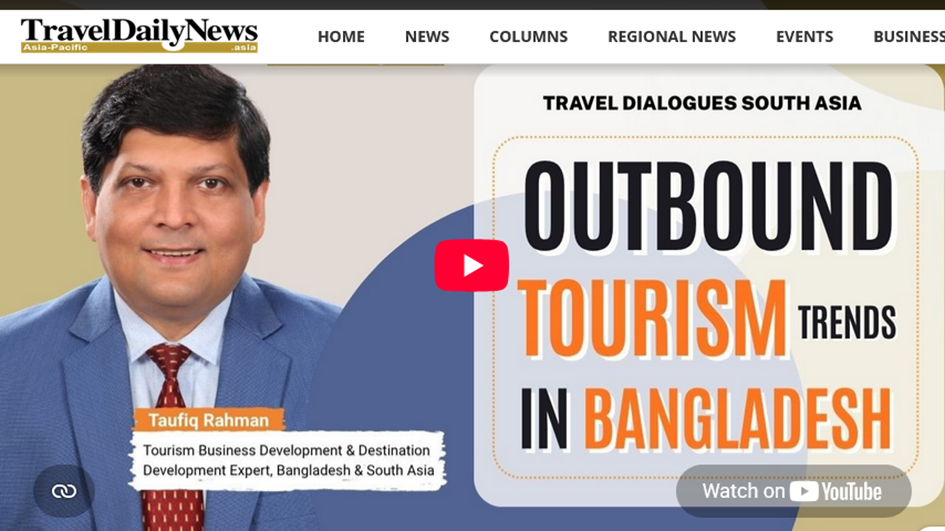
This week, speaking with your humble editor on Travel Dialogues South Asia, Mr. Taufiq Rahman, Secretary General of the PATA Bangladesh Chapter, discussed Bangladesh’s inbound tourism potential, government engagement, e-visas, regional markets and how a late start could become an advantage for sustainable tourism development.
Bangladesh's inbound tourism has remained significantly below its potential for decades, but changing government attitudes, plans for an e-visa system and growing demand from regional Asian markets could provide the country with an opportunity to rethink how it develops international tourism.
South Asia remains underrepresented in global tourism
The region is home to around two billion people, approximately one quarter of the world’s population, yet accounts for only 2–3% of global international tourism. Bangladesh itself has a population approaching 200 million.
For Bangladesh, the gap reflects a long-standing failure to recognise inbound tourism as an economic sector.
According to Rahman, since independence in 1971, tourism was often regarded by government primarily as entertainment rather than as an industry capable of generating foreign exchange, employment and a stronger international image.
Policy consequently concentrated heavily on domestic tourism. While neighbouring India could draw upon an enormous domestic market, Rahman argues that Bangladesh also needed to recognise the economic importance of attracting international visitors and generating foreign exchange.
Political instability repeatedly interrupted growth
Bangladesh did experience relatively steady inbound tourism development until around 2012–2013, but a succession of events interrupted that progress.
Political instability was followed by security incidents, including the 2016 Holey Artisan attack. The 2018 US-Bangla Airlines crash in Nepal and, subsequently, the COVID-19 pandemic created further setbacks for the sector.
The cumulative effect has been a tourism industry that has repeatedly had to rebuild international confidence rather than maintaining a consistent development trajectory.
That history helps explain why Bangladesh inbound tourism remains comparatively small despite the country’s population, culture, heritage and natural tourism assets.
A change in government attention
Rahman nevertheless sees signs that the environment is beginning to change.
He points to increased government interest in inbound tourism, including attention from the relevant ministry and the Prime Minister’s office. International tourism promotion, participation in major trade fairs and bringing international travel writers and bloggers into the country are among the areas receiving greater consideration.
One potentially important development is the proposed introduction of an e-visa procedure for tourists and investors.
According to Rahman, a committee led by the finance minister has decided to implement the system, drawing in part on India’s experience with e-visas.
For an emerging inbound destination, reducing friction before arrival can be particularly important. Marketing a destination internationally has limited effect if the practical process of travelling there remains unnecessarily difficult.
Who is currently travelling to Bangladesh?
The discussion also provides an interesting picture of Bangladesh’s existing international visitor profile.
Rahman identifies Japan and several Eastern European countries, including Poland, the Czech Republic, Slovenia and Lithuania, among markets currently generating visitors.
Many are not visiting Bangladesh as a standalone destination.
Rahman says that approximately 90% of the inbound tours handled by his company are combined with Nepal or Bhutan, with visitors typically spending three or four nights in Bangladesh.
This suggests an important strategic opportunity.
Rather than viewing neighbouring destinations purely as competitors, Bangladesh can potentially position itself as part of a broader South Asian itinerary. Multi-country travel could provide an entry point for travellers who might not initially consider a dedicated Bangladesh holiday.
Regional Asian markets could become increasingly important
Long-haul travel costs have also changed the market equation.
Rahman identifies growing potential from relatively short-haul Asian markets such as Malaysia, Thailand, Hong Kong, Singapore and Taiwan, which can be reached within approximately two to four hours by air.
The increasing cost of long-haul flights since the pandemic makes these regional markets particularly relevant to future tourism development.
That would require Bangladesh to think differently about international promotion.
A destination does not necessarily need to begin by competing for travellers thousands of kilometres away when sizeable outbound markets exist within its own wider region.
Experienced senior travellers are already finding Bangladesh
Another notable characteristic is the age and motivation of current international visitors.
According to Rahman, many are experienced travellers aged between 60 and 80 who have already visited more established destinations and are looking for something different.
Their interests tend towards culture, heritage and encounters with local people rather than youth-oriented entertainment.
This profile could help Bangladesh define where it can compete.
Attempting to replicate the mass-tourism models of established destinations may not be necessary. Cultural depth, nature, heritage and meaningful interaction with communities could provide a more differentiated proposition.
Turning late development into a “last mover’s advantage”
Perhaps the most interesting idea in the discussion is Rahman’s concept of a “Last Mover’s Advantage.”
Destinations that developed mass tourism decades ago are now dealing with some of its consequences. Bangladesh, by contrast, still has the opportunity to learn from those experiences before pursuing tourism development at scale.
Rahman sees potential to concentrate on sustainable and quality-driven forms of tourism, including ecotourism, nature-based tourism and cultural tourism.
Being late, from this perspective, does not necessarily mean being behind.
It can mean having the opportunity to observe what worked elsewhere, what failed and what should not be repeated.
For Bangladesh inbound tourism, this could prove particularly important. Tourism development does not have to be measured only through arrival numbers. The type of visitor, economic distribution, community benefits and preservation of cultural and natural assets can be considered before significant visitor volumes arrive.
Marketing remains a fundamental challenge
Potential, however, means little without visibility.
Rahman argues that Bangladesh needs much more focused marketing and promotion, particularly within neighbouring and regional markets.
He gives the example of Cox’s Bazar. Attractions of this kind may be geographically close to sizeable regional source markets, but proximity alone does not generate demand. Potential visitors need to know what exists and understand why they should travel there.
International promotion therefore needs to work alongside easier access, tourism product development and clearer destination positioning.
Does tourism need its own ministry?
Government structure is another issue raised in the discussion.
Bangladesh currently combines civil aviation and tourism within the same ministry. Rahman explains that the private sector has been calling for a dedicated Ministry of Tourism, arguing that aviation tends to receive greater attention and budget.
An alternative discussed is linking tourism with culture, reflecting the close relationship between the country’s cultural assets and its potential visitor proposition.
Whatever administrative model is chosen, Rahman stresses the need for adequate budgets, infrastructure investment and greater understanding within government of tourism’s economic contribution.
Reducing bureaucratic obstacles is equally important.
5.7 million inbound visitors by 2042
The long-term ambition is substantial.
The Bangladesh Tourism Master Plan projects 5.7 million inbound tourists by 2042. Rahman believes that stronger government focus, adequate budgets and closer collaboration with the private sector could produce significant development over the next five years.
But his argument for tourism goes beyond visitor numbers.
He characterises tourism as an industry capable of generating foreign exchange while distributing economic benefits across a remarkably broad range of participants — from rickshaw pullers and small businesses to luxury hotels.
In his formulation, tourism is “everyone’s business.”
There are also signs of growing institutional awareness, including plans to observe World Tourism Day on a significantly larger scale.
Bangladesh therefore faces an unusual opportunity. Its late arrival to international tourism development has undoubtedly cost the country business in the past. But it may also allow it to make different choices for the future.
If easier access, stronger regional marketing, government commitment and private-sector expertise can be combined with sustainable destination development, Bangladesh’s “last mover’s advantage” could become a genuine competitive advantage.

Meaningful Tourism at the ITB Asia in Singapore
As mentioned in the previous edition, ITB Asia, the main tourism fair for Southeast Asia, will take place again in October this year. Your humble editor is proud to have received the confirmation from Messe Berlin, the organiser, that he will be invited to be part of a panel discussing new forms of tourism. The exact date of the panel will be decided soon and of course communicated here. See you in Singapore!
New Certified MTC Trainer
After a successful Train-the-Trainer workshop, the network of international Certified MTC trainers continues to grow. We will present them one by one in the coming editions of Meaningful Tourism Weekly.

Workshop in Nepal for Meaningful Tourism Crisis Management
Meaningful Tourism Innovation Lab Nepal is organizing its second “Meaningful Tourism & AI” workshop on 24th September. In light of the devastating 26 August flash flood that disrupted livelihoods and tourism activities across several areas of Nepal, the MTIL Nepal has now added a new and timely topic to the programme: “Crisis Communication and Writing for the Traveler”.
In the first part of this second practical workshop, Prof. Dr. Wolfgang Georg Arlt will introduce Meaningful Tourism and key principles of tourism crisis communication: how to respond clearly, protect trust and communicate responsibly with media, travellers and stakeholders.
The second part of the workshop, led by Suman Baral, will remain centred on a practical, human-led process for writing with AI. He will explain how to understand target travelers, gather credible information, craft clear messages, create effective AI prompts and verify AI-assisted content before publishing. Participants will be able to apply this process to their own blogs, articles, emails, website content or social media posts, and leave with a completed piece of content and a reusable writing blueprint.
New Meaningful Tourism Innovation Lab in Indonesia
The international network of MTILs is growing. The sixth MTIL has now started in Bali, Indonesia. The leader will be the Certified MTC Trainer Prof. I Nengah Subadra PhD. He is Professor of Cultural Tourism at Triatma Mulya University, Bali, Indonesia, and serves as the Director of the Bureau of Research, Publication, and Community Service. Previously, he served as Dean of the Faculty of Business and Tourism (2020–2024).
Indonesia, Southeast Asia's largest economy, received just shy of nine million international tourists in the first seven months of 2026, up 5.2% from a year earlier and the highest since 2020. However, tourists are very unevenly distributed, with Bali, home of the new MTIL, one of the often-quoted examples of overtourism. The MTIL Indonesia will provide new insights and tools on how to move forward with a quality-oriented policy providing benefits and satisfaction to all stakeholders.

Meaningful Tourism Community: The Meaningful Tourism Transformational Game Workshop Trainer
Nimisha Vinu - Certified Trainer for UAE
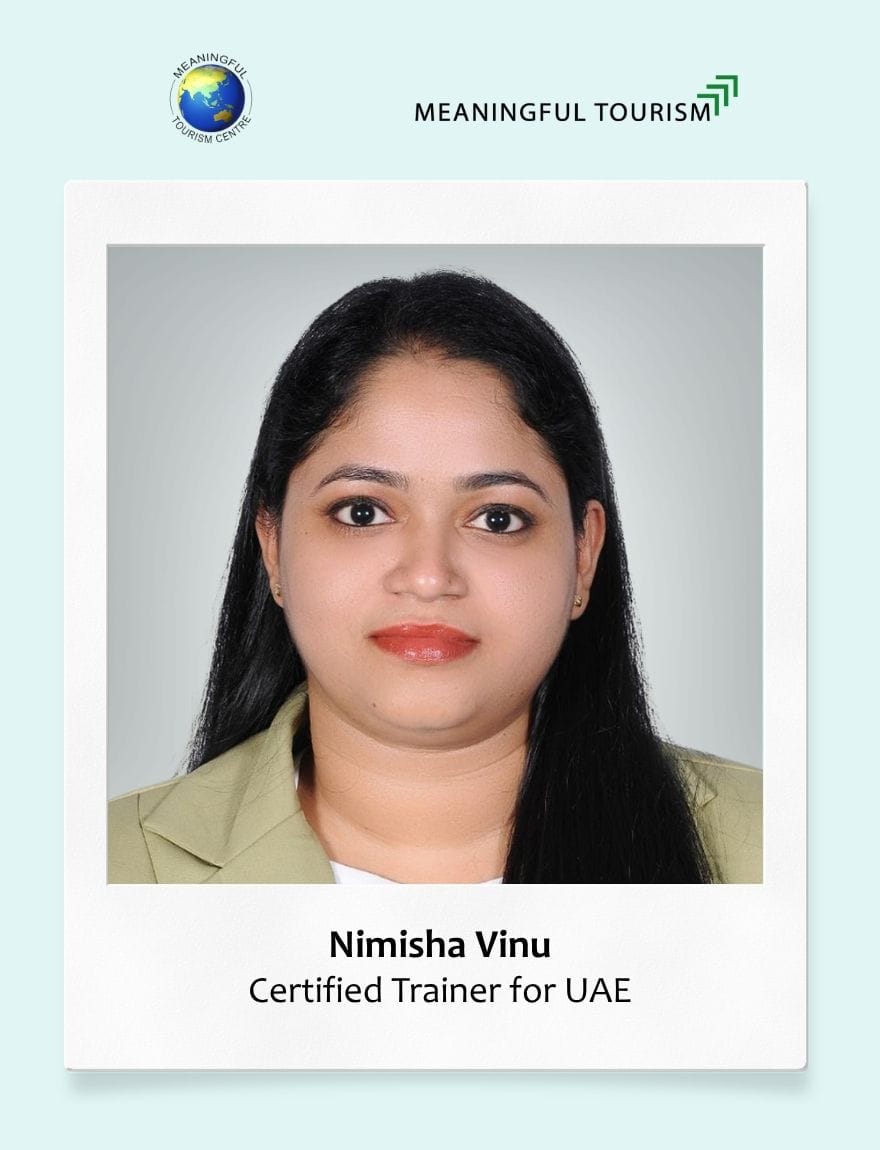
Nimisha Vinu is a Travel & Tourism and Hospitality Training Instructor with over 10 years of experience in the UAE and India. She has extensive experience delivering IATA-approved training in Travel & Tourism, Aviation, Hospitality, Ground Handling, Air Cargo, GDS (Amadeus, Galileo and Sabre), and Travel Agency & Tour Operations. She also has strong skills in curriculum development, assessment design, student counselling, career guidance, and industry engagement. Her professional background includes roles with universities, training institutes, and Air India, supported by several IATA and aviation-related certifications.
Meaningful Tourism Weekly: What is the current situation of tourism in UAE, and how can the Meaningful Tourism Paradigm help to support its development?
Nimisha Vinu: The UAE’s tourism sector is experiencing one of the most vibrant phases in its history. Once a place to shop and stop over, it has become one of the country’s largest economic pillars, as a consequence of the UAE Tourism Strategy 2031, which will welcome more hotel guests each year and promote all seven emirates as one connected destination, not seven separate cities. You can see that vision everywhere: Dubai and Abu Dhabi are still adding new cultural attractions, the new UAE Grand Tour offers visitors the chance to see all seven emirates in one trip, and Ras Al Khaimah is fast emerging with new resorts, mountain wellness stays and even space-training experiences.
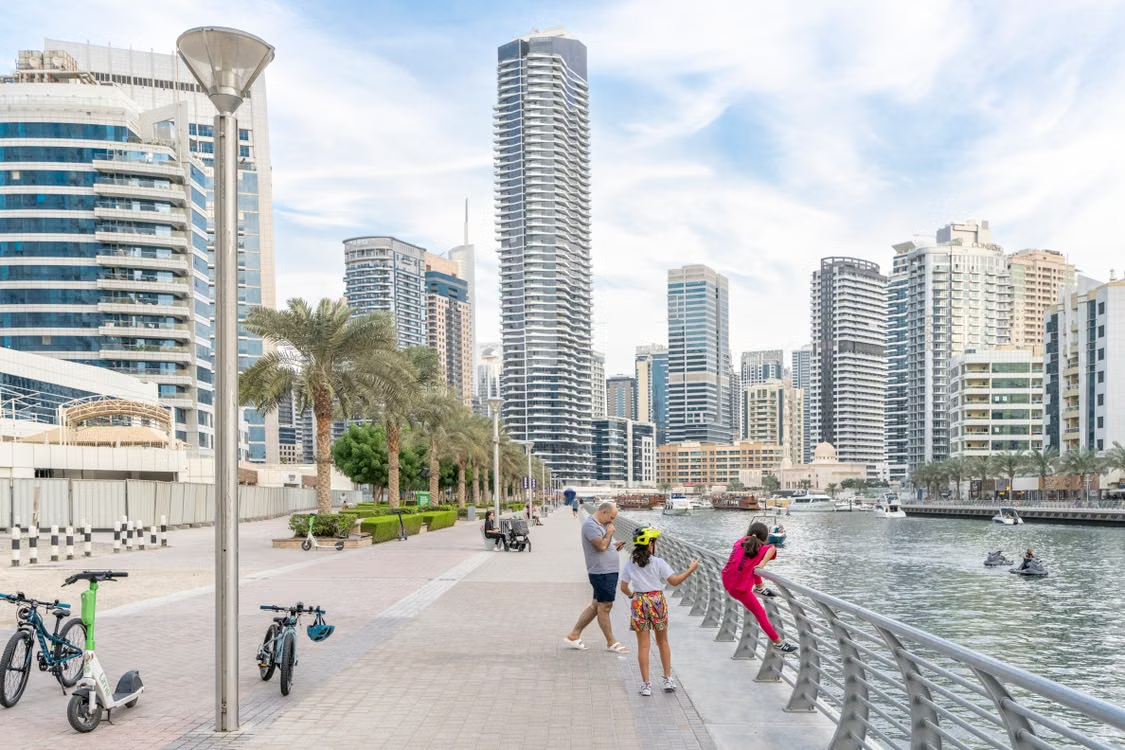
Earlier in 2026, tensions elsewhere in the region affected the sector, with fewer international bookings and softer hotel rates for a period. The UAE was quick to act, with financial support to hotels and tour operators, support to protect jobs and marketing to reassure travelers that the country was still safe and stable, helping the sector recover quite fast. This resilience speaks to tourism's importance to the UAE’s economy and why it is more important than ever to grow it responsibly.
Meaningful Tourism is where it comes in. Rather than simply counting visitors as a measure of success, it asks whether everyone involved is really benefiting: travelers, host communities, employees, businesses, the government and the environment. For the UAE, that balance is what stops rapid growth turning into overcrowding or strain on resources in a desert climate, and what ensures the workforce behind this boom is properly trained and valued.
With the country pushing toward its 2031 targets across every emirate at once, it’s pairing that ambition with a Meaningful Tourism mindset that will turn today’s growth into something lasting, benefiting communities, protecting the environment and building an industry people are proud to work in, not just impressive arrival figures.
MTC Certified Trainers
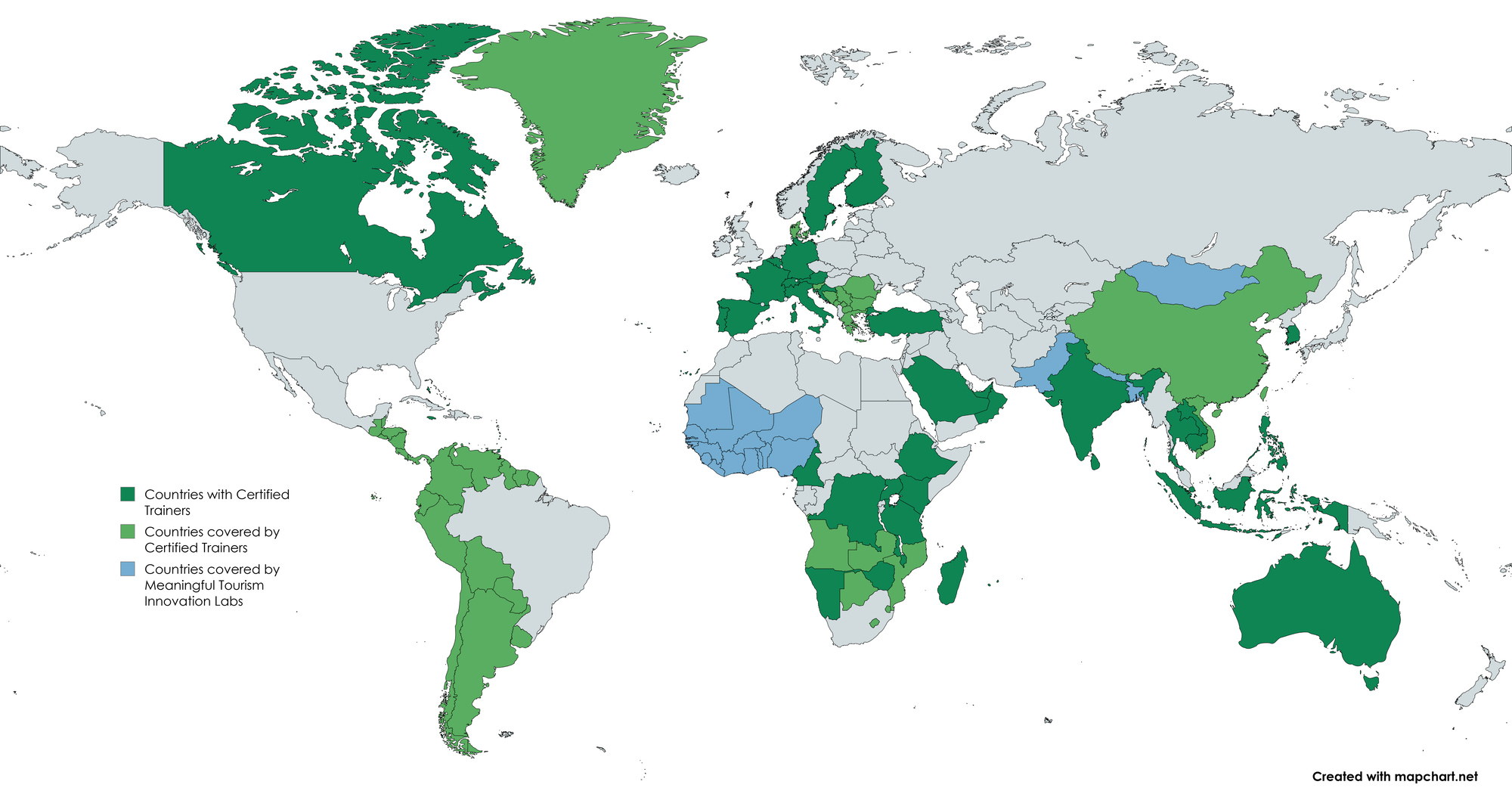
Please find below an overview of all our Certified Trainers for the Meaningful Tourism Transformational Game Workshop, along with the World Map showing the countries currently covered directly or indirectly.
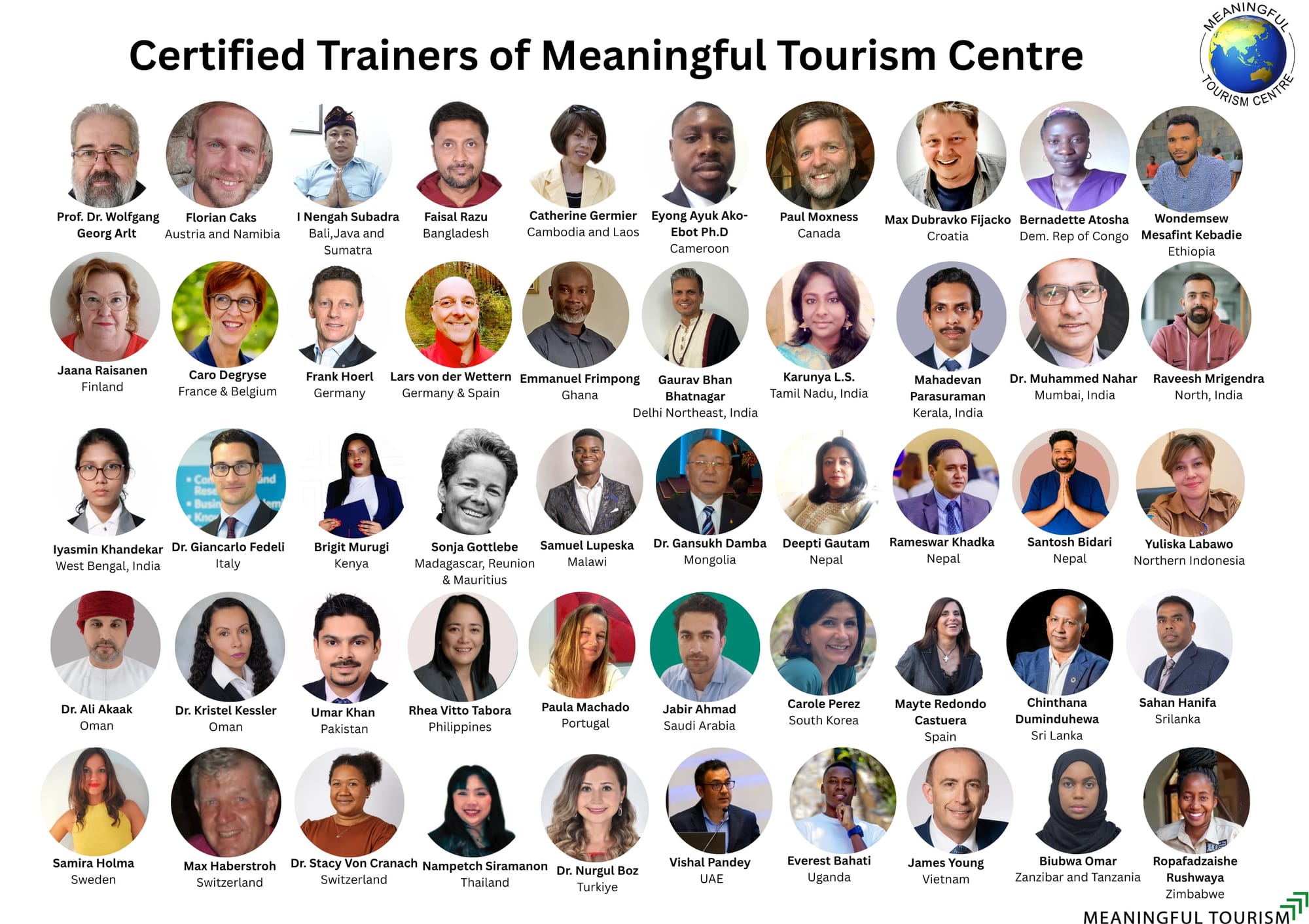
The network of MTC Certified Trainers is constantly growing. As shown on the map, many countries and regions worldwide are already served by dedicated experts. However, MTC is continuously looking for professionals with experience in training or lecturing and a passion for sustainable tourism to join the network and fill the blanks on the map.

World Peace Forum 2026
September 21-23, 2026
Lumbini, Nepal

More details here:


ITB Asia 2026
21-23 October 2026
Sands Expo & Convention Centre, Singapore

ITB Asia, Asia’s Largest Travel Trade Show, is an annual 3-day B2B trade show and convention designed to bring together the key travel industry leaders in the region. It convenes international exhibitors and buyers from the MICE, Leisure and Corporate segments.
About Meaningful Tourism Weekly
Meaningful Tourism Weekly is published every Thursday by Meaningful Tourism Centre (MTC) - London and Kathmandu, in collaboration with Travel Asia Now, led by Rhea Vitto Tabora.
Each issue features an Editorial, updates on MTC activities, a Best Practice Example, a profile of an MTC-certified trainer, news about upcoming events, and, occasionally, additional op-ed pieces from guest authors. The Meaningful Tourism News section also includes carefully selected news items, including videos and podcasts, with links to their original sources.
Subscription to Meaningful Tourism Weekly is free, with the addition of a paid content section that includes a library of surveys, exclusive articles, conference presentations, and statistical data, offering subscribers invaluable resources.
Sponsorship opportunities are available for those interested in supporting this initiative.
For more information about MTC's training programs, market research, product adaptation, consulting services, conferences, strategy development, and marketing, visit our website or email us at info@meaningfultourismcentre.org.