Football instead of battles


Dear reader,
Welcome back to our readers on LinkedIn! We have been hacked and could not access the LinkedIn account of your humble editor for several weeks. Hopefully, the problem will be solved in the next few days.
We also moved to new premises. Altogether, that kept Meaningful Tourism Weekly from being produced last week.
If you missed some previous editions, please see this as a sign to finally subscribe to the Meaningful Tourism Weekly newsletter. It is free and provides more information than the shortened version on LinkedIn.
If you already subscribed to Ghost for the full newsletter, congratulations on your smart move!
In the meantime, the Meaningful Tourism Centre has moved to a new office in Lalitpur, or, to use the old name, Patan. We are now based in Chyasal, one of the oldest settlements in the Kathmandu Valley.
Chyasal is located in the northern section of Lalitpur, near the banks of the Bagmati River. The history of this settlement is deeply intertwined with a bloody battlefield that marked the transition between two of Nepal's earliest dynasties. In the native Nepal Bhasa language, the word "chyasa" translates to eight hundred, a name that directly references a historical turning point around 250 A.D. During this period, the advancing forces of the Licchavi attacked a strategic fortress guarded by the ruling Kirat dynasty resulting, according to tradition, in the slaughter of eight hundred Kirat warriors.
Throughout the following centuries, Chyasal maintained its identity as a strategic border settlement and functioned as a vital northern defense post. Most famous is the ancient Gaja Lakshmi statue, a stone sculpture estimated to be nearly two thousand years old. Centuries later, during the Malla era, Chyasal sat precariously on the border between the rival kingdoms of Patan and Kathmandu. Because of this volatile geography, the local residents were viewed with suspicion as potential spies by the central Malla rulers. This political distrust isolated the town, causing it to miss out on the immense wealth generated by the trans-Himalayan trade that enriched neighboring urban centers. Despite this isolation, the community preserved unique cultural traditions, such as Jhyalcha, a silent shadow play performed for over three centuries that traces its origins back to an event involving one of the Malla dynasty kings.
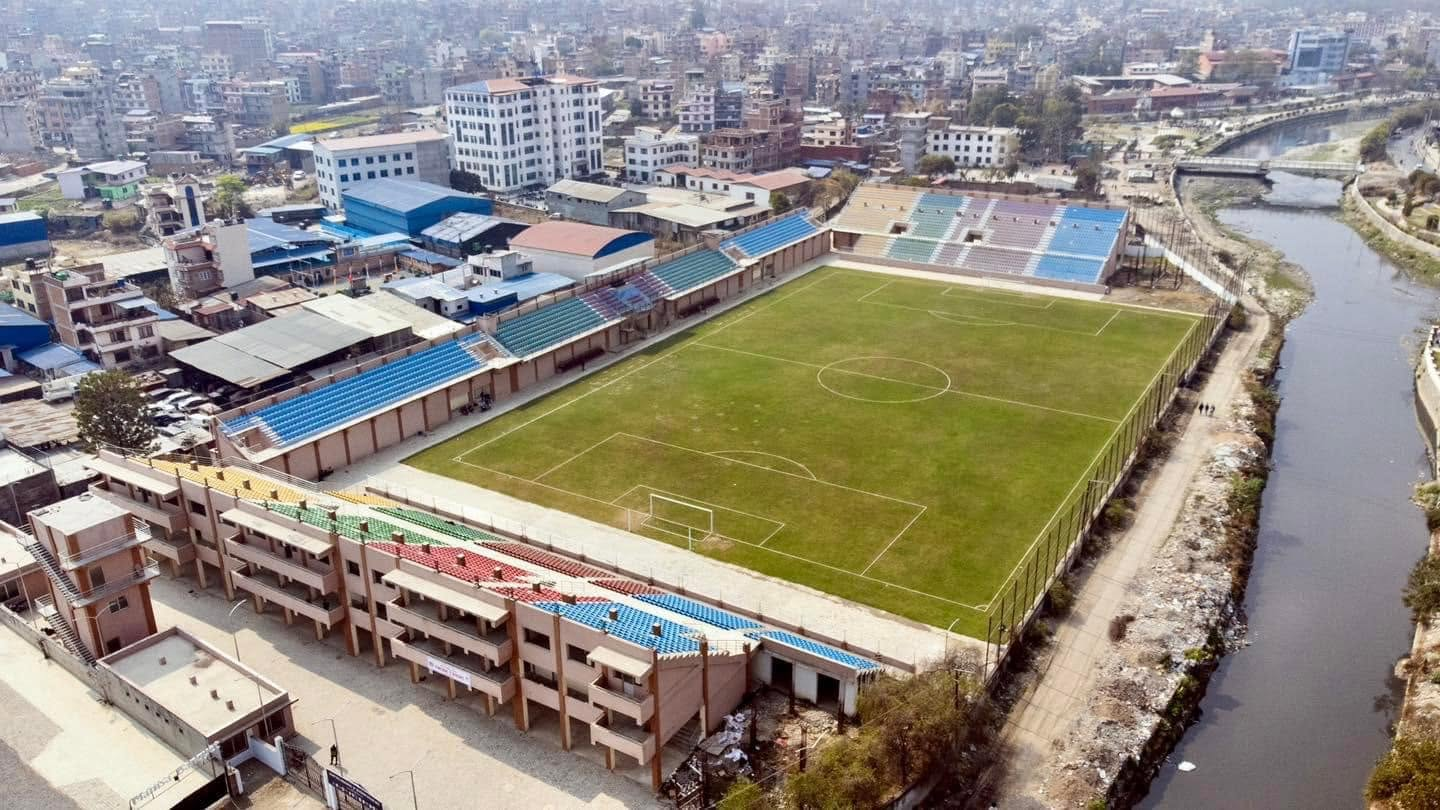
Today, the historic town is best known for the Chyasal Stadium, a venue with a capacity of ten thousand spectators and home to one of the country's most successful football clubs. The ancient blood-soaked battleground has been changed into a venue for friendly football matches.
Unfortunately, the players are currently not able to show their talent on the international stage. FIFA suspended the All Nepal Football Association (ANFA) indefinitely on June 24, 2026, due to third-party government and sports council interference in its internal governance and elections.
Your humble editor hopes that you enjoyed this little glimpse into the history of Nepal, a topic not taught anywhere outside the country. Don’t worry; in future editions, we will continue to concentrate on the advancement of the Meaningful Tourism Movement.
As always, all best wishes from the Meaningful Tourism Weekly team in Kathmandu and Manila, and from the whole Meaningful Tourism community to all our readers!


Summary of the latest edition of Travel Dialogues South Asia Podcast
Every week, MTC and its partners TravelDailyNews Asia-Pacific and Tanneri Chaso provide a new episode of the TRAVEL DIALOGUES SOUTH ASIA series of podcasts concentrating on the development of Meaningful Tourism in South Asia, including Pakistan, India, Maldives, Sri Lanka, Nepal, Bhutan, and Bangladesh.
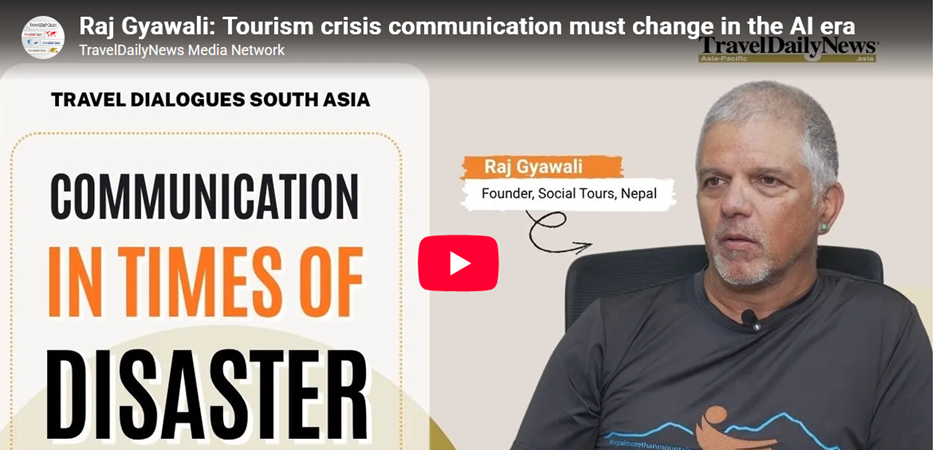
Raj Gyawali: Tourism crisis communication must change in the AI era
This week, Nepali tour operator and activist Raj Gyawali draws on Nepal’s earthquakes and floods to explain why fast, localised and credible crisis communication is becoming essential for tourism destinations in the AI era.
A natural disaster may last hours or days. The damage it causes to a destination’s tourism image can continue for months.
That distinction lies at the centre of my latest Travel Dialogues South Asia conversation with Raj Gyawali, Founder of Social Tours in Nepal. We discussed Nepal’s repeated experience of crises and what destinations can learn about tourism crisis communication as climate-related events become more frequent and information moves faster than ever.
Nepal provides an unusually relevant case study. The country has experienced political upheaval, the 2015 earthquake and subsequent oil embargo, the COVID-19 pandemic and more recent floods.
Tourism has repeatedly demonstrated its resilience. Yet each crisis has also shown how quickly perceptions can become disconnected from conditions on the ground.
The 2015 earthquake created an image crisis too
The 2015 Nepal earthquake was a devastating physical disaster. But for tourism, another problem emerged through the way the international story was communicated.
Gyawali argues that major news channels concentrated heavily on images of destruction. He describes this phenomenon as “disaster pornography”.
The resulting perception suggested devastation across Nepal, even though the impact was not geographically uniform.
For tourism, that distinction matters enormously.
Travellers do not necessarily interpret television footage geographically. Images from one affected area can quickly become associated with an entire country.
A localised disaster can therefore develop into a nationwide tourism crisis.
“Nepal Now” tried to show what was actually happening
Gyawali and other industry stakeholders responded by creating the Nepal Now campaign.
Rather than simply telling potential visitors that everything was fine, the initiative attempted to provide evidence from the destination itself.
One tactic involved GoPro footage showing the journey from the airport into the city and demonstrating conditions in unaffected areas.
The campaign also provided real-time information about recovery and resilience. Maps were used to show precisely where the disaster had affected the country rather than allowing audiences to assume the damage was nationwide.
Visitors already in Nepal became part of the communication.
Tourists were encouraged to hold signs saying “I’m in Nepal now”, creating visual evidence that travellers remained in the destination.
The strategy was straightforward: show rather than simply claim.
When government took over, momentum was lost
The Nepal Now campaign was eventually handed over to the Nepal Tourism Board.
According to Gyawali, however, it became ineffective because of government lethargy and poor execution.
This experience leads to one of the central arguments of the discussion.
Crisis communication requires speed.
Traditional government structures frequently operate through approval processes and hierarchical decision-making. Those structures may be appropriate for many areas of destination management, but they can become problematic when information needs to be communicated immediately.
In a tourism crisis, a delayed message may arrive after the international narrative has already formed.
The latest challenge is AI
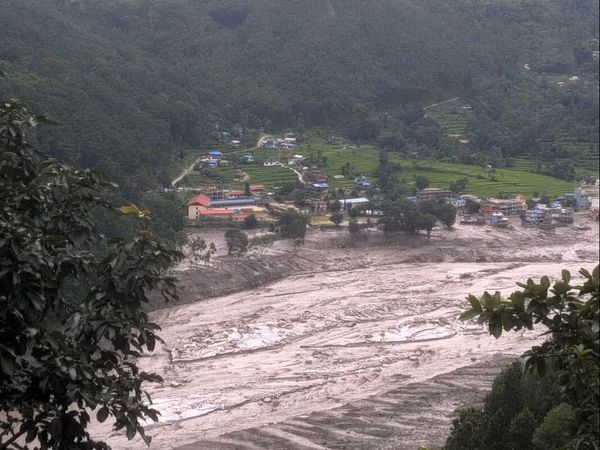
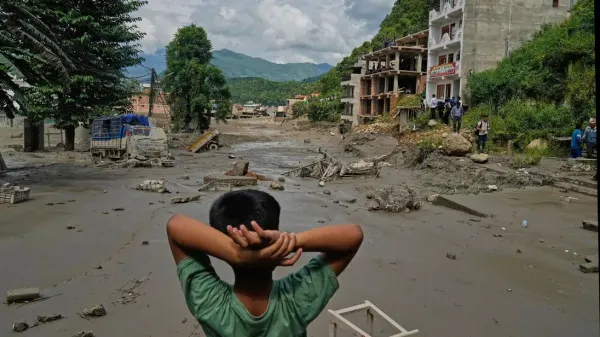
More recent flooding in Nepal has demonstrated how much the communications environment has changed since 2015.
Gyawali characterises the recent event as the country’s first catastrophe to be fully covered in the AI era.
The challenge is no longer limited to television news organisations and conventional media.
Bloggers, influencers and enormous quantities of digital content now contribute to the narrative. AI-generated material adds another layer, with irrelevant or misleading visuals potentially circulating alongside authentic information.
For tourism crisis communication, this fundamentally changes the speed and complexity of the response required.
Destinations are no longer responding to a relatively limited number of news reports. They are operating within an information ecosystem where content can be produced, replicated and redistributed almost instantly.
Nepal Now returned after the floods
The tourism industry responded by reactivating Nepal Now, once again providing real-time information.
Government communication followed a different approach.
According to Gyawali, a “Nepal Calling” recovery campaign was launched within ten days of the disaster. He considers that timing too early and identifies problems with the language used.
This raises an important issue for every destination managing a crisis.
The instinct is often to begin reassurance immediately. But the words chosen to reassure travellers can unintentionally reinforce the very concern the destination wants to remove.

Why saying “safe” can be counterproductive
Gyawali identifies several words and phrases that destinations should use carefully.
Saying a destination is “safe” can introduce or reinforce the idea that it was unsafe.
Saying it is “open” can suggest that it had previously closed.
And telling travellers “don’t cancel” introduces cancellation as an option.
This is one of the most practical lessons from our conversation.
Crisis communication cannot simply consist of reassuring adjectives.
A destination needs evidence.
Rather than saying everything is safe, it can show current conditions. Instead of saying everything is open, it can demonstrate hotels receiving guests, flights operating and tourism businesses functioning.
The difference is subtle but important: replace reassurance with verifiable information.
Localise the crisis
Another fundamental principle is localisation.
Gyawali argues that destinations should clearly demonstrate which areas have actually been affected.
Maps can be particularly useful because they provide geographical context that dramatic photographs or short television reports often lack.
A flood affecting one valley does not necessarily mean neighbouring destinations are inaccessible. An earthquake affecting particular districts does not automatically mean every tourism region has suffered equivalent damage.
Without that context, potential travellers may assume the worst.
Effective tourism crisis communication therefore needs to answer a simple question quickly: where exactly is the problem?
Put a date on the evidence
The timing of visual content is equally important.
Gyawali recommends using current photographs and videos with dates clearly attached to them.
This gives audiences evidence that what they are seeing reflects conditions after the disaster, rather than imagery recorded months or years earlier.
That becomes even more important in the AI era.
When authentic, outdated and generated images can circulate simultaneously, destinations need mechanisms that help audiences distinguish current evidence from unrelated material.
A dated video recorded by someone physically present in a destination can therefore become a valuable crisis communication asset.
Tell the story of the response, not only the disaster
There is another side of a crisis that international audiences may not always see: the response.
Gyawali argues that destinations should communicate positive, factual stories about rescue efforts, professional emergency response and local resilience.
In Nepal’s case, the discussion refers to 21,000 army professionals and adventure rescue capabilities as examples of stories that can demonstrate how the country responds when something goes wrong.
This does not mean minimising a disaster.
It means presenting a more complete picture.
The story is not only what happened. It is also what people are doing about it.
For travellers, that information can be particularly relevant because emergency capability contributes directly to confidence in a destination.
Nepal keeps relearning the same lesson
One of Gyawali’s strongest criticisms concerns institutional memory.
He argues that Nepal tends to forget what it has learned after each crisis.
When the next disaster occurs, the country effectively starts its communication response again from the beginning — a situation he compares to “Groundhog Day.”
This is a significant destination-management problem.
A crisis strategy developed only after a crisis has begun is already late.
Destinations exposed to earthquakes, floods, wildfires, storms or other recurring risks need communication protocols prepared in advance.
That means knowing who speaks, who verifies information, how images are sourced, which channels are activated and how the tourism industry coordinates its response.
Government may simply be too slow
Gyawali questions whether government bodies should lead every element of tourism crisis communication.
His concern is structural rather than simply political.
Government organisations tend to operate through top-down processes. Crisis communication needs agility, decentralised information and rapid decision-making.
The tourism industry, by contrast, has an immediate commercial interest in restoring accurate information and maintaining visitor confidence.
Gyawali therefore argues for an industry-led approach capable of filling gaps left by government while operating as part of a wider destination ecosystem.
That does not necessarily mean excluding government.
It means recognising that the people closest to travellers and tourism operations may be able to provide credible information considerably faster.
Every guide with a smartphone can become a source
This is where the model becomes particularly interesting.
Field guides and individual travellers are distributed across a destination. Most carry smartphones.
Gyawali sees them as potentially crucial sources of real-time, authentic information from different locations.
A guide in Pokhara can show what is happening in Pokhara.
A traveller on a trekking route can demonstrate current conditions there.
A hotel can show guests arriving that morning.
Rather than depending entirely on one central communications office, a destination can potentially create a network of credible voices providing geographically specific evidence.
In an age of misinformation, authenticity may increasingly depend on many verifiable local sources rather than one generic national statement.
Poor communication can extend the economic damage
The consequences are not limited to destination image.
According to the discussion, tourism recovery without effective communication can take 12 to 24 months. Gyawali argues that good communication can accelerate that recovery by around 1.5 times.
The implications extend across the visitor economy.
A traveller who postpones or cancels a trip affects airlines, hotels, tour operators, guides, restaurants, transport providers and communities dependent on tourism income.
A perception problem can therefore continue producing economic consequences long after the immediate physical emergency has ended.
Communication becomes part of economic recovery.
Adventure tourism gives Nepal one advantage
Nepal also possesses a characteristic that may support faster recovery.
Its visitor profile includes significant numbers of adventure travellers.
Gyawali argues that these travellers generally have a greater tolerance for perceived risk and may return more quickly following disruption than tourists travelling primarily to conventional resort destinations.
That does not eliminate the need for effective communication.
But it demonstrates why destinations need to understand their visitors when planning recovery strategies.
Different traveller segments perceive risk differently. The appropriate communication and recovery approach therefore may not be identical for every destination.
Crisis communication is becoming a climate issue
The lessons from Nepal extend well beyond Nepal.
As climate change contributes to increasing disaster risks, destinations worldwide will need to consider crisis communication as part of tourism preparedness rather than something improvised after an event.
Floods, wildfires, extreme heat and storms can affect relatively small geographical areas while generating global headlines about an entire destination.
The communications challenge is therefore likely to become more frequent.
At the same time, AI-generated content makes the information environment more difficult to control.
This combination makes preparation increasingly important.
Destinations need a crisis communication system before the crisis
The time to create a tourism crisis communication strategy is before the disaster happens.
Destinations need mechanisms for gathering verified information quickly. They need maps capable of localising disruption, dated images showing current conditions and trusted people across tourism regions who can provide real-time updates.
They also need to understand which words not to use.
Most importantly, industry and government need to know their respective roles before the pressure begins.
Nepal’s experience demonstrates that tourism can be resilient. But resilience alone does not determine how quickly visitors return.
The physical disaster and the perception of that disaster can follow very different timelines.
Managing the first requires emergency services, infrastructure and preparedness.
Managing the second requires speed, evidence, context and credibility.
In the AI era, destinations increasingly need both.

Meaningful Tourism at ITB Asia Conference
As previously announced, your humble editor will speak at the ITB Asia Conference 2026 in Singapore, running alongside ITB Asia from 21–23 October in under the theme “Experiences in Motion: Human-Centred Design in Travel & Tourism”.
In the meantime, the time and place of the panel discussion on Sustainable and Meaningful Tourism has been confirmed.
It will take place on 23 October 2026, from 12:00 PM to 01:00 PM local Singapore Time. The session title is “Sustainability Panel: The Next Decade of Sustainable Travel”. The venue is the Knowledge Theatre, located at the back of B2 - Hall E within ITB Asia.
Sustainability is now central to the future of travel. The next decade of travel will be defined by destinations, operators, and tourism businesses that embrace environmentally responsible, socially inclusive, and economically beneficial practices.
Industry leaders come together to share their perspectives on embedding sustainability into travel strategy, product development, and destination management, helping businesses position themselves competitively while creating ethical and meaningful experiences for travellers worldwide.
Moderator:
- Vinita Penna, Marketing Manager, Global Sustainable Tourism Council (GSTC)
Panellists:
- Preethi Sanjeevi, CEO & Co-Founder, Greytt.ai
- Prof. Dr. Wolfgang Georg Arlt, Executive Director, Meaningful Tourism Centre
- Mark Wong, Senior Vice President, Asia Pacific, Small Luxury Hotels of the World
- Assistant Professor Dr. Kaewta Muangasame, Project Director, Thailand Green Plan 2030 Project, Department of Tourism of Thailand (DOT), and Director, Sustainable Tourism Action Center (STAC, MUIC)
Three broad themes have been defined:
a) The Evolving Traveller: Designing Sustainable Tourism for Everyone
- How are traveller expectations around sustainability and responsible tourism evolving?
- As senior travellers become an increasingly important segment, how can the industry create sustainable experiences that are accessible, comfortable and engaging for older travellers?
- How can sustainable tourism be made more inclusive across different generations, abilities and traveller profiles?
b) From Sustainable to Meaningful Tourism: Creating Value Beyond the Visit
- How can destinations and tourism businesses create experiences that deliver meaningful value for travellers, local communities and the environment?
- How can the industry preserve authenticity and local culture while meeting growing demand for unique and purposeful experiences?
- How can the industry ensure that sustainability contributes to better experiences for travellers while also creating long-term benefits for destinations and communities?
c) Turning Sustainability into Action: Building the Future of Travel
- How can sustainability be embedded into tourism strategy, product development and destination management rather than treated as a standalone initiative?
- What are the biggest challenges preventing businesses and destinations from moving from sustainability commitments to meaningful action?
- How can technology, innovation and collaboration help make sustainable tourism more accessible, measurable and scalable?
- How can the industry balance sustainability goals with commercial realities and the need for continued tourism growth?
Book Chapter Passes Proofreading
Step by step, the publication of the book chapter on Meaningful Tourism and AI in the upcoming Handbook of Tourism Transformation: Multidisciplinary Approaches to Integrate Technology and Sustainability is getting closer and is now scheduled for December 2026.
The Handbook has its own page on the Springer website, which you can access here: https://link.springer.com/book/9783032390547.
Looking for a Christmas present for your colleagues or your boss? Look no further.

Meaningful Tourism Innovation Lab Nepal Relocates to New Lalitpur Office
As mentioned in the last edition, the MTIL Meaningful Tourism Innovation Lab Nepal together with the MTC Meaningful Tourism Centre, have relocated their joint office to new premises in Lalitpur Metropolitan City, Ward No. 9, Chyasal.
After the move happened, fortunately without any incidents or broken items, the entire team was fully engaged in setting up and managing the new office premises. We can happily announce that MTIL and MTC are fully operational from the new location, with all activities running smoothly.
As mentioned in the editorial, the new office stands in an area of notable historical and cultural importance. Chyasa (or Chyasal) means “800” in the native Newari language and, according to local history, refers to 800 Kirat guards slain at this site during a battle with the Lichhavis around 250 AD.

Meaningful Tourism Community: The Meaningful Tourism Transformational Game Workshop Trainer
Florian Caks - Certified Trainer for Austria and Namibia
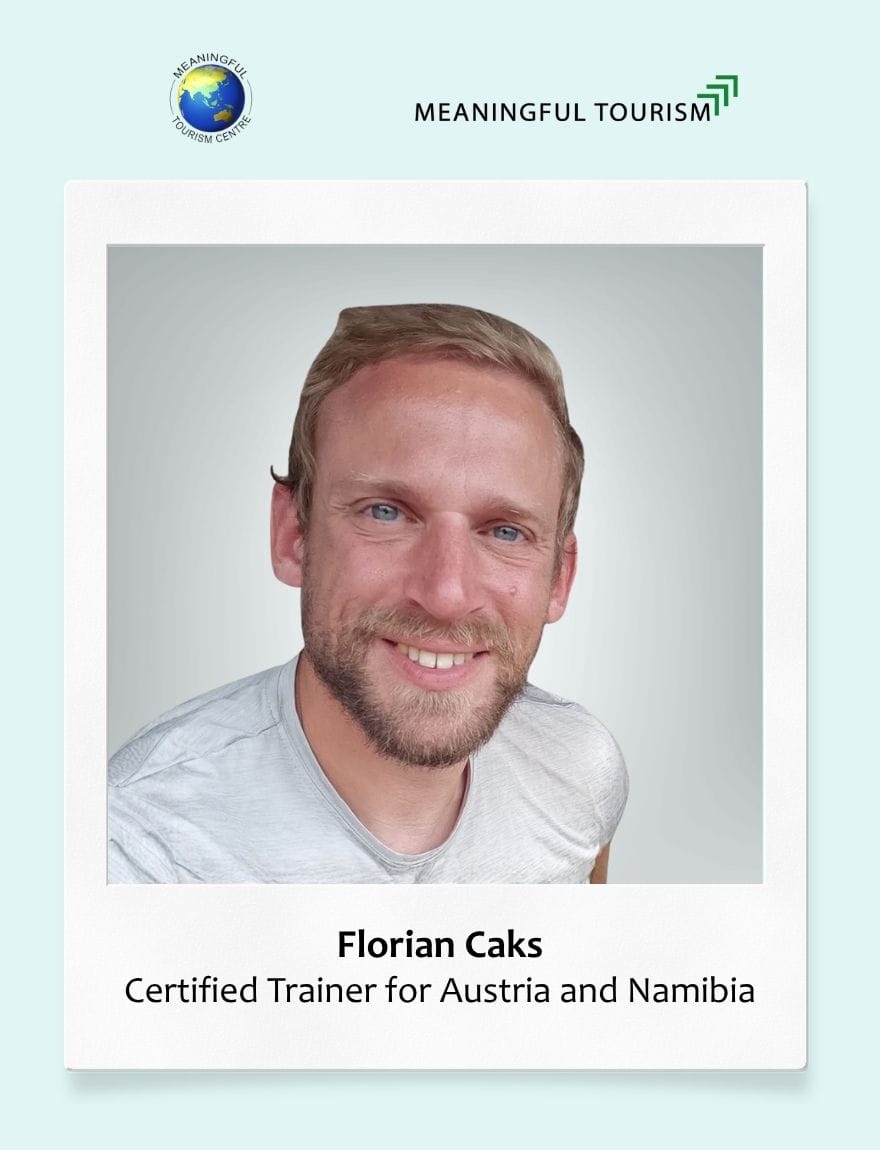
Florian Caks is a certified trainer for the Meaningful Tourism Transformational Game Workshop. Based in Vienna, Florian is an internationally experienced legal expert, ESG manager, and sustainable tourism professional. He holds a doctorate in business law and combines academic rigor with hands-on expertise across public, private, and development sectors. Florian brings unique insights from his background in behavioral law, sustainable finance, and tourism education. His interdisciplinary approach bridges law, psychology, and sustainability to deliver impactful learning experiences.
As the certified and exclusive MTC trainer for Austria and Namibia, he is dedicated to promoting meaningful and future-proof tourism strategies. Florian’s commitment to diversity, inclusion, and intercultural understanding shapes his engaging and purpose-driven teaching style. His workshop training is enriched by global experience and award-winning academic work. We are excited to welcome him to our community of meaningful tourism leaders.
Meaningful Tourism Weekly asked Florian about the state of tourism in Austria and Namibia, and the role the Meaningful Tourism paradigm can play in supporting development in these countries.
His answer:
Contrasts and similarities
Austria and Namibia are two countries that contrast greatly in so many aspects. Yet, in the context of tourism development, both are flagship destinations when it comes to sustainability and conservation, but also, both countries are confronted with their very own challenges.
Namibians, in their vast and breathtakingly beautiful, sparsely populated country with stunning wildlife and landscapes, are world champions in dealing with even the most extreme environmental, social, and economic challenges. The necessity to safeguard their most precious natural and cultural assets for a thriving tourism economy is widely understood; sustainable living in harmony with nature seems omnipresent. Namibia has impressed internationally with innovative approaches like community-based conservation, but also by diversifying its economy by establishing its pioneering role in renewable energy production and other areas. Despite all the positive developments and efforts, challenges such as severe droughts followed by record rainfalls accompanied by floods, biodiversity loss through poaching, and severe social inequalities (to mention only a few), remain and call for mitigation and adaptation.

Austria, one of the richest countries in the world, with its picturesque mountains and lakes, and known for its prestigious historical monuments, is often perceived as an inconspicuous gem in the heart of Europe – and the Austrians are aware of what they have. Yet, Austrian tourism faces challenges stemming from climate change, endangering the for the country so particularly characteristic ski tourism. Overtourism puts the acceptance of the local population to the test, and a pronounced shortage of skilled workers makes it hard to keep the high service standard or to keep tourism businesses running at all.

Global challenges – different manifestations – A Meaningful Tourism approach
These examples show that challenges in global tourism always seem to be linked to the same key areas and the same key stakeholders, just with different manifestations and characteristics. That’s where the Meaningful Tourism Paradigm comes into play. It starts from the premise that sustainable tourism development requires a holistic approach which provides and measures benefits and satisfaction for all six key stakeholders of tourism and hospitality. These are: Travelers, host communities, employees in tourism and hospitality service-providing companies, the companies themselves, governments on different levels, and the environment.
The negative results of climate change are certain to increase in severity in the coming decades. Whatever action is taken from now on is necessary to try to slow down and mitigate the process; however, equally important is the adaptation to these new realities, and the world has reached a tourism peak and needs a new paradigm on how to develop, measure and react to extreme weather events, rising sea levels and temperatures combined with protests by local communities, shortages of staff willing to work in the industry and decreases in biodiversity.
Meaningful Tourism is offering such a paradigm as a development of the concepts of sustainable and responsible tourism, based on a holistic approach and positive psychology and meant to provide a practical tool to implement measurable benefits and satisfaction for all stakeholders through alignment of interests instead of compromises, and this is done in the unique context of each destination or organisation.
Stakeholder engagement and KPIs as a common denominator
Through its focus on stakeholder engagement and KPI development, this approach can also help to bring the different perspectives on "sustainability" and "ESG" (Environmental, Social, and Governance) closer together. This is particularly relevant for EU countries like Austria, where companies are subject to mandatory or voluntary sustainability reporting, especially under the Corporate Sustainability Reporting Directive (CSRD). This can be either directly or indirectly as part of the value chain or in the context of financing.
Just as in the Meaningful Tourism approach, these frameworks have stakeholder engagement and KPIs at its core. Meaningful Tourism takes existing international (reporting) frameworks into account when it comes to KPI development. However, the just-mentioned EU sustainability frameworks are under the threat of extinction even before they have come to life (see the “Omnibus” initiative), and this is happening under the title of "burden-reduction" and, quite paradoxically, for the alleged enhancement of "competitiveness".
Meaningful Tourism and access to funds
However, banks will always be asking companies about their sustainability performance from a perspective of credit risk – irrespective of a legal obligation to report. Similarly, with the aim of future-proofing tourism, the Meaningful Tourism Centre as a non-profit organisation based in the UK and in Nepal, offers practical tools for destinations, companies and organisations to implement a Meaningful Tourism strategy, helping to fight climate change as well as making sure its own economic survival in the coming decades, and thus also to support access to finance.
MTC Certified Trainers
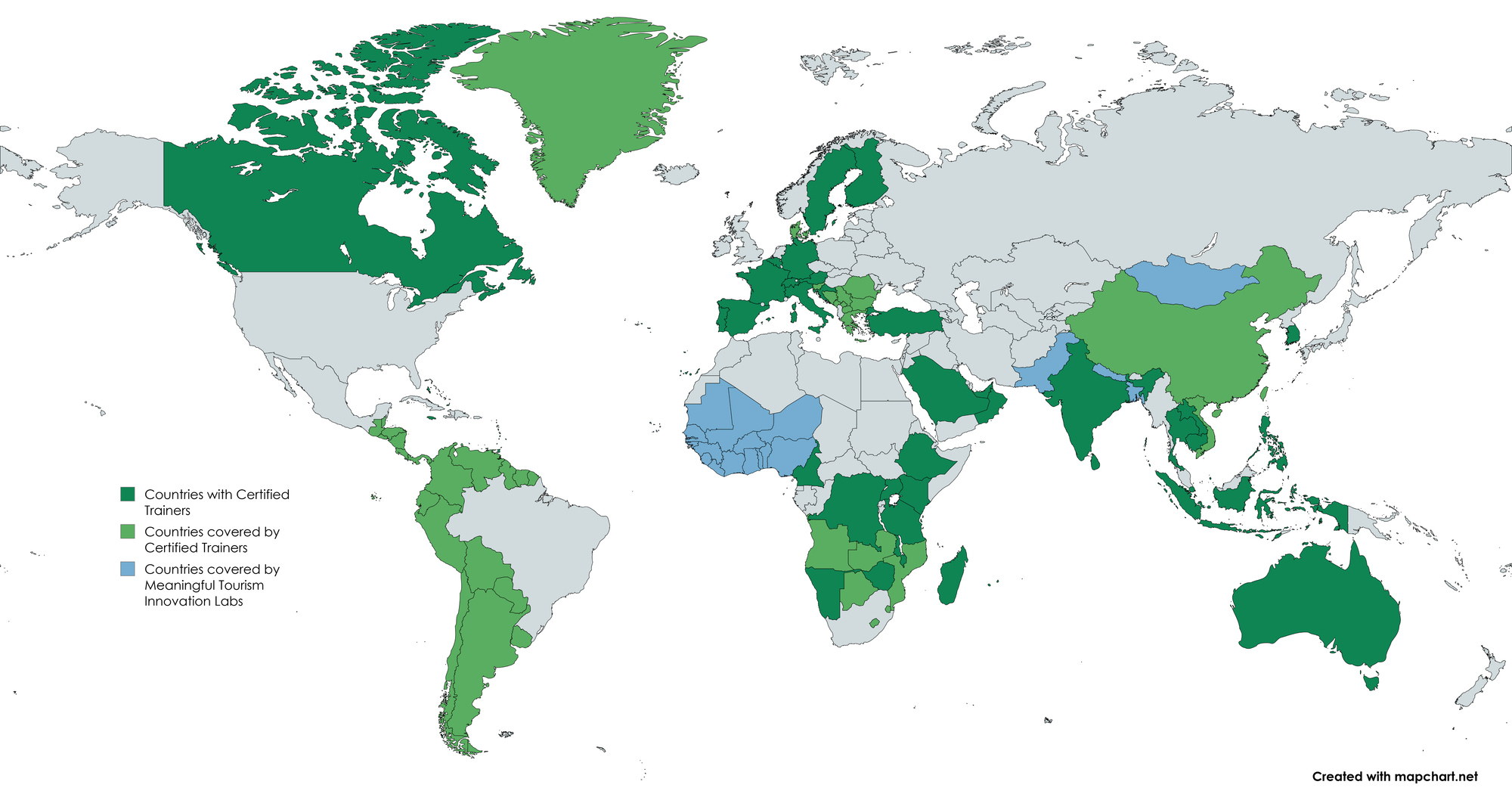
Please find below an overview of all our Certified Trainers for the Meaningful Tourism Transformational Game Workshop, along with the World Map showing the countries currently covered directly or indirectly.
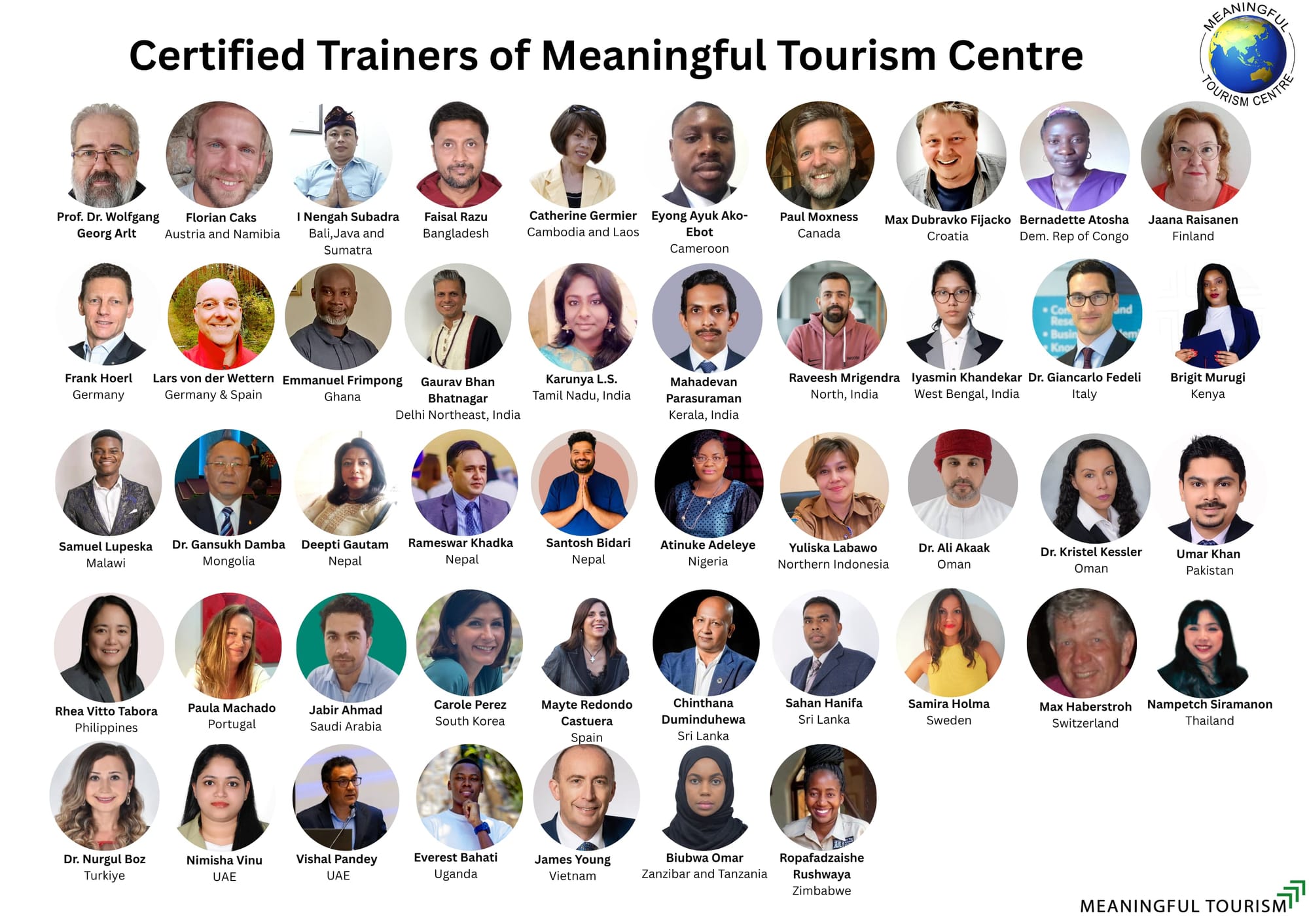
The network of MTC Certified Trainers is constantly growing. As shown on the map, many countries and regions worldwide are already served by dedicated experts. However, MTC is continuously looking for professionals with experience in training or lecturing and a passion for sustainable tourism to join the network and fill the blanks on the map.

ITB Asia 2026
21-23 October 2026
Sands Expo & Convention Centre, Singapore

ITB Asia, Asia’s Largest Travel Trade Show, is an annual 3-day B2B trade show and convention designed to bring together the key travel industry leaders in the region. It brings together international exhibitors and buyers from the MICE, Leisure, and Corporate segments.
About Meaningful Tourism Weekly
Meaningful Tourism Weekly is published every Thursday by Meaningful Tourism Centre (MTC) - London and Kathmandu, in collaboration with Travel Asia Now, led by Rhea Vitto Tabora.
Each issue features an Editorial, updates on MTC activities, a Best Practice Example, a profile of an MTC-certified trainer, news about upcoming events, and, occasionally, additional op-ed pieces from guest authors. The Meaningful Tourism News section also includes carefully selected news items, including videos and podcasts, with links to their original sources.
Subscription to Meaningful Tourism Weekly is free, with the addition of a paid content section that includes a library of surveys, exclusive articles, conference presentations, and statistical data, offering subscribers invaluable resources.
Sponsorship opportunities are available for those interested in supporting this initiative.
For more information about MTC's training programs, market research, product adaptation, consulting services, conferences, strategy development, and marketing, visit our website or email us at info@meaningfultourismcentre.org.