More luxury travellers are expected in Nepal – How will they travel around the country?

Dear reader,
during the Meaningful Tourism & AI Workshop in Patan on August 10, luxury tourism in Nepal was one of the hot topics discussed by the participants.
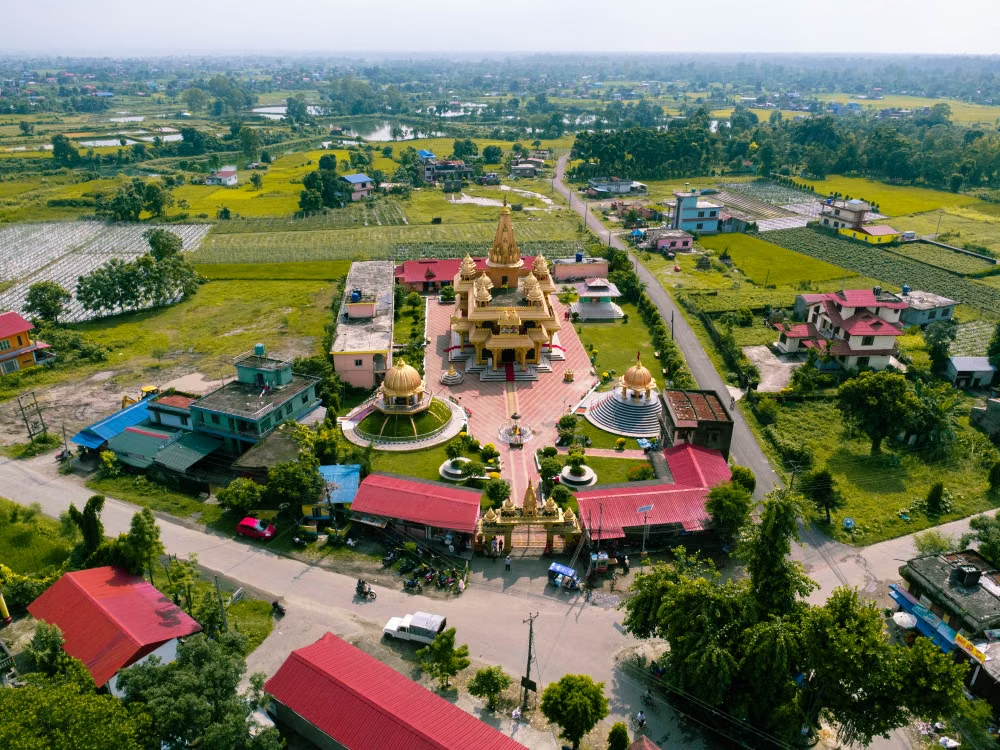
Several new five-star hotels have already started or are in the process of starting operation in the country, not only in the main tourist cities Kathmandu and Pokhara, but also in the southern Terai area close to the Indian border.
Furthermore, after years of sitting idle, finally the international part of the airport in Pokhara is scheduled to receive daily international flights from Dubai starting end of September. Therefore, the industry is hoping for an increase in high-spending visitor arrivals.
Some market segments, like persons needing a wheelchair or Muslims insisting of internationally certified Halal food services continue to be unable to enjoy travelling around Nepal.
However, for all affluent visitors a major question arises: How to travel in some style and comfort within the country?
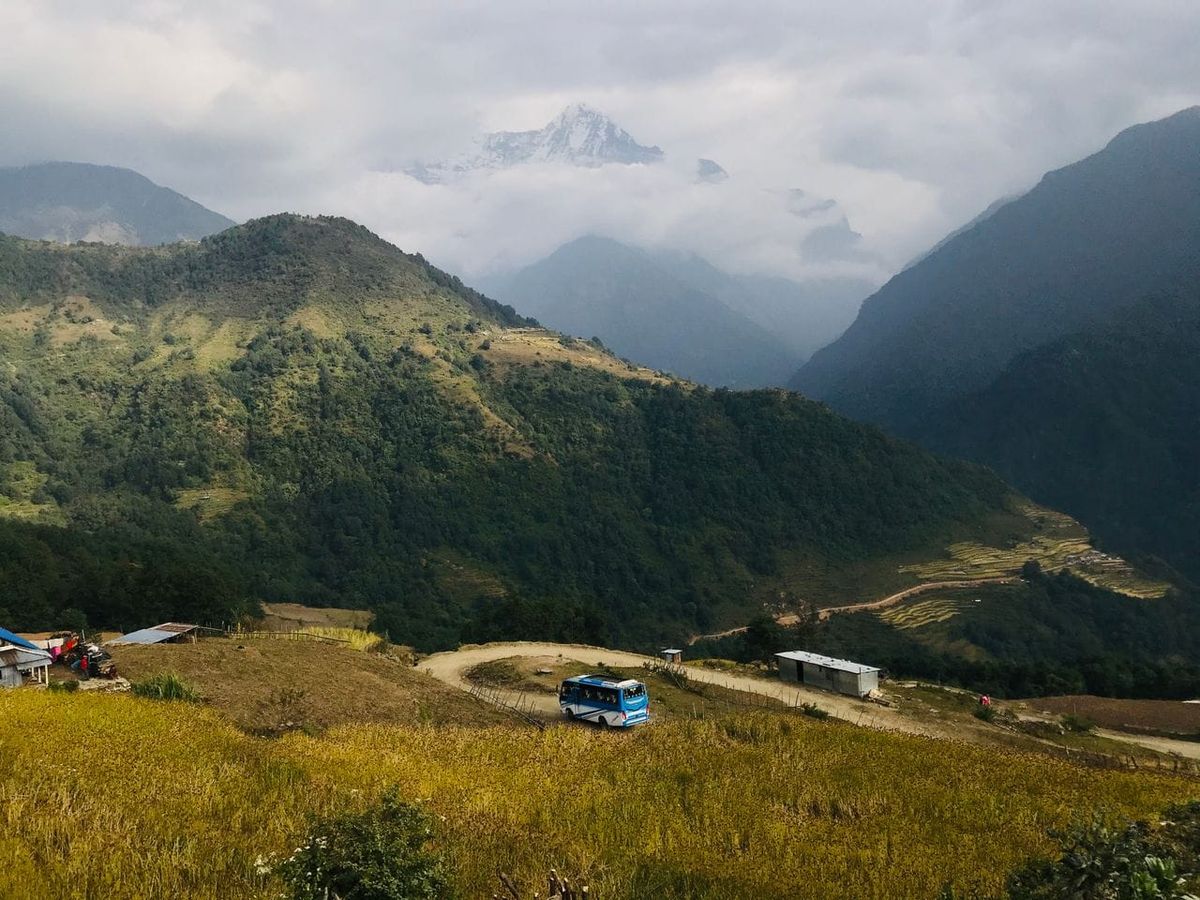
Nepal’s roads are bumpy and often blocked by landslides, even between the two biggest cities Kathmandu and Pokhara a limousine needs five hours or more for the 200 km distance. Domestic air connections have no business class services on the ground or seats in the aircraft and are often delayed or abruptly cancelled. Helicopters are very expensive, noisy, without toilets, offer limited luggage space and are not suitable for groups. River or railway transport simply does not exist in Nepal.
It is rather uncommon in the country to think about the solution of a problem before it actually arises. Nevertheless, your humble editor, coming from a country which used to be famous for careful planning, has given some thoughts to the question, using a holistic Meaningful Tourism approach.
Building highways and new airport terminal takes many years and a short-term solution could be the offer of Premium Economy services providing at least partly international standards for discerning travellers at least at and between the major airports Kathmandu, Pokhara, Chitwan and Bhairahawa:
- Dedicated lounges
- Priority check-in
- Priority boarding at gate
- Assistance in boarding/deboarding on stairs of aircraft if needed
- Increased luggage allowance
- Dedicated limousine or small AC buses for transport between terminal and aircraft
- Front rows according to demand offered with empty seat next to window seat of premium passenger
- Sandwich and one free beverage offered during flight
Such an offer could be arranged without the need for any structural changes to the aircrafts and could easily be reduced or enlarged according to the number of premium seats booked. It would offer an increase in service quality affluent travellers – and probably also some Nepali passengers - would happily pay for, and would reduce the reluctance of many luxury tourists to use domestic flights.
Obviously, introducing aircraft with real business class seats would add to the experience, however solutions are needed now, not when the domestic airlines buy their next generation of aircrafts in some distant future.
Nepali are used to the low levels of reliability and punctuality, cramped waiting areas, dirty buses or walks across the tarmac in the rain or hot sun. Backpackers and low-budget visitors, constituting the majority of international air passengers at the moment, will endure the experience as unavoidable, accepting a smile and a friendly Namaste from the stewardess as compensation. For most long-distance international business class travellers, however, this gap in the service chain will be a game-stopper, ending their plan to visit Nepal.
As always, all best wishes from the Meaningful Tourism Weekly team in Kathmandu and Manila, and from the whole Meaningful Tourism community to all our readers!


Summary of the latest edition of Travel Dialogues South Asia Podcast
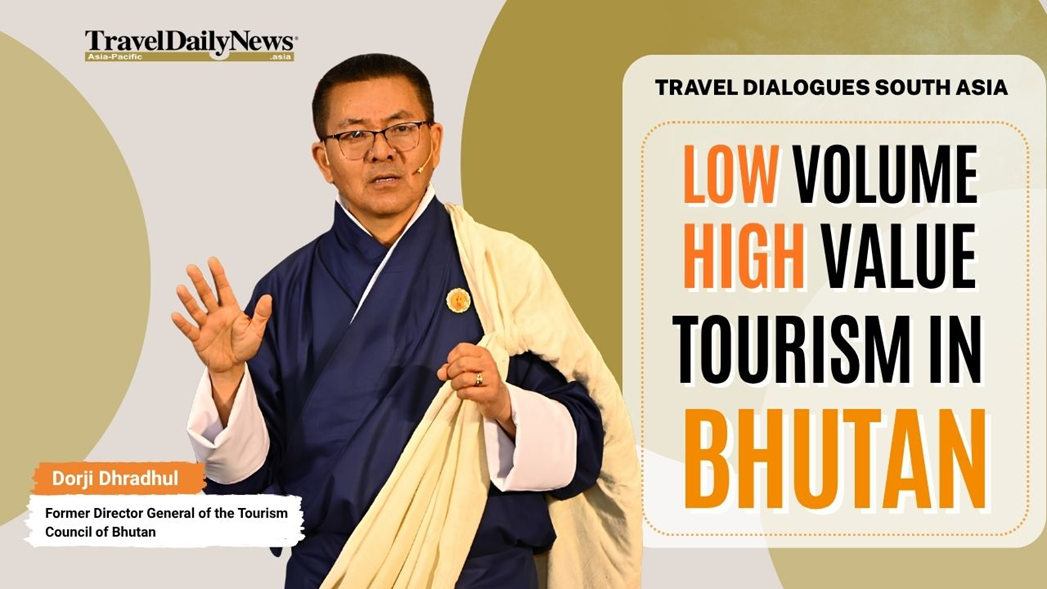
Every week, MTC and its partners TravelDailyNews Asia-Pacific and Tanneri Chaso provide a new episode of the TRAVEL DIALOGUES SOUTH ASIA series of podcasts concentrating on the development of Meaningful Tourism in South Asia, including Pakistan, India, Maldives, Sri Lanka, Nepal, Bhutan, and Bangladesh.
In the latest edition of the Travel Dialogues South Asia podcast, your humble editor talked with Dorji Dhradhul, former Director General of the Tourism Council of Bhutan and author of the recently published book High Value, Low Volume Tourism with a Soul.
Bhutan’s high value, low volume tourism: A long-term model for sustainable growth
Bhutan’s high value, low volume tourism model prioritises long-term sustainability, cultural respect and meaningful experiences while balancing visitor growth, employment and regional tourism opportunities.
A tourism philosophy dating back to 1974
Bhutan opened to tourism in 1974 with the “High Value, Low Volume” philosophy already forming the foundation of its approach to international visitors.
According to Dhradhul, the policy originated with Bhutan’s fourth King, His Majesty Jigme Singye Wangchuck, who developed the concept while still in his teens. Dhradhul describes him as the “father of high-value, low-volume tourism”.
The approach preceded contemporary international debates around overtourism and mass tourism by several decades. Rather than pursuing visitor numbers as the principal measure of tourism development, Bhutan established a model intended to protect the country’s culture, environment and development philosophy.
This long-term perspective remains central to Bhutan's high-value, low-volume tourism today.
Bhutan strengthened its approach after the pandemic
The pandemic created expectations that Bhutan might relax its tourism policy following approximately two and a half years of closure. Instead, the country reinforced the model.
A central element was the Sustainable Development Fee, or SDF, a daily levy paid by international visitors. According to the interview summary, the fee increased from $65 to $200 per person per day following the reopening, although it is currently discounted to $100 until July 2027.
The decision demonstrated Bhutan’s continued commitment to prioritising long-term sustainability rather than seeking a rapid recovery through substantially higher visitor volumes.
Dhradhul explores the philosophy underpinning this approach further in his book, High Value, Low Volume Tourism with a Soul.
What does Bhutan mean by the “right” visitor?
The policy also raises the question of what constitutes the appropriate visitor for Bhutan.
The country seeks travellers who appreciate and respect its culture, environment, development philosophy and its high-value, low-volume approach.
While Bhutan would ideally be accessible to everyone, Dhradhul explains that practical realities require a selective model. The policy therefore also acts as a mechanism for managing the profile and number of visitors entering the country.
The concept of “tourism with a soul” extends this principle further. Tourism should create a meaningful experience for both visitor and host, with impacts reaching beyond the individual holiday to communities, the country and ultimately the planet.
Employment presents a challenge
The Bhutan high value low volume tourism model also involves trade-offs.
One of the most significant challenges concerns employment. Regulated visitor volumes, particularly following the pandemic, have affected opportunities within the tourism economy. Visitor numbers are gradually recovering, but employment remains an important consideration when balancing sustainability with economic development.
Bhutan nevertheless continues to favour long-term protection of the destination over the potential short-term revenues associated with mass tourism.
Dhradhul argues that uncontrolled tourism could damage Bhutan’s distinctive brand and exceed its carrying capacity within five to ten years. Such damage could prove irreversible.
The policy therefore needs to be viewed over a much longer horizon, extending 50 or even 100 years rather than focusing primarily on immediate tourism revenues.
High value versus elitism
The financial requirements associated with visiting Bhutan have also generated debate over whether the tourism model is elitist.
Dhradhul rejects this interpretation. His position is that international travel itself generally requires a degree of financial capability, regardless of the destination.
From Bhutan’s perspective, the policy is instead designed to manage tourism according to the country’s environmental, cultural and social capacity while maintaining the value of the experience.
This distinction is important to understanding the philosophy behind Bhutan high value low volume tourism. The objective is not simply to charge visitors more, but to protect the characteristics that make the destination distinctive over the long term.
South Asia as an increasingly important source market
Regional tourism represents another important dimension of Bhutan’s future tourism development.
South Asian countries are significant source markets, with India holding a particularly important position as Bhutan’s closest and largest neighbour. There is also potential to increase arrivals from Bangladesh and Nepal.
Visitor volumes from Pakistan, Sri Lanka and the Maldives remain comparatively limited, according to the discussion.
Greater regional travel could provide environmental as well as economic benefits. Shorter flight distances can reduce the pollution associated with long-haul journeys, while potentially rising air travel costs could make closer destinations increasingly attractive.
Regional tourism as a distinct travel category
Your humble editor pointed out in the discussion, that the emergence of “regional tourism” as a category in its own right is a necessary step.
Traditionally, tourism markets have been divided primarily between domestic and international travel. However, journeys within approximately three to four hours of flight time can increasingly be considered a separate regional segment.
For Bhutan, this creates opportunities to strengthen tourism links with neighbouring South Asian markets while maintaining the principles of its established tourism model.
Regional demand could therefore become an increasingly important component of Bhutan high value low volume tourism, particularly as travellers consider shorter-distance journeys and destinations reassess the environmental impact of international mobility.
A tourism strategy designed for generations
Bhutan’s tourism policy stands apart from models centred primarily on increasing international arrivals. Since opening to tourism in 1974, the country has maintained a strategy intended to protect its cultural identity, natural environment and carrying capacity.
The post-pandemic reinforcement of the policy demonstrates the continued importance placed on this long-term approach, despite the challenges it creates for employment and tourism businesses.
As regional tourism develops and international travel patterns evolve, Bhutan’s challenge will remain balancing economic opportunities with the principles that have shaped its tourism sector for more than five decades.
ITB India to open its gates on September 1, 2026
As reported earlier and in the Events section below, your humble editor “PROF M” is visiting the ITB India 2026 as a speaker and is available for meetings during the fair in Mumbai. All readers are also invited to attend the presentation “Meaningful Tourism as a tool for sustainable tourism development in India and beyond” on September 2 at 1:30 pm.
If you have no entrance ticket to the fair, no problem. We still have a few complimentary Trade Visitor passes available to our readers, courtesy of Meaningful Tourism Centre! Each pass grants access to the exhibition and conference programmes across all three days — a value of $25 USD. Please hurry to contact us to secure your complimentary pass.

Feedback on Meaningful Tourism workshop in Nepal
Last week’s first offline “Meaningful Tourism & AI” workshop of the Meaningful Tourism Innovation Lab Nepal on August 10, 2026 received a lot of positive feedback. Participants highlighted that they understand that tourism is increasingly about change and personal transformation, not just about sightseeing:
“The session highlighted that tourism today is about transformation. People are no longer travelling only to see a place; they travel to learn, connect, experience local life, and return home with a different perspective.” - Nepal In Style Travel & Tours
Other participants emphasised the strategic value of integrating sustainability, AI and innovation into product development and destination management:
“The session offered valuable insights into Nepal’s untapped tourism potential, sustainable tourism practices, AI-driven innovation, and data-driven decision-making. The interactive discussions also highlighted opportunities for better tourism product development and enhancing traveler experiences. A great opportunity to learn, connect, and explore how technology and meaningful tourism can contribute to Nepal’s growing tourism ecosystem.” - eSewa Ltd.
The workshop also opened new perspectives for industry practitioners who have long been exposed to terms like eco‑tourism and sustainability, but were looking for a more holistic and practical framework:
“It was a different perspective on tourism, even though we’ve been hearing terms like eco, responsible, and sustainable for years. It was wonderful attending your workshop, and Suman’s AI approach was also one of the reasons I joined. I will definitely recommend it and have already talked with some friends about your future workshops.” - nature-treks.com
Some participants are already translating the inspiration from the workshop into concrete business plans and international partnerships:
“It was really insightful and informative workshop, and it helped us boost our knowledge. We are seriously looking for Chinese outbound B2B partners to welcome Chinese travelers to Nepal, and we believe this is possible with support from COTRI in identifying active Chinese outbound members who are willing to promote Nepal as a destination.” - Alchemy Travels
Looking ahead, the next workshop in Nepal will take place on September 24, 2026. Building on the experiences and feedback from the August 10 workshop, more in‑depth AI applications in tourism will be introduced, with a clear focus on practical tools that participants can apply directly in their businesses, from product design and customer experience to marketing and data‑driven decision‑making. In particular, the AI component will be revised to reflect the specific interests expressed by participants, with a stronger emphasis on practical content creation processes based on traveller personas and empathy mapping, enabling tourism professionals to design messages and offers that truly resonate with different market segments.
An AI participation certificate will also be introduced for attendees who complete the full workshop programme, recognising their engagement with practical AI applications for tourism. The Halal tourism concept, and how to become more welcoming and service‑ready for Muslim travellers, will also be added as a new topic for discussion in the upcoming workshop, recognising its growing relevance for Nepal’s future tourism development.
In addition, before the workshop, participants will be invited to submit specific topics and challenges they wish to discuss in the group sessions. This approach will help ensure that all relevant themes are covered and that group work provides hands‑on, directly applicable knowledge tailored to participants’ real business needs.
By breaking down silos between sustainability, community benefits, profitability, technological innovation and new market segments such as Halal and Chinese outbound tourism, the Meaningful Tourism Innovation Lab Nepal continues to position itself as a platform for collaborative learning and practical implementation.
Introducing the Meaningful Tourism Innovation Lab Mongolia partners
As reported before, MTC and MTIL Nepal are proudly welcoming Mongolia as new country hosting a Meaningful Tourism Innovation Lab. Thanks to the initiative and diligent work of the Certified MTC trainer Gansukh Damba, the MTIL Mongolia could be started with two strong partners:
1. Sustainable Tourism Development Center of Mongolia
The Sustainable Tourism Development Center (STDC) is a non-governmental organization and a leading tourism research institute in Mongolia. It was established in 2006, and its main mission is to contribute to the sustainable tourism development of Mongolia.
The mission is directed to add our contribution to designing, monitoring, evaluating, and improving sustainable tourism practices and principles in Mongolia.
STDC works on a wide range of activities, implementing several project programs, sustainable tourism development planning, hospitality management, training, and consultancy.
2. Tourism Education and Development Society of Mongolia
The Tourism Education and Development Association is a non-governmental organization dedicated to the development of education, research, and professional consulting services in the Mongolian tourism and hospitality industry. The organization collaborates with other industry associations and organizations such as the Mongolian Tourism Organisation to organize international and national activities.
To hear more about the upcoming activities of the MTIL Mongolia, watch this space in coming editions of Meaningful Tourism Weekly!

Meaningful Tourism Community: The Meaningful Tourism Transformational Game Workshop Trainer
Mayte Redondo Castuera - Certified Trainer for Spain
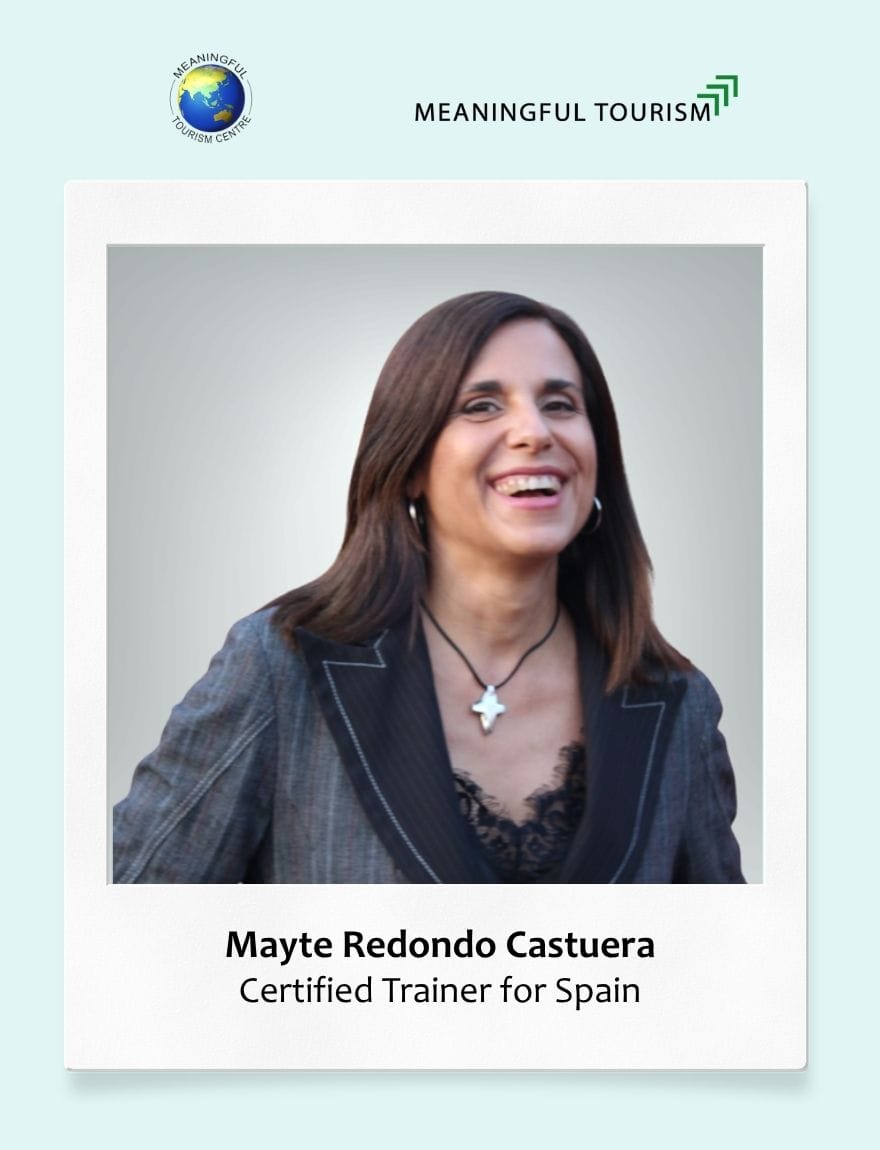
Mayte Redondo Castuera is a sustainable tourism expert with over 30 years of experience. She is the founder of Travel 2 Care People and Planet and a trainer for the Meaningful Tourism Game workshop. As a certified Travelife Coach and Auditor, she supports tour operators in adopting responsible practices. She also collaborates with Green Destinations and is a Good Travel Guide Ambassador. Mayte holds a Master’s in Digital Marketing & E-Commerce and a degree in Tourism Management. Her work blends deep industry knowledge with a strong commitment to people, the planet, and purpose-driven travel.
Meaningful Tourism Weekly asked Mayte about the situation of tourism in Spain the role Meaningful Tourism paradigm can play to support the development in this country.
Her answer:
Reframing tourism in Barcelona: How can the Meaningful Tourism Centre support its development?
Tourism in Barcelona, and more broadly in Spain, is rebounding strongly post-pandemic. Visitor numbers are rising rapidly, but so are the pressures: overcrowding, resident dissatisfaction, gentrification, environmental degradation, and unsustainable visitor flows.
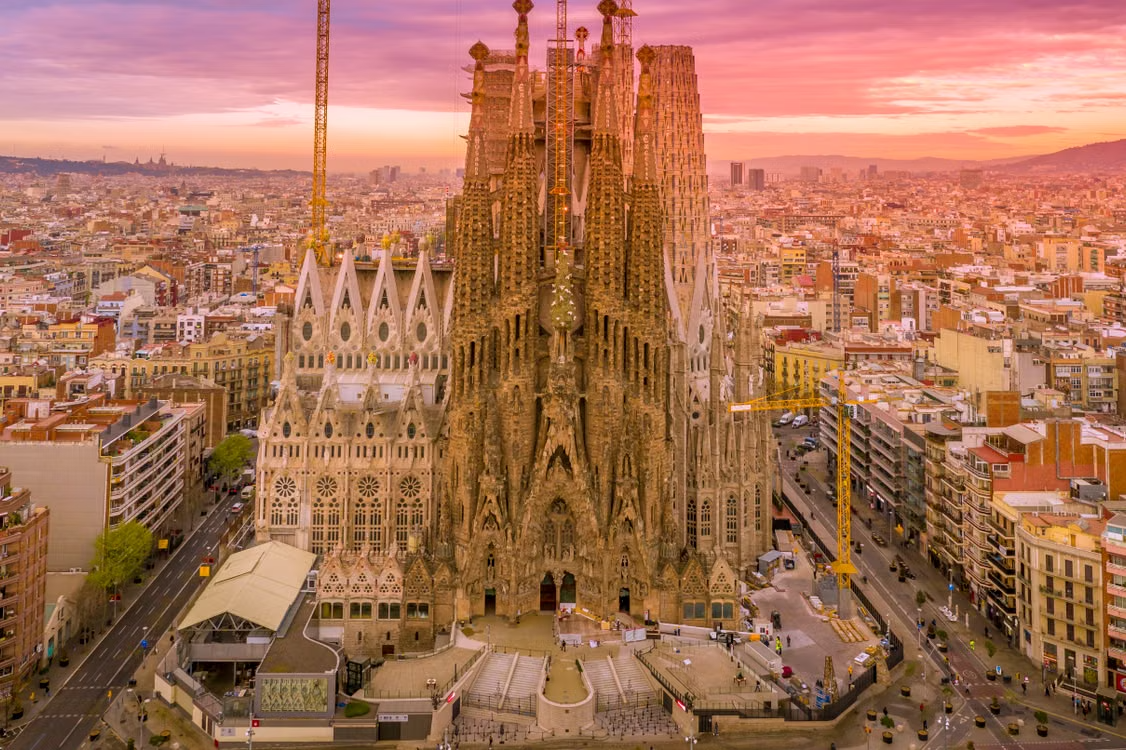
Iconic attractions like the Sagrada Família, Park Güell, and Las Ramblas draw millions annually, but the saturation of tourists in central districts (particularly Ciutat Vella, Eixample, and Barceloneta) has led to rising tensions between visitors and residents. As professionals in the tourism industry, we know that success comes with complexity.
The city has already taken regulatory steps to manage growth, such as restricting short-term rentals and controlling hotel development through the PEUAT plan (Special Urban Plan for Tourist Accommodation). Yet these measures are often reactive, fragmented, or politically contested. What’s missing is a coordinated, strategic framework that aligns the needs of all The Meaningful Tourism paradigm is built around one core principle: tourism must generate measurable benefits and satisfaction for all six main stakeholder groups (travellers, host communities, employees, service providers, government bodies, and the environment). MTC operationalizes this principle through practical tools, expert training, and clear KPIs. Let’s see how:
1. Stakeholder-centered workshops to build consensus and strategy
MTC’s Transformational Game Workshop is a structured, one-day offline session where participants assume roles across the six stakeholder groups. It turns fragmented interests into actionable collaboration and building an strategy.
Example for Barcelona:
A session involving local tourism boards, hotel associations, resident groups from Ciutat Vella, tourism employees, and environmental NGOs could jointly define KPIs like:
- Reduce peak-season visitor numbers in high-impact zones by 25% via experience diversification.
- Increase resident satisfaction with tourism management by 15% in annual surveys.
2. SMART KPIs to drive real change
MTC supports destinations in developing SMART (Specific, Measurable, Achievable, Relevant, Time-bound) KPIs. These metrics allow professionals to manage tourism impact the same way businesses manage performance, with clarity and data.
Tourism business example:
A hotel group could adopt the KPI “80% staff retention over 12 months through improved contracts and training,” tied to incentive schemes. Local authorities might target “30% of all guided tours led by certified local guides,” to redistribute economic benefit.
3. Ongoing strategic support
Beyond training, MTC provides expert consultancy for mid- to long-term implementation. Whether it's a follow-up strategy session, policy co-design, or continuous KPI refinement, MTC ensures the plan doesn’t stay on paper.
Example:
After a workshop, a follow-up pilot program in the Gràcia or Poblesec districts could promote cultural tourism managed by local associations, lightening pressure on central Barcelona while empowering neighbourhoods economically and socially.
Host Communities: By involving residents in co-designing tourism experiences, such as neighbourhood-led cultural tours or locally hosted events, the city can foster a sense of ownership and reduce resentment. For example, the Sant Andreu district could develop initiatives showcasing local traditions, food, and crafts, offering a richer alternative to the heavily trafficked Gothic Quarter.
4. Tools for ESG and SDG integration
MTC’s KPI framework aligns with ESG (Environmental, Social, Governance) and SDG (Sustainable Development Goals) reporting. This is crucial for public sector transparency and for private operators seeking responsible investment and brand positioning.
Example:
A DMO or tourism board could use MTC KPIs for annual sustainability reporting, enhancing trust with both residents and international partners.
Barcelona doesn't need more tourism, it needs better tourism. The Meaningful Tourism Centre equips the city with the tools, training, and strategic structure to make tourism more inclusive, transparent, and beneficial for all. By adopting this paradigm, Barcelona can lead a new era of regenerative, stakeholder-driven tourism.
MTC Certified Trainers
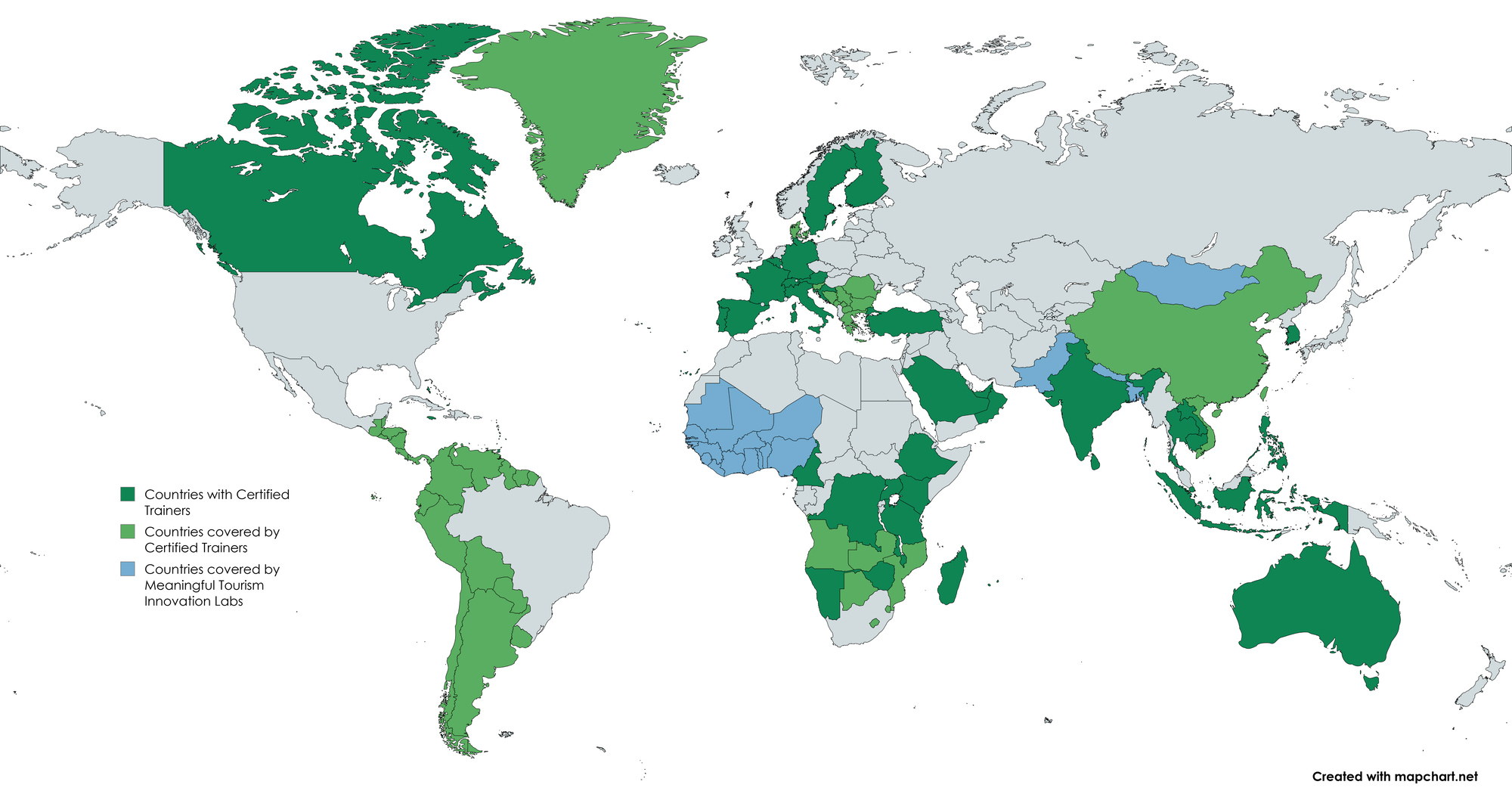
Please find below an overview of all our Certified Trainers for the Meaningful Tourism Transformational Game Workshop, along with the World Map showing the countries currently covered directly or indirectly.
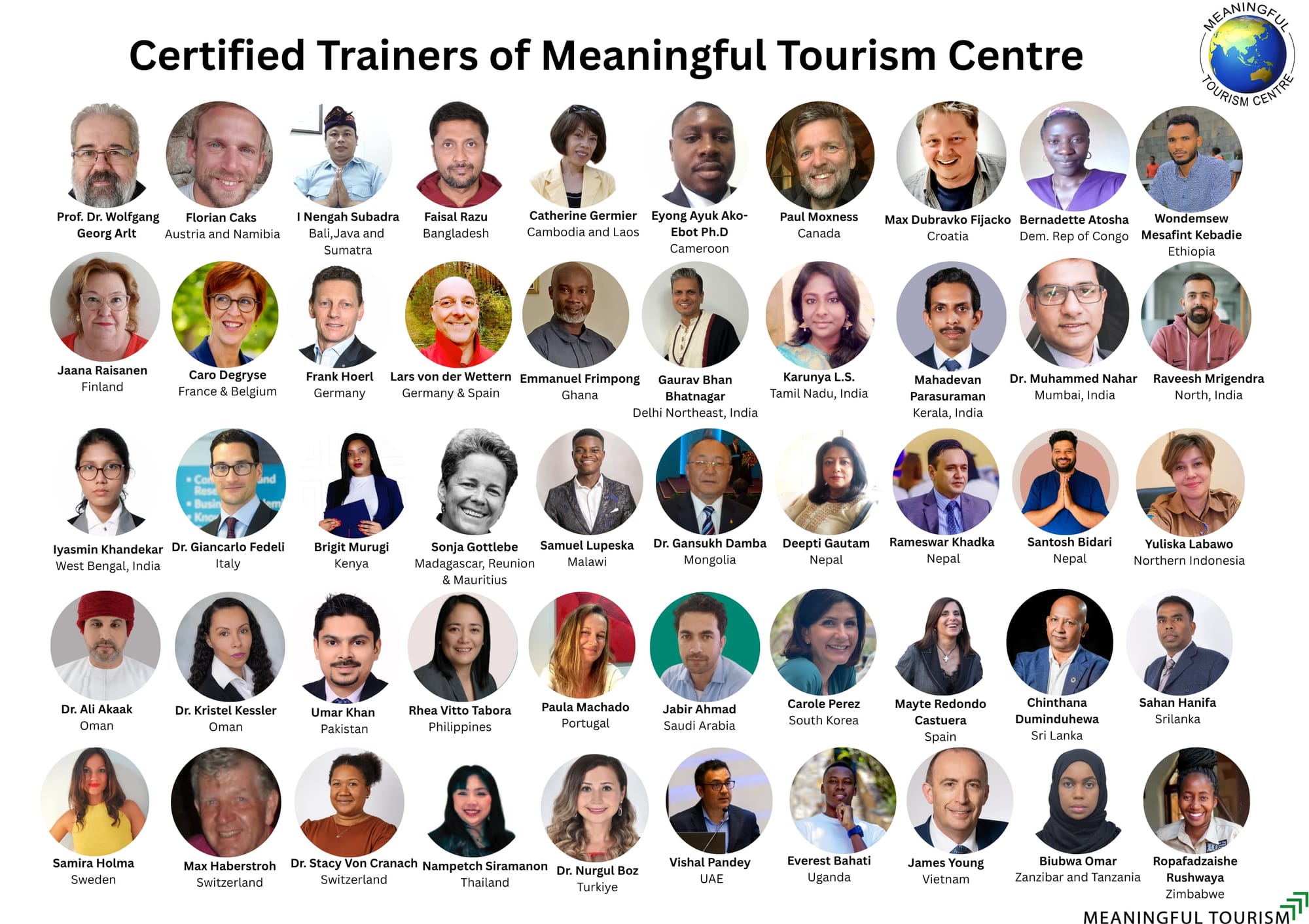
The network of MTC Certified Trainers is constantly growing. As shown on the map, many countries and regions worldwide are already served by dedicated experts. However, MTC is continuously looking for professionals with experience in training or lecturing and a passion for sustainable tourism to join the network and fill the blanks on the map.

ITB India
September 1 - 3, 2026
Jio World Convention Centre, Mumbai, India

Prof. em. Dr. Wolfgang Georg Arlt FRGS FRAS, Executive Director of Meaningful Tourism Centre and CEO of China Outbound Tourism Research Institute (COTRI), will give a 30-minute presentation titled “Meaningful Tourism as a tool for sustainable tourism development in India and beyond” on September 2 at 1:30 pm.
We are excited to offer 15 complimentary Trade Visitor passes to our readers, courtesy of Meaningful Tourism Centre! Each pass grants access to the exhibition and conference programmes across all three days — a value of $25 USD. Passes are available on a first-come, first-served basis, so don't wait. Contact us today to secure your complimentary pass.
About Meaningful Tourism Weekly
Meaningful Tourism Weekly is published every Thursday by Meaningful Tourism Centre (MTC) - London and Kathmandu in collaboration with Travel Asia Now, led by Rhea Vitto Tabora.
Each issue features an Editorial, updates on MTC activities, a Best Practice Example, a profile of an MTC-certified trainer, news about upcoming events, and, occasionally, additional op-ed pieces from guest authors. Carefully selected news items, including videos and podcasts, are also included, with links to their original sources in the Meaningful Tourism News section.
Subscription to Meaningful Tourism Weekly is free, with the addition of a paid content section that includes a library of surveys, exclusive articles, conference presentations, and statistical data, offering subscribers invaluable resources.
Sponsorship opportunities are available for those interested in supporting this initiative.
For more information about MTC's training programs, market research, product adaptation, consulting services, conferences, strategy development, and marketing, visit our website or email us at info@meaningfultourismcentre.org.