China, AI, Robots and Meaningful Tourism


Dear reader,
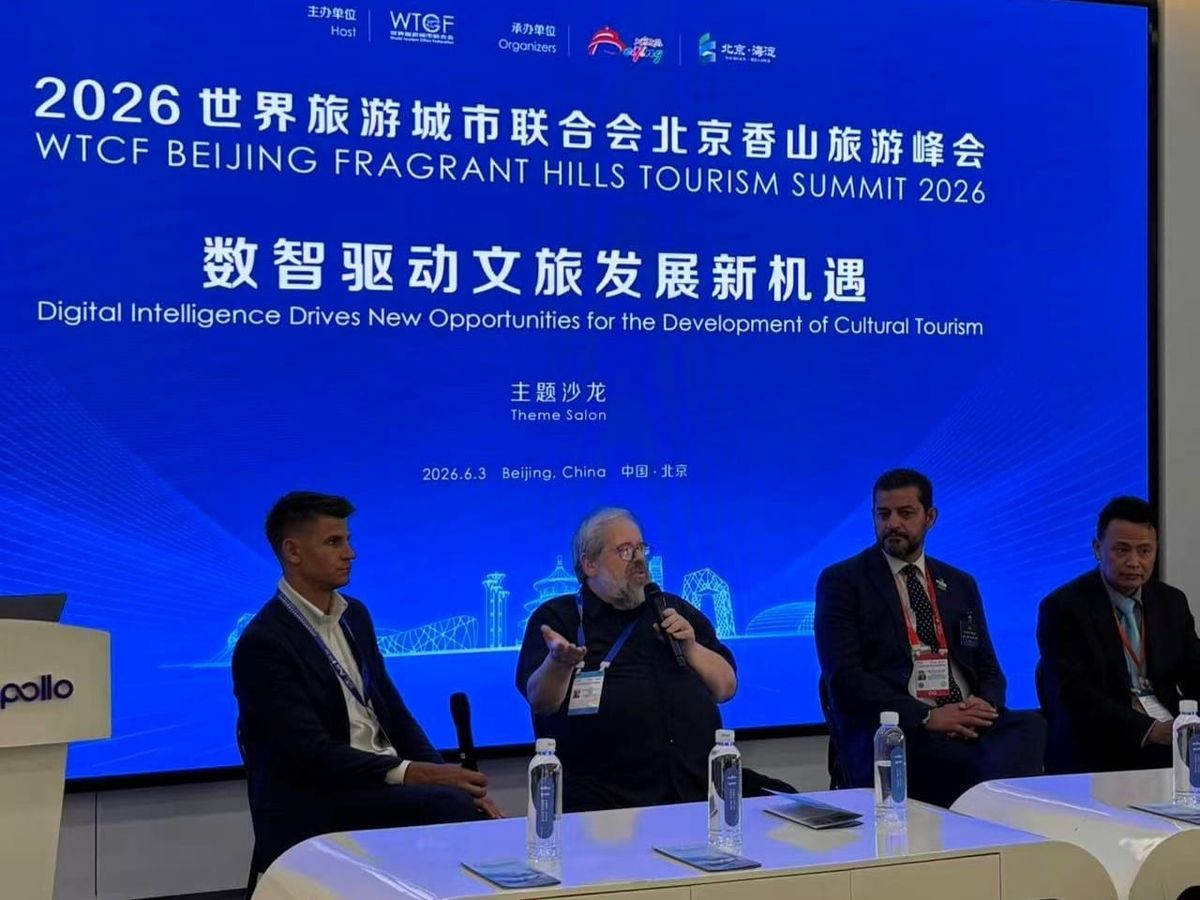
Greetings from Beijing! The last few days, your humble editor participated in the World Tourism Cities Federation (WTCF) Summit and met with colleagues of the Chinese Academy of Sciences to prepare the start of the Green Tourism Special Committee of the World Green Design Organization (WGDO), of which your humble editor has been chosen to be one of the Vice Chairpersons.
Opposite to many cities in the world, Beijing is turning more and more into a green city each time there is a chance to visit. The air quality is getting better thanks to the many new trees and parks introduced and also to the fact that by now almost all cars and bikes are powered by electric motors. The organisers of the WTCF Summit even arranged for a visit to Baidu Apollo, a company producing self-driving cars. Your humble editor had the chance to be driven around in one of these vehicles and also participated in a panel discussion at the home of Baidu Apollo near the new Daxing airport.
The main guest of the Summit was Gloria Guevara, CEO and President of WTTC, who pointed out that tourism grew faster than the global economy in 2025, but also reminded the audience of about 400 participants that tourism is changing and is not only about quantitative numbers. Like all speeches, an AI-based translation in several languages was provided, which showed the advances, but sometimes also the still existing limits of today's AI simultaneous translation systems.
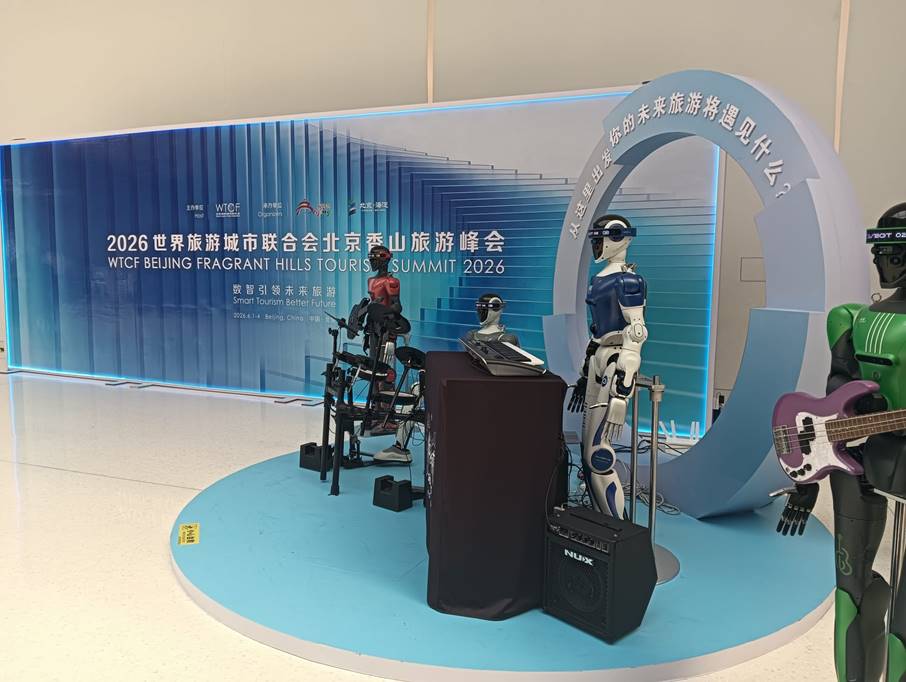
Outside the lecture halls of the breathtaking modern Zhongguancun International Innovation Centre, a big exhibition showed robot bands and a lady robot playing music on pianos, robot dogs walking around (for 200 RMB a piece, your humble editor could not resist buying one), and even the coffee was served by a somewhat overengineered coffee machine with arms.
However, the gaps in the development are still very visible. During a spectacular dinner show on the first evening, for example, with AI-generated videos on huge screens and all kinds of technological magic, the courses were each served by young women kneeling in front of the predominantly male VIP guests. I had the luck to sit next to the Vice Mayor of Colombo in the front row, and the girl serving the two of us obviously had a strict order not to make eye contact, but act strictly as a servant.
On another level, all the hi-tech advantages become less impressive when visitors to China still have to use – illegal -VPNs to connect to the globally used services of Google, YouTube, LinkedIn, WhatsApp, etc. Experts teach us that AI only works properly in an ecosystem of flat information hierarchies and transparency, just the opposite of what you encounter in China.
Sooner or later, the Chinese government will have to start to trust its citizens in their usage of online information or the premium position China enjoys in many technological fields will not be translated into economical and societal progress.
As usual, beside all the dazzling new technologies displayed and discussed during the Summit, not a word was spoken about the other big agent of change for tourism and indeed the world: Climate Change. Your humble editor has been to many conferences which were talking only about sustainability without mentioning AI, and other like the WTCF Summit, concentrating solely on technology and not mentioning Climate Change, global warming, rising sea levels etc., at all. The industry and the governments are still acting within silos, while an integrated approach is desperately needed. It will not come as a surprise that your humble editor promoted the idea of a Meaningful Tourism Economy also during the Summit and also for the development of outbound, inbound and domestic tourism in China.
Fortunately, Prof Dong Suocheng and his team of the Institute of Geographical Sciences and Natural Resources Research at the Chinese Academy of Sciences have this integrated view, and showed great interest in the concept of Meaningful Tourism during the Green Tourism Special Committee working meeting which took place on the day after the WTCF Summit ended. More about this in next week’s edition of Meaningful Tourism Weekly.
As always, all best wishes from the Meaningful Tourism Weekly team in Kathmandu and Manila, and from the whole Meaningful Tourism community to all our readers!


Meaningful Tourism in South Asia – Podcast summary
Every week, MTC and its partners TravelDailyNews Asia-Pacific and Tanneri Chaso provide a new episode of the TRAVEL DIALOGUES SOUTH ASIA series of podcasts concentrating on the development of Meaningful Tourism in South Asia, including Pakistan, India, Maldives, Sri Lanka, Nepal, Bhutan and Bangladesh.
This week, the podcast featured your humble editor speaking with Ass. Prof. Dr. Smrittee Panta from the Kathmandu University School of Management on tourism, hospitality and education in Nepal.
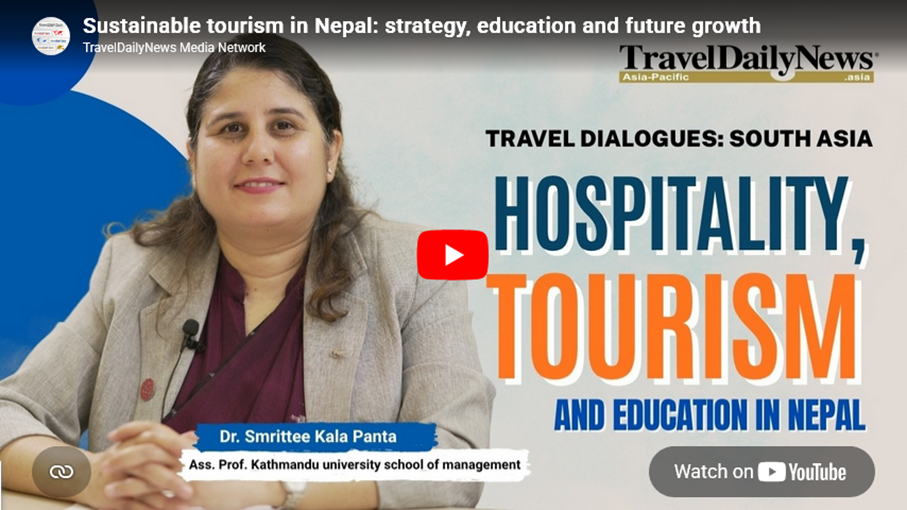
The full podcast can be found here:
https://www.traveldailynews.asia/column/interviews/sustainable-tourism-nepal-development/
Tourism as an interconnected ecosystem
Tourism in Nepal is increasingly viewed as an interconnected ecosystem that generates value across communities, the economy, visitors and the environment. This perspective reflects a broader shift towards sustainability, where development is not measured solely by arrivals but also by long-term social and environmental outcomes.
The concept of sustainable tourism in Nepal therefore extends beyond traditional growth metrics, incorporating factors such as community well-being, economic inclusion and ecosystem resilience.
Challenges and regional opportunities
Nepal’s geographical position between India and China provides a strategic advantage, particularly in the context of shifting global travel patterns. While international crises continue to impact long-haul travel, certain segments, such as adventure tourism, remain relatively stable, with mountaineering activities continuing to attract demand.
At the same time, declining arrivals from European and other long-haul markets highlight the importance of regional demand. Tourists from South Asia and East Asia, particularly India and China, are increasingly seen as key drivers of recovery and future growth.
The development of regional destination management strategies is essential, especially in ecologically sensitive and culturally diverse areas, where balancing tourism growth with sustainability remains a priority.
Government strategy and performance targets
The Nepalese government has outlined ambitious tourism objectives, aiming to double visitor numbers and triple per capita spending by 2030. However, these targets are complemented by a broader recognition that performance must also be measured through qualitative indicators.
These include environmental sustainability, community benefits and resilience, reinforcing the importance of a holistic approach to tourism development. In this context, sustainable tourism in Nepal is positioned as a long-term strategic priority rather than a short-term growth objective.
From adventure to well-being tourism
Nepal’s global image has traditionally been associated with adventure tourism, particularly mountaineering. However, there is a growing effort to reposition the destination as a hub for well-being tourism.
This shift emphasises a broader understanding of wellness, encompassing cultural, spiritual and emotional dimensions in addition to physical health. The country’s cultural heritage and natural environment support the development of transformative travel experiences, moving beyond transactional tourism towards deeper visitor engagement.

Regional development and local impact
Tourism plays a critical role in supporting regional development and local economies. By creating employment opportunities, particularly in rural areas, it can reduce outward migration and contribute to preserving cultural identity.
Jobs generated through tourism are inherently location-based, making them an important tool for sustaining communities. The continued development of sustainable tourism in Nepal is therefore closely linked to inclusive economic growth and social stability.
Reforming tourism education
Education is identified as a key pillar for the future of the tourism sector. Nepal is moving towards more experiential and work-integrated learning models, focusing on practical skills and real-world application.
In addition to technical competencies, there is increasing emphasis on interpersonal, intercultural and emotional intelligence skills, which are essential in a global tourism environment. Academic institutions are also expanding international collaborations and attracting international students, contributing to a more dynamic educational ecosystem.
At the same time, there is recognition of the need to strengthen research capacity through advanced academic programmes, including master’s and doctoral studies.
Outlook for sustainable tourism growth
The outlook for sustainable tourism in Nepal remains positive, supported by a young workforce, growing collaboration between stakeholders and increasing alignment between government policy and industry needs.
The combination of strategic positioning, education reform and regional focus provides a foundation for long-term development. As global demand for meaningful and transformative travel experiences continues to rise, Nepal is well positioned to strengthen its role in the international tourism landscape.
New newsletter accompanying the Travel Dialogues South Asia podcast with more than 2,800 subscribers in first week
MTC, a new newsletter on LinkedIn, will not only provide a summary of each podcast but also additional news about tourism development in South Asia. Within the first week, already more than 2,500 colleagues subscribed to the Travel Dialogues South Asia newsletter!
It can be subscribed to for free here: https://www.linkedin.com/posts/prof-dr-wolfgang-g-arlt_first-issue-of-the-new-newsletter-travel-activity-7465819733196472321-znzw?utm_source=share&utm_medium=member_desktop&rcm=ACoAAADPQF8B9LknuLT3s3DOd71HVGmgO8Fnb0Q
Meaningful Tourism at the WTCF Summit in Beijing
As mentioned in the editorial, this week’s Meaningful Tourism Weekly was written in Beijing (and produced as always in Manila by Travel Asia Now).

The World Tourism Cities Federation Summit brought together more than 400 delegates representing many of the almost 200 city members of the WTCF. The venue was located in Haidian, the “Silicon Valley” of China, home to the best universities in the country and thousands of companies pushing forward the boundaries of technology. In a touching contrast, delegates were provided with accommodation at the Friendship Hotel, a small city of palace-style buildings and gardens built in the 1950s as the home of all foreigners residing in Beijing. Even today, a Russian restaurant reminds guests that “international friendship” meant at that time first of all friendship with the Soviet Union. The contrast between the Zhongguancun International Innovation Centre, full of robots and AI-translated discussions about technology, and the lush gardens with green-tiled tilted roofs peaking through the trees could not be greater.
During one of the panel discussions outside the Zhongguancun Centre, at the Baidu Apollo conference room surrounded by self-driving limousines, your humble editor had the opportunity to point out the importance of the establishment of a Meaningful Tourism Economy to create a frame for a positive effect of modern technology. The other panellists agreed that AI is a tool like a hammer, it can help to build beautiful handmade furniture, it can also be used to kill another person. If you only have a hammer without the necessary paradigm for its usage, the world looks like, as the saying goes, as if it is made of nails only.
Meaningful Tourism Innovation Lab Nepal to start offering trainings and workshops
The opening of the Meaningful Tourism Innovation Lab Nepal to support the translation of insights into concrete action to build a Meaningful Tourism Economy for the stakeholders involved has been greeted with positive comments by many stakeholders in the country and beyond.
It seems that the idea of establishing Meaningful Tourism Innovation Labs is the right answer to the demand of the industry as well as governmental players to have a platform for the development of innovative tourism forms within the framework of a Meaningful Tourism Economy.
In Nepal, the first offline workshops and trainings will start in the coming weeks. Readers based in Nepal are kindly asked to contact info@meaningfultourismcentre.org for details.
Invitation to ITB India and ITB MICE China
MTC will organise the first Meaningful Tourism stand at ITB India in September 2026 in Mumbai and is also discussing the participation at the first installment of the ITB MICE China organised in November 2026 by Messe Berlin. The latter one will fill a gap in China, which until now has no fair focussed on the MICE segment of tourism.
We are inviting all members of the Meaningful Tourism Movement to join by sharing our stand during these fairs.

Meaningful Tourism Community: The Meaningful Tourism Transformational Game Workshop Trainer
Prof. I Nengah Subadra - Certified Trainer for Bali, Indonesia
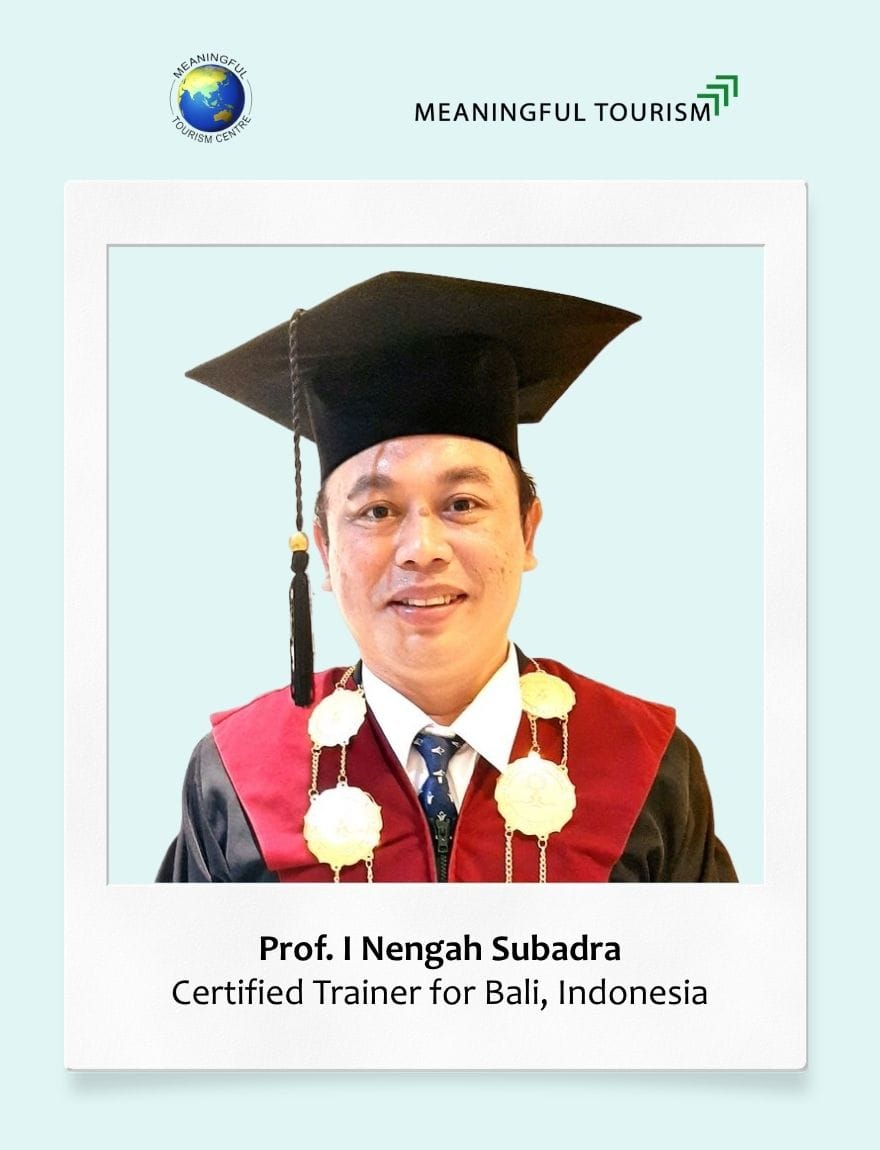
Prof. I Nengah Subadra, PhD, is a Professor of Tourism and currently serves as the Head of the Department for Research, Publication, and Community Service at the University of Triatma Mulya in Bali, Indonesia.
With almost ten years of academic experience, he has been actively involved in teaching tourism marketing and research methodology at the graduate level. He holds a PhD in Tourism from the University of Lincoln, UK, where he focused on tourism research, and a Master’s degree in Tourism Studies from the University of Udayana with a specialization in ecotourism. His academic foundation also includes a Bachelor's degree in English Language and Literature from the University of Warmadewa, where he conducted research on tourism discourse analysis. Dr. Subadra’s work integrates academic leadership, research excellence, and a deep commitment to sustainable tourism development.
The Meaningful Tourism Weekly asked Prof. Subadra: What is the current situation of tourism in Bali, and how can the Meaningful Tourism Paradigm help to support its development?
His response: Tourism in Bali has experienced a robust recovery following the disruptions caused by the COVID-19 pandemic. International arrivals have surged, with some months in 2024 already matching or surpassing pre-pandemic levels observed in 2019. By the end of 2023, the island had received over 5.2 million international tourists, alongside a substantial number of domestic visitors. Major source markets such as Australia, India, China, the United Kingdom, the United States, and broader Europe have largely returned, while ongoing diversification strategies continue to expand international reach.

However, the resurgence of tourism has reintroduced symptoms of overtourism, particularly in popular areas such as the southern tourism sites including Kuta, Seminyak, Canggu, Uluwatu, and Ubud. These regions are grappling with severe traffic congestion and overstretched waste management systems, resulting in both terrestrial and marine pollution. Environmental challenges persist, with water scarcity intensified by the hospitality sector’s consumption demands, and further degradation seen in coastal zones, coral reefs, and ecologically sensitive attractions such as rice terraces and waterfalls.
MTC Certified Trainers
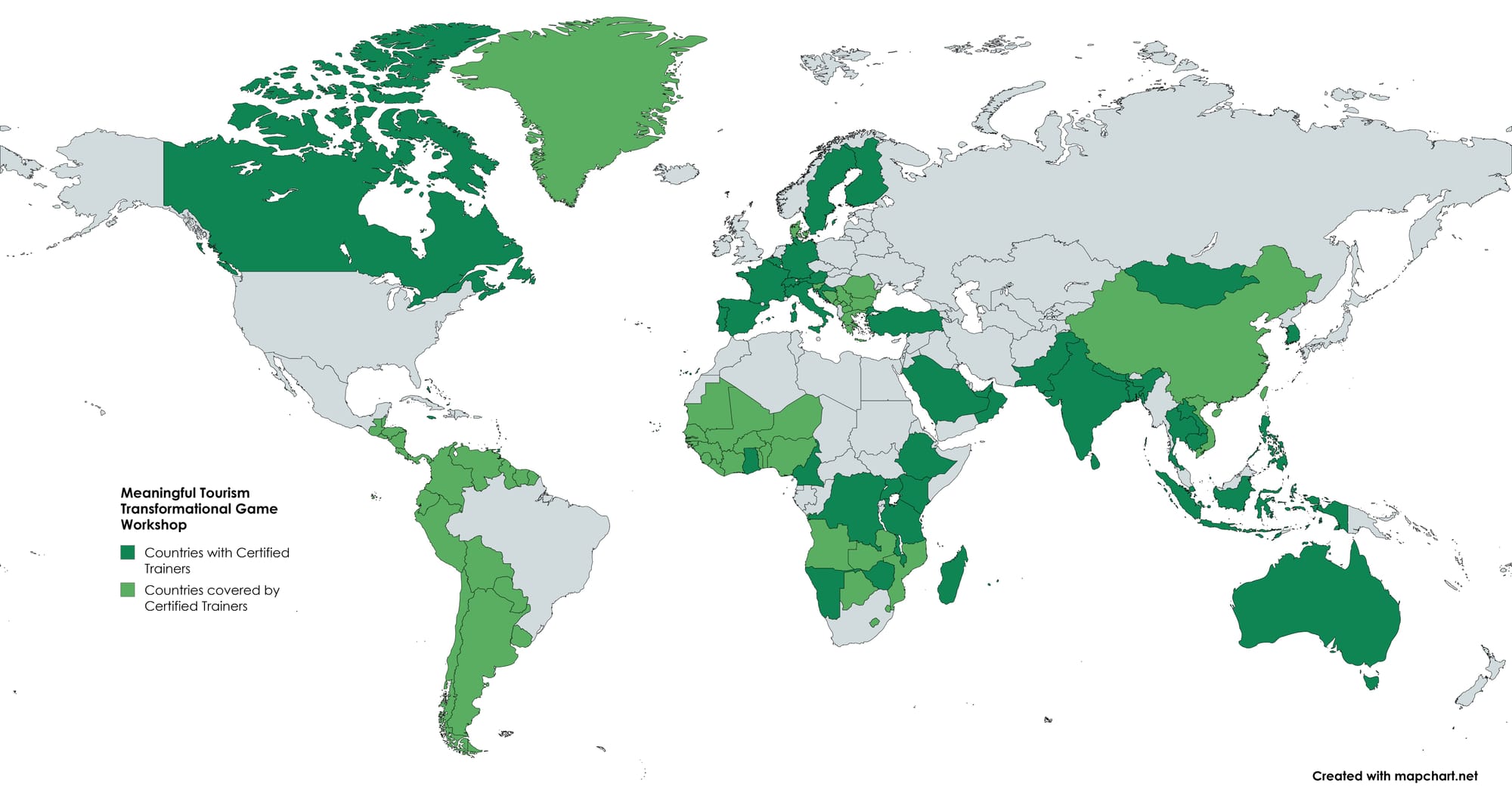
Please find below an overview of all our Certified Trainers for the Meaningful Tourism Transformational Game Workshop, along with the World Map showing the countries currently covered directly or indirectly.
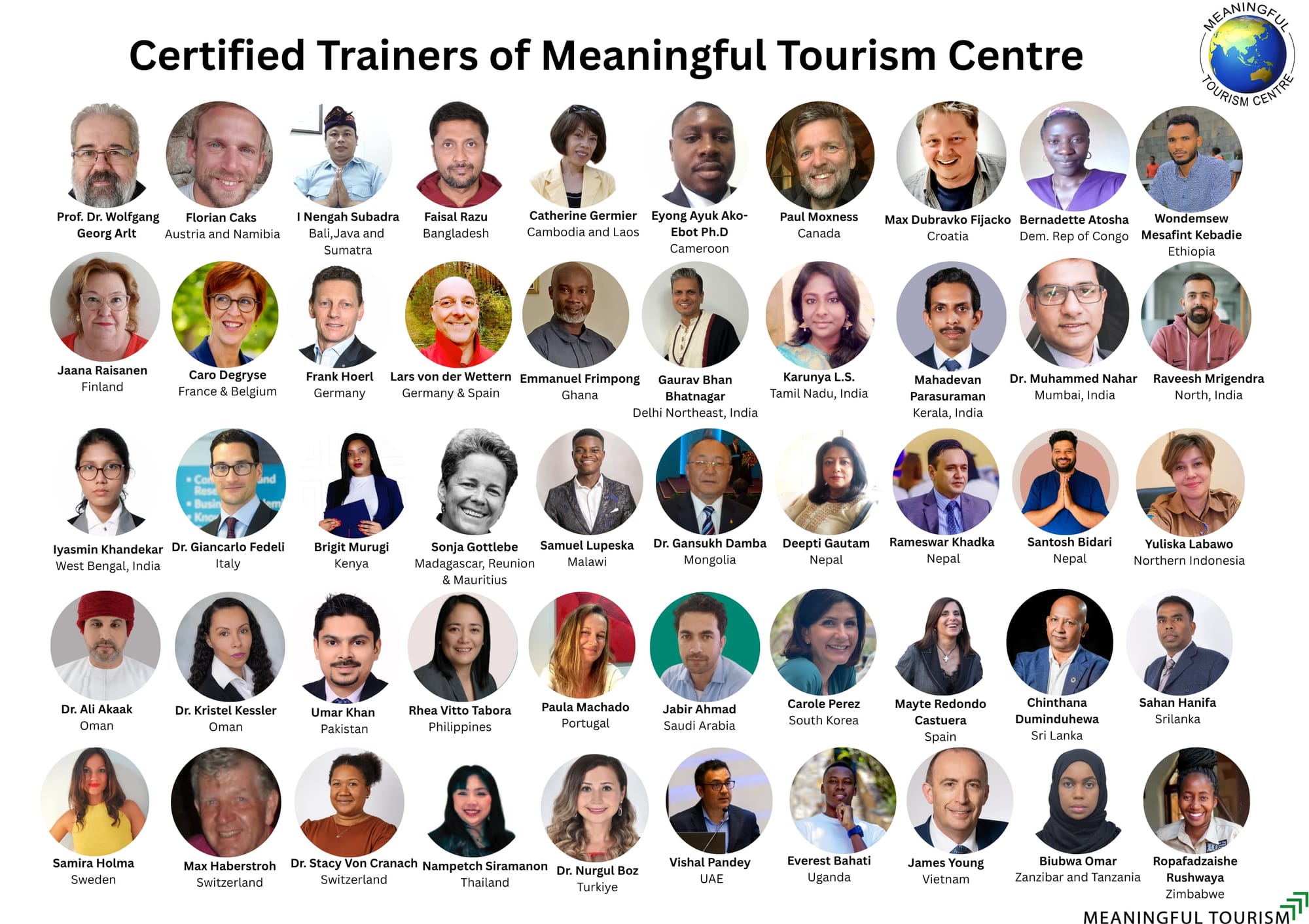
The network of MTC Certified Trainers is constantly growing. As shown on the map, many countries and regions worldwide are already served by dedicated experts. However, MTC is continuously looking for professionals with experience in training or lecturing and a passion for sustainable tourism to join the network and fill the blanks on the map.
About Meaningful Tourism Weekly
Meaningful Tourism Weekly is published every Thursday by Meaningful Tourism Centre (MTC) - London and Kathmandu in collaboration with Travel Asia Now, led by Rhea Vitto Tabora.
Each issue features an Editorial, updates on MTC activities, a Best Practice Example, a profile of an MTC-certified trainer, news about upcoming events, and, occasionally, additional op-ed pieces from guest authors. Carefully selected news items, including videos and podcasts, are also included, with links to their original sources in the Meaningful Tourism News section.
Subscription to Meaningful Tourism Weekly is free, with the addition of a paid content section that includes a library of surveys, exclusive articles, conference presentations, and statistical data, offering subscribers invaluable resources.
Sponsorship opportunities are available for those interested in supporting this initiative.
For more information about MTC's training programs, market research, product adaptation, consulting services, conferences, strategy development, and marketing, visit our website or email us at info@meaningfultourismcentre.org.